GMC Yukon XL 2000–2006
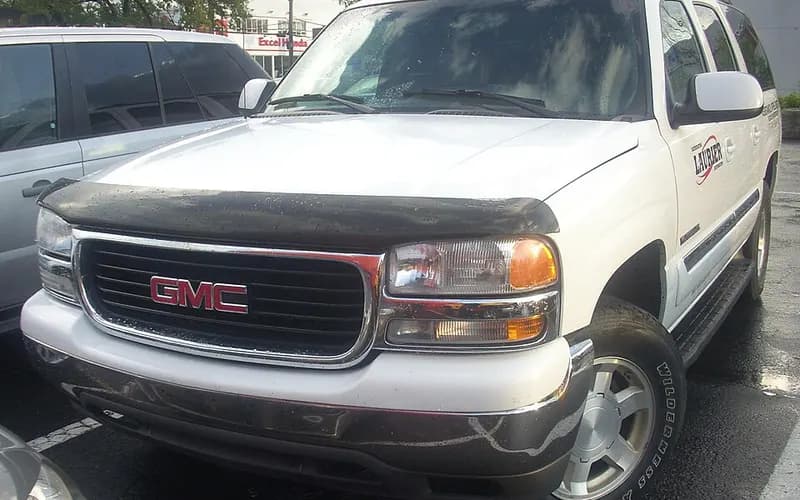
Common on this vehicle:Warning lightLeakNoiseCorrosion or rustParking brakeMisfire or rough idleStalls or shuts offGauge or instrument fault
Known issues of this vehicle
Problems described in the manufacturer’s technical documents, government investigations and trade technical sources. Every statement stands on a quoted passage of its source and is shown only after passing an automatic audit.
Issues that answer this search (6)
Brakes15 cards, 251 records
13 more
- ABS activation at low speed52 records
- Parking brake lining wear35 records
- Pedal moves at full lock2 records
- Pushrod retainer missing1 records
- Cosmetic rotor corrosion1 records
- ABS light, EBCM ground G1101 records
- RH front brake pipe contact1 records
- Reduced Brake Power message1 records
- Service Brake Booster, C01361 records
- Stability message with C04551 records
- Violent steering wheel shake1 records
- C0265 after EBCM replacementno records
- Service Stability with C0131no records
Instruments and lighting4 cards, 151 records
Electrical, wiring and power28 cards, 46 records
See the 28
- RKE, passenger door inop.13 records
- Reduced Engine Power, wiring7 records
- CHECK CD error, CD stuck2 records
- Rear audio/HVAC inoperative2 records
- Starter keeps cranking2 records
- Trailer brakes on with lamps2 records
- Generator whine in audio1 records
- Intermittent battery drain1 records
- Battery lamp with B14891 records
- Connector fretting corrosion1 records
- Battery cable contacts shaft1 records
- Intermittent no start, DTCs1 records
- Memory seat recalls forward1 records
- Navigation radio fan hum1 records
- No audio at times1 records
- Poor radio reception1 records
- Radio disc error1 records
- No radio audio or display1 records
- Radio theft LED not flashing1 records
- Radio volume lower1 records
- Rear wiper jumps, fog lamps1 records
- B0951, new headlamp switch1 records
- Seat heater, memory seat out1 records
- Turn signal flashes fast1 records
- Adjustable pedals no recallno records
- DRLs will not disableno records
- Passlock stall or no-startno records
- Running board lamp overheatno records
Engine16 cards, 35 records
15 more
- Intake manifold gasket leak10 records
- Worn cam lobe or lifter5 records
- Throttle body sticks4 records
- Crank position sensor (8.1L)4 records
- Cold lean hesitation2 records
- Oil consumption at 8600 GVW2 records
- Oil leak from frozen PCV2 records
- Accessory belt whine1 records
- Oil consumption, PCV valve1 records
- P0300 after engine repairs1 records
- Rear knock sensor corrosion1 records
- Slight roughness at idle1 records
- Engine knock on cold startno records
- Oil pump pickup O-ring cutno records
- Throttle body carbon buildupno records
Body, doors and interior19 cards, 31 records
See the 19
- Rear door window inoperative5 records
- Front snap or popping noise4 records
- Rear wheelhouse plugs loose4 records
- Seatback moves when braking3 records
- Console lid hard to open2 records
- Power folding mirror shakes2 records
- Door lock lever disengages2 records
- Armrest hinges broken1 records
- Dash center rattle1 records
- Door sags or is hard to open1 records
- Seat adjuster knob missing1 records
- Headliner or roof rattle1 records
- Rear cupholder latch broken1 records
- Rear door upper hinge welds1 records
- Side access door noise1 records
- Trailer hitch bent or broken1 records
- Cupholder lid will not closeno records
- Headliner saggingno records
- Head restraint pinch pointsno records
Fuel system10 cards, 25 records
Steering4 cards, 19 records
Heating and air conditioning11 cards, 18 records
See the 11
- Blower resistor overheating5 records
- A/C noise, A/C inoperative3 records
- No cabin air filter2 records
- Temperature doors full hot2 records
- A/C warm at extended idle1 records
- HVAC actuator clicking1 records
- HVAC mode, temp control loss1 records
- Side to side temp difference1 records
- Rear heater weak in cold1 records
- Rear HVAC ticking, B04341 records
- No blower after new moduleno records
Transmission and driveline13 cards, 10 records
12 more
- 4L60-E 2-3 upshift clunk1 records
- 4L60-E burnt 3-4 clutch1 records
- Slip after new input housing1 records
- 4L80-E planetary gear whine1 records
- Rear axle whine1 records
- Service 4WD, DTC B27251 records
- 4WD lamps, system inop.1 records
- Transfer case service light1 records
- Transfer case stops shifting1 records
- Transfer case connector1 records
- 4L60-E TCC valve bore wearno records
- Grind into Park in 4LOno records
Suspension, wheels and tires6 cards, 8 records
Airbags and seat belts8 cards, 7 records
Exhaust and emissions2 cards, 5 records
Audio and telematics4 cards, 5 records
Other2 cards, 1 records
Cooling1 cards, 0 records
See the 1
States a check or a repairStates symptoms or cautions onlyAnswers the search in handA bar is as long as the records under the card (not how often the fault occurs). Titles are shortened; the card itself gives the full one.
Read the cards as text (6)
EngineModel years 2001–2006Manufacturer
Castech cylinder head porosity crack (gradual coolant loss)
Why it happens:A very low percentage of cylinder heads with an embossed Castech logo may develop a porosity crack in a very specific area.
Caution:If the heads are not Castech castings, follow normal diagnostic procedures to find the cause of the coolant loss.
Manufacturer communication 1Open the card →
Fuel systemModel years 2000–2005GovernmentTrade technical source
Aftermarket part (not the vehicle as built): Fram G3727 replacement fuel filter connector - recall 06E-043
Why it happens:The connector on the fuel filter was not manufactured to Honeywell's specification.
- If left:This may cause an inadequate seal at the connection, potentially leading to a fuel leak.
- If left:In the presence of an ignition source, a fire could occur.
Caution:The recall pertains only to aftermarket Fram fuel filters and has no relation to original equipment on the listed vehicles.
No record matchesOpen the card →
Fuel systemModel years 2000–2001ManufacturerGovernment
Fuel module reservoir assembly: fuel pump wire connectors may overheat - recall 05V-155
Why it happens:The fuel module reservoir assemblies contain fuel pump wire connectors that may overheat under certain operating conditions.
- If left:If the ignition circuit wire is exposed, the fuel pump fuse blows, disabling the pump and causing a stall or no-start.
- If left:Enough heat at the pass-through connector may make a hole in it, which may light the 'Service Engine Soon' light during the emission system diagnostic routine.
- If left:Fuel vapor and in some cases liquid fuel may leak from the tank through the hole in the connector body.
- If left:Fuel leakage in the presence of an ignition source could result in a fire.
- If left:If the ignition circuit or ground wire is exposed and shorts to the fuel level sender card wires, fuel level readings may be inaccurate.
- If left:Engine stall can occur if bare wire exposed by melted insulation shorts against a ground or ground wire and the fuel pump relay fuse blows, or if the vehicle runs out of fuel because a short between the fuel pump wiring and the level sensor wiring makes the fuel gauge read inaccurately.
Caution:After removing the connector, be sure the O-ring does not remain in the cover.
Owner complaint 4Recall 1Manufacturer communication 1Open the card →
Transmission and drivelineModel years 1998–2007Repair business
Transfer case pump rub (hole worn through rear case half)
Why it happens:The magnesium case is softer than the aluminum pump, and pump movement in normal operation eventually wears a hole in the rear case half.
- If left:The transfer case holds only two quarts, so fluid loss can quickly become catastrophic for the internal components.
- If left:Pump rub is very often fatal to transfer cases because the vehicle is often driven thousands of miles before problems show.
No record matchesOpen the card →
BrakesModel years 2000–2006Government
Brake pipe (brake line) corrosion and rupture
Why it happens:The pipes' steel-copper construction is vulnerable to galvanic corrosion if exposed to the environment.
- If left:Corroded brake lines may rupture during a brake application, reducing brake effectiveness.
- If left:The worst case is failure of the front circuit (rear-only braking) with a lightly loaded vehicle.
- If left:GM stated that the brake system is split front/rear and that, should a brake pipe suddenly fail, the vehicle would be capable of stopping with the pressure supplied by the remaining circuit.
- If left:Most of the failures reported to ODI occurred in vehicles with more than 10 years in service.
Caution:Analysis of repair records indicates that consumers often elect to repair only the failed circuit.
Owner complaint 135Open the card →
BrakesModel years 2000–2006ManufacturerGovernment
Hydro-boost brake assist and power steering share one hydraulic supply (four campaigns)
Why it happens:Some vehicles were built with an out-of-specification hydro-boost housing relief valve bore.
- If left:The valve O-ring seal may fracture, and steering effort may be slightly higher while braking or parking.
- If left:The loss of fluid would increase steering and braking effort, and a crash may occur without prior warning.
- If left:A hydraulic pump driveshaft can fracture, causing immediate loss of power steering assist.
- If left:On hydro-boost vehicles the same failure removes brake power assist once the reserve pressure is used up.
- If left:Power steering assist would be lost and steering effort would rise.
- If left:On hydro-boost vehicles the hose failure could also remove power brake assist.
- If left:Power steering fluid sprayed onto hot engine parts could cause an engine compartment fire.
- If left:The Hydro-Boost unit includes a pneumatic accumulator that serves as a reserve and provides a transition between power assisted and manual braking when pressure supply is lost. The number of accumulator-assisted stops varies with previous steering and braking inputs.
- If left:Loss of boost with a depleted reserve sharply increases brake pedal effort: a driver used to applying 20 lbs for a moderate 0.3 g deceleration may have to apply 130 lbs or more.
- If left:In the steering test, the test vehicle required 45 in-lb (= 5.08 N·m) with the system intact and 300 in-lb (= 33.9 N·m) with the system failed.
Caution:An inoperative pump raises steering and braking effort but does not completely remove the ability to steer or slow the vehicle.
Owner complaint 10Recall 4Manufacturer communication 5Open the card →
Other known issues (137)
EngineModel years 1999–2002ManufacturerGovernment
Increased accelerator pedal effort / throttle body sticks (clean and adjust, do not replace)
Why it happens:The investigation found two factors that may cause the defect: TB manufacturing process problems, and accumulation of deposits (a PCV system by-product) on or around the throttle valve and bore.
- If left:Some interviewed owners reported that their vehicle had been serviced for the condition but the symptoms returned; none of those repair attempts used the TSB 02-06-04-054 process.
Caution:Do not replace the throttle body; the reference is bulletin 02-06-04-054B.
Owner complaint 2Manufacturer communication 2Open the card →
EngineModel years 1999–2006Manufacturer
Engine knock on cold start (carbon on piston)
Why it happens:The noise may be caused by an interaction between carbon formed on the piston, the piston motion and the cylinder wall.
- What it does not lead to:GM Powertrain Engineering confirmed the noise is not detrimental to the performance, reliability or durability of the engine.
- What it does not lead to:The noise has no effect on the longevity of any engine component.
Caution:Replacing the engine assembly or pistons to repair this condition is not recommended.
No record matchesOpen the card →
EngineModel years 1999–2005ManufacturerTrade technical source
Intake manifold gasket leak (cold idle misfire, lean codes)
Why it happens:The bulletin states the intake gasket seals may leak around the intake ports, causing the lean condition.
Caution:Do not measure the intake manifold across all four intake runner ports.
Owner complaint 1Manufacturer communication 9Open the card →
EngineModel years 1999–2013Manufacturer
P0300 after engine repairs: injector connectors crossed (cylinders 5-7 / 6-8)
Why it happens:Injector connectors for cylinders 5-7 and 6-8 can be crossed and cause an engine misfire.
Manufacturer communication 1Open the card →
EngineModel years 1999–2002ManufacturerTrade technical source
Rear bank knock sensor corrosion from water intrusion (P0332)
Why it happens:The condition may result from corrosion of the rear bank knock sensor caused by water intrusion into the sensor cavity.
Caution:Do not form the RTV into a complete circle; leave the rear section open.
Manufacturer communication 1Open the card →
EngineModel years 1999–2013Manufacturer
Slight roughness at idle with no DTCs (possible characteristic)
First signs:Customers may complain of a slight rough idle with no DTCs or other engine performance concerns, and comparison vehicles may show the same.
- What it does not lead to:If the concern is considered an idle characteristic, no repairs should be attempted.
Manufacturer communication 1Open the card →
EngineModel years 2000–2000Manufacturer
Lean hesitation, sag or stumble at -6 to +20°C coolant temperature (PCM reprogram)
First signs:A lean hesitation, sag or stumble occurs when the coolant temperature is between -6 and +20°C.
Manufacturer communication 2Open the card →
EngineModel years 2000–2019Manufacturer
Higher than expected oil consumption at 8600 GVW and above (accepted rate and consumption test)
Why it happens:Towing a trailer or hauling additional weight will increase oil consumption.
Caution:Part of the oil film left on the cylinder wall is consumed during combustion, so varying rates of oil consumption are accepted as normal in all engines.
Owner complaint 1Manufacturer communication 1Open the card →
EngineModel years 2000–2002Manufacturer
Higher than expected engine oil consumption (PCV valve replacement)
First signs:Engine oil consumption is higher than expected.
Manufacturer communication 1Open the card →
EngineModel years 2000–2003Manufacturer
Oil pump pickup (screen) O-ring cut: engine tick / lifter noise
Why it happens:The O-ring seal between the oil pump screen and the oil pump may be cut, causing aeration of the oil.
Caution:The noise may often be diagnosed as a collapsed lifter.
No record matchesOpen the card →
EngineModel years 2001–2002Manufacturer
Accessory drive belt whine (power steering pump pulley repositioned)
First signs:The accessory drive belt whines.
Manufacturer communication 1Open the card →
EngineModel years 2001–2001ManufacturerGovernment
Crankshaft position sensor may work intermittently or fail (8.1L V8) - recall 07V-521
Why it happens:The crankshaft position can operate intermittently or fail completely.
- If left:The engine may stall and may restart immediately or after a cool-down period.
- If left:If the sensor becomes completely inoperative, the engine quits and will not restart.
- If left:Either failure can increase the risk of a crash.
- If left:Over half of the surveyed owners noted at least one stall at speeds above 40mph (= 64.4 km/h), and about one-third noted the vehicle was stranded partially or fully in a lane of traffic.
Caution:All of the surveyed consumers noted multiple stalling events before the CKP was properly diagnosed and replaced.
Owner complaint 3Recall 1Open the card →
EngineModel years 2002–2018Manufacturer
Single-cylinder misfire (P0300-P0308) and/or chirp, squeak or tick at camshaft speed: worn cam lobe / lifter, valve or valve spring
Why it happens:Possible causes include a worn camshaft lobe and/or lifter roller.
Caution:A damaged cam lobe is easy to overlook when inspecting through the lifter bores; unworn lifter rollers do not mean the cam lobes are okay.
Manufacturer communication 5Open the card →
EngineModel years 2002–2014Manufacturer
Oil leak after cold start from frozen PCV system (rear main seal)
Why it happens:This is the result of a frozen PCV system and excessive crankcase pressure.
Manufacturer communication 2Open the card →
EngineModel years 2006–2018Manufacturer
Throttle body carbon build-up: idle surge, reduced engine power, throttle DTCs (high mileage)
Why it happens:As carbon builds up in the throttle body of a high-mileage vehicle, the ECM/PCM learns to compensate by increasing the throttle plate angle.
Caution:If the throttle body is cleaned without performing an idle learn reset/reset idle learn with the Tech 2, the ECM/PCM may continue to compensate for the previous carbon build up, and the concern may return along with DTCs P0121, P0506 and/or P0507.
No record matchesOpen the card →
Fuel systemModel years 1999–2003Manufacturer
Fuel pressure regulator buzz / hum after replacement (check fuel pump feed voltage drop and connector crimps)
Why it happens:Engineering introduced a redesigned fuel pump connector for service in December 2004 (bulletin 04-06-04-088C).
Manufacturer communication 1Open the card →
Fuel systemModel years 2000–2015Manufacturer
Fuel gauge reads low or drops to empty in Park / Neutral (normal characteristic)
Why it happens:The VCM/PCM is the buffer for the fuel gauge.
- What it does not lead to:On an automatic transmission no buffering takes place in park or neutral; this is a normal characteristic and no repairs are necessary.
Manufacturer communication 1Open the card →
Fuel systemModel years 2000–2003Manufacturer
DTC P0446 set with the SES lamp on (replace the EVAP vent solenoid, not the canister)
Caution:Do not replace the EVAP canister. The reference bulletin is 04-06-04-055.
Manufacturer communication 3Open the card →
Fuel systemModel years 2001–2005Manufacturer
Out of fuel with the gauge reading above empty, cranks but no start, stall (replace the fuel sensor, not the sender module)
Caution:Do not replace the fuel sender module; the reference is bulletin 04-08-49-018E.
Owner complaint 5Manufacturer communication 1Open the card →
Fuel systemModel years 2002–2002Manufacturer
Slow or short fuel fill, inaccurate fuel gauge (2500: fuel tank vent)
First signs:Slow, difficult fuel fill; short fill; fuel gauge inaccurate.
Manufacturer communication 1Open the card →
Fuel systemModel years 2003–2003Government
Mid-frame cross member tear could puncture fuel tank in angled frontal impact - recall 03V-019
Why it happens:In a sufficiently severe 30-degree left angle frontal impact, a tear could develop in the mid-frame cross member where it attaches to the left frame rail.
- If left:If the mid-frame cross member tears during frontal impact and produces a sharp edge, contact of the sharp edge with the fuel tank could result in a puncture of the fuel tank and possible fuel leakage.
- If left:Fuel leakage in the presence of an ignition source could result in a fire.
Recall 2Manufacturer communication 1Open the card →
Fuel systemModel years 2004–2006ManufacturerGovernment
Engine fuel rail pulse damper retainer clip may fracture (8.1L V8) - recall 06V-289 / Transport Canada 2006195
Why it happens:The engine fuel rail pulse damper retainer clip may fracture, leaving the damper inadequately retained.
- If left:If the damper comes loose, a fuel leak may result.
- If left:Fuel leakage in the presence of an ignition source could result in a fire.
Caution:The service procedure in this recall is different from the service procedure in the service manual.
Recall 2Open the card →
Fuel systemModel years 2005–2005ManufacturerGovernment
Engine fuel rail crossover tube retainer screws may break (5.3L RPO L59) - recall 04V-376
Why it happens:The engine fuel rail crossover tube retainer screws were not manufactured to specification and may break.
- If left:If a screw breaks, fuel could leak from the crossover joint, the engine may stall, and with an ignition source an engine compartment fire could occur.
Caution:The GM bulletin lists Tahoe and Yukon models because Canadian vehicles are included in the bulletin.
Recall 2Open the card →
CoolingModel years 2005–2007Manufacturer
Coolant leak at the rear of the vehicle (auxiliary heater hose quick connector)
Why it happens:The condition may be due to the auxiliary heater hose quick connection leaking, or a broken retaining clip.
Caution:The part number is available, but in the parts catalog it is not presently associated with any of the affected vehicles.
No record matchesOpen the card →
Exhaust and emissionsModel years 2002–2018Manufacturer
P0420 / P0430 on a new or just-replaced catalytic converter (break-in not completed)
Why it happens:The catalytic converter may not have completed a thorough break-in cycle after replacement, possibly resulting in a false DTC P0420 and/or P0430.
Manufacturer communication 4Open the card →
Exhaust and emissionsModel years 2002–2005Manufacturer
Exhaust pop or ping noise (replace the heat shield, not the exhaust system)
Caution:Do not replace the exhaust system. The reference bulletin is 03-06-05-008B.
Owner complaint 1Open the card →
Transmission and drivelineModel years 1999–2006Manufacturer
4L60-E slip or no forward engagement right after input housing replacement (service part 17803687)
Why it happens:The input housing from GM Service Parts may have an incorrectly drilled input shaft.
Caution:Do not replace an input housing solely because of a small air leak between the shaft and housing.
Manufacturer communication 1Open the card →
Transmission and drivelineModel years 1999–2007Manufacturer
4L80-E / 4L85-E planetary gear whine in first and second gear
First signs:The 4L80E/4L85E may have planetary gear whine noise in first and second gear.
- What it does not lead to:This planetary gear whine can be characteristic of the 4L80E/4L85E.
Manufacturer communication 1Open the card →
Transmission and drivelineModel years 1999–2019Manufacturer
Grind / ratchet noise when shifting into Park in 4LO (characteristic)
Why it happens:In 4LO the gear reduction makes the transmission output shaft turn faster than the parking pawl will hold.
- What it does not lead to:The condition should be considered characteristic of 4 wheel drive vehicles operated in 4LO.
Caution:Replacing transmission, transfer case or driveline components will not resolve the concern.
No record matchesOpen the card →
Transmission and drivelineModel years 1999–2007Manufacturer
Electronic transfer case stops shifting with no DTC (shift abuse lock out mode, normal)
Why it happens:This occurs if the transfer case control module senses repeated shift requests in a short period of time.
Manufacturer communication 1Open the card →
Transmission and drivelineModel years 2000–2002Manufacturer
Service 4WD indicator and DTC B2725 (transfer case shift control switch)
First signs:The “Service 4WD” indicator is illuminated and DTC B2725 is set.
Manufacturer communication 1Open the card →
Transmission and drivelineModel years 2000–2006Manufacturer
Transfer case speed sensor connector locks bend on disconnect (improved connector)
First signs:The plastic locks of the transfer case mounted speed sensor connector flex or bend during disconnect.
Caution:Do not use the old part.
Manufacturer communication 1Open the card →
Transmission and drivelineModel years 2002–2003Manufacturer
Whine noise from the rear axle (tuned torsional damper propeller shaft)
First signs:There is a whine noise from the rear axle.
Manufacturer communication 1Open the card →
Transmission and drivelineModel years 2002–2004Manufacturer
4WD/AWD lamps and system inoperative: "sleepy" New Venture Gear transfer case control module (reprogram the TCCM)
Caution:Do not replace the encoder motor or the transfer case.
Manufacturer communication 1Open the card →
Transmission and drivelineModel years 2003–2003Manufacturer
Transfer case service light, New Venture Gear transfer case (replace the encoder motor sensor and reprogram the TCCM)
Caution:Do not replace the module, the encoder motor or the transfer case for DTCs C0327, P0836, P0500; the reference is bulletin 03-04-21-001D.
Manufacturer communication 1Open the card →
Transmission and drivelineModel years not statedManufacturer
4L60-E / 4L65-E clunk on 2-3 upshift or 3-2 downshift (normal condition)
Why it happens:On a 2-3 upshift the 2-4 band releases and the 3-4 clutch applies; the shift timing can cause a momentary torque reversal of the output shaft that results in a clunk.
- What it does not lead to:This is a normal condition and no repairs should be attempted.
Caution:For 2005 model year fullsize utilities and pickups, refer to bulletin 05-07-30-012.
Manufacturer communication 1Open the card →
Transmission and drivelineModel years not statedTrade technical source
4L60-E burnt 3-4 clutch pack
Why it happens:Low line pressure and/or leaks of 3rd gear oil are the root cause of most 3-4 slipping.
Caution:An obvious leak such as a cracked apply piston should not stop further investigation.
Manufacturer communication 1Open the card →
Transmission and drivelineModel years not statedTrade technical source
4L60-E / 4L65-E TCC regulator valve bore wear (P1870 converter clutch slip)
Why it happens:Continuous oscillation of the regulator valve in PWM and EC3 units wears the bore over time so that apply pressure exhausts.
- If left:This is a primary cause for TCC-related slip code P1870 and overheated converters.
- If left:The exhausting apply pressure also lowers line pressure, which can result in burnt clutches.
Caution:Blocking the regulator valve with a pump slide spring can eliminate these codes but not the bore wear that caused them.
No record matchesOpen the card →
BrakesModel years 1998–2001Manufacturer
Violent steering wheel shake or vibration at road speed (brake booster)
First signs:The condition may get worse the longer the vehicle is driven and may be aggravated by applying the brake.
Manufacturer communication 1Open the card →
BrakesModel years 1999–2002ManufacturerGovernment
Parking brake linings worn out prematurely, parking brake does not hold (PBR single-shoe drum-in-hat)
Why it happens:The parking brake is a drum-in-hat design with a single brake shoe bearing two friction linings (a "Banksia"-style brake). The shoe is expanded by a cable-actuated piston and held against the backing plate by a spring-loaded hold-down clip.
- If left:ODI's chief concern was that an unattended vehicle with an ineffective parking brake may inadvertently roll, striking persons or property.
Caution:The vehicles warn the operator with a chime if driven over 3 mph (= 4.83 km/h) with the parking brake engaged.
Owner complaint 35Open the card →
BrakesModel years 2000–2005Manufacturer
ABS lamp with DTC C0265 (EBCM motor relay circuit) after EBCM replacement
Why it happens:There is an issue with the relay solder connection to the circuit board.
Caution:An EBCM obtained from another dealer may also set C0265.
No record matchesOpen the card →
BrakesModel years 2000–2002ManufacturerGovernment
Unwanted ABS activation at low speed (front wheel speed sensor mounting corrosion)
Why it happens:These vehicles may have a condition permitting corrosion to occur between the front hub/bearing assembly and the wheel speed sensor.
- If left:Unwanted activation can increase stopping distances in low-speed braking, which could result in a crash.
Caution:Do not pry the sensor out of the bore; prying breaks the sensor body off in the bore.
Owner complaint 49Recall 2Manufacturer communication 1Open the card →
BrakesModel years 2000–2006Manufacturer
ABS light with C0265/C0201/U1041 or no communication with brake module (EBCM ground G110)
First signs:Upon inspection, DTCs C0265 and C0201 may be set in the brake module.
- If left:DTC U1041 can also set in other modules.
- If left:A poor connection at the EBCM ground is causing brake modules to be replaced unnecessarily.
Caution:Do not replace the brake module for this condition; do the ground repair before further EBCM diagnosis.
Manufacturer communication 1Open the card →
BrakesModel years 2000–2000Government
Front right-hand brake pipe contact with body cross sill - recall 00V-345
Why it happens:Clearance between the front right-hand brake pipe and the body cross sill can decrease until they touch.
- If left:If the pipe is damaged, half of the brake system can lose fluid and pressure.
- If left:The pedal will be lower than normal and stopping distances longer.
Recall 1Open the card →
BrakesModel years 2001–2004Manufacturer
Brake pedal moves or self applies at full steering lock (Hydro-Boost)
Why it happens:The cause may be the internal dump valve of the hydro-boost not seating properly because of contamination in the steering system.
Caution:Before replacing the Hydro-Boost, the entire steering system (pump, lines, cooler, gear box) must be flushed to avoid a recurrence.
Manufacturer communication 2Open the card →
BrakesModel years 2002–2003Manufacturer
DIC “Reduced Brake Power” message and reduced vacuum boost
First signs:The Driver's Information Center (DIC) shows a “Reduced Brake Power” message and vacuum boost is reduced.
Manufacturer communication 1Open the card →
BrakesModel years 2004–2004Manufacturer
Service Brake Booster message on a Hydroboost vehicle with DTC C0136 (instrument cluster not SPS programmed)
Why it happens:The Service Brake Booster message notifies the driver of a Supplemental Brake Assist (SBA) concern on vehicles with a vacuum boost brake system.
Manufacturer communication 1Open the card →
BrakesModel years 2004–2006Manufacturer
Service Stability message with DTC C0131, C0196, C0290 and/or C0292
First signs:A Service Stability message is on with DTC C0131, C0196, C0290 and/or C0292 set.
No record matchesOpen the card →
BrakesModel years 2005–2005Government
Brake pedal pushrod retainer missing - recall 05V-103
Why it happens:The brake pedal pushrod retainer may be missing.
- If left:Without the retainer, the booster pushrod could disengage from the brake pedal.
- If left:This could result in a loss of brakes which could result in a crash.
Recall 1Open the card →
BrakesModel years 2005–2006Manufacturer
Cosmetic brake rotor corrosion: burnish, do not resurface
Caution:Do not resurface the brake rotors for cosmetic corrosion.
Manufacturer communication 1Open the card →
BrakesModel years 2005–2005Manufacturer
Stability System Disabled / Service Stability message with DTC C0455 (bent terminals at the steering wheel position sensor)
Why it happens:The concern may be caused by bent terminals on the SWPS (Steering Wheel Position Sensor).
Manufacturer communication 1Open the card →
SteeringModel years 1999–2005Manufacturer
Tire scrub noise on low speed turns (steering rod / centerlink installed backwards)
Why it happens:The steering rod (centerlink) can be installed backwards on all trucks and utilities with recirculating ball type steering that do not use a steering dampener.
Manufacturer communication 1Open the card →
SteeringModel years 2000–2006Manufacturer
Steering intermediate shaft clunk
First signs:A clunking noise under the hood that can be felt in the steering wheel and/or steering column.
Owner complaint 12Manufacturer communication 4Open the card →
SteeringModel years 2002–2005Manufacturer
Quadrasteer: rear wheels stay turned after the front wheels are straight (controlled re-centering after a fault, normal operation)
Why it happens:When a fault is detected during a turn, the Rear Wheel Steering module performs a controlled re-centering of the rear wheels, which may take up to 30 seconds.
Caution:An owner may believe the rear wheels are stuck in the turned position when in fact this is normal operation.
Manufacturer communication 1Open the card →
SteeringModel years 2003–2013Manufacturer
Power steering pump whine between idle and 2000 rpm
Why it happens:A new design power steering pump was introduced which will help improve or eliminate this noise concern.
Manufacturer communication 1Open the card →
Suspension, wheels and tiresModel years 1999–2006Manufacturer
Vehicle body tilt or lean left / right (torsion bar front suspension)
First signs:The procedure addresses complaints of the vehicle leaning left or right.
Caution:The P and R heights are not set at the factory, and no specification is given for them.
Manufacturer communication 1Open the card →
Suspension, wheels and tiresModel years 2000–2015Manufacturer
Upper control arm bracket alignment (dowel) pin missing at front end alignment
Why it happens:The pin serves as a pilot for the alignment cam when adjusting the front caster and camber.
Manufacturer communication 1Open the card →
Suspension, wheels and tiresModel years 2001–2006Manufacturer
Autoride (Z55) Service Ride Control / Service Suspension System message
Why it happens:The cause can be the automatic level control pressure sensor wiring shorted to ground.
Caution:Do not replace the complete air compressor assembly for this concern.
Manufacturer communication 3Open the card →
Suspension, wheels and tiresModel years 2001–2006GovernmentTrade technical source
Aftermarket part (not the vehicle as built): Federal-Mogul National / Carquest replacement wheel hub assembly retention nut - recall 07E-106
- If left:The inboard retention nut that maintains the hub bearing assembly can loosen, resulting in an ABS light, noise and/or wheel separation.
- If left:Wheel separation can result in a vehicle crash.
Caution:The recall pertains only to replacement National and Carquest hub assemblies and has no relation to original equipment on GM or Ford vehicles.
Recall 1Open the card →
Suspension, wheels and tiresModel years 2004–2013Manufacturer
Grease seen at front hub bearing seals (normal purge, do not replace)
Why it happens:The factory grease fill of the front bearing/hub assembly exceeds what is required for bearing lubrication over the life of the vehicle.
Caution:Do not replace the bearing for grease purge.
Manufacturer communication 1Open the card →
Suspension, wheels and tiresModel years 2005–2006Manufacturer
Creak or squeak noise from the rear lower control arm bushings (do not replace the propshaft)
Why it happens:The noise could be coming from the rear lower control arm bushings; the squeak is caused by relative movement of the bushing to the control arm flange.
Caution:The noise can sound like it comes from the propshaft; do not replace the propshaft for this condition.
Manufacturer communication 1Open the card →
Electrical, wiring and powerModel years 2000–2000Manufacturer
Generator whine in the audio system (new ground for radio and amplifier)
First signs:Generator whine is heard in the audio system.
Manufacturer communication 1Open the card →
Electrical, wiring and powerModel years 2000–2002Manufacturer
Intermittent battery drain from a sticking A/C compressor relay
Why it happens:The A/C compressor relay may stick, causing the battery to drain.
Manufacturer communication 1Open the card →
Electrical, wiring and powerModel years 2000–2002Manufacturer
Rear wiper jumps when the fog lamps are turned on (auxiliary ground to rear washer pump)
First signs:The rear wiper jumps when the fog lamps are turned on.
Manufacturer communication 1Open the card →
Electrical, wiring and powerModel years 2000–2003Government
Conversion equipment (not the vehicle as built): Southern Comfort running board courtesy lights overheating - recall 03V-094
Why it happens:The courtesy light or lights might overheat when the wire harness is exposed to excessive moisture and road salt.
- If left:The overheating can melt the running board or cause a fire.
No record matchesOpen the card →
Electrical, wiring and powerModel years 2000–2003Manufacturer
Trailer brakes applied whenever headlamps or park lamps are on (brake controller jumper harness)
Why it happens:The condition may be due to wiring changes in the vehicle electrical system for the 2003 model year.
Manufacturer communication 2Open the card →
Electrical, wiring and powerModel years 2000–2002Manufacturer
Turn signal flashes fast (export flasher relay installed)
Why it happens:It is possible that an Export relay was installed into the vehicle.
Manufacturer communication 1Open the card →
Electrical, wiring and powerModel years 2001–2001Government
Positive battery cable contact with steering shaft universal joint (Denali) - Transport Canada 2001092
Why it happens:The positive battery cable assembly could contact the steering shaft universal joint.
- If left:This could wear through the conduit and cable insulation and cause intermittent electrical shorting.
- If left:The insulation and conduit could overheat and ignite, with a possible underhood fire.
Recall 1Open the card →
Electrical, wiring and powerModel years 2001–2002Manufacturer
Poor radio reception from a loose radio antenna mast
Why it happens:The concern may be related to a loose radio antenna mast.
Caution:The wrench is then to be placed in the glove box for the owner's later use.
Manufacturer communication 1Open the card →
Electrical, wiring and powerModel years 2002–2015Manufacturer
Radio shows a disc error when a media disc is inserted (unsupported disc format or damaged disc)
Why it happens:Not all systems are able to play Blu-Ray discs, DVDs, or CD-R/CD-RW discs.
Manufacturer communication 1Open the card →
Electrical, wiring and powerModel years 2003–2019Manufacturer
DRLs or auto headlamps will not disable with the headlamp switch (Canada, RPO Z49; normal)
Why it happens:Vehicles built for Canada (RPO Z49) have different software that does not allow the DRLs or auto headlamps to be shut off.
Caution:This is a normal operation of the vehicle and no repairs should be attempted.
No record matchesOpen the card →
Electrical, wiring and powerModel years 2003–2006Manufacturer
Intermittent no start with Service Stability, ABS light, 'Unknown Driver' and multiple DTCs / no module communication
First signs:GM bulletin summary: intermittent no start, Service Stability message, ABS light on, multiple DTCs, DIC showing Unknown Driver, and various electrical conditions.
Manufacturer communication 1Open the card →
Electrical, wiring and powerModel years 2003–2005Manufacturer
Memory seat recalls to a more-forward position than set (memory seat module software)
Why it happens:Engineering found the cause to be a coding deficiency in the software of the memory seat module.
Caution:Do not replace the memory seat module.
Manufacturer communication 1Open the card →
Electrical, wiring and powerModel years 2003–2005Manufacturer
Hum or fan noise from the navigation radio (internal cooling fan, normal)
Why it happens:The navigation radio has an internal cooling fan to cool its internal components.
Caution:This sound is normal.
Manufacturer communication 1Open the card →
Electrical, wiring and powerModel years 2003–2003Manufacturer
No audio out of the speakers at times (radio reprogram or amplifier replacement)
First signs:At times there is no audio out of the speakers.
Manufacturer communication 1Open the card →
Electrical, wiring and powerModel years 2003–2004Manufacturer
Remote keyless entry and front passenger door window, lock, mirror inoperative (reprogram the Passenger Door Module)
Why it happens:The Door Lock and Side Window Switch contains a microprocessor called the Passenger Door Module (PDM); the condition and the repair procedure involve the PDM.
Caution:The Tech 2 must contain software 23.001 (CD 3) or newer; if it does not, download this software before proceeding.
Manufacturer communication 13Open the card →
Electrical, wiring and powerModel years 2003–2005Manufacturer
Red radio theft LED does not flash (manufacturer's counter not reset at assembly)
Why it happens:Starting with the 2003 model year, owners no longer enter a security code into the radio to activate the theft feature; it works automatically by learning a portion of the VIN.
Caution:So that Retained Accessory Power (RAP) does not keep the radio alive with the ignition off, the driver's door must be open during the key on/key off process.
Manufacturer communication 1Open the card →
Electrical, wiring and powerModel years 2003–2004Manufacturer
Radio volume lower at the same setting after reprogramming or replacement (new audio calibration, normal)
Why it happens:A new Audio Calibration, part number 10364319, was released to enhance low end volume control resolution.
Caution:This is normal and no repairs should be made.
Manufacturer communication 1Open the card →
Electrical, wiring and powerModel years 2003–2005Manufacturer
Rear seat audio and/or rear HVAC controls inoperative (replace the RSA, not the console)
Caution:Do not replace the console; the reference is bulletin 03-08-44-018A.
Manufacturer communication 2Open the card →
Electrical, wiring and powerModel years 2003–2006Manufacturer
Reduced Engine Power from throttle body connector crimp, broken wire or grounds
Why it happens:The TAC / throttle body codes may be caused by a loose wiring crimp at the throttle body connector or a broken throttle body circuit.
Caution:Installing this pigtail connector may cause other intermittent TAC module / TP codes at a later date.
Owner complaint 7Open the card →
Electrical, wiring and powerModel years 2003–2003Manufacturer
Replacement headlamp switch has no LED indicators and sets DTC B0951 (2003, normal)
Why it happens:A running change was implemented starting with the 2004 model year, and the new replacement switch does not have the "auto" and "disable" LED indicators.
Caution:This is a normal condition; no repairs should be attempted.
Manufacturer communication 1Open the card →
Electrical, wiring and powerModel years 2003–2003Manufacturer
Seat heater or memory power seat inoperative (memory seat control module)
First signs:The seat heater and/or the memory power seat is inoperative.
Manufacturer communication 1Open the card →
Electrical, wiring and powerModel years 2003–2003Manufacturer
Starter keeps cranking after the key is released (PCM-controlled automatic crank, normal)
Why it happens:On these vehicles the PCM controls the starter relay, with input from the key switch; after 0.4 seconds of cranking a timer is activated in the PCM.
Caution:This is a normal condition and no repairs should be attempted for it.
Manufacturer communication 2Open the card →
Electrical, wiring and powerModel years 2004–2005Manufacturer
CD slow to play, CHECK CD error, CD stuck or clock resets to 12:00 (reprogram the radio, do not replace it)
Why it happens:A software anomaly within the radio has been found.
Caution:Do not replace the radio for these conditions.
Manufacturer communication 2Open the card →
Electrical, wiring and powerModel years 2004–2004Manufacturer
No audio and no radio display, or radio clock resets (2004; radio set-up with the Tech 2)
First signs:Listed vehicles built in March and April with radio RPO UC6, UB1 or UB0 may have no audio and no radio display, or a radio clock that resets.
Caution:Use software 24.003, released May 3, 2004, or newer.
Manufacturer communication 1Open the card →
Electrical, wiring and powerModel years 2005–2005Manufacturer
Adjustable pedals do not recall preset positions and/or front heated seats turn off after 30 seconds (brake pedal position switch)
Caution:Do not replace the brake pedal assembly. The reference bulletin is 05-08-143-001.
No record matchesOpen the card →
Electrical, wiring and powerModel years 2005–2006Manufacturer
Intermittent battery lamp with history DTC B1489 after BGCM replacement (module not SPS programmed)
Why it happens:If the calibration was not completed properly or the vehicle left the dealership with the module not programmed, DTC B1489 may set, followed by an intermittent battery lamp.
Manufacturer communication 1Open the card →
Electrical, wiring and powerModel years 2005–2006Manufacturer
Intermittent MIL, service lamps/messages or DTCs from connector fretting corrosion
Why it happens:The passage is a heading about diagnosing and repairing fretting corrosion.
Manufacturer communication 1Open the card →
Electrical, wiring and powerModel years not statedManufacturerTrade technical source
Passlock theft deterrent: starts then stalls / no-start with security lamp
Why it happens:A magnet in the ignition cylinder produces a unique voltage across a Hall effect sensor in the ignition housing; the BCM and lock cylinder enable starting.
Caution:Loss of Ignition 1 voltage to the BCM gives the same start-then-stall behaviour.
No record matchesOpen the card →
Instruments and lightingModel years 2003–2005Repair business
Instrument panel cluster gauges stick, flutter or stop working
First signs:Customers reported that one or more instrument cluster gauges stick, flutter or become inoperative.
- If left:This may cause inaccurate readings, including the speedometer and fuel gauge.
Owner complaint 137Manufacturer communication 1Open the card →
Instruments and lightingModel years 2003–2024Manufacturer
Speedometer needle appears inaccurate (specification +/- 2 MPH)
Why it happens:The stepper motor will electrically operate the needle, and there may be some variation in accuracy.
Caution:Tire size, tread life and inflation may cause some variation in the readings.
Manufacturer communication 3Open the card →
Instruments and lightingModel years 2005–2005ManufacturerGovernment
Shift lever position indicator in the instrument cluster may not illuminate (FMVSS 102) - recall 05V-055
Why it happens:Under certain starting conditions the shift lever position indicator in the instrument panel cluster may not illuminate.
- If left:If the indicator does not illuminate, the driver may not know which gear the vehicle is in.
- If left:The vehicle may move in an unintended direction, possibly injuring others outside the vehicle.
Owner complaint 5Recall 2Open the card →
Instruments and lightingModel years 2005–2014Manufacturer
Voltmeter fluctuates between 12 and 14 volts (Regulated Voltage Control, normal)
Why it happens:Starting with the 2005 model year these vehicles have a Regulated Voltage Control (RVC) system, which reduces the targeted output voltage to 12.6-13.1 volts in Fuel Economy Mode to improve fuel economy.
Caution:This fluctuation with the RVC system is normal system operation; no repairs should be attempted.
Manufacturer communication 3Open the card →
Heating and air conditioningModel years 2000–2001Manufacturer
Engine compartment noise with A/C on and A/C inoperative (auxiliary rear A/C: suction hose and compressor)
First signs:Noise in the engine compartment with the A/C on; A/C system inoperative.
Manufacturer communication 3Open the card →
Heating and air conditioningModel years 2000–2003Manufacturer
A/C blows warm at extended idle (6.0L: auxiliary electric cooling fan)
First signs:A/C not cold enough; A/C blows warm air with the vehicle at extended idle.
Manufacturer communication 1Open the card →
Heating and air conditioningModel years 2000–2002Manufacturer
Loss of HVAC mode or temperature control (wiring harness rerouted)
First signs:HVAC system mode and/or temperature control is lost.
Manufacturer communication 1Open the card →
Heating and air conditioningModel years 2000–2001Manufacturer
Passenger side colder or warmer than the driver's side (HVAC case to cowl seal)
First signs:The passenger side of the vehicle is colder or warmer than the driver's side.
Manufacturer communication 1Open the card →
Heating and air conditioningModel years 2000–2001Manufacturer
Insufficient heat from the rear heater in extreme cold (tee coupling replacement)
First signs:There is insufficient heat from the rear heater during extreme cold weather.
Manufacturer communication 1Open the card →
Heating and air conditioningModel years 2003–2006Manufacturer
Blower motor inoperative after blower control module replacement (auto HVAC)
Why it happens:It may occur if the blower speed is set to any position except low when the key is turned off.
No record matchesOpen the card →
Heating and air conditioningModel years 2003–2006ManufacturerGovernment
HVAC blower motor resistor module / connector overheating
Why it happens:The terminal interface between the relay resistor module and its power connector may be unable to carry higher current for sustained blower operation.
- If left:The relay resistor module or wiring connector could overheat and the HVAC blower may not function on certain blower settings or may be inoperative.
- If left:These warning signs could in some cases be leading indicators of an impending vehicle fire.
Caution:The connector must be replaced even if it was replaced in an earlier repair.
Owner complaint 3Recall 1Manufacturer communication 1Open the card →
Heating and air conditioningModel years 2003–2006Manufacturer
No passenger compartment air filter (not available from the 2003 model year; normal)
Why it happens:Starting in the 2003 model year the passenger compartment air filter is no longer available as a factory option; with the redesigned HVAC case, the opening for the filter cavity no longer exists.
Caution:This is to be communicated to the customer as a normal operating characteristic that will not impact the designed performance or reliability of the vehicle.
Manufacturer communication 2Open the card →
Heating and air conditioningModel years 2003–2006Manufacturer
HVAC temperature doors default to full hot or defrost cannot be obtained
First signs:Various HVAC concerns including temperature doors defaulting to full hot or being unable to obtain the defrost position.
Owner complaint 1Manufacturer communication 1Open the card →
Heating and air conditioningModel years 2003–2006Manufacturer
Rear HVAC ticking noise, no rear temperature or mode control, DTC B0434 / B3764 (revised auxiliary HVAC control module)
Why it happens:The HVAC actuators may hunt for the correct commanded position, and this cycling can cause a clicking or ticking noise.
Caution:With the new module the rear blower speed may rise slightly (approximately 50 rpm); if the customer objects, the blower control module may be replaced with the second design blower control module.
Manufacturer communication 1Open the card →
Heating and air conditioningModel years 2004–2006Manufacturer
HVAC actuator clicking / ticking noises (recalibrate the HVAC control module, do not replace actuators)
First signs:The condition is clicking/ticking noises from an HVAC actuator.
Caution:Do not replace the actuators.
Manufacturer communication 1Open the card →
Airbags and seat beltsModel years 2000–2000Manufacturer
AIR BAG indicator on with side impact module DTCs (connector CPA replacement)
First signs:The AIR BAG indicator is illuminated and side impact module DTCs B0028, B0029, B0040 and B0041 are set.
Manufacturer communication 1Open the card →
Airbags and seat beltsModel years 2000–2000Government
Air bag sensing diagnostic module (SDM) anomaly - recall 02V-178
Why it happens:Some vehicles have an SDM with an anomaly that could keep the driver and passenger air bags from deploying in certain frontal crashes.
- If left:In a crash, front seat occupants may receive more severe injuries.
Recall 2Open the card →
Airbags and seat beltsModel years 2000–2001Manufacturer
Second row seat belt retractor does not lock automatically for a child restraint
First signs:The second row seat belt retractor does not automatically lock when installing a child restraint.
Manufacturer communication 1Open the card →
Airbags and seat beltsModel years 2000–2006Manufacturer
Air bag (SIR) lamp on with DTC B1001 after BCM or SDM replacement
Why it happens:The SDM compares the restraints ID stored in the SDM to the restraints ID stored in the BCM.
Caution:A 30 minute theft relearn will not allow the SDM or BCM to learn the restraints ID.
No record matchesOpen the card →
Airbags and seat beltsModel years 2001–2001Government
2nd/3rd row outboard seat belt retractor internal crack - recall 01V-159
Why it happens:An internal component in the outboard seat belt retractors for the 2nd and 3rd row seats could be cracked.
- If left:With repeated actuation of the locking mechanism the crack could spread until the seat belt no longer locks.
- If left:In a crash, the no-lock condition could increase occupant injury.
Recall 1Open the card →
Airbags and seat beltsModel years 2003–2003Manufacturer
Air bag lamp on with DTC B0092 (passenger presence system sensor harness)
First signs:The air bag lamp is on, the passenger air bag indicator always reads OFF, and DTC B0092 is set.
Manufacturer communication 1Open the card →
Airbags and seat beltsModel years 2003–2005ManufacturerGovernment
2nd row center seat belt routing (lap belt fit) - recall 05V-163
Why it happens:The 2nd row center seat belt routing may make it difficult to position the lap portion low around the hips, especially for smaller occupants.
- If left:A lap belt that is not low and snug on the hips can ride up on the abdomen and expose the occupant to more risk of abdominal and internal organ injury.
Caution:Appropriate use of a child seat or booster seat, as recommended for small children, improves the fit for that group.
No record matchesOpen the card →
Airbags and seat beltsModel years 2003–2006Manufacturer
SIR lamp on and inside mirror temperature/compass display inoperative (open air bag fuse, circuit 1139 shorted to ground)
Why it happens:The concern may be caused by an open 15 amp air bag fuse.
Manufacturer communication 1Open the card →
Body, doors and interiorModel years 1999–2003Manufacturer
Center console lid hard to open or close (lubricate the latch)
Why it happens:According to bulletin 02-08-49-007, this may be caused by insufficient lubrication on the latch.
Caution:Do not replace parts in an attempt to repair this condition.
Manufacturer communication 2Open the card →
Body, doors and interiorModel years 1999–2002Manufacturer
Broken latch of the rear cupholder in the center console (replace the latch only)
Caution:Do not replace the middle console assembly.
Manufacturer communication 1Open the card →
Body, doors and interiorModel years 2000–2003Manufacturer
Door manual lock lever disengages from the door trim panel (lock lever replacement)
First signs:The door manual lock lever disengages from the door trim panel.
Manufacturer communication 2Open the card →
Body, doors and interiorModel years 2000–2006Manufacturer
Door sags or is hard to open or close (worn or corroded hinge pins and bushings)
Why it happens:This could be caused by worn or corroded door hinge pins and bushings.
Manufacturer communication 1Open the card →
Body, doors and interiorModel years 2000–2000Manufacturer
Driver's seatback moves during braking (recliner replacement)
First signs:The driver's power bucket seatback moves during braking.
Caution:The procedure in the bulletin is applicable to the power recliner only.
Owner complaint 1Manufacturer communication 2Open the card →
Body, doors and interiorModel years 2000–2001Manufacturer
Rear door window inoperative (motor replacement)
First signs:The rear door window is inoperative.
Owner complaint 1Manufacturer communication 4Open the card →
Body, doors and interiorModel years 2000–2001Government
Loose or missing rear wheelhouse plugs (exhaust gas entry) - recall 00V-343
Why it happens:Some vehicles have loose or missing rear wheelhouse plugs.
- If left:With a missing or loose plug the gases could enter the passenger compartment and could cause illness, unconsciousness or death.
Recall 2Manufacturer communication 2Open the card →
Body, doors and interiorModel years 2000–2002Government
Second-row rearward folding head restraint pinch points - recall 02V-253
Why it happens:Two potential pinch points exist on each folding head restraint when it folds rearward as the seatback is folded down.
- If left:A finger inserted into the pinch point when the head restraint folds could be trapped and pinched, causing injury.
No record matchesOpen the card →
Body, doors and interiorModel years 2000–2002Manufacturer
Side access door noise (door check link replacement)
First signs:There is a noise from the front and rear side access doors.
Manufacturer communication 1Open the card →
Body, doors and interiorModel years 2000–2006Government
Factory trailer hitch receiver bent, broken or weld failure
Why it happens:The OEM hitch receiver is made of welded steel tube and plates and is attached to the frame rail at the rear of the vehicle.
- If left:In the GM hitch design, when the receiver box assembly breaks away, the chain plate carrying the safety chain and emergency brake activation anchorages may tear off with it.
Caution:VRTC's sectioning of welds and material analysis of the inspected units showed proper weld quality and steel material; it found no weld quality issue in its survey, vehicle inspections or parts analyses.
Owner complaint 1Open the card →
Body, doors and interiorModel years 2002–2002Manufacturer
Rattle from the center of the dash (cowl insulator clip)
First signs:A rattle type noise comes from the center of the dash.
Manufacturer communication 1Open the card →
Body, doors and interiorModel years 2002–2007Manufacturer
Front seat adjuster switch knob loose or missing (replace only the switch cover)
First signs:The front seat adjuster switch knob is loose or missing.
Caution:Do not replace the entire power seat adjuster switch; the reference given is 05-08-50-017.
Manufacturer communication 1Open the card →
Body, doors and interiorModel years 2002–2002Manufacturer
Headliner or roof rattle (roof drain channel)
First signs:There is a headliner or roof rattle.
Manufacturer communication 1Open the card →
Body, doors and interiorModel years 2003–2006Manufacturer
Bench seat (RPO AE7) center console armrest hinges broken (replace the lid, not the console assembly)
First signs:The condition is broken center console armrest hinges on the bench seat (RPO AE7).
Caution:Do not replace the entire console assembly.
Manufacturer communication 1Open the card →
Body, doors and interiorModel years 2003–2005Manufacturer
Center console cupholder and ashtray lid will not close (Denali; latch pulled out of its retainer)
Why it happens:Customers may be pulling up on the cover instead of pushing down to let the automatic release work; the pull applies excessive force and pulls the latch out of the retainer while it is locked.
Caution:Do not re-use a latch that has become loose, and do not replace the lower bezel assembly.
No record matchesOpen the card →
Body, doors and interiorModel years 2003–2003Manufacturer
RPO DL3 power folding mirror loose, moves or shakes after being folded by hand (cycle it electrically)
Why it happens:These mirrors must always be moved electrically; a mirror folded inward by hand and moved back outboard by hand will not latch into the detent.
Caution:The mirrors fold inboard electrically with the same switches used for adjusting the individual mirrors: place the L/R toggle switch in neutral, then use the pad to fold the mirrors in or out.
Manufacturer communication 2Open the card →
Body, doors and interiorModel years 2003–2005Manufacturer
Snap or popping noise from the front of the vehicle (slot the front crossmember mounting holes)
Caution:Do not replace the crossmember. The reference bulletin is 03-08-61-002D.
Owner complaint 3Manufacturer communication 1Open the card →
Body, doors and interiorModel years 2003–2019Manufacturer
Headliner sagging (hook and loop patch detached; reattach with epoxy)
First signs:The headliner sags or does not stay tight to the roof or around the sunroof opening, if equipped.
Caution:The document does not give a specific repair for a certain year, make, model or patch location.
No record matchesOpen the card →
Body, doors and interiorModel years 2003–2003Government
Rear door upper hinge welds out of specification (FMVSS 214) - recall 03V-037
Why it happens:The rear door upper hinge has four welds, and on some vehicles one or two may not be to specification.
- If left:As a result, door strength may be degraded in a side impact crash.
Recall 1Open the card →
Audio and telematicsModel years 2000–2000Manufacturer
No response when the OnStar button is pressed (DTC B2476): button assembly test values
First signs:On 1998-2000 OnStar equipped vehicles there may be no response when the OnStar button is pressed.
Caution:In these cases use OnStar Diagnostic Table DT3 (OnStar Button Assembly Test), but the values given in step 7 of that test are incorrect.
Manufacturer communication 1Open the card →
Audio and telematicsModel years 2003–2006Manufacturer
OnStar cannot configure the vehicle (118 error) after the 15-08-44-001 upgrade
Why it happens:This occurs because the new module is not connecting to the preferred network.
Manufacturer communication 1Open the card →
Audio and telematicsModel years 2003–2014Manufacturer
Some OnStar features no longer work (2G cellular sunset; the module is not broken)
Why it happens:On December 31, 2022, the 2G cellular signal will no longer be active, causing some OnStar module features to be inoperable.
Caution:Do not replace the OnStar module because of the 2G shutdown.
Manufacturer communication 2Open the card →
Audio and telematicsModel years 2003–2006Manufacturer
Red OnStar LED and DTC B2455 after Canada upgrade bulletin 15-08-44-001 (audio and microphone drain wires shorted)
Why it happens:A short between the audio drain wire and the microphone drain wire causes this concern.
Manufacturer communication 1Open the card →
OtherModel years 2000–2000Government
Tire recall (not the vehicle as built): Firestone Wilderness LE tread separation - recall 01T-001
Why it happens:Tread separation can occur due to a lack of adhesion to the first steel belt.
- If left:With continued use it may lead to complete separation of the tread/belt package from the carcass, possibly resulting in a crash, injury or death.
No record matchesOpen the card →
OtherModel years 2006–2006ManufacturerGovernment
Tire and loading information label lists inaccurate vehicle capacity weight (FMVSS 110) - recall 05V-552
Why it happens:The vehicles were shipped with tire and loading information labels listing an inaccurate vehicle capacity weight.
- If left:A misprinted label could lead to improper loading or tire inflation, which could result in a tire failure and increase crash risk.
Recall 1Open the card →
Manufacturer’s documents that state this condition: 7
Documents whose own text states the code, display, symptom or keyword searched for, including those addressed to GM vehicles in general. Open one and read “Applies to” to see whether it fits.
fault and correction22-NA-009 ・ 2023-04-12 ・ for GM vehicles in general
Information on New Torque Specification and Installation Procedure for ACDelco Spin-On Oil Filters
1 causes ・ 1 steps to confirm ・ 2 repair steps ・ 4 earlier editions
fault and correction21-NA-124 ・ 2023-01-06 ・ for GM vehicles in general
Diagnostic Tip for Malfunction Indicator Lamp (MIL) Illuminated - DTC P0442 and/or P0455 Set
P0442 P0455 ・ 2 causes ・ 6 steps to confirm ・ 2 earlier editions
fault and correction20-NA-065 ・ 2022-09-07 ・ for GM vehicles in general
P0101 P0137 P0138 P0140 P0141 P0157 ・ 1 causes ・ 3 steps to confirm
fault and correctionPIP5163E ・ 2021-04-19 ・ for GM vehicles in general
Alleged Cylinders Out Of Round
1 causes ・ 5 steps to confirm ・ 1 repair steps ・ 5 earlier editions
fault and correctionPIP4925B ・ 2019-03-18 ・ for GM vehicles in general
SES Light with Fuel Trim and or Oxygen Sensor Codes
P0101 P0137 P0138 P0140 P0141 P0157 ・ 6 steps to confirm
fault and correctionPIT4943C ・ 2017-08-15 ・ for GM vehicles in general
EVAP Emissions Small Leak Diagnosis (DTC P0442)
P0442 ・ 7 steps to confirm ・ 1 repair steps ・ 1 earlier editions
normal characteristic (no repair)01-08-42-001O ・ 2023-02-28 ・ for GM vehicles in general
Exterior Lamp Condensation and Water Leak Information and Replacement Guidelines
2 causes ・ 4 steps to confirm ・ 1 repair steps ・ 1 earlier editions
3 records that touch this generation only at its boundary (model year 2000); not counted for this vehicle
In model year 2000 the previous generation was also sold under the same name. These records state no other model year of this generation, and either state years outside it or call the vehicle the old style: they do not say which generation they mean, so they are not counted among the causes or under the cards. The ground for the shared year:
01-03-08-001; Revised Fastener Tightening Specifications; 2000 Chevrolet and GMC C/K Pickup and Utility Models (Classic), 2000 Cadillac Escalade- Manufacturer communicationRevised transfer case front output shaft seal (bulletin 00-04-21-001)1999–2000 YUKON XL
- Manufacturer communicationRevised front seat belt retractor replacement procedures (bulletin 00-09-40-004)1999–2000 C/K PICKUP AND UTILITY MODELS (YUKON XL)
- Manufacturer communicationRevised drum brake component specifications (bulletin 02-05-24-001)1997–2000 C/K PICKUP AND UTILITY MODELS (YUKON XL)