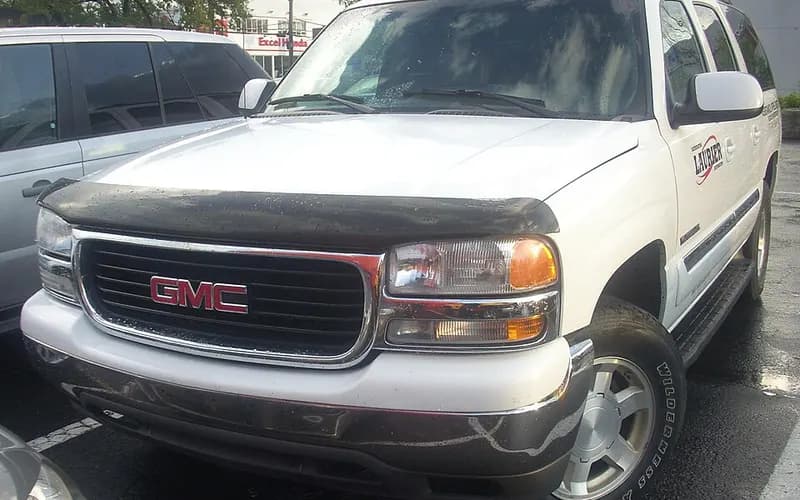
OtherModel years 2006–2006ManufacturerGovernment
Tire and loading information label lists inaccurate vehicle capacity weight (FMVSS 110) - recall 05V-552
Certain trucks and sport utility vehicles; the NHTSA record lists GMC Yukon and Yukon XL 2006. Model years come from the NHTSA record's product list held in the database, not from the recall text.
FaultCrate・Tire and loading information label lists inaccurate vehicle capacity weight (FMVSS 110) - recall 05V-552
The vehicles were shipped with tire and loading information labels listing an inaccurate vehicle capacity weight.
The labels audited for the C/K full-size truck platform did not properly reflect the vehicle weight capacity with the manufacturing build variation (MBV) subtracted.
What to do
- The Tire and Loading Information Label is attached below the door lock post (striker) on the pillar.
- Owners are provided with corrected labels and installation instructions.
- At the customer's option a dealer can install the label.
- Dealers install a new partial label over the existing label; the new label contains only the corrected loading information.
- Make sure the current label and the surrounding area are clean and dry, using a non-oil based cleaner, preferably isopropyl alcohol.
- Align the new label over the matching text on the current label, apply it and smooth it from the center out.
If left
- A misprinted label could lead to improper loading or tire inflation, which could result in a tire failure and increase crash risk.→ improper loading or tire inflation; tire failure
Applies to
- Certain trucks and sport utility vehicles fail to conform to FMVSS No. 110, Tire Selection and Rims.
See the evidence (2 documents, 10 passages)
| Document | Publisher | Date |
|---|---|---|
| [1]Recall 05V552000: EQUIPMENT:OTHER:LABELS ↗ | GovernmentNHTSA | 2005-12-07 |
| [2]Recall 05V-552: documents filed with NHTSA ↗ | ManufacturerGeneral Motors (the documents of the recall as filed with NHTSA: defect notice, dealer bulletin) | — |
Applies toCertain trucks and sport utility vehicles fail to conform to FMVSS No. 110, Tire Selection and Rims.
CERTAIN TRUCKS AND SPORT UTILITY VEHICLES FAIL TO CONFORM TO THE REQUIREMENTS OF FEDERAL MOTOR VEHICLE SAFETY STANDARD NO. 110, "TIRE SELECTION AND RIMS."— [1]
Why it happensThe vehicles were shipped with tire and loading information labels listing an inaccurate vehicle capacity weight.
THESE VEHICLES WERE SHIPPED WITH TIRE AND LOADING INFORMATION LABELS LISTING AN INACCCURATE VEHICLE CAPACITY WEIGHT.— [1]
If leftA misprinted label could lead to improper loading or tire inflation, which could result in a tire failure and increase crash risk.
A MISPRINTED LABEL COULD LEAD TO IMPROPER VEHICLE LOADING SPECIFICATIONS OR TIRE INFLATION WHICH COULD RESULT IN A TIRE FAILURE, INCREASING THE RISK OF A CRASH.— [1]
RepairOwners are provided with corrected labels and installation instructions.
OWNERS WILL BE PROVIDED WITH CORRECTED LABELS AND INSTALLATION INSTRUCTIONS.— [1]
RepairAt the customer's option a dealer can install the label.
AT THE CUSTOMER'S OPTION, A DEALER CAN INSTALL THE LABEL FOR THEM.— [1]
Why it happensThe labels audited for the C/K full-size truck platform did not properly reflect the vehicle weight capacity with the manufacturing build variation (MBV) subtracted.
the Tire and Loading Information labels he had audited that day for the C/K full-size truck platform did not properly reflect the vehicle weight capacity with the manufacturing build variation (MBV) subtracted to compensate for as-built mass variation from the nominal target.— [2]
RepairDealers install a new partial label over the existing label; the new label contains only the corrected loading information.
Dealers are to install a new partial label over the existing label. This new label will contain only the corrected loading information.— [2]
How to confirmThe Tire and Loading Information Label is attached below the door lock post (striker) on the pillar.
Locate the Tire and Loading Information Label. The label is attached below the door lock post (striker) on the pillar and should look like the above illustration.— [2]
RepairMake sure the current label and the surrounding area are clean and dry, using a non-oil based cleaner, preferably isopropyl alcohol.
Ensure that the current label and surrounding area is clean and dry. Use a non-oil based cleaner, preferably isopropyl alcohol.— [2]
RepairAlign the new label over the matching text on the current label, apply it and smooth it from the center out.
Carefully align the new label (1) over the matching text on the current label. 6. Apply the label and smooth the label from the center out.— [2]
Put together by FaultCrate from public records and technical documents. The cause and the repair are for the workshop to decide with the vehicle in front of it. Counts are records, not failure rates.
List the records (1 that can be opened)
Records whose recall number, document number or text matches. Each line says why it matched.
- Tire and Loading Information Label Inaccuracy RecallRecall 2005-07-12・recall number matches