
Fuel systemModel years 2004–2006ManufacturerGovernment
Engine fuel rail pulse damper retainer clip may fracture (8.1L V8) - recall 06V-289 / Transport Canada 2006195
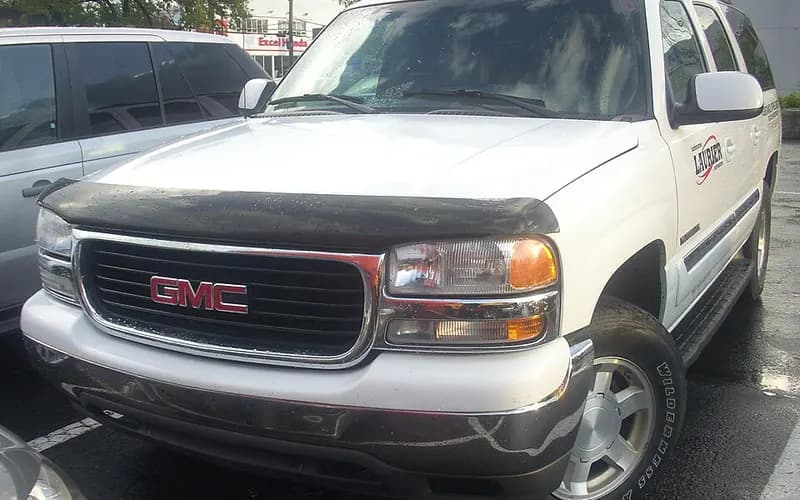
Certain trucks with an 8.1L V8 (RPO L8-VIN G) engine; the NHTSA record lists GMC Yukon XL 2004-2006 and the Transport Canada record Yukon XL 2006. Model years come from the NHTSA record's product list held in the database, not from the recall text.
FaultCrate・Engine fuel rail pulse damper retainer clip may fracture (8.1L V8) - recall 06V-289 / Transport Canada 2006195
On trucks with the 8.1L V8 (RPO L18), the engine fuel rail pulse damper retainer clip may fracture, leaving the damper inadequately retained. If the damper comes loose, a fuel leak may result, and it may cause a fire if an ignition source is present. In GM's defect report, there were 31 reports of failed clips on 2004 Workhorse Custom Chassis (WCC) engines and none involving engines in Chevrolet or GMC vehicles; in the investigation by WCC and GM Powertrain, analysis showed some clips were not properly heat treated and were more susceptible to fracture.
How to decide
Replace the retainer clip; confirm eligibility with GMVIS before starting
Watch out
Relieve fuel pressure and hold the dampener while changing the clip, or the O-ring may not seat or seal
Labor time
0.3 hours (the recall labor time for light duty trucks)
Parts
Clamp 12575017 (1 per vehicle)
Check2
- The recall involves certain 2004-06 Chevrolet Silverado, Suburban and Avalanche, GMC Sierra and Yukon XL, and 2006 Chevrolet Kodiak and GMC TopKick vehicles equipped with the 8.1L V8 (RPO L18 - VIN G).recall documents
- Confirm the vehicle's eligibility with GMVIS before starting the repair; not all vehicles within the VIN breakpoints in the bulletin may be involved.recall documents
Decide2
If the leak check after the clip change finds a leak, a dampener kit with a new O-ring must be installed; the same holds if the dampener has been removed from the fuel rail.recall documents
- The correction is replacing the engine fuel rail pulse damper retainer clip (recall bulletin 06080A).recall documents
Steps11Light Duty Trucks
Prepare
- 1Unsnap the intake manifold sight shield from the stud and remove it from the sight shield bracket.
- 2Disconnect the negative battery cable (the SI procedure). Loosen the fuel fill cap to relieve fuel tank vapor pressure.
Relieve the fuel pressure
- 3Remove the fuel rail pressure cap and connect the J 34730-1A to the fuel pressure valve, wrapping a shop towel around the fitting while connecting it to avoid spillage. Put the bleed hose of the J 34730-1A into an approved container.
- 4Open the valve on the J 34730-1A to bleed the system pressure. To help relieve the residual pressure in the fuel rail, push down on the fuel rail dampener; it should move inward approximately 2-3 mm (1/8 in) as the pressure releases.
- 5Once the system pressure is completely relieved, remove the J 34730-1A and take its bleed hose out of the container. Remove the shop towel from the fitting and discard it into an approved container, disconnect the J 34730-1A from the fuel pressure valve, and drain any fuel left in the gage into an approved container. Install the fuel rail pressure fitting cap; the fuel connections are now safe for servicing.
Replace the clip
- 6Clean any dirt from the fuel pressure dampener retainer (clip) and the surrounding area.
- 7Push down on the fuel dampener and remove the dampener clip, and discard it; push down on the dampener and install the new clip. Keep pushing the dampener down until steps 16 and 17 are completed, to avoid damaging the dampener O-ring.
Reassemble and check for leaks
- 8Install the fuel fill cap and connect the negative battery cable (the SI procedure).
- 9Leak check: turn the ignition ON with the engine OFF for 2 seconds, OFF for 10 seconds, then ON with the engine OFF, and inspect the fuel rail, the fuel rail dampener, and the fuel rail pressure cap and valve for fuel leaks.
- 10If a leak is present, a dampener kit with a new O-ring must be installed: relieve the system pressure as in steps 4-14, clean dirt and debris from the dampener cavity, and lubricate the new O-ring with clean engine oil before installing the dampener. When finished, repeat steps 20.1-20.4.
- 11Install the intake manifold sight shield to the bracket, snap it onto the stud, and close the hood.
A summary, grouped as the work goes, of the Light Duty Trucks (Silverado, Suburban, Avalanche, Sierra, Yukon XL) service procedure (steps 1-23) of GM recall bulletin 06080A (October 2006; NHTSA recall 06V-289). Kodiak and TopKick (Medium Duty Trucks) have a separate procedure in the same bulletin. 06080A revises the August 2006 bulletin 06080, adding caution statements and other changes. It covers vehicles with the 8.1L V8 (RPO L18) built within the VIN breakpoints listed, and not all vehicles within them may be involved (confirm with GMVIS first). The bulletin's Models name the Yukon XL, not the Yukon. What the steps that refer to SI (battery negative cable disconnection and connection) contain is not given here. The document covers model years from 2004. That this vehicle is among the Light Duty Trucks is from recall documents.Open Recall Bulletin 06080A
Cautions and risks6
- If the fuel pressure is not relieved as in step 8, or the dampener is not held in position while the clip is replaced, the dampener O-ring may not seat or seal properly; a damaged or improperly seated O-ring may result in a fuel leak, and a fuel leak in the presence of an ignition source may result in a fire.recall documents
- Do not remove the fuel dampener from the fuel rail. If it is removed, a fuel dampener kit with a new O-ring must be installed, and a fuel leak may result if the dampener and O-ring are not replaced. Before installing the dampener, clean dirt and debris from the dampener cavity and lubricate the new O-ring with clean engine oil.recall documents
- Relieve the fuel system pressure before servicing fuel system components, to reduce the risk of fire and personal injury. Even after that, a small amount of fuel may be released when servicing the fuel lines or connections: cover the regulator and the fuel line fittings with a shop towel before disconnecting, and place the towel in an approved container when the disconnection is complete.recall documents
- In GM's investigation, clips broke on two experimental vehicles at the GM proving ground when the technician tried to remove them.recall documents
- The service procedure in this recall is different from the one in the service manual (the labor time allowance has been revised to match it).recall documents
- Follow 06080A (October 2006): it revises the August 2006 bulletin 06080, adding caution statements and other minor changes, and copies of 06080 are to be discarded. GM says it is important that all technicians are aware of this revision and follow the step-by-step instructions without deviation.recall documents
What it needs
- Parts
- Clamp 12575017 (Clamp-Fuel Pulse Dpnr; 1 per vehicle).recall documents
- If a leak is present, or the dampener has been removed from the fuel rail: a dampener kit with a new O-ring.recall documents
- Materials
- Shop towels, and an approved container for the towels and the fuel.recall documents
- When a dampener is installed: clean engine oil for the new O-ring.recall documents
- Tools
- Fuel pressure gage J 34730-1A.recall documents
- Time
- The recall labor time is 0.3 hours for light duty trucks (0.5 hours for medium duty trucks).recall documents
- The owner letter gives the actual service correction time as approximately 35 minutes (the dealer is likely to need the vehicle longer because of scheduling).recall documents
- Cost seen
- Vehicles subject to the recall are serviced at no charge, regardless of mileage, age of vehicle or ownership.recall documents
Part numbers printed in the document
The numbers are as the document prints them. The name and the replacing number are what the pages of GMPartsGiant, a reseller of genuine parts and not GM, state. Aftermarket equivalents are not checked here (the links only search by number). Confirm the fit for the vehicle (VIN) before ordering.
Only what the documents and the pages read state; what is not listed is not thereby not needed.
If left
- If the damper comes loose, a fuel leak may result.→ fuel leak
- Fuel leakage in the presence of an ignition source could result in a fire.→ fire
In the records
- Engine Fuel Rail Pulse Damper Retainer Clip: replaced 1
Applies to
- The recall concerns trucks with an 8.1L V8 (RPO L8-VIN G) engine.
See the evidence (3 documents, 19 passages)
| Document | Publisher | Date |
|---|---|---|
| [1]Recall 06V289000: ENGINE AND ENGINE COOLING ↗ | GovernmentNHTSA | 2006-08-03 |
| [2]Recall 2006195: Fuel System (engine fuel rail pulse damper retainer clip) | GovernmentTransport Canada | 2006-08-04 |
| [3]Recall 06V-289: documents filed with NHTSA ↗ | ManufacturerGeneral Motors | — |
Applies toThe recall concerns trucks with an 8.1L V8 (RPO L8-VIN G) engine.
ON CERTAIN TRUCKS EQUIPPED WITH AN 8.1L V8 (RPO L8-VIN G) ENGINE— [1]
Why it happensThe engine fuel rail pulse damper retainer clip may fracture, leaving the damper inadequately retained.
THE ENGINE FUEL RAIL PULSE DAMPER RETAINER CLIP MAY FRACTURE RESULTING IN INADEQUATE RETENTION OF THE DAMPER.— [1]
If leftIf the damper comes loose, a fuel leak may result.
IF THE DAMPER COMES LOOSE, A FUEL LEAK MAY RESULT.— [1]
If leftFuel leakage in the presence of an ignition source could result in a fire.
FUEL LEAKAGE, IN THE PRESENCE OF AN IGNITION SOURCE, COULD RESULT IN A FIRE.— [1]
RepairDealers replace the engine fuel rail pulse damper retainer clip.
DEALERS WILL REPLACE THE ENGINE FUEL RAIL PULSE DAMPER RETAINER CLIP FREE OF CHARGE.— [1]
Why it happensOn certain vehicles, the engine fuel rail pulse damper retainer clip may fracture, resulting in inadequate retention of the damper.
On certain vehicles, the engine fuel rail pulse damper retainer clip may fracture, resulting in inadequate retention of the damper.— [2]
RepairDealers replace the engine fuel rail pulse damper retainer clip.
Correction: Dealers will replace the engine fuel rail pulse damper retainer clip.— [2]
Why it happensAnalysis showed some clips were not properly heat treated and were more susceptible to fracture.
Analysis showed some clips were not properly heat treated and were more susceptible to fracture.— [3]
RepairPart: 12575017 Clamp-Fuel Pulse Dpnr, quantity 1 per vehicle.
12575017 Clamp-Fuel Pulse Dpnr 1— [3]
CautionThe service procedure in this recall is different from the service procedure in the service manual.
The service procedure contained in this recall is different from the service procedure found in the appropriate service manual.— [3]
RepairConnect the J 34730-1A fuel pressure gage to the fuel pressure valve, wrapping a shop towel around the fitting while connecting it to avoid spillage.
Connect the J 34730-1A to the fuel pre ssure valve. Wrap a shop towel around the fitting while connecting the gage in order to avoid spillage.— [3]
RepairInstall the bleed hose on J 34730-1A into an approved container.
Install the bleed hose on J 34730-1A into an approved container.— [3]
RepairOpen the valve on the J 34730-1A to bleed the system pressure; to help relieve residual pressure in the fuel rail, push down on the fuel rail dampener, which should move inward approximately 2-3 mm (1/8 in) as the pressure releases.
Open the valve on the J 34730-1A in order to bleed the system pressure. To assist in relieving residual pressure in the fuel rail, push down on the fuel rail dampener. The dampener should move inward approximately 2-3 mm (1/8 in) as the pressure releases from the system.— [3]
CautionIf the fuel pressure is not relieved as instructed in step 8, or the dampener is not held in position while the clip is replaced, the dampener O-ring may not seat or seal properly, and a damaged or improperly seated O-ring may result in a fuel leak.
If the fuel pressure is not relieved as instructed in step 8, or the dampener is not held in position during the replacement of the dampener clip, the dampener O-ring may not seat or seal properly. A damaged or improperly seated O-ring may result in a fuel leak.— [3]
CautionDo not remove the fuel dampener from the fuel rail; if it is removed, a fuel dampener kit with a new O-ring must be installed.
Do not remove the fuel dampener from the fuel rail. If the dampener is removed, a fuel dampener kit with a new O-ring must be installed.— [3]
RepairPush down on the fuel dampener and remove the fuel pressure dampener clip; discard the old clip.
Push down on the fuel dampener and remove the fuel pressure dampener clip (1). Discard old dampener clip.— [3]
RepairPush down on the fuel dampener and install the new fuel pressure dampener clip.
Push down on the fuel dampener and install the new fuel pressure dampener clip (1).— [3]
How to confirmTo inspect for leaks, turn the ignition ON with the engine OFF for 2 seconds, turn it OFF for 10 seconds, turn it ON with the engine OFF, and inspect the fuel rail, fuel rail dampener, and fuel rail pressure cap and valve for fuel leaks.
Turn the ignition ON, with the engine OFF, for 2 seconds. 20.2 Turn the ignition OFF for 10 seconds. 20.3 Turn the ignition ON, with the engine OFF. 20.4 Inspect the fuel rail, fuel rail dampener, and fuel rail pressure cap and valve for fuel leaks.— [3]
RepairIf a leak is present, a dampener kit with a new O-ring must be installed.
If a leak is present, a dampener kit with new O-ring must be installed.— [3]
Put together by FaultCrate from public records and technical documents. The cause and the repair are for the workshop to decide with the vehicle in front of it. Counts are records, not failure rates.
List the records (2 that can be opened)
Records whose recall number, document number or text matches. Each line says why it matched.
- Engine fuel rail pulse damper retainer clip fracture recallRecall 2006-08-04・recall number matches
- Fuel Rail Pulse Damper Retainer Clip Fracture RecallRecall 2006-03-08・recall number matches