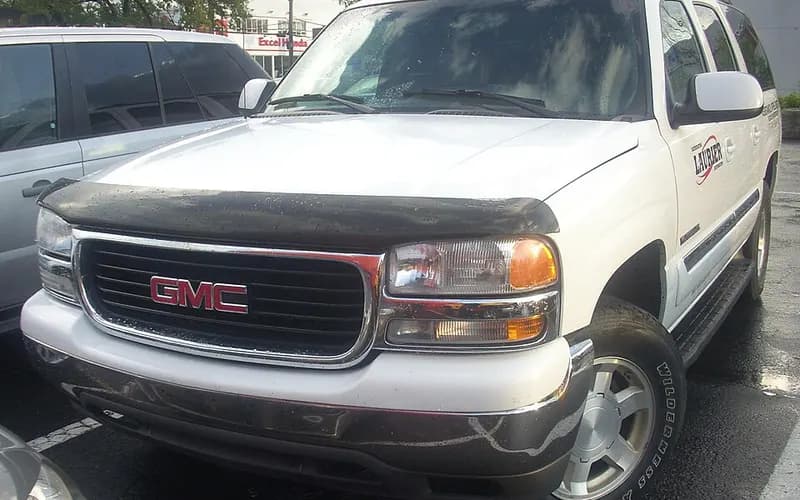
EngineModel years 2002–2018Manufacturer
Single-cylinder misfire (P0300-P0308) and/or chirp, squeak or tick at camshaft speed: worn cam lobe / lifter, valve or valve spring
GMC Yukon Models 2002 - 2018, V8 (PIP4138R); replaced by 19-NA-219 covering GM passenger cars and trucks with V6/V8 pushrod engines
FaultCrate・Single-cylinder misfire (P0300-P0308) and/or chirp, squeak or tick at camshaft speed: worn cam lobe / lifter, valve or valve spring
Customers may complain of an SES light, engine misfire and/or engine noise.
A verified noise is not eliminated by canceling fuel injectors and occurs at camshaft speed (half of crankshaft speed).
The noise may be described as a chirp, squeak, squeal or tick and may increase off idle.
If the SES light is on, there will be a P0300-P0308 DTC with misfires counting on a single cylinder, which may or may not be felt.
Possible causes include a worn camshaft lobe and/or lifter roller.
A worn cam lobe on this engine family generally creates a consistent chirp, squeak, squeal or tick at camshaft speed and/or a misfire with a P0300-P0308 DTC.
What to do
- If pressing on the valve side of the rocker changes the noise, a lifter and/or cam lobe concern on that cylinder is most likely.
- The misfiring/ticking cylinder should have less cam lobe lift than comparison cylinders if a worn lifter roller and/or cam lobe is the cause.
- During the noise, press with a wooden hammer handle on the rocker arms at the valve side, push rod side, and side of the rocker to find which one is making noise.
- Measure the cam lobe lift at the push rod side of the rocker arm.
- A good indicator of a sticking valve is engine misfires that continue to count on an aggressive deceleration with engine braking.
- Release the air pressure from the cylinder and work the valve up and down in the guide while turning it 360 degrees; if any binding is felt, a stem to guide clearance concern exists.
- Typically, the Cylinder Leakage Test outlined in SI should isolate valve leakage.
- For a suspected sticking valve, snap the valve onto its seat and confirm it comes off easily; if force is needed to tap it off the seat, excessive carbon build up exists, which may be repaired by decarboning the engine.
- A broken valve spring may stay stacked together and be hard to see, so lightly push on different places on the springs with a small hammer handle.
- If those tests do not isolate the cause, visually inspect the lifter rollers and cam lobes for flat spots, pits, grooves, scoring, gouging, flaking or rusting.
- A bore scope or pen light may help when inspecting the cam lobes through the lifter bores.
- If a worn camshaft lobe or lifter roller is found, follow SI procedures to replace the camshaft and all lifters.
- Also replace the plastic lifter guide for the lifter that had the damaged cam lobe and/or lifter roller.
- Refer to the latest version of PIP4753 for decarboning instructions.
- If a broken valve spring is found, replace the broken valve spring as necessary.
Caution
- A damaged cam lobe is easy to overlook when inspecting through the lifter bores; unworn lifter rollers do not mean the cam lobes are okay.
- If an AFM lifter concern is suspected, refer to the latest version of PIP4568 for additional information.
Applies to
- The model list includes GMC Yukon Models 2002 - 2018 with V8 engines.
See the evidence (6 documents, 24 passages)
| Document | Publisher | Date |
|---|---|---|
| [1]PIP4138R: SES Light, Misfire, DTC P0300, And/or A Chirp, Squeak, Squeal, Or Tick Noise ↗ | ManufacturerGeneral Motors (published by NHTSA) | 2018-10-16 |
| [2]19-NA-219: Diagnostic Tip for Misfire, Chirp, Squeak, Squeal or Tick Noise, MIL Illuminated - DTC P0300-P0308 Set ↗ | ManufacturerGeneral Motors (published by NHTSA) | 2023-04-24 |
| [3]PIP4138R SES Light, Misfire, DTC P0300, And/or A Chirp, Squeak, Squeal, Or Tick Noise - Potential ↗ | ManufacturerGeneral Motors | — |
| [4]PIP4138Q SES Light, Misfire DTC P0300 And/Or A Chirp, Squeak, Squeal Or Tick Noise - Potential Valvetrain Concern ↗ | ManufacturerGeneral Motors | — |
| [5]PIP4138M SES Light, Misfire, DTC P0300, and/or a Chirp, Squeak, Squeal, or Tick Noise - Potential Valvetrain Concern ↗ | ManufacturerGeneral Motors | — |
| [6]PIP4138N SES Light, Misfire, DTC P0300, And/or A Chirp, Squeak, Squeal, Or Tick Noise - Potential Valvetrain Concern ↗ | ManufacturerGeneral Motors | — |
Applies toThe model list includes GMC Yukon Models 2002 - 2018 with V8 engines.
GMC Yukon Models 2002 - 2018 All All V8 ALL— [1] Models
First signsCustomers may complain of an SES light, engine misfire and/or engine noise.
Some customers may complain of a SES light, engine misfire, and/or engine noise.— [1] Condition
First signsA verified noise is not eliminated by canceling fuel injectors and occurs at camshaft speed (half of crankshaft speed).
If a noise is verified, it will not be eliminated by canceling fuel injectors and the noise will occur at camshaft speed (half of crankshaft speed).— [2] Information
First signsThe noise may be described as a chirp, squeak, squeal or tick and may increase off idle.
The noise may be described as a chirp, squeak, squeal or tick noise and may increase off of idle.— [2] Information
Why it happensPossible causes include a worn camshaft lobe and/or lifter roller.
Worn camshaft lobe and/or lifter roller— [2] Recommendation
Why it happensA worn cam lobe on this engine family generally creates a consistent chirp, squeak, squeal or tick at camshaft speed and/or a misfire with a P0300-P0308 DTC.
Generally, a worn cam lobe on this engine family will create a consistent chirp, squeak, squeal or tick noise at camshaft speed and/or a misfire with a P0300-P0308 DTC.— [2] Recommendation 1
How to confirmIf pressing on the valve side of the rocker changes the noise, a lifter and/or cam lobe concern on that cylinder is most likely.
If the noise is changed by applying pressure to the valve side of the rocker, this is most likely the result of a lifter and/or cam lobe concern on that cylinder.— [2] Recommendation 1
How to confirmThe misfiring/ticking cylinder should have less cam lobe lift than comparison cylinders if a worn lifter roller and/or cam lobe is the cause.
The misfiring/ticking cylinder should obviously have less lift than the comparison cylinders if this is the result of a worn lifter roller and/or cam lobe.— [2] Recommendation 1
CautionA damaged cam lobe is easy to overlook when inspecting through the lifter bores; unworn lifter rollers do not mean the cam lobes are okay.
It is very easy to overlook a damaged cam lobe when inspecting them through the lifter bores and just because the lifter rollers are not worn, does not mean that the related cam lobes are okay.— [2] Recommendation 1
First signsIf the SES light is on, there will be a P0300-P0308 DTC with misfires counting on a single cylinder, which may or may not be felt.
If the SES light is on, the technician will find a P0300-P0308 DTC with misfires counting on a single cylinder that may or may not be felt.— [3]
How to confirmDuring the noise, press with a wooden hammer handle on the rocker arms at the valve side, push rod side, and side of the rocker to find which one is making noise.
Use a wooden hammer handle to apply pressure to the following locations of the rocker arms during the noise to determine which one is making noise: valve side, push rod side, and side of the rocker.— [3]
How to confirmMeasure the cam lobe lift at the push rod side of the rocker arm.
Measure the cam lobe lift at the push rod side of the rocker arm.— [3]
How to confirmA good indicator of a sticking valve is engine misfires that continue to count on an aggressive deceleration with engine braking.
A good indicator of a sticking valve is if engine misfires continue to count on an aggressive deceleration with engine braking.— [3]
How to confirmRelease the air pressure from the cylinder and work the valve up and down in the guide while turning it 360 degrees; if any binding is felt, a stem to guide clearance concern exists.
Release the air pressure from the cylinder and work the valve up and down in the guide while turning the valve 360 degrees. If any binding is felt, a stem to guide clearance concern exists and should be repaired by following SI procedures.— [3]
How to confirmTypically, the Cylinder Leakage Test outlined in SI should isolate valve leakage.
Typically, the Cylinder Leakage Test outlined in SI should isolate valve leakage— [3]
How to confirmFor a suspected sticking valve, snap the valve onto its seat and confirm it comes off easily; if force is needed to tap it off the seat, excessive carbon build up exists, which may be repaired by decarboning the engine.
If okay, rotate and snap the valve onto the valve seat to make sure that it easily comes off of the seat again. If you have to use force to tap the valve off of the seat, excessive carbon build up exists, which may be repaired by decarboning the engine.— [4]
How to confirmA broken valve spring may stay stacked together and be hard to see, so lightly push on different places on the springs with a small hammer handle.
Sometimes, the two broken pieces of the spring will remain stacked together so it may be hard to detect when visually inspecting them. As a result, it may help to lightly push on different places on the springs with a small hammer handle.— [4]
How to confirmIf those tests do not isolate the cause, visually inspect the lifter rollers and cam lobes for flat spots, pits, grooves, scoring, gouging, flaking or rusting.
If the tests above do not isolate the cause of this concern, it may be necessary to visually inspect the lifter rollers and cam lobes for obvious damage, such as flat spots, pits, grooves, scoring, gouging, flaking, rusting, etc...— [5]
How to confirmA bore scope or pen light may help when inspecting the cam lobes through the lifter bores.
It may help to use a bore scope or pen light when inspecting the cam lobes through the lifter bores.— [6]
RepairIf a worn camshaft lobe or lifter roller is found, follow SI procedures to replace the camshaft and all lifters.
Follow SI procedures to replace the camshaft and all lifters if a worn camshaft lobe or lifter roller is found.— [3]
RepairAlso replace the plastic lifter guide for the lifter that had the damaged cam lobe and/or lifter roller.
Also replace the plastic lifter guide for the lifter that had the damaged cam lobe and/or lifter roller— [3]
RepairRefer to the latest version of PIP4753 for decarboning instructions.
Refer to the latest version of PIP4753 for decarboning instructions.— [3]
RepairIf a broken valve spring is found, replace the broken valve spring as necessary.
If a broken valve spring is found, replace the broken valve spring as necessary.— [3]
CautionIf an AFM lifter concern is suspected, refer to the latest version of PIP4568 for additional information.
If either of these AFM lifter concerns is suspected, please refer to the latest version of PIP4568 for additional information.— [3]
Put together by FaultCrate from public records and technical documents. The cause and the repair are for the workshop to decide with the vehicle in front of it. Counts are records, not failure rates.
List the records (5 that can be opened)
Records whose recall number, document number or text matches. Each line says why it matched.
- Diagnostic tip: valve, lifter or camshaft issueManufacturer communication 2023-05-06・document number matches
- Engine Misfire and Service Engine Soon Lamp InformationManufacturer communication 2017-08-15・text contains "camshaft lobe"
- Service Engine Soon Lamp, Misfire, and Engine Noise InformationManufacturer communication 2017-08-15・text contains "camshaft lobe"
- Service Engine Soon Lamp, Misfire, and Engine Noise InformationManufacturer communication 2017-08-15・text contains "camshaft lobe"
- Service Engine Soon Lamp and Engine Misfire InformationManufacturer communication 2017-08-15・text contains "camshaft lobe"