Airbags and seat beltsModel years 2003–2005ManufacturerGovernment
2nd row center seat belt routing (lap belt fit) - recall 05V-163
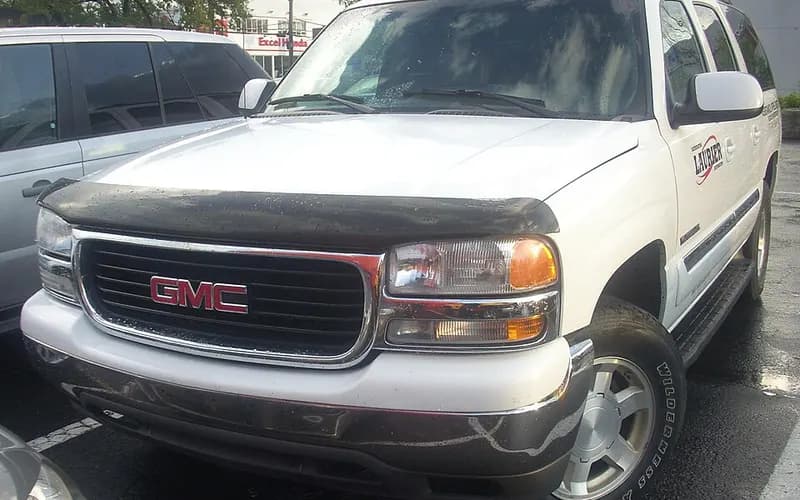
Certain crew cab pickup trucks and sport utility vehicles; the NHTSA record lists GMC Yukon 2003-2005. Model years come from the NHTSA record's product list held in the database, not from the recall text. The remedy differs by document: GM's notice (NHTSA's summary) cuts the loop open and secures it with a retainer; the dealer bulletin takes the belt out of the loop and stitches the loop closed. GM's notice and the dealer bulletin also name the Yukon XL (2003-2005).
FaultCrate・2nd row center seat belt routing (lap belt fit) - recall 05V-163
The 2nd row center seat belt routing may make it difficult to position the lap portion low around the hips, especially for smaller occupants.
The 3-point belt for this seating position was designed and validated for the 2003 model year GMT800 utilities and crew cab pick-ups without a loop on the seat around the lap belt webbing.
What to do
- In NHTSA's summary (from GM's notice), dealers cut open the guide loop, remove a portion of it, and fold over and secure the remaining two sides with a retainer.
- In GM's dealer bulletin, the correction: dealers eliminate the seat loop by removing the safety belt from the loop and stitching the loop closed.
- In GM's dealer bulletin: remove the nut retaining the rear center seat's lower seat belt anchor.
- In GM's dealer bulletin: remove the belt from the seat loop on the front of the seat back cushion.
- In GM's dealer bulletin: route the belt outside the seat loop and install it on the lower anchor stud, making sure the belt is not twisted.
- In GM's dealer bulletin: install the retaining nut to the anchor stud and tighten it to 53 N·m (39 lb ft).
- In GM's dealer bulletin: sew the retaining loop closed in the center with upholstery thread and needle (size 16 recommended), using a minimum of four complete loops of thread.
If left
- A lap belt that is not low and snug on the hips can ride up on the abdomen and expose the occupant to more risk of abdominal and internal organ injury.→ greater risk of abdominal and internal organ injury
Caution
- Appropriate use of a child seat or booster seat, as recommended for small children, improves the fit for that group.
See the evidence (2 documents, 11 passages)
| Document | Publisher | Date |
|---|---|---|
| [1]Recall 05V163000: SEAT BELTS:REAR/OTHER ↗ | GovernmentNHTSA | 2005-04-22 |
| [2]Recall 05V-163: documents filed with NHTSA ↗ | ManufacturerGeneral Motors (the documents of the recall as filed with NHTSA: defect notice, dealer bulletin) | — |
Why it happensThe 2nd row center seat belt routing may make it difficult to position the lap portion low around the hips, especially for smaller occupants.
ON CERTAIN CREW CAB PICKUP TRUCKS AND SPORT UTILITY VEHICLES, THE 2ND ROW CENTER OCCUPANT SEAT BELT ROUTING MAY MAKE IT DIFFICULT TO POSITION THE LAP PORTION OF THE SAFETY BELT LOW AROUND THE HIPS OF OCCUPANTS, ESPECIALLY SMALLER OCCUPANTS, SEATED IN THIS POSITION.— [1]
CautionAppropriate use of a child seat or booster seat, as recommended for small children, improves the fit for that group.
APPROPRIATE USE OF A CHILD SEAT OR BOOSTER SEAT, AS RECOMMENDED FOR SMALL CHILDREN, DOES IMPROVE THE FIT CONDITION FOR THIS USER GROUP.— [1]
If leftA lap belt that is not low and snug on the hips can ride up on the abdomen and expose the occupant to more risk of abdominal and internal organ injury.
A LAP PORTION OF THE SEAT BELT ROUTING THAT IS NOT LOW AND SNUG ON THE HIPS CAN ALLOW THE LAP BELT TO RIDE UP ON AN OCCUPANT'S ABDOMEN INSTEAD OF FITTING LOW AROUND THEIR HIPBONES, AND THEREFORE, CAN EXPOSE THEM TO MORE RISK OF ABDOMINAL AND INTERNAL ORGAN INJURY.— [1]
RepairIn NHTSA's summary (from GM's notice), dealers cut open the guide loop, remove a portion of it, and fold over and secure the remaining two sides with a retainer.
DEALERS WILL CUT OPEN THE GUIDE LOOP, REMOVE A PORTION OF THE LOOP, AND THEN THE REMAINING TWO SIDES SHOULD BE FOLDED OVER AND SECURED WITH A RETAINER FREE OF CHARGE.— [1]
Why it happensThe 3-point belt for this seating position was designed and validated for the 2003 model year GMT800 utilities and crew cab pick-ups without a loop on the seat around the lap belt webbing.
For the 2003 model year, a 3-point (lap and shoulder) seat belt configuration in the 2nd row center seating position was designed and validated for the GMT800 utilities and crew cab pick-ups. This system, as developed, did not include a loop on the seat surrounding the lap seat belt webbing.— [2]
RepairIn GM's dealer bulletin, the correction: dealers eliminate the seat loop by removing the safety belt from the loop and stitching the loop closed.
Dealers are to eliminate the seat loop by removing the safety belt from the loop and stitching the loop closed.— [2]
RepairIn GM's dealer bulletin: remove the nut retaining the rear center seat's lower seat belt anchor.
Remove the nut (1) retaining the rear center seat's lower seat belt anchor (seat back shown in the up position).— [2]
RepairIn GM's dealer bulletin: remove the belt from the seat loop on the front of the seat back cushion.
Remove the belt from the seat loop on the front of the seat back cushion.— [2]
RepairIn GM's dealer bulletin: route the belt outside the seat loop and install it on the lower anchor stud, making sure the belt is not twisted.
Route the belt outside of the seat loop and install it on the lower anchor stud. Be sure that the belt is not twisted.— [2]
RepairIn GM's dealer bulletin: install the retaining nut to the anchor stud and tighten it to 53 N·m (39 lb ft).
Install the retaining nut to the anchor stud. Tighten Tighten the retaining nut to 53 N·m (39 lb ft).— [2]
RepairIn GM's dealer bulletin: sew the retaining loop closed in the center with upholstery thread and needle (size 16 recommended), using a minimum of four complete loops of thread.
Using an appropriate color of locally obtained upholstery thread and needle (size 16 recommended), sew the retaining loop closed in the center. Use a minimum of four complete loops of thread.— [2]
Put together by FaultCrate from public records and technical documents. The cause and the repair are for the workshop to decide with the vehicle in front of it. Counts are records, not failure rates.
Records under this issue 0
No record matches