
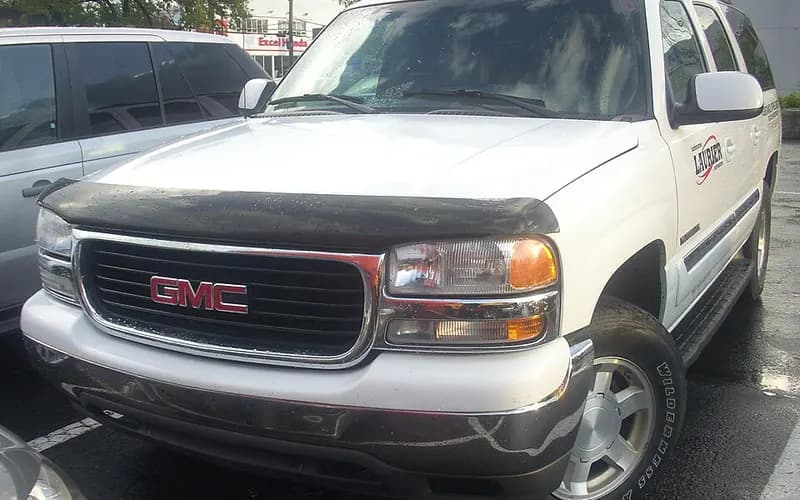
← Look into the faults of the GMC Yukon XL
Warning display
Low fuel warning: possible causes and documented repairs — 2000–2006 GMC Yukon XL
Of the records of the 2000–2006 GMC Yukon XL, 4 state “Low fuel warning” (Owner complaint: 2, Manufacturer communication: 2). The technical documents say how to deal with 2 of its possible causes. They are listed by the number of matching records, most first.
Narrow it by model year, engine and more
Causes the technical documents say how to deal with (2)
Fuel gauge reads low or drops to empty in Park / Neutral (normal characteristic)
1 matching record
The fuel gauge may be inaccurate or drop to empty (E) with the low fuel light on; further analysis may reveal it is most apparent at or below the quarter tank mark. On an automatic transmission no buffering takes place in park or neutral, which GM calls a normal characteristic needing no repairs.
How to tell
- Low fuel warning
What to do
- Try to duplicate it by driving a short distance in reverse and stopping, shifting to park or neutral and then to drive.
- Note how the vehicle is being parked (on an incline, front of the vehicle up hill or down hill).
Fuel module reservoir assembly: fuel pump wire connectors may overheat - recall 05V-155
1 matching record
Inside the fuel tank, at the fuel pump wiring pass-through connector on top of the module reservoir assembly (MRA), fretting corrosion from vibration inside the tank raises the resistance, and when enough heat is conducted through the wire the insulation and the connector may melt. Overheated wires may become exposed: an ignition circuit wire shorting to ground blows the fuel pump fuse (engine stall or no-start), and an ignition circuit or ground wire shorting to the fuel level sender card wires may make the fuel level readings inaccurate; a hole in the connector may let fuel vapor, and in some cases liquid fuel, leak out of the tank; if enough fuel leaked and an ignition source were present, a vehicle fire could occur.
How to tell
What to do
- With the key in OFF or LOCK and all electrical loads off (unless instructed otherwise), disconnect the negative battery cable. Remove and discard the "ECM B" fuse.
- Loosen the fuel filler cap to relieve the tank vapor pressure. Connect the J 34730-1A fuel pressure gauge to the fuel pressure valve (wrap a shop towel around the fitting), put the gauge's bleed hose into an approved container and open the valve to bleed the system pressure. Drain any fuel left in the gauge into an approved container.
- Raise the vehicle (by Lifting and Jacking the Vehicle in SI if necessary).
- Loosen the fuel fill hose clamp and disconnect the hose from the fill pipe, and likewise the vent hose from the vent pipe. Drain as much fuel as possible through the fill pipe with a hand or air operated pump.
8 more steps ·All steps, part numbers and sources (4 sources) →
Related symptoms, trouble codes and warning displays
What the technical documents state together with the faults above.
- Warning display
- Check engine / Service Engine Soon
Put together by FaultCrate from public records and technical documents. The cause and the repair are for the workshop to decide with the vehicle in front of it. Counts are records, not failure rates.