
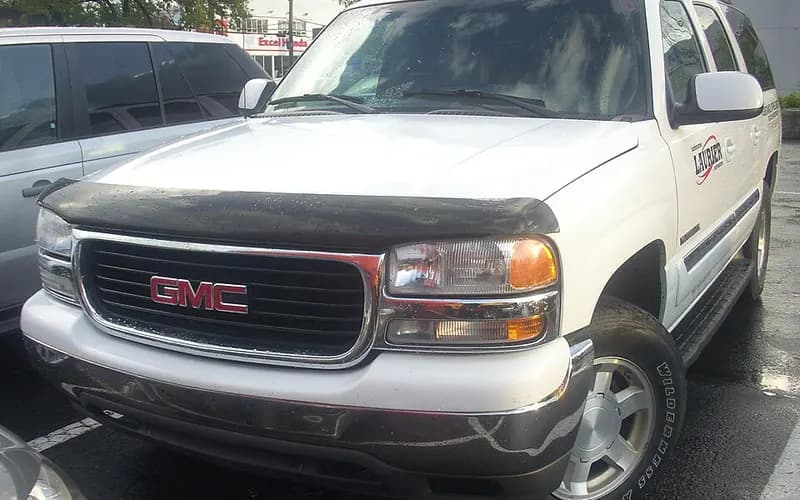
← Look into the faults of the GMC Yukon XL
Trouble code
P0300: possible causes and documented repairs — 2000–2006 GMC Yukon XL
Of the records of the 2000–2006 GMC Yukon XL, 35 state trouble code P0300 (Owner complaint: 1, Manufacturer communication: 34). The technical documents say how to deal with 4 of its possible causes. They are listed by the number of matching records, most first.
Narrow it by model year, engine and more
Causes the technical documents say how to deal with (4)
Intake manifold gasket leak (cold idle misfire, lean codes)
10 matching records
On the 5.3L Vortec with its plastic intake manifold, leaks between the manifold and the gaskets, or between the gaskets and the cylinder heads, have been a consistent problem; leaks typically occur when the engine is cold and may subside as it warms (MOTOR). GM's PIP3232C, as MOTOR reports it, says the intake gasket seals may be leaking around the intake ports, causing the lean condition, and describes a cold engine idle misfire with DTC P0171, P0174 or P0300.
How to tell
What to do
- The seals may leak around the bottom side of the port, which makes the vacuum leak hard to detect.
- Lower-than-normal MAF readings may be seen if the intake seals are leaking.
- An intake manifold with warpage in excess of 3mm (.118 in.) over a 200mm (7.87-in.) area must be replaced.
- Measure the intake manifold for warpage across two runner ports only.
5 more steps ·All steps, part numbers and sources (3 sources) →
Single-cylinder misfire (P0300-P0308) and/or chirp, squeak or tick at camshaft speed: worn cam lobe / lifter, valve or valve spring
5 matching records
On GM's V6/V8 pushrod engines (the bulletin's "this engine family"), a worn cam lobe generally creates a consistent chirp, squeak, squeal or tick noise at camshaft speed and/or a misfire with a P0300-P0308 DTC. The misfire may or may not be felt, and the cause may not be isolated after following SI diagnosis (GM).
How to tell
What to do
- During the noise, press with a wooden hammer handle on the rocker arms at the valve side, the push rod side and the side of the rocker to find which one is making the noise. If pressing on the valve side changes the noise, a lifter and/or cam lobe concern on that cylinder is most likely. Sometimes this works and sometimes it does not; it seems to depend on the amount of cam lobe wear.
- Disconnect the coils and injectors on one bank, run the engine with that valve cover removed, back off the related rocker arm a couple of turns and listen for a change in the noise.
- If necessary, both rockers and push rods can be removed one cylinder at a time with that cylinder's coil and injectors disconnected.
- If the noise is eliminated and no problem is found with the valve spring, push rod or rocker arm, a worn lifter roller and/or cam lobe is most likely.
8 more steps ·All steps, part numbers and sources (6 sources) →
P0300 after engine repairs: injector connectors crossed (cylinders 5-7 / 6-8)
1 matching record
After engine repairs, injector connectors crossed between cylinders 5-7 and 6-8 can cause an engine misfire, and DTC P0300 sets. The misfire may not be detected and may happen during deceleration.
How to tell
What to do
- If you have determined crossed injector connectors may be a possible cause, validate the injector connector routing with the applicable SI document.
- Correct the injector connector routing and evaluate for the concern.
Engine Valve: clogged or contaminated
1 matching record
Related symptoms, trouble codes and warning displays
What the technical documents state together with the faults above.
- Symptom
- NoiseWarning light
- Warning display
- Check engine / Service Engine Soon
Put together by FaultCrate from public records and technical documents. The cause and the repair are for the workshop to decide with the vehicle in front of it. Counts are records, not failure rates.