
EngineModel years 2001–2006Manufacturer
Castech cylinder head porosity crack (gradual coolant loss)
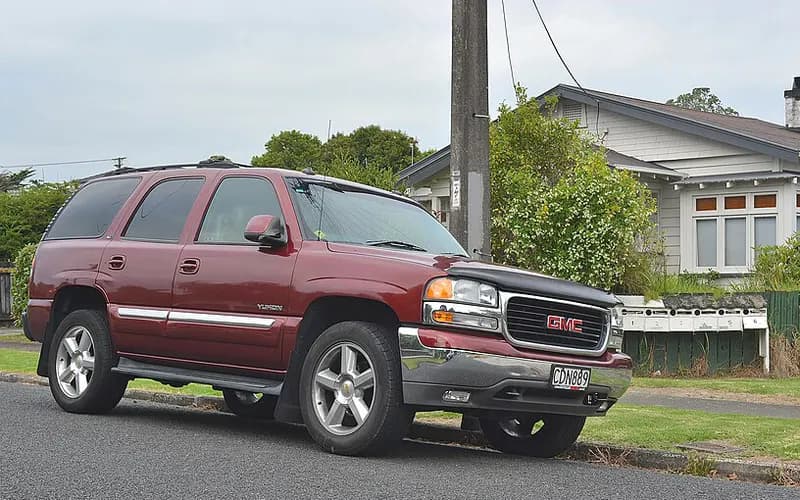
2001-2006 GMC Envoy, Jimmy, Sierra, Yukon Models with 4.8L, 5.3L, or 5.7L Vortec Gen III / Gen IV V8 (RPOs LS1, LR4, LM7, LH6, L33, L59)
FaultCrate・Castech cylinder head porosity crack (gradual coolant loss)
Some vehicles may lose coolant gradually over time with no evidence of a leak found. A very low percentage of cylinder heads with an embossed Castech logo may develop a porosity crack in a very specific area, where coolant may leak.
How to decide
Castech head with coolant witness marks around the oil drain holes: replace the entire cylinder head assembly
Watch out
Not a Castech casting, or no evidence found: follow the normal diagnostic procedures in SI
Parts
The entire cylinder head assembly where coolant witness marks are found
Check5
- The TSB covers 2001-2006 Cadillac Escalade Models, Chevrolet Avalanche, Silverado, Suburban, Tahoe and others, and GMC Sierra, Yukon Models and others, with the engines below.GM
- The engines this TSB covers: the 4.8L, 5.3L or 5.7L Vortec Gen III / Gen IV V8 (VINs G, V, T, M, B, Z; RPOs LS1, LR4, LM7, LH6, L33, L59).GM
- First, check whether the head is a Castech casting. The Castech logo is on top of the intake port, under the rocker arm support rail, in the spring deck cavity (the TSB shows where, and a close-up).GM
- On a Castech casting, inspect around the five oil drain holes for witness marks of coolant seeping over time. The crack can be at any of the five oil drains, and shows as a clean or shiny area on an otherwise stained surface.GM
- Pressurizing the cooling system at this point may reveal coolant, air, or both weeping in that area.GM
Decide2
If a Castech-cast head shows coolant witness marks around the oil drain holes, replace the entire cylinder head assembly.GM
- If the heads are not Castech castings, or a Castech head shows no evidence of coolant loss on inspection, follow the normal diagnostic procedures in SI (GM's service information) to find the cause of the coolant loss.GM
Steps
None of the documents at hand gives the manufacturer's procedure.
Cautions and risks7
From the field
- A 2008 question on 2CarPros (2004 Tahoe) says a mechanic's cooling-system pressure test found no leak.2004 Chevrolet Tahoe・2CarPros
- On the same page another poster writes that the same symptom turned out to be a cracked head, and that the coolant loss stopped once the heads were replaced.2004 Chevrolet Tahoe・2CarPros
- That poster also writes that the engine has had a "skip" since the heads were replaced.2004 Chevrolet Tahoe・2CarPros
- Two 2009 questions on 2CarPros (a 2003 and a 2004 Silverado) both say there is no sign of an external leak and no coolant seen in the oil.2003 Chevrolet Silverado・2CarPros
- The answerer on the 2004 page writes that he has replaced many heads for this symptom, that the cracks are hard to see and that a pressure test is the only way to find the leak.2003 Chevrolet Silverado・2CarPros
- Neither page reports what was found on that truck.2003 Chevrolet Silverado・2CarPros
- A case where the head was not the cause: on Car Talk Community in 2018 (2000 Silverado 1500, 5.3L), the owner who had asked about a coolant leak of unknown origin later writes that the water pump failed and was replaced, and reports no further trouble after that.2000 Silverado 1500・Car Talk Community
What it needs
- Parts
- The entire cylinder head assembly (a Castech casting where coolant witness marks are found).GM
- Tools
- A means of pressurizing the cooling system (pressurizing it during the inspection may reveal coolant or air weeping at the crack area).GM
- For refilling a cooling system that has been drained: the GE-47716 Coolant Refill System (Vac-n-Fill), an essential tool shipped to dealers in November 2004. In many cases, simply pouring in fresh coolant leaves some trapped air; thermal-cycling the engine typically helps purge it, but on some engines there are remote pockets where air may be trapped. The tool removes all air from the cooling system.GM TechLink 2006-02, general guidance (an article that names no model)
Only what the documents and the pages read state; what is not listed is not thereby not needed.
In the records
- Engine: replaced 1(result not stated: 1)
- Oil Pump: replaced 1(says it came back: 1)
Applies to
- The bulletin covers 2001-2006 GMC Envoy, Jimmy, Sierra and Yukon models.
- It applies to the 4.8L, 5.3L or 5.7L Vortec Gen III / Gen IV V8.
See the evidence (2 documents, 11 passages)
| Document | Publisher | Date |
|---|---|---|
| [1]06-06-01-019C: Information on Gradual Coolant Loss Over Time with No Evidence of Leak Found ↗ | ManufacturerGeneral Motors | 2024-03-14 |
| [2]06-06-01-019C Information on Gradual Coolant Loss Over Time with No Evidence of Leak Found ↗ | ManufacturerGeneral Motors | — |
Applies toThe bulletin covers 2001-2006 GMC Envoy, Jimmy, Sierra and Yukon models.
2001-2006 GMC Envoy, Jimmy, Sierra, Yukon Models— [1] Models
Applies toIt applies to the 4.8L, 5.3L or 5.7L Vortec Gen III / Gen IV V8.
with 4.8L, 5.3L, or 5.7L VORTEC® GEN III, GEN IV V8 Engine— [1] Models
First signsSome vehicles may lose coolant gradually over time.
Some vehicles may experience a gradual coolant loss over time.— [1]
Why it happensA very low percentage of cylinder heads with an embossed Castech logo may develop a porosity crack in a very specific area.
A very low percentage of cylinder head(s) manufactured with an embossed Castech logo may develop a porosity crack in a very specific area.— [1]
How to confirmInspect the cylinder head to determine whether the casting was made by Castech.
Inspect the cylinder head assembly to determine if the casting was manufactured by Castech.— [1]
How to confirmOn a Castech casting, inspect around the five oil drain holes for witness marks of coolant seepage.
inspect the area around the five oil drain holes for witness marks indicating coolant seepage over time (2).— [1]
How to confirmThe crack can be at any of the five cylinder head oil drains and shows as a clean or shiny area on an otherwise stained surface.
The crack location can be found in any of the five-cylinder head(s) oil drains. This can be seen as a clean or shiny area, on an otherwise stained surface (1).— [1]
How to confirmPressurizing the cooling system may reveal coolant, air, or both weeping in that area.
Pressurizing the cooling system at this time may reveal coolant, air, or a combination, weeping in the described area.— [1]
RepairIf coolant witness marks are found, replace the entire cylinder head assembly.
If inspection reveals evidence of coolant witness marks (1), replace the entire cylinder head(s) assembly.— [1]
CautionIf the heads are not Castech castings, follow normal diagnostic procedures to find the cause of the coolant loss.
If the cylinder head(s) are Not a Castech casting, follow normal diagnostic procedures in SI to determine the cause of the coolant loss.— [1]
How to confirmCheck whether the head is a Castech casting by looking for the casting logo on top of the intake port, under the rocker arm support rail and in the spring deck cavity portion of the cylinder head.
This can be accomplished by inspecting for their casting logo located on top of the intake port, under the rocker arm support rail and in the spring deck cavity portion of the cylinder head.— [2]
Put together by FaultCrate from public records and technical documents. The cause and the repair are for the workshop to decide with the vehicle in front of it. Counts are records, not failure rates.
Records under this issue 5
Owner complaint 4Manufacturer communication 1
Look into the records of this issue (5)List the records (5 that can be opened)
Records whose recall number, document number or text matches. Each line says why it matched.
- Internal Coolant Leak from Cylinder Head LocationManufacturer communication 2024-03-19・document number matches
- Engine losing coolant with no apparent external leakageOwner complaint 2016-07-18・tied by reading the record: “COOLANT APPEARS TO BE LEAKING INTO THE ENGINE OIL, CAUSING IT TO SLUDGE, THEREBY CAUSING ENGINE FAILURE. GM IS AWARE OF AN ISSUE AND ISSUED TSB 06-06-01-019B FOR DEFECTIVE CYLINDER HEAD CASTING.”
- Coolant drain into engine block from faulty cylinder headOwner complaint 2015-01-03・text contains "CASTECH"
- 5.3L GM engine camshaft delamination and engine replacementOwner complaint 2013-09-13・text contains "CASTECH"
- Slug buildup, oil pressure loss, and coolant lossOwner complaint 2013-09-03・tied by reading the record: “I FOUND A ARTICLE ON THE INTERNET THAT A NUMBER OF GMC VEHICLES INCLUDING MINE WERE BUILT WITH DEFECTIVE CYLINDER HEADS DUE TO CRACKS OVER TIME WHICH ALLOWS COOLANT TO LEAK INTO ENGINE AND MIX WITH THE OIL WHICH BUILDS UP SLUG.”