
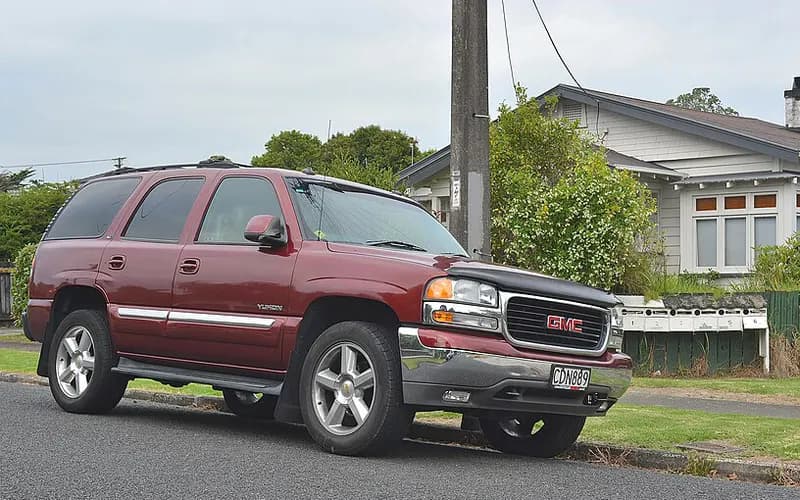
← Look into the faults of the GMC Yukon
Warning display
Brake warning / Service Brake System: possible causes and documented repairs — 2000–2006 GMC Yukon
Of the records of the 2000–2006 GMC Yukon, 7 state “Brake warning / Service Brake System” (Owner complaint: 5, Recall: 1, Manufacturer communication: 1). The technical documents say how to deal with 3 of its possible causes. They are listed by the number of matching records, most first.
Narrow it by model year, engine and more
Causes the technical documents say how to deal with (3)
Brake pipe (brake line) corrosion and rupture
3 matching records
Steel-copper brake pipes are vulnerable to corrosion when exposed to the environment, and a corroded pipe may rupture during a brake application, reducing braking. Of the circuit failures, the worst case is losing the front circuit with a light load, leaving only the rear brakes (NHTSA's tests).
How to tell
- Brake warning / Service Brake System
What to do
- Before disconnecting anything, identify which pipe goes to which port on the master cylinder, the BPMV and the combination valve (where equipped). Then disconnect the pipes from the master cylinder, the combination valve and the BPMV pre-charge pump (where equipped), and plug each port.
- Lower the spare, raise and support the vehicle, and remove the front and rear wheels.
- Apply penetrating lubricant to the bleeder screws of the front and rear calipers and to the fitting tube nuts at the front hoses, the BPMV and the rear hose(s).
- Remove the left and right front wheelhouse panels and the engine shield (if equipped).
8 more steps ·All steps, part numbers and sources (4 sources) →
Unwanted ABS activation at low speed (front wheel speed sensor mounting corrosion)
1 matching record
Corrosion may form between the front hub/bearing assembly and the wheel speed sensor; if the brakes are applied at more than 6 km/h (3.7 mph) but less than 16 km/h (10 mph), it may cause an unwanted ABS activation, and where stopping distance is limited a crash could occur. As GM explained it, the condition can occur if corrosion forms under the wheel speed sensor and moves the sensor away from the integral toothed ring.
What to do
- Raise the vehicle on a hoist and support it, and remove both front wheels.
- Put a large C-clamp over the top of the caliper housing against the back of the outboard pad, tighten it slowly until the pistons are pushed completely into their bores, and remove the clamp.
- Remove the two bolts holding the caliper mounting bracket to the knuckle, take the caliper and bracket off as an assembly and support it with heavy mechanic's wire or equivalent. The caliper need not come off the bracket; do not disconnect the flexible brake hose from the caliper.
- Mark the rotor's position on the bearing hub, remove the rotor retaining push nuts from the wheel studs (if equipped), and remove the rotor.
8 more steps ·All steps, part numbers and sources (4 sources) →
Front right-hand brake pipe contact with body cross sill - recall 00V-345
1 matching record
On some vehicles the clearance between the front right-hand brake pipe and the body cross sill could decrease over the vehicle's life until they touch. If the pipe is damaged, half of the brake system can lose fluid and pressure: the pedal is lower than normal and stopping distances longer.
How to tell
- Brake warning / Service Brake System
What to do
- Dealers inspect the front right-hand brake pipe for wear.
- A worn section is replaced with a redesigned pipe section; otherwise a spacer clip is installed.
Related symptoms, trouble codes and warning displays
What the technical documents state together with the faults above.
Put together by FaultCrate from public records and technical documents. The cause and the repair are for the workshop to decide with the vehicle in front of it. Counts are records, not failure rates.