
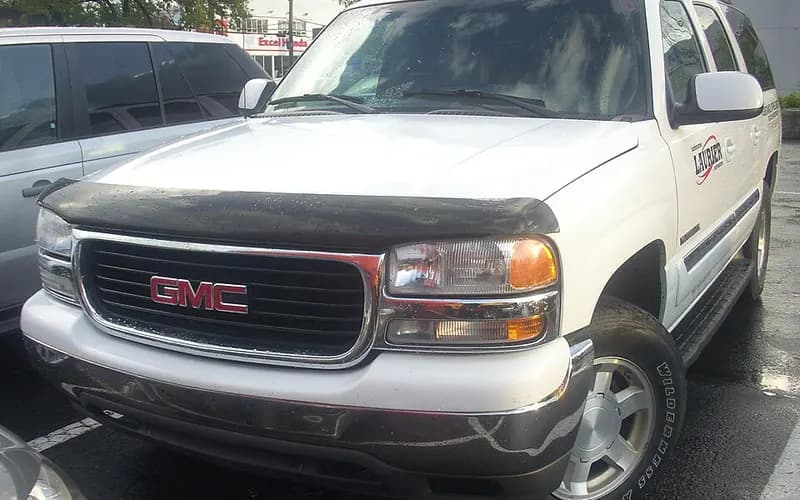
← Look into the faults of the GMC Yukon XL
Trouble code
P1516: possible causes and documented repairs — 2000–2006 GMC Yukon XL
Of the records of the 2000–2006 GMC Yukon XL, 6 state trouble code P1516 (Owner complaint: 1, Manufacturer communication: 5). The technical documents say how to deal with 3 of its possible causes. They are listed by the number of matching records, most first.
Narrow it by model year, engine and more
Causes the technical documents say how to deal with (3)
DTCs P2108, P1516 and U0107 (do not replace the TAC module)
2 matching records
On 2006 fullsize pickups and utilities and other models, TAC (throttle actuator control) module warranty increased in association with DTCs P2108, P1516 and U0107. In the "Fix It Right the First Time" table of TechLink, GM says not to replace the TAC module when these DTCs are present.
How to tell
What to do
- Perform the diagnostics for the DTCs, but delete the steps that involve replacing the TAC module.
Reduced Engine Power from throttle body connector crimp, broken wire or grounds
1 matching record
On vehicles with a 4.8, 5.3, 6.0 or 7.0 V-8 engine, a vehicle may come in for a reduced power message and DTCs P0120, P0220, P1516, P2101 or P2135. These Throttle Actuator Control (TAC) / throttle body type codes may be caused by a loose wiring crimp at the throttle body connector or a broken throttle body circuit (GM's PIP3089B).
How to tell
What to do
- First complete the current SI diagnostics for any symptoms or trouble codes found. If an intermittent T/P or TAC module type code is occurring, complete the three inspections below.
- Inspect all related throttle body terminals for a loose wiring crimp. The loose crimp may be difficult to find; the poor connection will be between the terminal and the copper strands of the wire. Wiggle test the individual throttle body circuits to see if the concern can be duplicated.
- Inspect the related circuits for broken wires inside the insulation. The outer insulation may look fine, but the internal copper strands may be partially broken. Breaks usually occur within 1 to 4 inches (= 25.4–101.6 mm) of the throttle body connector. Wiggle testing may also set a trouble code.
- On C/K trucks, complete the SI procedures for voltage drop on grounds G103 and G104; G103 or G104 may be loose or corroded.
Throttle body carbon build-up: idle surge, reduced engine power, throttle DTCs (high mileage)
No matching record (stated by the technical documents)
As carbon builds up in the throttle body of a high mileage vehicle, the ECM/PCM learns to compensate by increasing the throttle plate angle. If enough carbon builds up, an idle surge, deceleration surge, tip-in hesitation, reduced engine power mode and/or DTCs P0068, P0121, P1516, P2101, P2119 and/or P2176 may be experienced.
How to tell
What to do
- If SI diagnosis does not isolate the cause, inspect the throttle body bore and plate for obvious carbon build-up.
- If carbon is present, follow the Throttle Body Cleaning Procedure in SI to clean the throttle body.
- After ensuring the bore and plate are clean, perform an idle learn reset/reset idle learn with the Tech 2/GDS and re-evaluate the concern.
Related symptoms, trouble codes and warning displays
What the technical documents state together with the faults above.
- Warning display
- Check engine / Service Engine SoonReduced Engine Power
Put together by FaultCrate from public records and technical documents. The cause and the repair are for the workshop to decide with the vehicle in front of it. Counts are records, not failure rates.