
GMC Yukon 2000–2006
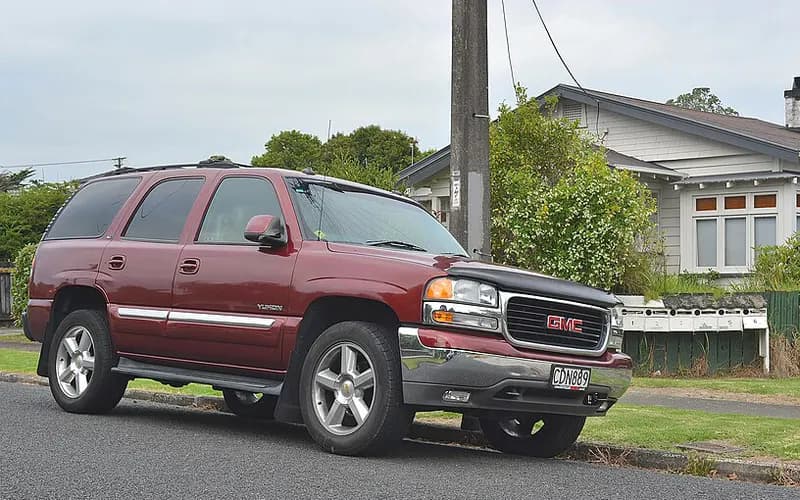
Common on this vehicle:Warning lightNoiseLeakMisfire or rough idleVibration or shudderAir conditioning or heaterReduced brakingCorrosion or rust
Record by record
72 records state a cause or a remedy. Each record is shown as short labels in the order fault → finding the cause → correction. Press a label to narrow to the records that state it.
Component named as the cause
Work done
How it is said to have ended
- says it did not fix it2
- result not stated4
A ribbon is as wide as the records that state both of its ends (only the commonest are drawn). A record that names several symptoms or components runs through each. Orange is records that say the fault came back or was not fixed. Results come from owners’ reports only; one that does not say is “result not stated”. None of this is a likelihood of a cause or a rate at which work succeeds.
Read the records one by one (29)
Known issuesSingle-cylinder misfire (P0300-P0308) and/or chirp, squeak or tick at camshaft speed: worn cam lobe / lifter, valve or valve spring2
Manufacturer communication2000–2006 GMC YUKON DENALI ・ 2017-08-15(2 earlier editions of this document folded here)
Engine Misfire and Service Engine Soon Lamp Information
1Fault
- With the SES light on, a P0300-P0308 DTC is found with misfires counting on a single cylinder, which may or may not be felt.
- The noise may be described as a chirp, squeak, squeal or tick and may increase off of idle.
2Finding the cause
- Valve Spring: broken
- Active Fuel Management Lifter: defective
- Valve: defective
- Camshaft Lobe: worn
- Lifter Roller: worn
Possible causes
- A worn cam lobe on this engine family generally makes a consistent chirp, squeak, squeal or tick at camshaft speed and/or a misfire with a P0300-P0308 DTC.
Steps to confirm (in the document’s order)
- Press on the rocker arms with a wooden hammer handle while the noise is present; if pressing the valve side of a rocker changes the noise, a lifter and/or cam lobe concern on that cylinder is most likely.
- Measure cam lobe lift at the push rod side of the rocker arm; it will differ from the SI specification but should be similar to the other rockers on the same bank.
- A bore scope or pen light may help when inspecting the cam lobes through the lifter bores.
- A good sign of a sticking valve is that misfires keep counting during an aggressive deceleration with engine braking.
- The Cylinder Leakage Test in SI should typically isolate valve leakage by showing excessive leakage past an intake or exhaust valve compared with the others.
3Correction
Repair
- If a worn cam lobe or lifter roller is found, replace the camshaft and all lifters per SI, plus the plastic lifter guide for the affected lifter (for the 2010 model year, all the plastic lifter guides).
- If force is needed to tap the valve off its seat, there is excessive carbon build up, which may be repaired by decarboning the engine.
Read the sentences of the record
From the manufacturer’s document
- Applies to:Applies to 1999-2013 GMC Savana, Sierra and Yukon (with a V8 engine per the model list) (note: the Yukon years run later than the years this service covers).
- Condition:With the SES light on, a P0300-P0308 DTC is found with misfires counting on a single cylinder, which may or may not be felt.
- Condition:The noise may be described as a chirp, squeak, squeal or tick and may increase off of idle.
- Cause:A worn cam lobe on this engine family generally makes a consistent chirp, squeak, squeal or tick at camshaft speed and/or a misfire with a P0300-P0308 DTC.
- Confirm:Press on the rocker arms with a wooden hammer handle while the noise is present; if pressing the valve side of a rocker changes the noise, a lifter and/or cam lobe concern on that cylinder is most likely.
- Confirm:Measure cam lobe lift at the push rod side of the rocker arm; it will differ from the SI specification but should be similar to the other rockers on the same bank.
- Confirm:A bore scope or pen light may help when inspecting the cam lobes through the lifter bores.
- Repair:If a worn cam lobe or lifter roller is found, replace the camshaft and all lifters per SI, plus the plastic lifter guide for the affected lifter (for the 2010 model year, all the plastic lifter guides).
- Confirm:A good sign of a sticking valve is that misfires keep counting during an aggressive deceleration with engine braking.
- Repair:If force is needed to tap the valve off its seat, there is excessive carbon build up, which may be repaired by decarboning the engine.
- Confirm:The Cylinder Leakage Test in SI should typically isolate valve leakage by showing excessive leakage past an intake or exhaust valve compared with the others.
- Confirm:The two pieces of a broken valve spring can stay stacked together and be hard to see, so lightly push on different places on the springs with a small hammer handle.
Open the manufacturer’s document (PDF) ↗ The points above were read from this document.
- Remedy
- This Preliminary Information communication provides information to the technician about vehicles that have a Service Engine Soon Malfunction Indicator Lamp on, engine misfire, and/or engine noise. Technician may find Diagnostic Trouble Codes P0300-P0308. If published Service Information diagnostics does not isolate the cause of this concern technician should check for a worn camshaft lobe and/or lifter roller, a sticking valve, valve leakage, a broken valve spring, and a collapsed active fuel management lifter.
Manufacturer communication2000–2006 GMC YUKON DENALI ・ 2017-08-15
Service Engine Soon Lamp and Engine Misfire Information
1Fault
2Finding the cause
3Correction
What the documents say to do
Single-cylinder misfire (P0300-P0308) and/or chirp, squeak or tick at camshaft speed: worn cam lobe / lifter, valve or valve springConfirm
- If pressing on the valve side of the rocker changes the noise, a lifter and/or cam lobe concern on that cylinder is most likely.
Repair
- If a worn camshaft lobe or lifter roller is found, follow SI procedures to replace the camshaft and all lifters.
- Also replace the plastic lifter guide for the lifter that had the damaged cam lobe and/or lifter roller.
Caution
- A damaged cam lobe is easy to overlook when inspecting through the lifter bores; unworn lifter rollers do not mean the cam lobes are okay.
Read the sentences of the record
Open the manufacturer’s document (PDF) ↗ What is shown here is NHTSA’s summary; the procedure is in the document itself.
- Remedy
- This Preliminary Information communication provides information to the technician about vehicles that have a Service Engine Soon Malfunction Indicator Lamp on, engine misfire, and/or engine noise. Technician may find Diagnostic Trouble Codes P0300-P0308. If published Service Information diagnostics does not isolate the cause of this concern technician should check for a worn camshaft lobe and/or lifter roller, a sticking valve, valve leakage, a broken valve spring, and a collapsed active fuel management lifter.
Known issues4L80-E / 4L85-E planetary gear whine in first and second gear1
Manufacturer communication2000–2006 GMC YUKON DENALI ・ 2017-08-15
Planetary Gear Whine Noise in First and Second Gear
1Fault
- The 4L80E/4L85E automatic transmission may have a planetary gear whine noise in first and second gear, typically louder in first gear than in second.
2Finding the cause
Steps to confirm (in the document’s order)
- If the noise is judged abnormal and the transmission was built after 9-01-03, perform the Rear Unit End Play Check (SI Document ID # 52027).
- The correct end play is between 0.127-0.508 mm (0.005-0.020 in).
3Correction
Repair
- If end play is out of specification, inspect and replace the output planetary gear set (661 - Output Carrier Assembly and 650 - Sun Gear) as necessary.
- Set the rear end play with the correct selective thrust washer (674), targeting between .010 and .015 in.
- If end play is within specification, replace the transmission assembly, referring to bulletin 02-07-30-029A before ordering it.
Caution
- This planetary gear whine can be characteristic of the 4L80E/4L85E; compare the vehicle with an identically built vehicle (same GVWR) before attempting any repairs.
Read the sentences of the record
From the manufacturer’s document
- Applies to:Applies to 1999-2007 GMC Sierra and Yukon XL (among other listed GM trucks and vans) with the 4L80E (RPO MT1) or 4L85E (RPO MN8) transmission (note: the Yukon XL range runs to 2007).
- Condition:The 4L80E/4L85E automatic transmission may have a planetary gear whine noise in first and second gear, typically louder in first gear than in second.
- Caution:This planetary gear whine can be characteristic of the 4L80E/4L85E; compare the vehicle with an identically built vehicle (same GVWR) before attempting any repairs.
- Confirm:If the noise is judged abnormal and the transmission was built after 9-01-03, perform the Rear Unit End Play Check (SI Document ID # 52027).
- Confirm:The correct end play is between 0.127-0.508 mm (0.005-0.020 in).
- Repair:If end play is out of specification, inspect and replace the output planetary gear set (661 - Output Carrier Assembly and 650 - Sun Gear) as necessary.
- Repair:Set the rear end play with the correct selective thrust washer (674), targeting between .010 and .015 in.
- Repair:If end play is within specification, replace the transmission assembly, referring to bulletin 02-07-30-029A before ordering it.
Open the manufacturer’s document (PDF) ↗ The points above were read from this document.
- Remedy
- This Preliminary Information communication provides information to the technician about vehicles that may have a planetary gear whine noise in first and second gear. Technician should compare the noise to a like vehicle. Technician will need to check the build date of the transmission, if it was built after 09/01/2003 and it is determined that a vehicle has an abnormal amount of noise, perform the rear unit end play check. Technician will replace the output planetary gear set if end play is out of specification. The transmission assembly will need to be replaced if the end play is with in specification.
Known issuesAftermarket part (not the vehicle as built): Federal-Mogul National / Carquest replacement wheel hub assembly retention nut - recall 07E-1061
Recall2000 GMC YUKON ・ —
Wheel Hub Assembly Bearing Nut Loosening Recall
1Fault
- The inboard retention nut that maintains the hub bearing assembly can loosen, resulting in an ABS light indication, noise, and/or wheel separation from the vehicle; wheel separation can result in a vehicle crash.
2Finding the cause
Steps to confirm (in the document’s order)
- On 2x4 vehicles, raise the vehicle on an approved hoist first; the hub assembly is good if a yellow, green or blue paint mark is seen on the grease cap on the inboard side of the steering knuckle.
- If the paint mark is not present, remove the wheel and the brake rotor and clean rust from the hub assembly face to check for the date code stamping.
- Defective hub assemblies can be identified by the country of origin on the package together with a recalled date code, by the date code on the package, or by the date code on the hub assembly.
- If a round yellow sticker is present on the box label, the part is good.
3Correction
Repair
- The hub assemblies were manufactured for aftermarket use; owners of these parts should have them removed and replaced as soon as possible.
- Federal-Mogul will replace the recalled hub assemblies free of charge.
Parts
- The recalled part numbers are 515020, 515021, 515025, 515053, 515054, 515059 and 515060.
Read the sentences of the record
From the manufacturer’s document
- Applies to:This is an equipment recall by Federal-Mogul of certain wheel hub assemblies sold as replacement parts only.
- Applies to:The recalled hub assemblies were packaged and sold between January 23, 2006 and December 20, 2007 under the National and CARQUEST Premium (BGS/Blue) brands, in 7 base part numbers.
- Parts:The recalled part numbers are 515020, 515021, 515025, 515053, 515054, 515059 and 515060.
- Applies to:The application lists include GMC 1500 Yukon (2WD) and GMC 1500 Yukon XL (2WD), 2001-2006.
- Applies to:ILJIN manufactured the recalled hub assemblies from December 27, 2005 to November 29, 2007.
- Condition:The inboard retention nut that maintains the hub bearing assembly can loosen, resulting in an ABS light indication, noise, and/or wheel separation from the vehicle; wheel separation can result in a vehicle crash.
- Confirm:On 2x4 vehicles, raise the vehicle on an approved hoist first; the hub assembly is good if a yellow, green or blue paint mark is seen on the grease cap on the inboard side of the steering knuckle.
- Confirm:If the paint mark is not present, remove the wheel and the brake rotor and clean rust from the hub assembly face to check for the date code stamping.
- Confirm:Defective hub assemblies can be identified by the country of origin on the package together with a recalled date code, by the date code on the package, or by the date code on the hub assembly.
- Confirm:If a round yellow sticker is present on the box label, the part is good.
- Repair:The hub assemblies were manufactured for aftermarket use; owners of these parts should have them removed and replaced as soon as possible.
- Repair:Federal-Mogul will replace the recalled hub assemblies free of charge.
- Cause
- CERTAIN FEDERAL-MOGUL REPLACEMENT WHEEL HUB ASSEMBLIES WITH THE BRAND NAMES: NATIONAL, CARQUEST P/NOS. 515020, 515021, 515025, 515053, 515054, 515059, AND 515060, SHIPPED BETWEEN JANUARY 23, 2006, AND DECEMBER 20, 2007, SOLD FOR LIGHT DUTY AND MEDIUM DUTY TRUCKS. THE INBOARD RETENTION NUT USED TO MAINTAIN HUB BEARING ASSEMBLY CAN LOOSEN RESULTING IN AN ABS LIGHT INDICATION, NOISE, AND/OR WHEEL SEPARATION.
- Remedy
- FEDERAL-MOGUL WILL NOTIFY CUSTOMERS AND WILL REPLACE THE HUB ASSEMBLY FREE OF CHARGE. THE RECALL BEGAN ON FEBRUARY 7, 2008. OWNERS CAN CONTACT FEDERAL-MOGUL TOLL-FREE AT 877-489-6659.
- Consequence
- WHEEL SEPARATION CAN RESULT IN A VEHICLE CRASH.
Known issuesTire recall (not the vehicle as built): Firestone Wilderness LE tread separation - recall 01T-0011
Recall2000 GMC YUKON ・ 2001-02-01
Tire Tread Separation on Wilderness LE Tires
1Fault
2Finding the cause
3Correction
Read the sentences of the record
- Cause
- TIRE DESCRIPTION: WILDERNESS LE TIRES (BOTH BLACK AND RAISED WHITE LETTER TIRES) PRODUCED DURING THE WEEK OF APRIL 24, 2000 (THE SEVENTEENTH WEEK OF 2000) AT THE CUERNAVACA, MEXICO PLANT WITH TIRE SERIAL NUMBERS V672WL11700 (BLACKWALL) AND V672WL21700 (RAISED WHITE LETTERS). THESE TIRES WERE USED AS ORIGINAL EQUIPMENT ON MODEL YEAR 2000 YUKON XL 1500 SERIES VEHICLES AND WERE ALSO OFFERED AS OPTIONAL EQUIPMENT ON THE 2000 CHEVROLET SUBURBAN 1500 SERIES VEHICLES. TREAD SEPARATION CAN OCCUR DUE TO A LACK OF ADHESION TO THE FIRST STEEL BELT.
- Remedy
- ON JANUARY 2, 2001, FIRESTONE MADE A PUBLIC ANNOUNCEMENT OF THE DEFECT AND THAT REPLACEMENT TIRES ARE IMMEDIATELY AVAILABLE AT NO COST TO THE CUSTOMER. REPLACEMENT TIRES ARE AVAILABLE AT EITHER THEIR LOCAL GM OR CHEVROLET DEALER OR BY THEIR LOCAL AUTHORIZED PARTICIPATING FIRESTONE RETAILER. OWNER NOTIFICATION BEGAN JANUARY 1, 2001. OWNERS SHOULD CONTACT FIRESTONE AT 1-800-465-1904.
- Consequence
- TREAD BELT SEPARATION MAY BE NOTICED BY IRREGULAR WEAR, NOISE, OR VIBRATION. WITH CONTINUED USE, IT MAY LEAD TO COMPLETE SEPARATION OF THE TREAD/BELT PACKAGE FROM THE TIRE CARCASS, POSSIBLY RESULTING IN A VEHICLE CRASH, PERSONAL INJURY, OR DEATH.
Known issuesAftermarket part (not the vehicle as built): Fram G3727 replacement fuel filter connector - recall 06E-0431
Recall2000 GMC YUKON ・ —
Fram Replacement Fuel Filters (P/N G3727) Recall
1Fault
- The connector on the fuel filter was not manufactured to specification, so the O-ring may not seat correctly on the fuel line; this may cause an inadequate seal, potentially leading to a fuel leak (wetting or dripping) and possible vehicle fire.
2Finding the cause
Steps to confirm (in the document’s order)
- The part number (G3727), country of origin (Mexico) and the date code (e.g., X60031) are located on the side of the fuel filter.
3Correction
Repair
- Honeywell will replace the subject fuel filters at no charge to the customer.
Read the sentences of the record
From the manufacturer’s document
- Applies to:This is an equipment recall of fuel filters manufactured by Interfil in Mexico and sold by Honeywell under the FRAM brand name, part number G3727, intended for aftermarket installation on the vehicle applications in the attached table.
- Applies to:Only filters with date codes X52911 through X60801 sequentially or X600141, and with a Mexico country of origin marking on the filter housing, are subject to the recall.
- Applies to:The application table lists YUKON 1992 - 2005, YUKON DENALI 2005, YUKON DENALI XL 2005, YUKON XL 1500 2000 - 2005 and YUKON XL 2500 2000 - 2005.
- Condition:The connector on the fuel filter was not manufactured to specification, so the O-ring may not seat correctly on the fuel line; this may cause an inadequate seal, potentially leading to a fuel leak (wetting or dripping) and possible vehicle fire.
- Confirm:The part number (G3727), country of origin (Mexico) and the date code (e.g., X60031) are located on the side of the fuel filter.
- Repair:Honeywell will replace the subject fuel filters at no charge to the customer.
- Cause
- CERTAIN REPLACEMENT FUEL FILTERS, FRAM BRAND NAME P/N G3727, WITH DATE CODES X52911 THROUGH X60801 SEQUENTIALLY OR X600141 AND A MEXICO COUNTRY OR ORIGIN MARKING ON THE FUEL FILTER HOUSING MANUFACTURED FROM OCTOBER 18, 2005, THROUGH MARCH 21, 2006, SOLD FOR USE ON THE VEHICLES LISTED ABOVE AND ON CERTAIN SCHOOL BUSES. (TO SEE THE SCHOOL BUS ENGINE SIZES, CLICK ON "DOCUMENT SEARCH" AND THEN "BUS APPLICATIONS"). THE CONNECTOR ON THE FUEL FILTER WAS NOT MANUFACTURED TO HONEYWELL'S SPECIFICATION. AS A RESULT, THE O-RING MAY NOT SEAT CORRECTLY ON THE FUEL LINE.
- Remedy
- HONEYWELL WILL NOTIFY OWNERS AND REPLACE THE FUEL FILTERS FREE OF CHARGE. THE RECALL BEGAN ON OCTOBER 18, 2006. OWNERS MAY CONTACT FRAM CUSTOMER SERVICE AT 1-800-890-2075 (OPTION 1).
- Consequence
- THIS CONDITION MAY CAUSE AN INADEQUATE SEAL AT THE CONNECTION, POTENTIALLY LEADING TO A FUEL LEAK. IN THE PRESENCE OF AN IGNITION SOURCE, A FIRE COULD OCCUR.
Known issuesFuel pressure regulator buzz / hum after replacement (check fuel pump feed voltage drop and connector crimps)1
Manufacturer communication2000–2003 GMC YUKON DENALI ・ 2017-08-15
Buzz Noise at Idle After Fuel Pressure Regulator Replacement
1Fault
2Finding the cause
Not stated
3Correction
Read the sentences of the record
- Remedy
- This Preliminary Information communication provides information to the technician about vehicles that may have a buzz noise at idle after fuel pressure regulator replacement. Technician will need to gain access to the fuel pump. After gaining access to the fuel pump check the power and ground for voltage drop with the key in the off from the fuel pump to the battery post. Technician should also check the pin fit and terminal drag. Technician may replace the fuel pump connector with the updated part using the latest version service bulletin 04-06-04-088C. Technician should inspect voltage drop points at the UBEC, fuel pump relay, ground at the frame and the battery cable grounds. If excessive resistance is found at the crimps, replace the crimp n seal splice sleeves for the affected circuits. If the circuits do not have high resistance replace the regulator using part number 19236428.
Known issuesGrind / ratchet noise when shifting into Park in 4LO (characteristic)1
Manufacturer communication2000–2006 GMC YUKON DENALI ・ 2018-08-20
Light Duty Trucks: Grinding Noise in Park with 4WD Low
1Fault
- Light duty trucks with automatic transmission and 4 wheel drive may make a grinding/ratcheting noise when the transmission is shifted into park while the transfer case is in 4 wheel drive low (4LO) range.
- The grind/ratchet noise lasts approximately one second.
2Finding the cause
Possible causes
- When the transmission is shifted from drive or reverse into park with the transfer case in 4LO, the driveline unloads and turns the propeller shaft approximately 1/8 of a turn.
- The gear reduction in the transfer case makes the transmission output shaft turn faster than the parking pawl will hold, so the parking pawl grinds/ratchets until the output shaft stops.
3Correction
Caution
- This should be considered characteristic of 4 wheel drive vehicles operated in 4LO.
- Replacing transmission, transfer case and/or driveline components will not resolve the concern; shifting into park with the transfer case in the 4HI or 2HI range is recommended.
Read the sentences of the record
From the manufacturer’s document
- Applies to:The model list names GMC Yukon models, 1999 - 2019.
- Condition:Light duty trucks with automatic transmission and 4 wheel drive may make a grinding/ratcheting noise when the transmission is shifted into park while the transfer case is in 4 wheel drive low (4LO) range.
- Cause:When the transmission is shifted from drive or reverse into park with the transfer case in 4LO, the driveline unloads and turns the propeller shaft approximately 1/8 of a turn.
- Cause:The gear reduction in the transfer case makes the transmission output shaft turn faster than the parking pawl will hold, so the parking pawl grinds/ratchets until the output shaft stops.
- Condition:The grind/ratchet noise lasts approximately one second.
- Caution:This should be considered characteristic of 4 wheel drive vehicles operated in 4LO.
- Caution:Replacing transmission, transfer case and/or driveline components will not resolve the concern; shifting into park with the transfer case in the 4HI or 2HI range is recommended.
Open the manufacturer’s document (PDF) ↗ The points above were read from this document.
- Remedy
- This Preliminary information communicates to the dealer technician thatLight Duty Trucks equipped with automatic transmissions and 4 wheel drive may exhibit a condition of grinding/ratcheting type noise when shifting the automatic transmission into park while the transfer case is in 4 wheel drive low (4LO) range. Dealers technician's are advised this condition should be deemed a normal characteristic of 4WD low operation.
Known issuesParking brake linings worn out prematurely, parking brake does not hold (PBR single-shoe drum-in-hat)1
Owner complaint2000 GMC YUKON ・ 2004-05-06
Parking brake issue with scraping noise from rear
1Fault
2Finding the cause
3Correction
Not stated
What the documents say to do
Parking brake linings worn out prematurely, parking brake does not hold (PBR single-shoe drum-in-hat)Confirm
- On complaint vehicles examined in the field, wear occurred earlier and to a greater extent on the driver's side parking brake unit and was largely localized at the tip of one of the linings.
Repair
- A revised clip designed to exert less force on the shoe went into MY 2003 production and into the service part stream. Installing the newer clip and replacing worn linings has been shown to remedy the defect.
- The closing report lists a bulletin of Aug 2004 as 02-05-26-001B "Brakes - Parking Brake Shoe Retainer Clip Availability", announcing a new retainer clip service kit for DIH-equipped vehicles.
Caution
- The vehicles warn the operator with a chime if driven over 3 mph (= 4.83 km/h) with the parking brake engaged.
Read the sentences of the record
- Fault
- PARKING BRAKE ISSUE. (2 more)
- Cause
- I MAINTAINED THAT WAS NOT TRUE, THAT THERE MUST BE A DESIGN FLAW WITH SOME OF THE BRAKE COMPONENTS CAUSING THE UNINTENDED ENGAGING OF THE PARKING BRAKE SHOE AND THE DRUM. (1 more)
- Inspection
- THE SERVICING DEALER PULLED THE REAR BREAK ROTOR OFF TO INSPECT THE PARKING BRAKE. (1 more)
- Consequence
- A LOSS OF CONTROL OR SUDDEN STOP PROBABLY WOULD TAKE PLACE.
Known issuesSteering intermediate shaft clunk1
Manufacturer communication2000–2006 GMC YUKON ・ 2008-07-14
Upper Intermediate Steering Shaft Clunking Noise
1Fault
2Finding the cause
Not stated
3Correction
Read the sentences of the record
- Remedy
- CLUNKING NOISE UNDER HOOD AND CAN BE FELT IN STEERING WHEEL AND/OR STEERING COLUMN (REPLACE UPPER INTERMEDIATE STEERING SHAFT [I-SHAFT] ASSEMBLY). *PE
Known issuesTire scrub noise on low speed turns (steering rod / centerlink installed backwards)1
Manufacturer communication2000–2005 GMC FULL SIZE TRUCKS AND UTILITIES (YUKON) ・ 2004-10-01
Tire scrub noise on low speed turns: steering rod (centerlink) installed backwards
1Fault
2Finding the cause
Possible causes
- The steering rod (centerlink) can be installed backwards on all trucks and utilities with recirculating ball type steering that do not use a steering dampener.
- The idler and pitman attaching holes are tapered in only one direction.
Steps to confirm (in the document’s order)
- To determine the correct installation, compare with a like vehicle; correctly installed, the steering rod curves to the rear, outboard of the idler/pitman attachment holes and inboard of the inner tie rods.
- Installed incorrectly, the curved portion of the rod between the idler/pitman holes and the inner tie rods curves toward the front of the vehicle.
3Correction
Repair
- Remove and correctly reinstall the steering rod (centerlink).
Read the sentences of the record
From the manufacturer’s document
- Applies to:Applies to 1999-2005 Full Size Trucks and Utilities: owners may experience tire scrub noise on low speed turns (parking lot maneuvers).
- Cause:The steering rod (centerlink) can be installed backwards on all trucks and utilities with recirculating ball type steering that do not use a steering dampener.
- Cause:The idler and pitman attaching holes are tapered in only one direction.
- Confirm:To determine the correct installation, compare with a like vehicle; correctly installed, the steering rod curves to the rear, outboard of the idler/pitman attachment holes and inboard of the inner tie rods.
- Confirm:Installed incorrectly, the curved portion of the rod between the idler/pitman holes and the inner tie rods curves toward the front of the vehicle.
- Repair:Remove and correctly reinstall the steering rod (centerlink).
Open this issue of GM TechLink ↗ The points above are read from an article of TechLink, GM’s monthly publication for dealership technicians. The article itself is not reproduced here.
- Remedy
- Tire Scrub Noise On Low Speed Turns Owners of some 1999-2005 Full Size Trucks and Utilities may experience tire scrub noise on low speed turns (parking lot maneuvers). The steering rod (centerlink) can be installed backwards on all trucks and utilities with recirculating ball type steering that do not use a steering dampener. The idler and pitman attaching holes are tapered in only one direction. To determine the correct installation of the steering rod, compare to a like vehicle. In a correct installation, the steering rod should curve to the rear, outboard of idler/pitman attachment holes and inboard of the inner tie rods. With the steering rod installed incorrectly, the curved portion of the rod between the idler/pitman holes and inner tie rods curves toward the front of the vehicle. Remove and correctly reinstall the steering rod (centerlink).
POWER TRAIN5
Manufacturer communication2000–2006 GMC YUKON ・ 2022-10-17(2 earlier editions of this document folded here)
Torque Converter Bolt Removal Warning
1Fault
- Noise from underneath a vehicle equipped with an automatic transmission.
2Finding the cause
Possible causes
- Running the engine with those bolts removed may damage the pilot on the front of the torque converter, the pilot hole in the end of the crankshaft, or both.
Steps to confirm (in the document’s order)
- Use chassis ears to isolate the component or assembly that is the loudest source of the noise.
3Correction
Caution
- Do not remove the flex plate to torque converter bolts, push the converter back toward the transmission and start the engine to tell whether the noise is from the engine or the transmission.
Read the sentences of the record
From the manufacturer’s document
- Applies to:All brands and models, model years 2000 - 2021.
- Condition:Noise from underneath a vehicle equipped with an automatic transmission.
- Caution:Do not remove the flex plate to torque converter bolts, push the converter back toward the transmission and start the engine to tell whether the noise is from the engine or the transmission.
- Cause:Running the engine with those bolts removed may damage the pilot on the front of the torque converter, the pilot hole in the end of the crankshaft, or both.
- Confirm:Use chassis ears to isolate the component or assembly that is the loudest source of the noise.
Open the manufacturer’s document (PDF) ↗ The points above were read from this document.
- Remedy
- This Preliminary Information communication provides information to the technician to not remove the torque converter bolts and start the engine as this may cause damage to the torque converter of the crankshaft on vehicles equipped with an automatic transmission.
Manufacturer communication2000–2006 GMC YUKON DENALI ・ 2022-09-19
Flexplate and Torque Converter Separation Warning
1Fault
- A noise comes from underneath a vehicle equipped with an automatic transmission.
- The technician may find that the noise comes from the bell housing area.
2Finding the cause
Possible causes
- Running the engine with those bolts removed may damage the pilot on the front of the torque converter, the pilot hole in the end of the crankshaft, or both.
Steps to confirm (in the document’s order)
- Use chassis ears to isolate the component or assembly that is the loudest source of the noise.
3Correction
Caution
- Do not separate the torque converter from the flex plate.
- Do not remove the flex plate to torque converter bolts, push the converter back and start the engine to tell whether the noise is from the engine or the transmission.
Read the sentences of the record
From the manufacturer’s document
- Applies to:Applies to GM passenger cars and trucks, model years 2000 to 2023.
- Condition:A noise comes from underneath a vehicle equipped with an automatic transmission.
- Condition:The technician may find that the noise comes from the bell housing area.
- Caution:Do not separate the torque converter from the flex plate.
- Caution:Do not remove the flex plate to torque converter bolts, push the converter back and start the engine to tell whether the noise is from the engine or the transmission.
- Cause:Running the engine with those bolts removed may damage the pilot on the front of the torque converter, the pilot hole in the end of the crankshaft, or both.
- Confirm:Use chassis ears to isolate the component or assembly that is the loudest source of the noise.
Open the manufacturer’s document (PDF) ↗ The points above were read from this document.
- Remedy
- This diagnostic tip advises the tech not to separate the flexplate from the torque convertor or damage my occur if the engine is started while diagnosing for noise from the engine or transmission.
Manufacturer communication2000–2006 GMC YUKON DENALI ・ 2008-04-07
Eaton Locking Differential Chatter Shudder Noise on Turns (RPO G80)
1Fault
2Finding the cause
3Correction
Read the sentences of the record
- Remedy
- EATON LOCKING DIFFERENTIAL CHATTER SHUDDER NOISE ON TURNS, EQUIPPED WITH A LOCKING REAR DIFFERENTIAL RPO G80. *NJ UPDATED 7/17/2008. *PE
Manufacturer communication2000–2005 GMC YUKON ・ 2005-04-21
4WD Models with Noise, Vibration on Dry Pavement
1Fault
2Finding the cause
Not stated
3Correction
Read the sentences of the record
- Remedy
- 4WD MODELS WITH NOISE, VIBRATION ON DRY PAVEMENT. *EH
Manufacturer communication2000–2006 GMC YUKON ・ 2004-03-02
Whine Noise in First and Second Gear Notification
1Fault
2Finding the cause
Not stated
3Correction
Read the sentences of the record
- Remedy
- 4L80E, 4L85E WHINE NOISE IN FIRST AND SECOND GEAR. *TT
ENGINE AND ENGINE COOLING4
Manufacturer communication2000–2006 GMC YUKON ・ 2011-06-08
Service Engine Soon Light On With Misfire or Engine Noise
1Fault
2Finding the cause
Not stated
3Correction
Read the sentences of the record
- Remedy
- GM: THE SERVICE ENGINE SOON LIGHT IS ON, THERE IS ALSO A MISFIRE OR ENGINE NOISE. THERE ARE MULTIPLE POSSIBLE CAUSES. *RM
Manufacturer communication2000–2004 GMC YUKON ・ 2004-10-14
Engine Tick, Rattle or Knock Noise After Cylinder Head Gasket Replacement
1Fault
2Finding the cause
3Correction
ENGINE TICK, RATTLE OR KNOCK NOISE AFTER CYLINDER HEAD GASKET REPLACEMENT ON THE 6.0L ENGINE. *TT
Read the sentences of the record
- Remedy
- ENGINE TICK, RATTLE OR KNOCK NOISE AFTER CYLINDER HEAD GASKET REPLACEMENT ON THE 6.0L ENGINE. *TT
Manufacturer communication2000–2004 GMC YUKON ・ 2004-03-04
Exhaust System Popping/Snapping Noise When Hot
1Fault
2Finding the cause
Not stated
3Correction
Read the sentences of the record
- Remedy
- ADVANCE SERVICE INFORMATION - EXHAUST SYSTEM POPPING/SNAPPING NOISE WHEN VEHICLE IS HOT, AT IDLE OR IMMEDIATELY AFTER VEHICLE IS SHUT OFF. *TT BULLETIN 03-06-05-008, DATED 11/01/2003 REPLACED. *TT
Manufacturer communication2000–2003 GMC YUKON ・ 2004-02-28
1Fault
2Finding the cause
Not stated
3Correction
Read the sentences of the record
- Remedy
- ENGINE WHISTLE NOISE. *TT
EQUIPMENT3
Manufacturer communication2000–2006 GMC YUKON ・ 2023-08-21(2 earlier editions of this document folded here)
Unusual Noise Diagnosis - Preliminary Information
1Fault
2Finding the cause
Steps to confirm (in the document’s order)
- For an unusual noise that is hard to identify or pinpoint, record a sound or video file of the noise before disassembly and before calling Technical Assistance.
3Correction
Read the sentences of the record
From the manufacturer’s document
- Applies to:Applies to 2000-2024 vehicles of all brands and models.
- Confirm:For an unusual noise that is hard to identify or pinpoint, record a sound or video file of the noise before disassembly and before calling Technical Assistance.
Open the manufacturer’s document (PDF) ↗ The points above were read from this document.
- Remedy
- This Preliminary Information communication provides information to the technician about vehicles that have an unusual noise and is difficult to identify, isolate or pinpoint. Technician should get record a sound clip or take a video of the noise for assessment by engineering. Technician will need to call General Motors Technical Assistance Center for further assistance.Â
Manufacturer communication2000–2006 GMC YUKON DENALI ・ 2018-04-02
Technical Bulletin Revision for 2013-2014 Model Years
1Fault
- On automatic transmission vehicles, a clunk noise when shifting between Park and Drive, Park and Reverse, or Drive and Reverse.
- A clunk noise while driving when the accelerator is quickly depressed and then released.
2Finding the cause
Possible causes
- Gear clearance or freeplay (lash) can produce a clunk whenever a gear is loaded and unloaded quickly or the direction of rotation is reversed.
- In a 4-wheel drive vehicle the transfer case gears and their clearances add freeplay on top of that from the rear axle gears, universal joints and transmission.
Steps to confirm (in the document’s order)
- Compare the complaint vehicle with a like vehicle; if the results are the same, it is a normal condition.
3Correction
Caution
- Because every driveline component has some lash by design, changing driveline components may not reduce the lash satisfactorily.
- The clunk noise does not adversely affect durability or performance.
- Do not confuse this with the clunk at stop or from launch that is handled by cleaning/lubricating the rear propshaft slip yoke splines (Corporate Bulletin Number 09-04-21-003D or later).
Read the sentences of the record
From the manufacturer’s document
- Applies to:2014 and prior GM passenger cars and light duty trucks.
- Condition:On automatic transmission vehicles, a clunk noise when shifting between Park and Drive, Park and Reverse, or Drive and Reverse.
- Condition:A clunk noise while driving when the accelerator is quickly depressed and then released.
- Confirm:Compare the complaint vehicle with a like vehicle; if the results are the same, it is a normal condition.
- Cause:Gear clearance or freeplay (lash) can produce a clunk whenever a gear is loaded and unloaded quickly or the direction of rotation is reversed.
- Cause:In a 4-wheel drive vehicle the transfer case gears and their clearances add freeplay on top of that from the rear axle gears, universal joints and transmission.
- Caution:Because every driveline component has some lash by design, changing driveline components may not reduce the lash satisfactorily.
- Caution:The clunk noise does not adversely affect durability or performance.
- Caution:Do not confuse this with the clunk at stop or from launch that is handled by cleaning/lubricating the rear propshaft slip yoke splines (Corporate Bulletin Number 09-04-21-003D or later).
Open the manufacturer’s document (PDF) ↗ The points above were read from this document.
- Remedy
- This technical bulletin provides a revision of 99-04-20-002G to add 2013-2014 model years.
Manufacturer communication2000–2006 GMC YUKON DENALI ・ 2017-08-15(1 earlier editions of this document folded here)
Abnormal Noise or Vibration Investigation Preliminary Information
1Fault
- The customer notices a noise or vibration that seems abnormal and may not have been there when the vehicle was new.
2Finding the cause
Possible causes
- Step bars/nerf bars that touch both the truck frame and the cab without insulation carry the noise of a normally operating drive train into the passenger area.
- Other known contributors are running boards, bug shields, sun visors, vent shades, emergency lights, custom grilles, ski racks and bicycle racks.
Steps to confirm (in the document’s order)
- The first diagnostic step is to evaluate the vehicle for any after-market accessories.
- These items must be removed to evaluate whether they contribute to the concern.
3Correction
Caution
- If the root cause is a non-GM aftermarket accessory, no warranty claim should be filed; it is a customer pay item.
Read the sentences of the record
From the manufacturer’s document
- Applies to:Applies to 2013 and prior passenger cars and light duty trucks, including Saab and Saturn.
- Condition:The customer notices a noise or vibration that seems abnormal and may not have been there when the vehicle was new.
- Confirm:The first diagnostic step is to evaluate the vehicle for any after-market accessories.
- Cause:Step bars/nerf bars that touch both the truck frame and the cab without insulation carry the noise of a normally operating drive train into the passenger area.
- Cause:Other known contributors are running boards, bug shields, sun visors, vent shades, emergency lights, custom grilles, ski racks and bicycle racks.
- Confirm:These items must be removed to evaluate whether they contribute to the concern.
- Caution:If the root cause is a non-GM aftermarket accessory, no warranty claim should be filed; it is a customer pay item.
Open the manufacturer’s document (PDF) ↗ The points above were read from this document.
- Remedy
- This Preliminary Information communication advises the technician that a noise or a vibration in the vehicle that seems to be abnormal may not have been there when the vehicle was purchased. Technician should look for Non - General Motors aftermarket accessories installed on the vehicle that can cause these issues.
STEERING2
Manufacturer communication2000–2003 GMC YUKON ・ 2005-01-11
Clunking Noise Under Hood and Steering Wheel
1Fault
2Finding the cause
Not stated
3Correction
Read the sentences of the record
- Remedy
- CLUNKING NOISE UNDER HOOD AND CAN BE FELT IN STEERING WHEEL. THIS BULLETIN REPLACES PREVIOUS BULLETIN 00-02-35-003E. *TT
Manufacturer communication2000–2004 GMC YUKON ・ 2004-06-09
Supplement to 00-02-35-003D – Clunking noise under hood notification
1Fault
2Finding the cause
Not stated
3Correction
SUPPLEMENT TO 00-02-35-003D - CLUNKING NOISE UNDER HOOD AND CAN BE FELT IN THE STEERING WHEEL. *TT
Read the sentences of the record
- Remedy
- SUPPLEMENT TO 00-02-35-003D - CLUNKING NOISE UNDER HOOD AND CAN BE FELT IN THE STEERING WHEEL. *TT
STRUCTURE2
Manufacturer communication2000–2003 GMC YUKON ・ 2004-11-05
Clunking noise under hood supplement to 00-02-35-003F
1Fault
2Finding the cause
Not stated
3Correction
SUPPLEMENT TO 00-02-35-003F CLUNKING NOISE UNDER HOOD AND CAN BE FELT IN STEERING WHEEL. *SC
Read the sentences of the record
- Remedy
- SUPPLEMENT TO 00-02-35-003F CLUNKING NOISE UNDER HOOD AND CAN BE FELT IN STEERING WHEEL. *SC
Manufacturer communication2000–2004 GMC YUKON ・ 2004-04-30
Buzz Noise from Headliner Above Driver
1Fault
2Finding the cause
Not stated
3Correction
Read the sentences of the record
- Remedy
- BUZZ NOISE FROM HEADLINER ABOVE DRIVER. *MR
SUSPENSION2
Manufacturer communication2000–2005 GMC YUKON DENALI ・ 2004-08-25
Rear Axle Locking Differential Chatter Shudder Noise on Turns
1Fault
2Finding the cause
3Correction
REAR AXLE LOCKING DIFFERENTIAL CHATTER SHUDDER NOISE ON TURNS. *MJ
Read the sentences of the record
- Remedy
- REAR AXLE LOCKING DIFFERENTIAL CHATTER SHUDDER NOISE ON TURNS. *MJ
Manufacturer communication2000–2006 GMC YUKON ・ 2004-02-11
Rear Leaf Spring Slap or Clunk Noise
1Fault
2Finding the cause
3Correction
Read the sentences of the record
- Remedy
- REAR LEAF SPRING SLAP OR CLUNK NOISE (REPLACE SPRING INSERTS) *TT UPDATED 10/18/07. *NJ
Showing 29 of the 72 you can open. Narrow the search to see the rest.
1 owner complaints have no classified sentences yet, so their causes and repairs are not picked out. Their text is in the list of records.