
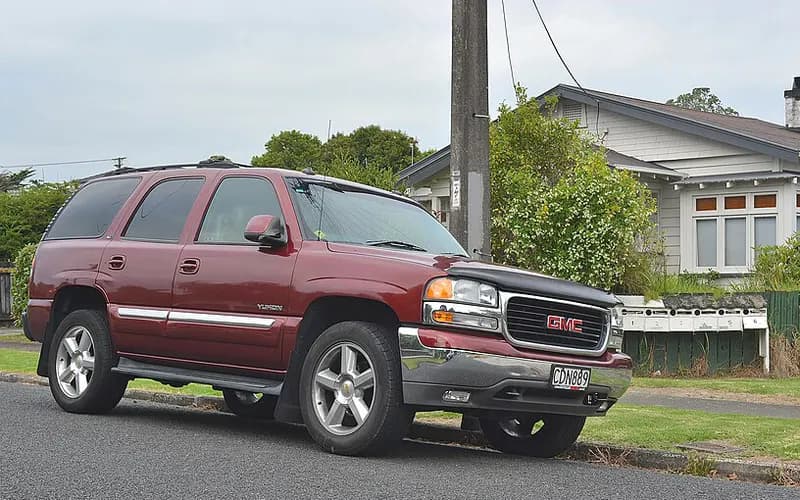
EngineModel years 2002–2018Manufacturer
Single-cylinder misfire (P0300-P0308) and/or chirp, squeak or tick at camshaft speed: worn cam lobe / lifter, valve or valve spring
GMC Yukon Models 2002 - 2018, V8 (PIP4138R); replaced by 19-NA-219 covering GM passenger cars and trucks with V6/V8 pushrod engines
FaultCrate・Single-cylinder misfire (P0300-P0308) and/or chirp, squeak or tick at camshaft speed: worn cam lobe / lifter, valve or valve spring
On GM's V6/V8 pushrod engines (the bulletin's "this engine family"), a worn cam lobe generally creates a consistent chirp, squeak, squeal or tick noise at camshaft speed and/or a misfire with a P0300-P0308 DTC. The misfire may or may not be felt, and the cause may not be isolated after following SI diagnosis (GM).
How to decide
If a camshaft lobe or lifter roller is worn, replace the camshaft and all lifters (SI procedures)
Watch out
A damaged cam lobe is easy to miss through the lifter bores; inspect both rollers and lobes carefully
Parts
Camshaft, all lifters, the lifter guide where the damage was (and the VLOM screen on AFM engines)
Check19
- GM's 19-NA-219 is written for technicians who follow SI diagnosis without isolating the cause.GM
- 19-NA-219 lists the possible causes when SI diagnosis does not isolate the cause as a worn camshaft lobe and/or lifter roller, a sticking valve, valve leakage, a broken valve spring, and a collapsed AFM (Active Fuel Management) lifter.GM
- 19-NA-219 says to pick the description that best matches the vehicle and perform the suggestions as necessary, starting with the easiest ones.GM
- The noise of this concern, if verified, is not eliminated by canceling fuel injectors, occurs at camshaft speed (half of crankshaft speed) and may increase off idle.GM
- With a worn cam lobe the noise is generally consistent; the misfire may or may not be felt, and may occur at all RPM or at a specific RPM only, such as idle only or high RPM only.GM
- With this concern, static compression and cylinder leakage are generally similar on all cylinders.GM
- PIP4138R, which 19-NA-219 replaces, says that if the SES light is on there will be a P0300-P0308 DTC with misfires counting on a single cylinder, which may or may not be felt.GM
- A sticking valve generally causes a misfire (which may or may not be felt, and may be consistent or intermittent), and an engine noise is unlikely. It may be temperature sensitive and more apparent when driving up a grade, cresting a hill or accelerating hard.GM
- Misfires that continue to count on an aggressive deceleration with engine braking are a good indicator of a sticking valve.GM
- If the misfire is consistent, a static compression test, running compression test or cylinder leakage test may isolate the sticking valve, but these tests are unlikely to isolate it if the misfire occurs only while driving at specific conditions.GM
- Valve leakage generally causes a consistent misfire (which may or may not be felt), more apparent at idle or low RPM, normally without engine noise.GM
- With valve leakage, in most cases a static or running compression test will not reveal anything abnormal unless the leakage is very high.GM
- The Cylinder Leakage Test in SI should typically isolate valve leakage by finding excessive leakage past an intake or exhaust valve compared with the others.GM
- A broken valve spring generally causes a tick noise and/or a misfire, consistently or intermittently; the misfire may or may not be felt and may occur only at specific operating conditions, such as high RPM driving.GM
- A broken valve spring may be isolated by compression and leakage tests in some instances but not in others, if the two broken pieces stay stacked together.GM
- Two broken pieces of a valve spring that stay stacked together can be hard to see; lightly pushing on different places on the springs with a small hammer handle may help.GM
- On engines with AFM only: an AFM lifter that unlocks as soon as the engine starts gives a MIL and P0300 with misfires on cylinder 1, 4, 6 or 7 (V8) / 3 or 6 (V6), but noise is unlikely.GM
- On engines with AFM only: an AFM lifter that is mechanically collapsed or stuck gives a consistent valve train tick, the SES light and P0300 with misfires on cylinder 1, 4, 6 or 7 (V8) / 3 or 6 (V6).GM
- The misfire graphic and/or misfire data on the Tech 2 may help pinpoint suspect cylinders.GM TechLink 2002-12, general guidance (an article that names no model)
Decide6
If a worn camshaft lobe or lifter roller is found, replace the camshaft and all lifters following SI procedures. Also replace the plastic lifter guide of the lifter that had the damaged lobe and/or roller (all of the guides for the 2010 model year), and on AFM engines the VLOM filter screen under the oil pressure sensor.GM
- To check for a sticking valve, remove the valve springs and seals from the valves of the misfiring cylinder following SI procedures. Before releasing the air pressure from the cylinder, tightly wrap a rubber band or tie strap around the tip of each valve stem.GM
- Release the air pressure and work the valve up and down in the guide while turning it 360 degrees. If any binding is felt, a stem to guide clearance concern exists and is repaired by SI procedures.GM
- If okay, rotate and snap the valve onto the seat to make sure it easily comes off the seat again; if it takes force to tap the valve off the seat, there is excessive carbon build-up, which may be repaired by decarbonizing the engine (instructions in Service Bulletin 16-NA-383).GM
- A valve sealing concern is repaired by SI repair procedures; a broken valve spring is replaced as necessary.GM
- If an AFM lifter concern is suspected, refer to the latest version of PIP4568; for an AFM lifter concern on RPOs L83, L86, LT1 and LT4, follow the latest version of Service Bulletin 15-06-01-002.GM
Steps14Worn Cam Lobe and/or Lifter Roller
Find the noisy rocker
- 1During the noise, press with a wooden hammer handle on the rocker arms at the valve side, the push rod side and the side of the rocker to find which one is making the noise. If pressing on the valve side changes the noise, a lifter and/or cam lobe concern on that cylinder is most likely. Sometimes this works and sometimes it does not; it seems to depend on the amount of cam lobe wear.
- 2Disconnect the coils and injectors on one bank, run the engine with that valve cover removed, back off the related rocker arm a couple of turns and listen for a change in the noise.
- 3If necessary, both rockers and push rods can be removed one cylinder at a time with that cylinder's coil and injectors disconnected.
- 4If the noise is eliminated and no problem is found with the valve spring, push rod or rocker arm, a worn lifter roller and/or cam lobe is most likely.
Compare the lift
- 5Measure the cam lobe lift at the push rod side of the rocker arm. The lift there differs from the SI specification but should be similar to the other rockers on the same bank.
- 6With a worn lifter roller and/or cam lobe, the misfiring/ticking cylinder should obviously have less lift than the comparison cylinders.
- 7On an AFM engine, no or low lift on cylinder 1, 4, 6 or 7 (V8) / 3 or 6 (V6) could also be a collapsed AFM lifter (if one is found, refer to the latest version of PIP4568).
- 8On engines with AFM, commanding AFM on with the scan tool unlatches the lifters on cylinders 1, 4, 6 and 7 (V8) / 3 and 6 (V6) and stops opening their valves. This step will not work on 2017 and 2018 models.
- 9If the noise is eliminated with AFM commanded on, there is a good chance it comes from the valvetrain of cylinders 1, 4, 6 or 7 (V8) / 3 or 6 (V6).
- 10If then no problem is found with the push rods, rockers or valve springs, a worn lifter roller and/or cam lobe on cylinders 1, 4, 6 or 7 (V8) / 3 or 6 (V6) is most likely.
Inspect
- 11If the tests above do not isolate the cause, visually inspect the lifter rollers and cam lobes for visual damage, flat spots, pits, grooves, scoring, gouging, flaking and rusting.
- 12A damaged lobe is easy to overlook through the lifter bores, and unworn rollers do not mean the lobes are okay, so inspect both carefully.
- 13A bore scope or pen light may help, and in some cases a worn lobe is not discovered until the camshaft is removed and inspected.
If wear is found
- 14Replace the camshaft and all lifters following SI procedures, together with the plastic lifter guide of the lifter that had the damaged lobe and/or roller (all of the guides for the 2010 model year), and on AFM engines the VLOM filter screen under the oil pressure sensor.
Suggestions 1 to 5 of "1. Worn Cam Lobe and/or Lifter Roller" in GM's 19-NA-219 (April 2023, which replaces PIP4138R), with its Notice for when wear is found, summarized by stage of the work. The bulletin is for technicians who followed SI diagnosis without isolating the cause, and says to perform the suggestions as necessary, starting with the easiest. The replacement itself follows SI procedures. 19-NA-219 covers 2002-2023 GM passenger cars and trucks with V6/V8 pushrod engines and names no models; the vehicles are named by the table of the previous version, PIP4138R (2002-2018, V8), which carries the same suggestions. Model years 2000 and 2001 are in the years of neither. PIP4138R's table does not name the Yukon XL; a GM document that writes only the Yukon is read as covering the Yukon XL too. The document covers model years from 2002. That this vehicle is among the Worn Cam Lobe and/or Lifter Roller is from GM.Open Bulletin 19-NA-219
Cautions and risks4
- A damaged cam lobe is very easy to overlook when inspecting through the lifter bores, and unworn lifter rollers do not mean the related lobes are okay: inspect both carefully. In some cases the worn lobe is not discovered until the camshaft is removed and inspected.GM
- When removing the valve springs and seals to check for a sticking valve (SI procedures), tightly wrap a rubber band or tie strap around the tip of each valve stem before releasing the air pressure from the cylinder, to keep the valves from dropping into the cylinder.GM
From the field
- A 2CarPros poster (2004 Tahoe, 5.3L; P0300 only) writes that he had watched all sixteen valves move with the valve covers off, but that a mechanic who listened said it sounded like a worn-out lifter.2004 Chevrolet Tahoe 5.3L・2CarPros
- The same 2CarPros poster (2004 Tahoe) writes that one should not take lifters to be good merely because the rocker arms go up and down.2004 Chevrolet Tahoe 5.3L・2CarPros
What it needs
- Parts
- Camshaft and all lifters (if a worn camshaft lobe or lifter roller is found; replaced by SI procedures).GM
- Plastic lifter guide: for the lifter that had the damaged cam lobe and/or roller (all of them for the 2010 model year).GM
- On AFM engines, the VLOM (Valve Lifter Oil Manifold) filter screen under the oil pressure sensor.GM
- A broken valve spring (if found, as necessary).GM
- Tools
- A wooden hammer handle (to press on the rockers during the noise) and a small hammer handle (to push lightly on the valve springs).GM
- A bore scope or pen light (may help when inspecting the cam lobes through the lifter bores).GM
- A scan tool (to command AFM on, on engines with AFM; this does not work on 2017 and 2018 models).GM
- A rubber band or tie strap (wrapped around the tip of each valve stem before releasing the cylinder's air pressure).GM
- Time
- FieldA 2CarPros answerer gives the labor for replacing the camshaft of a 2002 Tahoe (5.3L) as 15.8 HRS (an answer from 2024).2002 Chevrolet Tahoe 5.3L・2CarPros
- Cost seen
- FieldThe same answer (2002 Tahoe, 5.3L, 2024) gives the OEM camshaft 12560967 as $740.85 and the lifters 17122490, which he says a shop will want replaced too, as $57.50 x 16 = $920.00, and writes that gaskets, oil, a filter and coolant come on top.2002 Chevrolet Tahoe 5.3L・2CarPros
Only what the documents and the pages read state; what is not listed is not thereby not needed.
Applies to
- The model list includes GMC Yukon Models 2002 - 2018 with V8 engines.
See the evidence (6 documents, 24 passages)
| Document | Publisher | Date |
|---|---|---|
| [1]PIP4138R: SES Light, Misfire, DTC P0300, And/or A Chirp, Squeak, Squeal, Or Tick Noise ↗ | ManufacturerGeneral Motors | 2018-10-16 |
| [2]19-NA-219: Diagnostic Tip for Misfire, Chirp, Squeak, Squeal or Tick Noise, MIL Illuminated - DTC P0300-P0308 Set ↗ | ManufacturerGeneral Motors | 2023-04-24 |
| [3]PIP4138R SES Light, Misfire, DTC P0300, And/or A Chirp, Squeak, Squeal, Or Tick Noise - Potential ↗ | ManufacturerGeneral Motors | — |
| [4]PIP4138Q SES Light, Misfire DTC P0300 And/Or A Chirp, Squeak, Squeal Or Tick Noise - Potential Valvetrain Concern ↗ | ManufacturerGeneral Motors | — |
| [5]PIP4138M SES Light, Misfire, DTC P0300, and/or a Chirp, Squeak, Squeal, or Tick Noise - Potential Valvetrain Concern ↗ | ManufacturerGeneral Motors | — |
| [6]PIP4138N SES Light, Misfire, DTC P0300, And/or A Chirp, Squeak, Squeal, Or Tick Noise - Potential Valvetrain Concern ↗ | ManufacturerGeneral Motors | — |
Applies toThe model list includes GMC Yukon Models 2002 - 2018 with V8 engines.
GMC Yukon Models 2002 - 2018 All All V8 ALL— [1] Models
First signsCustomers may complain of an SES light, engine misfire and/or engine noise.
Some customers may complain of a SES light, engine misfire, and/or engine noise.— [1] Condition
First signsA verified noise is not eliminated by canceling fuel injectors and occurs at camshaft speed (half of crankshaft speed).
If a noise is verified, it will not be eliminated by canceling fuel injectors and the noise will occur at camshaft speed (half of crankshaft speed).— [2] Information
First signsThe noise may be described as a chirp, squeak, squeal or tick and may increase off idle.
The noise may be described as a chirp, squeak, squeal or tick noise and may increase off of idle.— [2] Information
Why it happensPossible causes include a worn camshaft lobe and/or lifter roller.
Worn camshaft lobe and/or lifter roller— [2] Recommendation
Why it happensA worn cam lobe on this engine family generally creates a consistent chirp, squeak, squeal or tick at camshaft speed and/or a misfire with a P0300-P0308 DTC.
Generally, a worn cam lobe on this engine family will create a consistent chirp, squeak, squeal or tick noise at camshaft speed and/or a misfire with a P0300-P0308 DTC.— [2] Recommendation 1
How to confirmIf pressing on the valve side of the rocker changes the noise, a lifter and/or cam lobe concern on that cylinder is most likely.
If the noise is changed by applying pressure to the valve side of the rocker, this is most likely the result of a lifter and/or cam lobe concern on that cylinder.— [2] Recommendation 1
How to confirmThe misfiring/ticking cylinder should have less cam lobe lift than comparison cylinders if a worn lifter roller and/or cam lobe is the cause.
The misfiring/ticking cylinder should obviously have less lift than the comparison cylinders if this is the result of a worn lifter roller and/or cam lobe.— [2] Recommendation 1
CautionA damaged cam lobe is easy to overlook when inspecting through the lifter bores; unworn lifter rollers do not mean the cam lobes are okay.
It is very easy to overlook a damaged cam lobe when inspecting them through the lifter bores and just because the lifter rollers are not worn, does not mean that the related cam lobes are okay.— [2] Recommendation 1
First signsIf the SES light is on, there will be a P0300-P0308 DTC with misfires counting on a single cylinder, which may or may not be felt.
If the SES light is on, the technician will find a P0300-P0308 DTC with misfires counting on a single cylinder that may or may not be felt.— [3]
How to confirmDuring the noise, press with a wooden hammer handle on the rocker arms at the valve side, push rod side, and side of the rocker to find which one is making noise.
Use a wooden hammer handle to apply pressure to the following locations of the rocker arms during the noise to determine which one is making noise: valve side, push rod side, and side of the rocker.— [3]
How to confirmMeasure the cam lobe lift at the push rod side of the rocker arm.
Measure the cam lobe lift at the push rod side of the rocker arm.— [3]
How to confirmA good indicator of a sticking valve is engine misfires that continue to count on an aggressive deceleration with engine braking.
A good indicator of a sticking valve is if engine misfires continue to count on an aggressive deceleration with engine braking.— [3]
How to confirmRelease the air pressure from the cylinder and work the valve up and down in the guide while turning it 360 degrees; if any binding is felt, a stem to guide clearance concern exists.
Release the air pressure from the cylinder and work the valve up and down in the guide while turning the valve 360 degrees. If any binding is felt, a stem to guide clearance concern exists and should be repaired by following SI procedures.— [3]
How to confirmTypically, the Cylinder Leakage Test outlined in SI should isolate valve leakage.
Typically, the Cylinder Leakage Test outlined in SI should isolate valve leakage— [3]
How to confirmFor a suspected sticking valve, snap the valve onto its seat and confirm it comes off easily; if force is needed to tap it off the seat, excessive carbon build up exists, which may be repaired by decarboning the engine.
If okay, rotate and snap the valve onto the valve seat to make sure that it easily comes off of the seat again. If you have to use force to tap the valve off of the seat, excessive carbon build up exists, which may be repaired by decarboning the engine.— [4]
How to confirmA broken valve spring may stay stacked together and be hard to see, so lightly push on different places on the springs with a small hammer handle.
Sometimes, the two broken pieces of the spring will remain stacked together so it may be hard to detect when visually inspecting them. As a result, it may help to lightly push on different places on the springs with a small hammer handle.— [4]
How to confirmIf those tests do not isolate the cause, visually inspect the lifter rollers and cam lobes for flat spots, pits, grooves, scoring, gouging, flaking or rusting.
If the tests above do not isolate the cause of this concern, it may be necessary to visually inspect the lifter rollers and cam lobes for obvious damage, such as flat spots, pits, grooves, scoring, gouging, flaking, rusting, etc...— [5]
How to confirmA bore scope or pen light may help when inspecting the cam lobes through the lifter bores.
It may help to use a bore scope or pen light when inspecting the cam lobes through the lifter bores.— [6]
RepairIf a worn camshaft lobe or lifter roller is found, follow SI procedures to replace the camshaft and all lifters.
Follow SI procedures to replace the camshaft and all lifters if a worn camshaft lobe or lifter roller is found.— [3]
RepairAlso replace the plastic lifter guide for the lifter that had the damaged cam lobe and/or lifter roller.
Also replace the plastic lifter guide for the lifter that had the damaged cam lobe and/or lifter roller— [3]
RepairRefer to the latest version of PIP4753 for decarboning instructions.
Refer to the latest version of PIP4753 for decarboning instructions.— [3]
RepairIf a broken valve spring is found, replace the broken valve spring as necessary.
If a broken valve spring is found, replace the broken valve spring as necessary.— [3]
CautionIf an AFM lifter concern is suspected, refer to the latest version of PIP4568 for additional information.
If either of these AFM lifter concerns is suspected, please refer to the latest version of PIP4568 for additional information.— [3]
Put together by FaultCrate from public records and technical documents. The cause and the repair are for the workshop to decide with the vehicle in front of it. Counts are records, not failure rates.
List the records (7 that can be opened)
Records whose recall number, document number or text matches. Each line says why it matched.
- Diagnostic tip: valve, lifter or camshaft issueManufacturer communication 2023-05-06・document number matches
- Service Engine Soon Lamp, Misfire, Engine Noise Diagnostic InformationManufacturer communication 2018-11-13・document number matches
- Engine Misfire and Related Issues NoticeManufacturer communication 2018-02-21・text contains "camshaft lobe"
- Engine Misfire and Service Engine Soon Lamp InformationManufacturer communication 2017-08-15・text contains "camshaft lobe"
- Service Engine Soon Lamp, Misfire, and Engine Noise InformationManufacturer communication 2017-08-15・text contains "camshaft lobe"
- Service Engine Soon Lamp, Misfire, and Engine Noise InformationManufacturer communication 2017-08-15・text contains "camshaft lobe"
- Service Engine Soon Lamp and Engine Misfire InformationManufacturer communication 2017-08-15・text contains "camshaft lobe"