
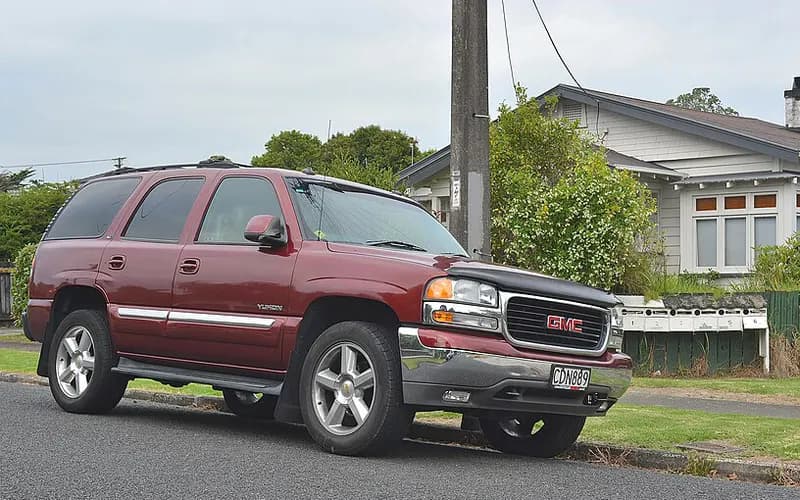
Fuel systemModel years 1999–2003Manufacturer
Fuel pressure regulator buzz / hum after replacement (check fuel pump feed voltage drop and connector crimps)
1999-2003 GMC Sierra, Yukon, Savana (and Avalanche, Silverado, Suburban, Tahoe, Express) built with 4.8 LR4, 5.3 LM7, 5.3 L59, 6.0 LQ4 or 6.0 LQ9
FaultCrate・Fuel pressure regulator buzz / hum after replacement (check fuel pump feed voltage drop and connector crimps)
Some vehicles may hum or buzz at idle after the fuel pressure regulator has been replaced. GM's PI has the power and ground feeds to the fuel pump checked for voltage drop and the crimps of the new fuel pump connector checked for resistance, and the regulator used if the circuits show no high resistance.
How to decide
Excessive crimp resistance: replace the splice sleeves; circuits without high resistance: use the listed regulator
Watch out
Do not introduce resistance at the new connector's crimps (incorrect or worn crimping tools, sleeves not fully shrunk)
Parts
Splice sleeves 12089190/12089189, or regulator 19236428 (ACDelco 217-3299)
Check5
- If the vacuum line is removed from the fuel pressure regulator, the noise may change or stop completely.NHTSA
- The PI covers 1999-2003 models built with the 4.8 LR4, 5.3 LM7, 5.3 L59, 6.0 LQ4 or 6.0 LQ9 engine.NHTSA
- A general GM TechLink article says regulator-related noise may come from the system or the regulator itself, and to hold a stethoscope on the regulator and listen for the noise the customer is concerned about.GM TechLink 2003-08, general guidance (an article that names no model)
- A noisy regulator may be misdiagnosed as a noisy alternator, and disconnecting the alternator is not a good test (system voltage drops, the pump makes lower pressure and the regulator noise goes away).GM TechLink 2003-08, general guidance (an article that names no model)
- The article says these conditions apply to return or semi-return systems.GM TechLink 2003-08, general guidance (an article that names no model)
Decide2
If excessive resistance is found at the crimps, replace the crimp n seal splice sleeves for the affected circuits.NHTSA
- If the circuits show no high resistance, use regulator part number 19236428 (ACDelco 217-3299).NHTSA
Steps6Fuel pressure regulator buzz and/or hum noise
Measure voltage drop
- 1With the key on and the engine off, check the power and ground feeds to the fuel pump for voltage drop, all the way from the battery posts. GM recommends a load of at least 3 amps at the fuel pump electrical connector, and wiggling all the connectors.
- 2Also check all pin fit and terminal drag.
Look where resistance builds
- 3A redesigned fuel pump connector was introduced for service in December 2004 (bulletin 04-06-04-088C). It is connected by crimping, and excessive resistance has been seen at the crimps from incorrect or worn crimping tools and/or splice sleeves not shrunk completely to seal the joint.
- 4Other possible voltage drop points to look at: the UBEC, the fuel pump relay, the ground at the frame and the battery cable grounds.
Repair
- 5If excessive resistance is found at the crimps, replace the crimp n seal splice sleeves for the affected circuits. They are in tray 1 of the J-38125-H terminal repair kit: 12089190 (blue) for the fuel pump circuits, 12089189 (salmon) for the fuel level sender circuits.
- 6If the circuits show no high resistance, use regulator part number 19236428 (ACDelco 217-3299).
For this procedure only
- Follow this diagnostic or repair process thoroughly and complete each step; if the condition is resolved before every step is done, the remaining steps need not be performed.NHTSA
- For wiring repairs under warranty, refer to the latest version of bulletin 10-00-89-005 for warranty information on wire and connector repairs.NHTSA
The Recommendation/Instructions of GM's PI PIP5280 (April 2015), in the document's order. It covers 1999-2003 models built with the 4.8 LR4, 5.3 LM7, 5.3 L59, 6.0 LQ4 or 6.0 LQ9 engine. The document does not number its steps. The document covers model years up to 2003. That this vehicle is among the Fuel pressure regulator buzz and/or hum noise is from NHTSA.Open PI PIP5280 ↗
Cautions and risks6
- The new fuel pump connector is connected by crimping; incorrect or worn crimping tools, or a splice sleeve not shrunk completely to seal the joint, can leave excessive resistance at the crimps.NHTSA
- On the Gen III engines (4.8L, 5.3L, 6.0L), three different fuel pressure regulators are used in 2002, each held on the fuel rail by a unique retainer (January 2002 TechLink).GM TechLink 2002-01
- Each retainer has its own diameter and window dimensions; two of the retainers have ID tabs on their sides.GM TechLink 2002-01
- Use the correct retainer to ensure adequate retention of the regulator (January 2002 TechLink).GM TechLink 2002-01
- The fuel pressure regulator of the 5.3L L59 is specific to the E85 fuel rail: larger in diameter than those of the other Gen III engines, with a special diaphragm compatible with E85. Its fuel pressure is different: 334 to 375 kPa (48 to 54 psi) (January 2002 TechLink).GM TechLink 2002-01
- A general GM TechLink article says a regulator that is noisy on one vehicle may not be noisy on another, and a noisy regulator may be quiet for a while when removed and inspected on the same vehicle; and to reconnect the vacuum hose if it was disconnected for the test.GM TechLink 2003-08, general guidance (an article that names no model)
What it needs
- Parts
- Crimp n seal splice sleeves: 12089190 (blue) for the fuel pump circuits, 12089189 (salmon) for the fuel level sender circuitsNHTSA
- When the circuits show no high resistance: fuel pressure regulator 19236428 (ACDelco 217-3299)NHTSA
- Tools
- J-38125-H terminal repair kit (splice sleeves in tray 1)NHTSA
Part numbers printed in the document
12089190Look up at RockAuto (aftermarket candidates) ↗Search the web ↗
12089189Look up at RockAuto (aftermarket candidates) ↗Search the web ↗
19236428Look up at RockAuto (aftermarket candidates) ↗Search the web ↗
The numbers are as the document prints them. The name and the replacing number are what the pages of GMPartsGiant, a reseller of genuine parts and not GM, state. Aftermarket equivalents are not checked here (the links only search by number). Confirm the fit for the vehicle (VIN) before ordering.
Only what the documents and the pages read state; what is not listed is not thereby not needed.
In the records
- Fuel Pressure Regulator: replaced 1
- Fuel Pump Connector: replaced 1
Applies to
- The bulletin covers 1999-2003 GMC Sierra, Yukon and Savana.
- It applies to engines 4.8 LR4, 5.3 LM7, 5.3 L59, 6.0 LQ4 or 6.0 LQ9.
See the evidence (1 documents, 9 passages)
| Document | Publisher | Date |
|---|---|---|
| [1]PIP5280: Fuel Pressure Regulator Buzz And/or Hum Noise ↗ | ManufacturerGeneral Motors | 2015-04-07 |
Applies toThe bulletin covers 1999-2003 GMC Sierra, Yukon and Savana.
1999-2003 GMC Sierra, Yukon, Savana— [1] Models
Applies toIt applies to engines 4.8 LR4, 5.3 LM7, 5.3 L59, 6.0 LQ4 or 6.0 LQ9.
Built with engines - 4.8 LR4, 5.3 LM7, 5.3 L59, 6.0 LQ4, or 6.0 LQ9— [1] Models
First signsSome vehicles may have a hum / buzz noise at idle after fuel pressure regulator replacement.
Some vehicles may exhibit a hum / buzz noise at idle after fuel pressure regulator replacement.— [1] Condition
How to confirmIf the vacuum line is removed from the regulator, the noise may change or stop completely.
If the vacuum line is removed from the fuel pressure regulator, the noise may change or stop completely.— [1] Condition
How to confirmCheck the power and ground feeds to the fuel pump for voltage drops, key on engine off, all the way from the battery posts.
Check the power and ground feeds to the fuel pump for voltage drops with key on engine off, all the way from the battery posts.— [1] Recommendation
Why it happensEngineering introduced a redesigned fuel pump connector for service in December 2004 (bulletin 04-06-04-088C).
Engineering introduced a redesigned fuel pump connector for service in December 2004 (see service bulletin 04-06-04-088C).— [1] Recommendation
Why it happensTechnicians sometimes introduce excessive resistance at the crimps of the new connector through incorrect or worn crimping tools or by not fully shrinking the splice sleeve.
we have seen that Tech's are sometimes introducing excessive resistance at the crimps due to incorrect or worn crimping tools AND/OR not shrinking the splice sleeve completely to seal the joint.— [1] Recommendation
How to confirmOther possible voltage drop points include the UBEC, fuel pump relay, the frame ground and the battery cable grounds.
Other possible voltage drop points include the UBEC, fuel pump relay, and ground at the frame and the battery cable grounds.— [1] Recommendation
RepairIf excessive resistance is found at the crimps, replace the crimp-and-seal splice sleeves for the affected circuits.
If excessive resistance is found at the crimps, replace the crimp n seal splice sleeves for the affected circuits.— [1] Recommendation
Put together by FaultCrate from public records and technical documents. The cause and the repair are for the workshop to decide with the vehicle in front of it. Counts are records, not failure rates.
List the records (1 that can be opened)
Records whose recall number, document number or text matches. Each line says why it matched.
- Buzz Noise at Idle After Fuel Pressure Regulator ReplacementManufacturer communication 2017-08-15・document number matches