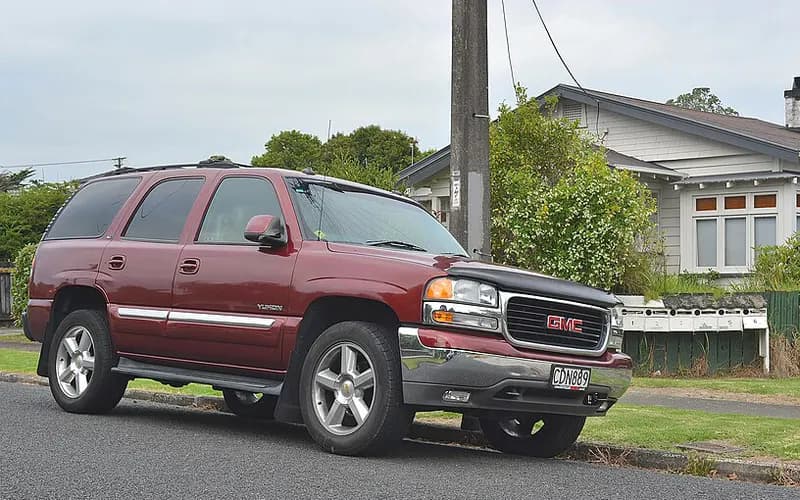
SteeringModel years 1999–2005Manufacturer
Tire scrub noise on low speed turns (steering rod / centerlink installed backwards)
The article is worded by class: 1999-2005 Full Size Trucks and Utilities, with recirculating ball type steering and no steering dampener.
FaultCrate・Tire scrub noise on low speed turns (steering rod / centerlink installed backwards)
The steering rod (centerlink) can be installed backwards on all trucks and utilities with recirculating ball type steering that do not use a steering dampener.
The idler and pitman attaching holes are tapered in only one direction.
What to do
- To determine the correct installation, compare with a like vehicle; correctly installed, the steering rod curves to the rear, outboard of the idler/pitman attachment holes and inboard of the inner tie rods.
- Installed incorrectly, the curved portion of the rod between the idler/pitman holes and the inner tie rods curves toward the front of the vehicle.
- Remove and correctly reinstall the steering rod (centerlink).
What is needed
- Parts and materials
- Not stated
- Labor time
- Not stated
- Special tools
- Not stated
- Scan tool
- Not stated
Only what the technical documents state. "Not stated" does not mean not needed.
Applies to
- Applies to 1999-2005 Full Size Trucks and Utilities: owners may experience tire scrub noise on low speed turns (parking lot maneuvers).
See the evidence (1 documents, 6 passages)
| Document | Publisher | Date |
|---|---|---|
| [1]GM TechLink, October 2004 ↗ | ManufacturerGeneral Motors | 2004-10-01 |
Applies toApplies to 1999-2005 Full Size Trucks and Utilities: owners may experience tire scrub noise on low speed turns (parking lot maneuvers).
Owners of some 1999-2005 Full Size Trucks and Utilities may experience tire scrub noise on low speed turns (parking lot maneuvers).— [1]
Why it happensThe steering rod (centerlink) can be installed backwards on all trucks and utilities with recirculating ball type steering that do not use a steering dampener.
The steering rod (centerlink) can be installed backwards on all trucks and utilities with recirculating ball type steering that do not use a steering dampener.— [1]
Why it happensThe idler and pitman attaching holes are tapered in only one direction.
The idler and pitman attaching holes are tapered in only one direction.— [1]
How to confirmTo determine the correct installation, compare with a like vehicle; correctly installed, the steering rod curves to the rear, outboard of the idler/pitman attachment holes and inboard of the inner tie rods.
To determine the correct installation of the steering rod, compare to a like vehicle. In a correct installation, the steering rod should curve to the rear, outboard of idler/pitman attachment holes and inboard of the inner tie rods.— [1]
How to confirmInstalled incorrectly, the curved portion of the rod between the idler/pitman holes and the inner tie rods curves toward the front of the vehicle.
With the steering rod installed incorrectly, the curved portion of the rod between the idler/pitman holes and inner tie rods curves toward the front of the vehicle.— [1]
RepairRemove and correctly reinstall the steering rod (centerlink).
Remove and correctly reinstall the steering rod (centerlink).— [1]
Put together by FaultCrate from public records and technical documents. The cause and the repair are for the workshop to decide with the vehicle in front of it. Counts are records, not failure rates.
List the records (1 that can be opened)
Records whose recall number, document number or text matches. Each line says why it matched.
- Tire scrub noise on low speed turns: steering rod (centerlink) installed backwardsManufacturer communication 2004-10-01・document number matches