
GMC Yukon 2000–2006
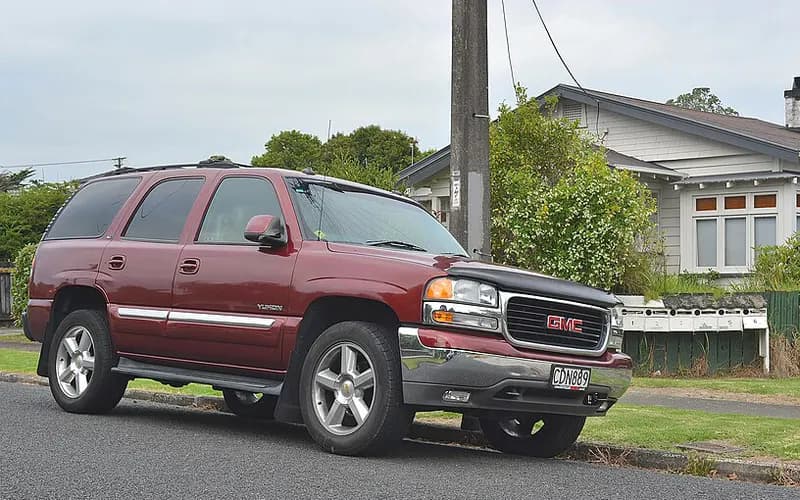
Common on this vehicle:NoiseVibration or shudderCorrosion or rustWarning lightTyre failure (blowout, tread separation)ABS activates (at low speed and the like)Air conditioning or heaterLights (headlights, turn signals)
Record by record
56 records state a cause or a remedy. Each record is shown as short labels in the order fault → finding the cause → correction. Press a label to narrow to the records that state it.
Symptom
Component named as the cause
Work done
How it is said to have ended
- says it held for a while1
- says it did not fix it1
- result not stated3
A ribbon is as wide as the records that state both of its ends (only the commonest are drawn). A record that names several symptoms or components runs through each. Orange is records that say the fault came back or was not fixed. Results come from owners’ reports only; one that does not say is “result not stated”. None of this is a likelihood of a cause or a rate at which work succeeds.
Read the records one by one (28)
Known issuesAutoride (Z55) Service Ride Control / Service Suspension System message2
Manufacturer communication2001–2006 GMC YUKON DENALI ・ 2013-08-06
Service Suspension System Display - Trim Height/Compressor Issue
1Fault
2Finding the cause
3Correction
What the documents say to do
Autoride (Z55) Service Ride Control / Service Suspension System messageConfirm
- The compressor assembly may need to be removed to see whether the wiring is pinched between the compressor and the frame.
Repair
- Repair the damaged or shorted circuits and reposition the wiring so it is not damaged again when the compressor is installed.
- The sensor is not serviced separately; install a complete air filter, dryer and sensor assembly.
Caution
- Do not replace the complete air compressor assembly for this concern.
Read the sentences of the record
- Remedy
- GM: IF THE SERVICE SUSPENSION SYSTEM IS DISPLAYED ON THE DIC, THE TRIM HEIGHT MAY BE INCORRECT, LOOSE COMPRESSOR INLET HOSE, OR THE COMPRESSOR SELF TEST MAY BE INOPERATIVE. ALSO INCLUDED SUBURBAN LD MY 2001-2013, YUKON DENALI XL MY 2013, YUKON XL LD 2001-2013 *JS
Manufacturer communication2001–2003 GMC YUKON ・ 2005-03-07
Ride Control Message and DTC C0580 Service Communication
1Fault
2Finding the cause
Not stated
3Correction
Read the sentences of the record
- Remedy
- SERVICE RIDE CONTROL MESSAGE DISPLAYED DIAGNOSTIC TROUBLE CODE C0580 SET REPLACE RIGHT FRONT SHOCK ADSORBER SOLENOID CONNECTOR AND INSTALL NEW AC SUCTION HOSE AND AUXILIARY AC EVAPORATOR HOSE. *EH
Known issuesUnwanted ABS activation at low speed (front wheel speed sensor mounting corrosion)1
Owner complaint2002 GMC YUKON ・ 2010-03-23
ABS activation during slow stops, increased stopping distance
1Fault
2Finding the cause
3Correction
Read the sentences of the record
- Fault
- ABS ACTIVATES DURING SLOW STOPS, INCREASES STOPPING DISTANCE.
- Cause
- I BELIEVE PROBLEM IS CORROSION IN FRONT WHEEL HUBS ON TONE RING.
- Remedy
- DEALER REPLACED BOTH FRONT SPEED SENSORS AND PROBLEM PERSISTS.
Known issuesAftermarket part (not the vehicle as built): Federal-Mogul National / Carquest replacement wheel hub assembly retention nut - recall 07E-1061
Recall2002 GMC YUKON ・ —
Wheel Hub Assembly Bearing Nut Loosening Recall
1Fault
- The inboard retention nut that maintains the hub bearing assembly can loosen, resulting in an ABS light indication, noise, and/or wheel separation from the vehicle; wheel separation can result in a vehicle crash.
2Finding the cause
Steps to confirm (in the document’s order)
- On 2x4 vehicles, raise the vehicle on an approved hoist first; the hub assembly is good if a yellow, green or blue paint mark is seen on the grease cap on the inboard side of the steering knuckle.
- If the paint mark is not present, remove the wheel and the brake rotor and clean rust from the hub assembly face to check for the date code stamping.
- Defective hub assemblies can be identified by the country of origin on the package together with a recalled date code, by the date code on the package, or by the date code on the hub assembly.
- If a round yellow sticker is present on the box label, the part is good.
3Correction
Repair
- The hub assemblies were manufactured for aftermarket use; owners of these parts should have them removed and replaced as soon as possible.
- Federal-Mogul will replace the recalled hub assemblies free of charge.
Parts
- The recalled part numbers are 515020, 515021, 515025, 515053, 515054, 515059 and 515060.
Read the sentences of the record
From the manufacturer’s document
- Applies to:This is an equipment recall by Federal-Mogul of certain wheel hub assemblies sold as replacement parts only.
- Applies to:The recalled hub assemblies were packaged and sold between January 23, 2006 and December 20, 2007 under the National and CARQUEST Premium (BGS/Blue) brands, in 7 base part numbers.
- Parts:The recalled part numbers are 515020, 515021, 515025, 515053, 515054, 515059 and 515060.
- Applies to:The application lists include GMC 1500 Yukon (2WD) and GMC 1500 Yukon XL (2WD), 2001-2006.
- Applies to:ILJIN manufactured the recalled hub assemblies from December 27, 2005 to November 29, 2007.
- Condition:The inboard retention nut that maintains the hub bearing assembly can loosen, resulting in an ABS light indication, noise, and/or wheel separation from the vehicle; wheel separation can result in a vehicle crash.
- Confirm:On 2x4 vehicles, raise the vehicle on an approved hoist first; the hub assembly is good if a yellow, green or blue paint mark is seen on the grease cap on the inboard side of the steering knuckle.
- Confirm:If the paint mark is not present, remove the wheel and the brake rotor and clean rust from the hub assembly face to check for the date code stamping.
- Confirm:Defective hub assemblies can be identified by the country of origin on the package together with a recalled date code, by the date code on the package, or by the date code on the hub assembly.
- Confirm:If a round yellow sticker is present on the box label, the part is good.
- Repair:The hub assemblies were manufactured for aftermarket use; owners of these parts should have them removed and replaced as soon as possible.
- Repair:Federal-Mogul will replace the recalled hub assemblies free of charge.
- Cause
- CERTAIN FEDERAL-MOGUL REPLACEMENT WHEEL HUB ASSEMBLIES WITH THE BRAND NAMES: NATIONAL, CARQUEST P/NOS. 515020, 515021, 515025, 515053, 515054, 515059, AND 515060, SHIPPED BETWEEN JANUARY 23, 2006, AND DECEMBER 20, 2007, SOLD FOR LIGHT DUTY AND MEDIUM DUTY TRUCKS. THE INBOARD RETENTION NUT USED TO MAINTAIN HUB BEARING ASSEMBLY CAN LOOSEN RESULTING IN AN ABS LIGHT INDICATION, NOISE, AND/OR WHEEL SEPARATION.
- Remedy
- FEDERAL-MOGUL WILL NOTIFY CUSTOMERS AND WILL REPLACE THE HUB ASSEMBLY FREE OF CHARGE. THE RECALL BEGAN ON FEBRUARY 7, 2008. OWNERS CAN CONTACT FEDERAL-MOGUL TOLL-FREE AT 877-489-6659.
- Consequence
- WHEEL SEPARATION CAN RESULT IN A VEHICLE CRASH.
Known issuesUpper control arm bracket alignment (dowel) pin missing at front end alignment1
Manufacturer communication2000–2006 GMC YUKON DENALI ・ 2018-05-07(1 earlier editions of this document folded here)
Front End Alignment - Missing Dowel Pin Recommendation
1Fault
- While performing a front end alignment, the upper control arm bracket alignment pin may be found missing.
2Finding the cause
Possible causes
- The pin serves as a pilot for the alignment cam when adjusting the front caster and camber.
3Correction
Repair
- If the pin is missing, a 1/4 inch dowel rod or a punch can be used as a temporary alignment aid to center the cam to the bracket while making adjustments and torqueing the control arm nuts.
Read the sentences of the record
From the manufacturer’s document
- Applies to:Applies to 2000-2015 GMC Yukon, Yukon XL, Yukon Denali and Yukon Denali XL.
- Condition:While performing a front end alignment, the upper control arm bracket alignment pin may be found missing.
- Cause:The pin serves as a pilot for the alignment cam when adjusting the front caster and camber.
- Repair:If the pin is missing, a 1/4 inch dowel rod or a punch can be used as a temporary alignment aid to center the cam to the bracket while making adjustments and torqueing the control arm nuts.
Open the manufacturer’s document (PDF) ↗ The points above were read from this document.
- Remedy
- This preliminary informational bulletin provides technicians a recommendation for when they are performing a front end alignment and find an alignment dowel pin missing .
Known issuesVehicle body tilt or lean left / right (torsion bar front suspension)1
Manufacturer communication2000–2006 GMC YUKON DENALI ・ 2019-04-08(1 earlier editions of this document folded here)
Vehicle Lean Adjustment Preliminary Information
1Fault
- The procedure is for diagnosing and correcting complaints of the vehicle leaning left or right.
2Finding the cause
Steps to confirm (in the document’s order)
- Measure fender wheel-opening heights, front and rear, to quantify vehicle lean.
- The front wheel-opening height is known as P height, and the rear wheel-opening height is known as R height.
- P height and R height are the distance from the ground to the highest point on the wheel-opening, going through the center of the wheel.
- Before measuring, make sure the vehicle is on a level surface, such as an alignment rack.
- Before measuring, check the fuel level and add weight if necessary to simulate a full tank.
3Correction
Repair
- If Z height is out of spec and the D height delta is greater than 1/2 inch (12 mm), adjust Z height until it is within spec and the P and R height deltas are less than 1/2 inch (12 mm).
- If adjustment is not possible, check the front eye of the rear leaf spring for matching color-coded tape or paint; both sides should be the same color. If not, switch springs side to side; if so, replace the leaf spring on the lower side only.
- If this is not possible, shim the body and/or pick-up box until the P and R height deltas are less than 1/2 inch (12 mm).
- After all adjustments are done, perform a front-end alignment and check headlight aim.
Read the sentences of the record
From the manufacturer’s document
- Applies to:Applies to GMC Yukon models, 1999 - 2006.
- Applies to:Applies to vehicles with torsion bar front suspension.
- Condition:The procedure is for diagnosing and correcting complaints of the vehicle leaning left or right.
- Confirm:Measure fender wheel-opening heights, front and rear, to quantify vehicle lean.
- Confirm:The front wheel-opening height is known as P height, and the rear wheel-opening height is known as R height.
- Confirm:P height and R height are the distance from the ground to the highest point on the wheel-opening, going through the center of the wheel.
- Confirm:Before measuring, make sure the vehicle is on a level surface, such as an alignment rack.
- Confirm:Before measuring, check the fuel level and add weight if necessary to simulate a full tank.
- Confirm:Check Z height and D height; see Trim Height Inspection Procedure.
- Repair:If Z height is out of spec and the D height delta is greater than 1/2 inch (12 mm), adjust Z height until it is within spec and the P and R height deltas are less than 1/2 inch (12 mm).
- Repair:If adjustment is not possible, check the front eye of the rear leaf spring for matching color-coded tape or paint; both sides should be the same color. If not, switch springs side to side; if so, replace the leaf spring on the lower side only.
- Repair:If this is not possible, shim the body and/or pick-up box until the P and R height deltas are less than 1/2 inch (12 mm).
- Repair:After all adjustments are done, perform a front-end alignment and check headlight aim.
Open the manufacturer’s document (PDF) ↗ The points above were read from this document.
- Remedy
- This Preliminary Information communication provides information to the technician about vehicles that have a lean to the left or right. Technician will need to measure fender wheel-opening heights, front and rear, to quantify vehicle lean. Fender wheel-opening heights are related to, but distinct from, trim height. The front wheel-opening height is known as P height, and the rear wheel-opening height is known as R height. Adjust and heights that are out of specification. After all adjustments are done, perform a front-end alignment and check headlight aim.
WHEELS5
Manufacturer communication2000–2006 GMC YUKON DENALI ・ 2023-10-25(1 earlier editions of this document folded here)
Hunter Wheel Road Force Balancer Service Information
1Fault
- Effective February 2017 (May 2017 for Canada), a Generation 3, 4 or 5 Hunter Road Force Balancer is designated as Essential Dealer Equipment.
2Finding the cause
Not stated
3Correction
Read the sentences of the record
From the manufacturer’s document
- Applies to:All GM passenger cars and trucks (includes medium duty), model years 2000 to 2024.
- Condition:Effective February 2017 (May 2017 for Canada), a Generation 3, 4 or 5 Hunter Road Force Balancer is designated as Essential Dealer Equipment.
Open the manufacturer’s document (PDF) ↗ The points above were read from this document.
- Remedy
- This service bulletin provides information about the Hunter wheel Road Force balancers that should be utilized for all repairs requiring balance and Road Force measurement.
Manufacturer communication2000–2006 GMC YUKON DENALI ・ 2021-05-17
Torque Converter Bolt Removal Warning
1Fault
- Customers may comment on noise coming from underneath a vehicle equipped with an automatic transmission.
- Technicians may find that the noise comes from the bell housing area.
2Finding the cause
Possible causes
- Running the engine with those bolts removed may damage the pilot on the front of the torque converter, the pilot hole in the end of the crankshaft, or both.
Steps to confirm (in the document’s order)
- Use chassis ears to isolate the component or assembly that is the loudest source of the noise.
3Correction
Caution
- Do not remove the flex plate to torque converter bolts, push the torque converter back toward the transmission and start the engine to tell whether the noise comes from the engine or the transmission.
Read the sentences of the record
From the manufacturer’s document
- Applies to:Applies to all brands, models, engines and transmissions, 2000 - 2021.
- Condition:Customers may comment on noise coming from underneath a vehicle equipped with an automatic transmission.
- Condition:Technicians may find that the noise comes from the bell housing area.
- Caution:Do not remove the flex plate to torque converter bolts, push the torque converter back toward the transmission and start the engine to tell whether the noise comes from the engine or the transmission.
- Cause:Running the engine with those bolts removed may damage the pilot on the front of the torque converter, the pilot hole in the end of the crankshaft, or both.
- Confirm:Use chassis ears to isolate the component or assembly that is the loudest source of the noise.
Open the manufacturer’s document (PDF) ↗ The points above were read from this document.
- Remedy
- This Preliminary Information communication provides information to the technician to not remove the torque converter bolts and start the engine as this may cause damage to the torque converter of the crankshaft on vehicles equipped with an automatic transmission.
Manufacturer communication2001–2006 GMC YUKON DENALI ・ 2018-04-23
Chromed Aluminum Wheels Chemical Staining and Corrosion
1Fault
2Finding the cause
Possible causes
- Chemical staining mostly results from acid based cleaners; the stains are frequently milky, black or greenish.
- A second type of staining comes from road chemicals such as calcium chloride used for dust control on unpaved roads, and looks like small pitting.
- A third type results from prolonged exposure to brake dust that penetrates the chrome.
- If the brake material sits on the wheel while exposed to moisture or salt, it corrodes the wheel beneath the chrome and leaves a pit or small blister.
3Correction
Repair
- Remove heavy brake dust build-up with GM Chrome Cleaner and Polish, P/N 1050173 (in Canada 10953013).
- For milky stains from acidic cleaners, after washing and drying apply 3M Chrome and Metal Polish #39527 with a clean terry cloth towel; the staining diminishes as it is applied.
Caution
- Do not use cleaning solutions containing hydrofluoric, oxalic and most other acids on chrome wheels or any wheels.
- Any wheel cleaner must be thoroughly rinsed off the wheel with clean, clear water.
- Stained wheels are not warrantable; most acid based cleaners permanently stain chrome wheels.
- This polish reduces the thickness of the chrome plating and, if used incorrectly or excessively, may remove it altogether, exposing a less bright, brassy coloured sub-layer.
- For spotting from road chemicals the procedure may marginally improve the condition but will not restore the finish or remove the pitting.
Read the sentences of the record
From the manufacturer’s document
- Applies to:Applies to 2013 and prior GM passenger cars and trucks.
- Cause:Chemical staining mostly results from acid based cleaners; the stains are frequently milky, black or greenish.
- Caution:Do not use cleaning solutions containing hydrofluoric, oxalic and most other acids on chrome wheels or any wheels.
- Caution:Any wheel cleaner must be thoroughly rinsed off the wheel with clean, clear water.
- Caution:Stained wheels are not warrantable; most acid based cleaners permanently stain chrome wheels.
- Cause:A second type of staining comes from road chemicals such as calcium chloride used for dust control on unpaved roads, and looks like small pitting.
- Cause:A third type results from prolonged exposure to brake dust that penetrates the chrome.
- Cause:If the brake material sits on the wheel while exposed to moisture or salt, it corrodes the wheel beneath the chrome and leaves a pit or small blister.
- Repair:Remove heavy brake dust build-up with GM Chrome Cleaner and Polish, P/N 1050173 (in Canada 10953013).
- Repair:For milky stains from acidic cleaners, after washing and drying apply 3M Chrome and Metal Polish #39527 with a clean terry cloth towel; the staining diminishes as it is applied.
- Caution:This polish reduces the thickness of the chrome plating and, if used incorrectly or excessively, may remove it altogether, exposing a less bright, brassy coloured sub-layer.
- Caution:For spotting from road chemicals the procedure may marginally improve the condition but will not restore the finish or remove the pitting.
Open the manufacturer’s document (PDF) ↗ The points above were read from this document.
- Remedy
- This informational bulletin provides information on the appearance of chromed aluminum wheels due to chemical staining, pitting corrosion and/or spotted.
Owner complaint2002 GMC YUKON ・ 2016-01-09
Tire tread separated and blew out at 65 MPH on highway
1Fault
2Finding the cause
3Correction
Not stated
Read the sentences of the record
- Fault
- TREAD SEPARATED FROM COOPER TIRE DISCOVERY H/T AND THEN BLEW OUT AS THE VEHICLE WAS TRAVELING AT 65 MPH (= 104.6 km/h) ON THE FLORIDA TURNPIKE.
- Consequence
- LUCKILY, THERE WAS NO AUTO ACCIDENT, BUT THE BRAKE LINES WERE SEVERED.
Manufacturer communication2000–2005 GMC YUKON ・ 2005-11-03
Handling characteristics of vehicles with 20 inch wheel/tire assemblies
1Fault
Not stated
2Finding the cause
Not stated
3Correction
HANDLING CHARACTERISTICS OF VEHICLES WITH 20 INCH WHEEL/TIRE ASSEMBLIES INSTALLED. *TT
Read the sentences of the record
- Remedy
- HANDLING CHARACTERISTICS OF VEHICLES WITH 20 INCH WHEEL/TIRE ASSEMBLIES INSTALLED. *TT
EQUIPMENT3
Manufacturer communication2000–2006 GMC YUKON DENALI ・ 2021-04-26
Aluminum Wheel Refinishing Service Bulletin
1Fault
2Finding the cause
Not stated
3Correction
Read the sentences of the record
- Remedy
- Refinishing Aluminum Wheels This bulletin updates General Motor's position on refinishing aluminum wheels. GM does not endorse any repairs that involve welding, bending, straightening o re-machining. Only cosmetic refinishing of the wheel's coatings, using recommended procedures, is allowed. Evaluating Damage In evaluating damage, it is the GM Dealer's responsibility to inspect the wheel for corrosion, scrapes, gouges, etc. The Dealer must insure that such damage is not deeper than what can be sanded or polished off. The wheel must be inspected for cracks. If cracks are found, discard the wheel. Any wheels with bent rim flanges must not be repaired or refinished. Wheels that have been refinished by an outside company must be returned to the same vehicle. The Dealer must record the wheel ID stamp or the cast date on the wheel in order to assure this requirement. Refer to Refinisher's Responsibility  Outside Company later in this bulletin.
Manufacturer communication2000–2006 GMC YUKON DENALI ・ 2021-04-26
Aluminum Wheel Refinishing Guidelines
1Fault
2Finding the cause
Not stated
3Correction
Read the sentences of the record
- Remedy
- Refinishing Aluminum Wheels This bulletin updates General Motor's position on refinishing aluminum wheels. GM does not endorse any repairs that involve welding, bending, straightening o re-machining. Only cosmetic refinishing of the wheel's coatings, using recommended procedures, is allowed. Evaluating Damage In evaluating damage, it is the GM Dealer's responsibility to inspect the wheel for corrosion, scrapes, gouges, etc. The Dealer must insure that such damage is not deeper than what can be sanded or polished off. The wheel must be inspected for cracks. If cracks are found, discard the wheel. Any wheels with bent rim flanges must not be repaired or refinished. Wheels that have been refinished by an outside company must be returned to the same vehicle. The Dealer must record the wheel ID stamp or the cast date on the wheel in order to assure this requirement. Refer to Refinisher's Responsibility  Outside Company later in this bulletin.
Manufacturer communication2000–2006 GMC YUKON DENALI ・ 2018-05-21(1 earlier editions of this document folded here)
Wheel Installation and Torque Techniques
1Fault
- Vibration in the steering wheel or seat centered at 10-14 Hz, between 93-115 km/h (58-72 mph).
2Finding the cause
Possible causes
- Wrong wheel torque methods can mount the wheel and tire assembly off center, so its mass "orbits" the hub axis and vibrates like a tire with high RFV or an imbalance.
3Correction
Repair
- Remove the tire and wheel assemblies, index them at least two stud positions from where they were, and reinstall them.
- With the wheel off the ground, install all lug nuts hand tight using only a socket.
- Snug all lug nuts in a star or criss-cross pattern with a hand wrench.
- Lower the vehicle until the tire has just enough contact to resist turning, then torque to specification with a torque wrench.
Caution
- This first order tire/wheel vibration may be misdiagnosed as wheel imbalance or excessive tire radial force variation.
- Improper torque may also distort the brake rotor.
- Do not use torque sticks or an impact driver to tighten wheel lug nuts.
Read the sentences of the record
From the manufacturer’s document
- Applies to:Applies to 2006-2013 GM passenger cars and light duty trucks.
- Condition:Vibration in the steering wheel or seat centered at 10-14 Hz, between 93-115 km/h (58-72 mph).
- Cause:Wrong wheel torque methods can mount the wheel and tire assembly off center, so its mass "orbits" the hub axis and vibrates like a tire with high RFV or an imbalance.
- Caution:This first order tire/wheel vibration may be misdiagnosed as wheel imbalance or excessive tire radial force variation.
- Caution:Improper torque may also distort the brake rotor.
- Repair:Remove the tire and wheel assemblies, index them at least two stud positions from where they were, and reinstall them.
- Caution:Do not use torque sticks or an impact driver to tighten wheel lug nuts.
- Repair:With the wheel off the ground, install all lug nuts hand tight using only a socket.
- Repair:Snug all lug nuts in a star or criss-cross pattern with a hand wrench.
- Repair:Lower the vehicle until the tire has just enough contact to resist turning, then torque to specification with a torque wrench.
Open the manufacturer’s document (PDF) ↗ The points above were read from this document.
- Remedy
- This informational bulletin provides a description of the proper wheel installation and proper wheel torque techniques used to install wheels onto vehicles
SUSPENSION3
Manufacturer communication2001–2006 GMC YUKON DENALI ・ 2023-12-26(3 earlier editions of this document folded here)
Suspension Service Communication
1Fault
- Condition 1 (2009 or prior vehicles): a Service Suspension System message on the DIC with incorrect rear ride height, and DTC C0696 or C0711 set in the Electronic Suspension Control (ESC) module.
- Condition 2: a Service Suspension System message on the DIC, possibly with low rear ride height under a heavy payload, and DTC C0711 set in the ESC module.
- Condition 3: a loose hose hangs down at the left rear; upon inspection the hose may be found damaged or disconnected from the air inlet filter of the auto leveling suspension air compressor.
2Finding the cause
Possible causes
- Condition 1 can be caused by the wiring to the automatic level control (ALC) pressure sensor being shorted to ground.
- Condition 2 may be caused by an internal fault in the ALC pressure sensor, which can occur when moisture gets into the sensor.
Steps to confirm (in the document’s order)
- The air compressor assembly may have to be removed to see whether the wiring is pinched between the compressor assembly and the frame.
- If system pressure at start up is below 10 psi (69 kpa), the system runs the compressor to add air to the shocks as a replenishment cycle.
3Correction
Repair
- For condition 1, repair any damaged or shorted circuits and reposition the wiring so it is not damaged again when the compressor assembly is installed.
- The sensor is no longer serviced separately; to replace it, install a complete air filter, dryer and sensor assembly.
- For condition 3, replace the auto leveling compressor air inlet filter and hose assembly (PN 22197160).
Part numbers printed in the document
The numbers are as the document prints them. The name and the replacing number are what the pages of GMPartsGiant, a reseller of genuine parts and not GM, state. Aftermarket equivalents are not checked here (the links only search by number). Confirm the fit for the vehicle (VIN) before ordering.
Parts
- Vehicles built before May, 2012 need a jumper harness for the updated sensor, which is included with assembly PN 22964558; vehicles built in May, 2012 and later need no jumper harness and use PN 22941807.
Part numbers printed in the document
22964558Filter Assembly, Auto Level Control Air CompressorLook up at RockAuto (aftermarket candidates) ↗Search the web ↗
Discontinued (no successor stated)(replaces 20982305 / 22197161)as stated by GMPartsGiant (checked 2026-10-06) ↗
22941807Filter Assembly, Auto Level Control Air CompressorLook up at RockAuto (aftermarket candidates) ↗Search the web ↗
Discontinued (no successor stated)as stated by GMPartsGiant (checked 2026-10-06) ↗
The numbers are as the document prints them. The name and the replacing number are what the pages of GMPartsGiant, a reseller of genuine parts and not GM, state. Aftermarket equivalents are not checked here (the links only search by number). Confirm the fit for the vehicle (VIN) before ordering.
Caution
- Do not replace the complete air compressor assembly for this concern.
- Condition 4 (no compressor self test at start up): the automatic level system normally does not, or only very infrequently does, cycle the compressor at key up.
Read the sentences of the record
From the manufacturer’s document
- Applies to:Applies to 2001-2013 GMC Yukon, Yukon XL LD, Yukon Denali and Yukon Denali XL (note: the years run later than the years this service covers).
- Applies to:Vehicles with RPO Z55 or Z95 are covered.
- Condition:Condition 1 (2009 or prior vehicles): a Service Suspension System message on the DIC with incorrect rear ride height, and DTC C0696 or C0711 set in the Electronic Suspension Control (ESC) module.
- Cause:Condition 1 can be caused by the wiring to the automatic level control (ALC) pressure sensor being shorted to ground.
- Confirm:The air compressor assembly may have to be removed to see whether the wiring is pinched between the compressor assembly and the frame.
- Repair:For condition 1, repair any damaged or shorted circuits and reposition the wiring so it is not damaged again when the compressor assembly is installed.
- Caution:Do not replace the complete air compressor assembly for this concern.
- Condition:Condition 2: a Service Suspension System message on the DIC, possibly with low rear ride height under a heavy payload, and DTC C0711 set in the ESC module.
- Cause:Condition 2 may be caused by an internal fault in the ALC pressure sensor, which can occur when moisture gets into the sensor.
- Repair:The sensor is no longer serviced separately; to replace it, install a complete air filter, dryer and sensor assembly.
- Parts:Vehicles built before May, 2012 need a jumper harness for the updated sensor, which is included with assembly PN 22964558; vehicles built in May, 2012 and later need no jumper harness and use PN 22941807.
- Condition:Condition 3: a loose hose hangs down at the left rear; upon inspection the hose may be found damaged or disconnected from the air inlet filter of the auto leveling suspension air compressor.
- Repair:For condition 3, replace the auto leveling compressor air inlet filter and hose assembly (PN 22197160).
- Caution:Condition 4 (no compressor self test at start up): the automatic level system normally does not, or only very infrequently does, cycle the compressor at key up.
- Confirm:If system pressure at start up is below 10 psi (69 kpa), the system runs the compressor to add air to the shocks as a replenishment cycle.
Open the manufacturer’s document (PDF) ↗ The points above were read from this document.
- Remedy
- Suspension.
Manufacturer communication2000–2005 GMC YUKON ・ 2005-09-28
Automatic level control inoperative due to water ingestion
1Fault
Not stated
2Finding the cause
3Correction
AUTOMATIC LEVEL CONTROL INOPERATIVE DUE TO WATER INGESTION. *TT
Read the sentences of the record
- Remedy
- AUTOMATIC LEVEL CONTROL INOPERATIVE DUE TO WATER INGESTION. *TT
Manufacturer communication2000–2005 GMC YUKON ・ 2005-05-12
Revised Front Caster and Camber Adjustment Procedure
1Fault
Not stated
2Finding the cause
Not stated
3Correction
REVISED FRONT CASTER AND CAMBER ADJUSTMENT PROCEDURE. ORIGINAL NOT YET RECEIVED. *TT
Read the sentences of the record
- Remedy
- REVISED FRONT CASTER AND CAMBER ADJUSTMENT PROCEDURE. ORIGINAL NOT YET RECEIVED. *TT
TIRES3
Manufacturer communication2001–2004 GMC YUKON DENALI ・ 2018-05-21(1 earlier editions of this document folded here)
Wheel and Tire Mounting and Balancing Notification
1Fault
- Customers may say the HVAC blower motor does not work or that no air flows from the vents; it may be intermittent.
2Finding the cause
Possible causes
- One possible cause is the contacts in the HVAC junction block(s) at the right side of the instrument panel.
Steps to confirm (in the document’s order)
- With the ignition on and the blower running, apply light hand pressure to the junction block connectors and see whether the movement affects blower operation.
- On junction block X4, locate Pin A6, Circuit 754.
- On X4, perform a pin drag test with test probe J-35616-2A (GY).
- On junction block X6, locate Pin A, Circuit 542.
- On X6, perform a pin drag test with test probe J-35616-42 (RD).
3Correction
Repair
- If the terminal fails the pin drag test, replace the terminal for Pin A6, referring to Junction Block - Right I/P X4 in SI.
Parts
- Terminals: 12191812/19 Junction Block X4 Terminal/Tray; 12084590/3 Junction Block X6 Terminal/Tray.
Part numbers printed in the document
12191812Look up at RockAuto (aftermarket candidates) ↗Search the web ↗
12084590Terminal, F Metri, Pack 630Look up at RockAuto (aftermarket candidates) ↗Search the web ↗
Discontinued (no successor stated)as stated by GMPartsGiant (checked 2026-10-06) ↗
The numbers are as the document prints them. The name and the replacing number are what the pages of GMPartsGiant, a reseller of genuine parts and not GM, state. Aftermarket equivalents are not checked here (the links only search by number). Confirm the fit for the vehicle (VIN) before ordering.
Caution
- Do not replace the HVAC blower motor assembly to correct this condition.
Read the sentences of the record
From the manufacturer’s document
- Applies to:Applies to 2008-2013 GMC Yukon models (note: later than the years this service covers).
- Applies to:Vehicles built prior to November 1, 2012 are covered.
- Condition:Customers may say the HVAC blower motor does not work or that no air flows from the vents; it may be intermittent.
- Cause:One possible cause is the contacts in the HVAC junction block(s) at the right side of the instrument panel.
- Caution:Do not replace the HVAC blower motor assembly to correct this condition.
- Confirm:With the ignition on and the blower running, apply light hand pressure to the junction block connectors and see whether the movement affects blower operation.
- Confirm:On junction block X4, locate Pin A6, Circuit 754.
- Confirm:On X4, perform a pin drag test with test probe J-35616-2A (GY).
- Repair:If the terminal fails the pin drag test, replace the terminal for Pin A6, referring to Junction Block - Right I/P X4 in SI.
- Confirm:On junction block X6, locate Pin A, Circuit 542.
- Confirm:On X6, perform a pin drag test with test probe J-35616-42 (RD).
- Parts:Terminals: 12191812/19 Junction Block X4 Terminal/Tray; 12084590/3 Junction Block X6 Terminal/Tray.
Open the manufacturer’s document (PDF) ↗ The points above were read from this document.
- Remedy
- This informational bulletin provides information on how to properly mount and balance wheels and tires on heavy duty truck models only
Manufacturer communication2000–2006 GMC YUKON DENALI ・ 2017-08-15
Tire and Wheel Size Change Information
1Fault
- The document covers changing the tire size on mid-size and full-size trucks and utilities.
2Finding the cause
Steps to confirm (in the document’s order)
- A calibration exists for 20" or 22" wheels and tires on full-size trucks under the latest version of TSB 03-03-10-006 or 06-03-10-011.
- A calibration is available only if a vehicle of the same model year, body style, engine size, transmission type, axle type and suspension type can be built in the sales order guide with that tire.
3Correction
Repair
- Once the tire application is confirmed in the sales guide, contact the Techline Customer Support Center (TCSC) to determine calibration availability.
Caution
- GM supports a tire calibration only for tires that have been sized, tested and designed for the vehicle and its applications.
- Do not use the tire size selection offered in the ABS module as a guide to which tires fit the vehicle.
- Changing the tire size in the ABS module affects only the wheel speed sensor calibration inside the ABS module; it does not correct the speedometer, and does not change the rear speed value on vehicles that take rear wheel speed from the ECM/PCM/VCM via the VSS.
- The customer may be charged for this service; it is not covered under the manufacturer's warranty.
Read the sentences of the record
From the manufacturer’s document
- Applies to:Applies to 2003 - 2013 General Motors light duty trucks, vans and utilities.
- Condition:The document covers changing the tire size on mid-size and full-size trucks and utilities.
- Caution:GM supports a tire calibration only for tires that have been sized, tested and designed for the vehicle and its applications.
- Caution:Do not use the tire size selection offered in the ABS module as a guide to which tires fit the vehicle.
- Caution:Changing the tire size in the ABS module affects only the wheel speed sensor calibration inside the ABS module; it does not correct the speedometer, and does not change the rear speed value on vehicles that take rear wheel speed from the ECM/PCM/VCM via the VSS.
- Confirm:A calibration exists for 20" or 22" wheels and tires on full-size trucks under the latest version of TSB 03-03-10-006 or 06-03-10-011.
- Confirm:A calibration is available only if a vehicle of the same model year, body style, engine size, transmission type, axle type and suspension type can be built in the sales order guide with that tire.
- Repair:Once the tire application is confirmed in the sales guide, contact the Techline Customer Support Center (TCSC) to determine calibration availability.
- Caution:The customer may be charged for this service; it is not covered under the manufacturer's warranty.
Open the manufacturer’s document (PDF) ↗ The points above were read from this document.
- Remedy
- This Preliminary Information communication provides information to the technician about changing the tire and wheel size on vehicles. General Motors will only support a tire calibration for tires that have been sized, tested and designed for the vehicle in question and its applications. Technician should not use the information that is provided by the antilock braking system tire size selection.
Manufacturer communication2000–2005 GMC YUKON ・ 2005-02-16
Correct Installation Procedure for Loose Hubcap Assembly
1Fault
Not stated
2Finding the cause
Not stated
3Correction
Read the sentences of the record
- Remedy
- USE OF CORRECT INSTALLATION PROCEDURE FOR LOOSE HUBCAP ASSEMBLY. THIS SERVICE BULLETIN REPLACES 030310002. *EH
SERVICE BRAKES, HYDRAULIC2
Owner complaint2002 GMC YUKON ・ 2005-12-06
Skidding and grinding when brake pedal applied, vehicle not included in recall
1Fault
THE VEHICLE WOULD SKID AND GRIND WHEN THE BRAKE PEDAL WAS APPLIED.
2Finding the cause
Not stated
3Correction
Read the sentences of the record
- Fault
- THE VEHICLE WOULD SKID AND GRIND WHEN THE BRAKE PEDAL WAS APPLIED.
- Remedy
- THE SAME DAY THE VEHICLE WAS TAKEN TO A LOCAL REPAIR FACILITY WHERE THEY REPLACED THE LEFT FRONT UNITIZED BEARING AND FRONT WHEEL DRIVE HUB ASSEMBLY. *NM
Owner complaint2002 GMC YUKON ・ 2005-11-30
Front wheel assembly replacement on 2002 GMC Yukon
1Fault
2Finding the cause
3Correction
Read the sentences of the record
- Remedy
- 2002 GMC YUKON FRONT WHEEL ASSEMBLY HAD TO BE REPLACED.
ELECTRICAL SYSTEM1
Manufacturer communication2000–2006 GMC YUKON DENALI ・ 2019-04-08
Tire Pressure Monitor and Diagnostic Tool Software Update
1Fault
2Finding the cause
Not stated
3Correction
Repair
- The document gives the steps to download or update the AFIT, TPM, GR8, MIT, PICO Scope or VDR tools.
Read the sentences of the record
From the manufacturer’s document
- Applies to:Applies to 1995-2017 vehicles of all brands and models.
- Repair:The document gives the steps to download or update the AFIT, TPM, GR8, MIT, PICO Scope or VDR tools.
Open the manufacturer’s document (PDF) ↗ The points above were read from this document.
- Remedy
- This Preliminary Information communicates to the dealer the process for downloading or updating operating software for the Tire Pressure Monitor, Active Fuel Injector tester, multi media tester, PICO Scope, GR8 starting/charging tester and Vehicle Data Recorder tools, giving website address and step by step instructions to complete the update.
ENGINE AND ENGINE COOLING1
Owner complaint2002 GMC YUKON DENALI ・ 2003-06-11
Intermittent noise from right rear of vehicle; returned after exhaust system change
1Fault
2Finding the cause
Not stated
3Correction
Read the sentences of the record
- Fault
- CONSUMER NOTICED A NOISE COMING FROM RIGHT REAR OF VEHICLE INTERMITTENTLY.
- Remedy
- DEALER WAS CONTACTED, AND CHANGED THE EXHAUST SYSTEM.
- Outcome
- NOISE STOPPED FOR A WHILE, BUT RETURNED. *AK
LEAF SPRING TO AXLE1
Manufacturer communication2000–2006 GMC YUKON ・ 2007-01-25
Left Front Axle Shaft Removal Difficulty and Differential Leak
1Fault
2Finding the cause
3Correction
LEFT FRONT AXLE SHAFT DIFFICULT TO REMOVE. AXLE DIFFERENTIAL LEAK SEAL SHAFT. *KB
Read the sentences of the record
- Remedy
- LEFT FRONT AXLE SHAFT DIFFICULT TO REMOVE. AXLE DIFFERENTIAL LEAK SEAL SHAFT. *KB
POWER TRAIN1
Manufacturer communication2000–2006 GMC YUKON DENALI ・ 2008-04-07
Eaton Locking Differential Chatter Shudder Noise on Turns (RPO G80)
1Fault
2Finding the cause
3Correction
Read the sentences of the record
- Remedy
- EATON LOCKING DIFFERENTIAL CHATTER SHUDDER NOISE ON TURNS, EQUIPPED WITH A LOCKING REAR DIFFERENTIAL RPO G80. *NJ UPDATED 7/17/2008. *PE
SERVICE BRAKES1
Owner complaint2002 GMC YUKON ・ 2014-12-23
ABS and brake warning lights illuminate while driving
1Fault
2Finding the cause
Not stated
3Correction
Read the sentences of the record
- Fault
- THE CONTACT STATED THAT WHILE DRIVING AT APPROXIMATELY 45 MPH (= 72.4 km/h), THE ABS AND THE BRAKE WARNING LIGHTS ILLUMINATED CONTINUOUSLY.
- Remedy
- THE DRIVER SIDE HUB ASSEMBLY WAS REPLACED BUT THE PASSENGER SIDE WAS NOT REPLACED.
- Inspection
- THE VEHICLE WAS TAKEN TO AN INDEPENDENT MECHANIC WHO DIAGNOSED THAT THE HUB ASSEMBLIES NEEDED TO BE REPLACED.
STRUCTURE1
Manufacturer communication2000–2006 GMC YUKON DENALI ・ 2017-08-15
Preliminary Information - Vibration Diagnosis Using Pico Oscilloscope
1Fault
- Customer vibration complaints are among the most challenging to diagnose and repair accurately.
2Finding the cause
Steps to confirm (in the document’s order)
- Drive the vehicle to verify the condition and record a Pico data file of the concern.
- Review the Pico file and use it to help determine the root cause or component.
3Correction
Repair
- Repair the vehicle using the Pico information together with any published information relevant to the vibration frequency observed.
Caution
- Without knowing the vibration frequency, repair attempts are just spinning wheels.
- Component level vibrations such as blower motor, brake pulsation or shudder on turns do not require a Pico file; the requirement is for vehicle level vibration complaints.
Read the sentences of the record
From the manufacturer’s document
- Applies to:Applies to all 2000 and newer GM vehicles.
- Condition:Customer vibration complaints are among the most challenging to diagnose and repair accurately.
- Caution:Without knowing the vibration frequency, repair attempts are just spinning wheels.
- Confirm:Drive the vehicle to verify the condition and record a Pico data file of the concern.
- Confirm:Review the Pico file and use it to help determine the root cause or component.
- Repair:Repair the vehicle using the Pico information together with any published information relevant to the vibration frequency observed.
- Caution:Component level vibrations such as blower motor, brake pulsation or shudder on turns do not require a Pico file; the requirement is for vehicle level vibration complaints.
Open the manufacturer’s document (PDF) ↗ The points above were read from this document.
- Remedy
- This Preliminary Information communication provides information to the technician about vibration complaints that are one of the most challenging complaints to accurately diagnose and repair. Technician will need to use Pico Oscilloscope Diagnostic Kit to effectively diagnosis vehicles. Technician should drive the vehicle will using the Pico Oscilloscope to record data. After the data is recorded it should be reviewed to determine the root cause of the concern. If a repair attempt made the concern better but not eliminated or had no affect at all, and are requesting assistance from General Motors Technical Assistance Center record another Pico file and save it to the computer. After the new Pico Oscilloscope data has been saved email the data to General Motors Technical Assistance Center in the subject line include ?Vibration? ?Business Associate Code? and the last 8 of the Vehicle Identification Number.
Showing 28 of the 56 you can open. Narrow the search to see the rest.
3 owner complaints have no classified sentences yet, so their causes and repairs are not picked out. Their text is in the list of records.