
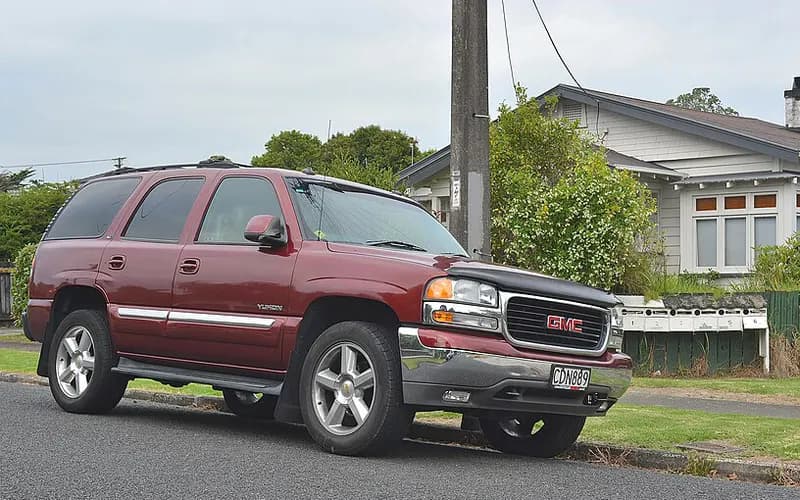
← Look into the faults of the GMC Yukon
Symptom
Smoke or fire: possible causes and documented repairs — 2000–2006 GMC Yukon
Of the records of the 2000–2006 GMC Yukon, 54 state “Smoke or fire” (Owner complaint: 36, Recall: 7, Manufacturer communication: 11). The technical documents say how to deal with 9 of its possible causes. They are listed by the number of matching records, most first.
Narrow it by model year, engine and more
Causes the technical documents say how to deal with (9)
HVAC blower motor resistor module / connector overheating
4 matching records
The terminal interface between the relay resistor module and the connector that powers it may be unable to carry the higher current of sustained blower operation, and moisture and other contaminants (such as road de-icing materials) entering the fresh air intake plenum may reach the module's circuit or corrode the terminals. The module or the connector could then overheat, and the blower may not work on certain settings or at all, possibly with a burning smell or smoke; Transport Canada says these warning signs could, in certain instances, be leading indicators of an impending vehicle fire.
What to do
- Remove the blower fuses (Htr A/C and HVAC 1), and lower the close-out panel enough to reach the resistor module connector.
- Disconnect the connector from the resistor module. The connector is replaced even if it was replaced in an earlier repair.
- Remove the tape from the harness to expose the wiring, and cut the wires back far enough from the connector to eliminate any melted insulation.
- Use the old connector as a map for splicing the wires to the new connector.
4 more steps ·All steps, part numbers and sources (2 sources) →
Hydro-boost brake assist and power steering share one hydraulic supply (four campaigns)
2 matching records
Hydro-boost links the power brakes and power steering by a common hydraulic pump, so a fractured pump driveshaft, a fractured hose, or fluid lost through a cracked accumulator can reach both steering and braking. An inoperative pump can make steering, and on hydro-boost vehicles braking, harder, but does not completely eliminate the ability to steer or slow the vehicle.
What to do
- In all cases, the proper tire size, and the maximum tire pressure set to the manufacturer's specification on the door placard, are recommended, especially for the front tires.
- Perform the Power Steering System Test in SI and make any necessary repairs based on the diagnosis.
- C/K 2500 and 3500, G 2500, 3500 and 4500, and HUMMER H2: the concern is a normal operating characteristic, and no further repairs should be made.
- C/K 1500 Series: the concern is a normal operating characteristic. On a vehicle with a 670 gear box, replacing it with a 680 gear box may increase the customer satisfaction (next stage).
2 more steps ·All steps, part numbers and sources (7 sources) →
Positive battery cable contact with steering shaft universal joint (Denali) - Transport Canada 2001092
1 matching record
On certain Yukon Denali and Yukon XL Denali vehicles, the positive battery cable assembly could come in contact with the steering shaft universal joint, eventually wearing through the cable's convoluted conduit and insulation and causing intermittent electrical shorting. This could overheat and ignite the cable insulation and conduit, with a possible underhood fire (Transport Canada recall).
What to do
- Dealers inspect the cable routing and reroute if necessary.
- The cable is also inspected for wear and replaced if necessary.
Aftermarket part (not the vehicle as built): Fram G3727 replacement fuel filter connector - recall 06E-043
1 matching record
On some aftermarket FRAM G3727 fuel filters the connector was not manufactured to Honeywell's specification, so the O-ring may not seat correctly on the fuel line. The seal at the connection may be inadequate, potentially leading to a fuel leak (wetting or dripping), and a fire could occur in the presence of an ignition source.
What to do
- The part number (G3727), country of origin (Mexico) and the date code (e.g., X60031) are located on the side of the fuel filter.
- Honeywell notifies owners and replaces the fuel filters free of charge.
Engine fuel rail crossover tube retainer screws may break (5.3L RPO L59) - recall 04V-376
1 matching record
On some vehicles with the 5.3L (RPO L59) E85 V8 engine, the engine fuel rail crossover tube retainer screws were not manufactured to specifications and may break. If a tube retainer screw breaks, fuel could leak from the fuel rail crossover joint, the engine may stall and, if an ignition source were present, an engine compartment fire could occur (GM recall bulletin 04066).
What to do
- Open the hood and install fender covers; remove the engine sight shield (beauty cover).
- Inspect for blue or green paint dots on the fuel rail crossover tube assembly or on the throttle body. If there are any paint dots, go to the document's step 13 (reinstall the sight shield; the "Reinstall" stage below).
- Do not remove the crossover tube from the fuel rail or disturb the o-ring seal (a fuel leak may be produced). Secure the fuel crossover tube retainer to the bracket on the fuel rail with locking type pliers, using sufficient force to keep the retainer from moving without damaging any parts.
- Remove the fuel rail crossover tube bracket retainer screw on one side and properly dispose of it. Take the two new screws from the retainer kit (P/N 89017590) and discard the remaining retainer brackets from the kit.
5 more steps ·All steps, part numbers and sources (3 sources) →
Parking brake linings worn out prematurely, parking brake does not hold (PBR single-shoe drum-in-hat)
1 matching record
In PBR's drum-in-hat parking brake (a single shoe bearing two linings, the "Banksia" style), the shoe can pivot about the piston so that the end of one lining rests against the drum; drum motion while driving then self-energizes the brake and maintains the contact, which may occur even without a parking brake application, and the linings wear out prematurely (GM's analysis found that the original-design hold-down clip contributed by preventing the shoe from retracting the lining away from the drum). With an ineffective parking brake an unattended vehicle may inadvertently roll, striking persons or property (ODI's chief concern).
What to do
- On complaint vehicles examined in the field, wear occurred earlier and to a greater extent on the driver's side parking brake unit and was largely localized at the tip of one of the linings.
- Bulletin 01-05-26-001 "Park Brake - Low Effort Apply System Description" (Mar 2001) describes a park brake test procedure.
- A revised clip designed to exert less force on the shoe went into MY 2003 production and into the service part stream. Installing the newer clip and replacing worn linings has been shown to remedy the defect.
- The closing report lists a bulletin of Aug 2004 as 02-05-26-001B "Brakes - Parking Brake Shoe Retainer Clip Availability", announcing a new retainer clip service kit for DIH-equipped vehicles.
5 more steps ·All steps, part numbers and sources (3 sources) →
Rear seat audio and/or rear HVAC controls inoperative (replace the RSA, not the console)
1 matching record
The rear seat audio (RSA) and/or the rear HVAC controls stop working. GM's Fix It Right table says to replace the RSA for this condition, not the console.
What to do
- Replace the RSA.
Conversion equipment (not the vehicle as built): Southern Comfort running board courtesy lights overheating - recall 03V-094
1 matching record
On certain pickup truck, van and mini van conversions with Southern Comfort built running boards, the courtesy lights in them might overheat when the wire harness is exposed to excessive moisture and road salt. The overheating can cause the running board to melt or cause a fire (NHTSA's recall summary).
What to do
- Dealers replace the wiring harness on these running boards.
Purge Solenoid: failed
1 matching record
Causes only records name
Not in the technical documents: named as the cause in records. A cause written in a complaint is the owner’s judgment or what a dealer said, not a confirmed fact.
Related symptoms, trouble codes and warning displays
What the technical documents state together with the faults above.
Put together by FaultCrate from public records and technical documents. The cause and the repair are for the workshop to decide with the vehicle in front of it. Counts are records, not failure rates.