GMC Yukon XL 2000–2006
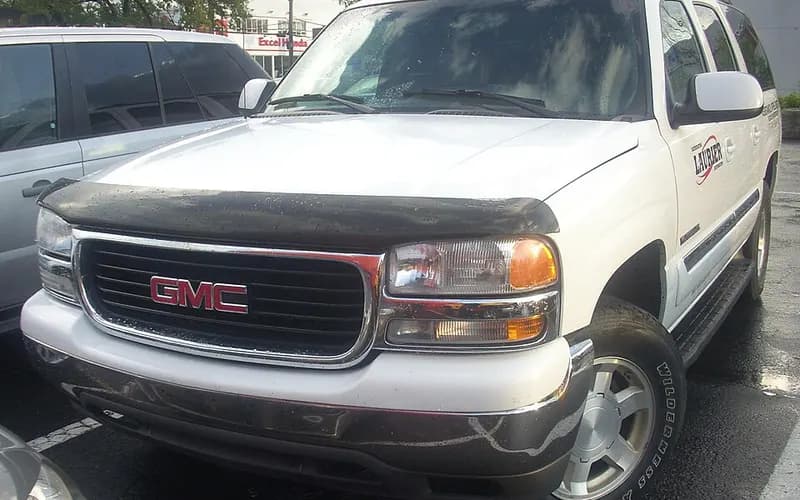
Common on this vehicle:Warning lightLeakGauge or instrument faultNoiseMisfire or rough idleCorrosion or rustVibration or shudderAir conditioning or heater
Record by record
723 records state a cause or a remedy. Each record is shown as short labels in the order fault → finding the cause → correction. Press a label to narrow to the records that state it.
Symptom
Component named as the cause
Work done
How it is said to have ended
- says it came back6
- says it did not fix it7
- result not stated24
A ribbon is as wide as the records that state both of its ends (only the commonest are drawn). A record that names several symptoms or components runs through each. Orange is records that say the fault came back or was not fixed. Results come from owners’ reports only; one that does not say is “result not stated”. None of this is a likelihood of a cause or a rate at which work succeeds.
Read the records one by one (32)
Known issuesShift lever position indicator in the instrument cluster may not illuminate (FMVSS 102) - recall 05V-0553
Recall2005 GMC YUKON XL ・ —
Automatic Transmission Shift Lever Position Indicator Illumination Recall
1Fault
- Under certain starting conditions the shift lever position indicator in the instrument panel cluster may not illuminate; on later start-ups the condition may or may not recur.
- If the indicator does not illuminate, the driver may not know which gear is selected and the vehicle may move in an unintended direction, possibly injuring people outside the vehicle.
2Finding the cause
Possible causes
- The PRNDL indicator behavior is induced only by a very specific battery voltage waveform and depends on vehicle level characteristics, while the vehicle otherwise operates normally.
- The "blank PRNDL" anomaly appeared at the assembly plants after interim 2005 model year instrument panel cluster revisions that began on January 31, 2005.
3Correction
Repair
- Dealers are to reprogram the instrument panel cluster.
- Prepare the vehicle for instrument panel cluster (IPC) reprogramming, then program the IPC using TIS data version 2.25.
Parts
- No parts are required for this recall.
Caution
- The service calibration is in Techline Information System (TIS) data version 2.25 and on TIS CD-ROM version 3.
- A later dealer message says TIS Data 2.50 has been released, so dealers no longer need to contact the Techline Customer Support Center (TCSC) for a VCI number to access the calibration.
- Vehicles with manual transmissions are not involved in this recall and need no further action.
Read the sentences of the record
From the manufacturer’s document
- Applies to:The recall covers certain 2005 Cadillac Escalade, Escalade ESV, Escalade EXT; Chevrolet Avalanche, Silverado, Suburban, Tahoe; and GMC Sierra, Yukon, Yukon XL vehicles equipped with an automatic transmission and built within the listed VIN breakpoints.
- Condition:Under certain starting conditions the shift lever position indicator in the instrument panel cluster may not illuminate; on later start-ups the condition may or may not recur.
- Condition:If the indicator does not illuminate, the driver may not know which gear is selected and the vehicle may move in an unintended direction, possibly injuring people outside the vehicle.
- Cause:The PRNDL indicator behavior is induced only by a very specific battery voltage waveform and depends on vehicle level characteristics, while the vehicle otherwise operates normally.
- Cause:The "blank PRNDL" anomaly appeared at the assembly plants after interim 2005 model year instrument panel cluster revisions that began on January 31, 2005.
- Repair:Dealers are to reprogram the instrument panel cluster.
- Repair:Prepare the vehicle for instrument panel cluster (IPC) reprogramming, then program the IPC using TIS data version 2.25.
- Caution:The service calibration is in Techline Information System (TIS) data version 2.25 and on TIS CD-ROM version 3.
- Caution:A later dealer message says TIS Data 2.50 has been released, so dealers no longer need to contact the Techline Customer Support Center (TCSC) for a VCI number to access the calibration.
- Parts:No parts are required for this recall.
- Caution:Vehicles with manual transmissions are not involved in this recall and need no further action.
- Cause
- CERTAIN SPORT UTILITY VEHICLES EQUIPPED WITH AN AUTOMATIC TRANSMISSION, FAIL TO COMPLY WITH THE REQUIREMENTS OF FEDERAL MOTOR VEHICLE SAFETY STANDARD NO. 102, "TRANSMISSION SHIFT LEVER SEQUENCE, STARTER INTERLOCK AND TRANSMISSION BRAKING EFFECT." UNDER CERTAIN VEHICLE STARTING CONDITIONS, THE SHIFT LEVER POSITION INDICATOR LOCATED IN THE INSTRUMENT PANEL CLUSTER MAY NOT ILLUMINATE. IF THE SHIFT LEVER POSITION INDICATOR DOES NOT ILLUMINATE, THE DRIVER MAY NOT KNOW WHICH GEAR THE VEHICLE IS IN.
- Remedy
- DEALERS WILL REPROGRAM THE INSTRUMENT PANEL CLUSTER FREE OF CHARGE. THE RECALL BEGAN ON FEBRUARY 14, 2005. OWNERS MAY CONTACT CADILLAC AT 1-866-982-2339, CHEVROLET AT 1-800-630-2438, AND GMC AT 1-866-996-9463.
- Consequence
- THE VEHICLE MAY MOVE IN AN UNINTENDED DIRECTION RESULTING IN POSSIBLE INJURY TO OTHERS OUTSIDE OF THE VEHICLE.
Recall2005 GMC YUKON XL ・ 2005-02-15
Shift Lever Position Indicator Illumination Recall
1Fault
Not stated
2Finding the cause
3Correction
Not stated
What the documents say to do
Shift lever position indicator in the instrument cluster may not illuminate (FMVSS 102) - recall 05V-055Repair
- Dealers reprogram the instrument panel cluster.
- Prepare the vehicle for instrument panel cluster (IPC) reprogramming, then program the IPC using TIS data version 2.25.
Read the sentences of the record
- Cause
- Certain vehicles equipped with an automatic transmission fail to comply with the requirements of CMVSS 101 - Location, identification and illumination of displays. Under certain vehicle starting conditions, the shift lever position indicator located in the instrument panel cluster may not illuminate. In subsequent vehicle start-ups, this condition may or may not occur again. If the shift lever position indicator does not illuminate, the driver may not know which gear the vehicle is in and the vehicle may move in an unintended direction, resulting in possible injury to others outside of the vehicle. Correction: Dealers will reprogram the instrument panel cluster.
Owner complaint2005 GMC YUKON DENALI XL ・ 2012-05-29
Gear indicator on instrument panel no longer illuminates
1Fault
THE CONTACT STATED THAT THE GEAR INDICATOR ON THE INSTRUMENT PANEL NO LONGER ILLUMINATED.
2Finding the cause
Not stated
3CorrectionNot repaired
THE VEHICLE WAS NOT TAKEN TO HAVE THE FAILURE DIAGNOSED OR REPAIRED.
What the documents say to do
Shift lever position indicator in the instrument cluster may not illuminate (FMVSS 102) - recall 05V-055Repair
- Dealers reprogram the instrument panel cluster.
- Prepare the vehicle for instrument panel cluster (IPC) reprogramming, then program the IPC using TIS data version 2.25.
Read the sentences of the record
- Fault
- THE CONTACT STATED THAT THE GEAR INDICATOR ON THE INSTRUMENT PANEL NO LONGER ILLUMINATED.
- Remedy
- THE VEHICLE WAS NOT TAKEN TO HAVE THE FAILURE DIAGNOSED OR REPAIRED.
- Consequence
- AS A RESULT, THE CONTACT WAS UNAWARE AS TO WHAT GEAR THE VEHICLE WAS ENGAGED.
Known issuesEngine fuel rail crossover tube retainer screws may break (5.3L RPO L59) - recall 04V-3762
Recall2005 GMC YUKON XL ・ 2004-02-08
Engine Fuel Rail Crossover Tube Retainer Screws
1Fault
- The engine fuel rail crossover tube retainer screws were not made to specification and may break; if one breaks, fuel could leak from the crossover joint, the engine may stall, and with an ignition source an engine compartment fire could occur.
2Finding the cause
Possible causes
- The failed screw was harder than specification; the over-hardening came from a conveyor in an induction hardening operation at the fastener plant stopping or slowing excessively, exposing the screws to the hardening for too long.
Steps to confirm (in the document’s order)
- Inspect for blue or green paint dots on the fuel rail crossover tube assembly or on the throttle body; if there are any, go to step 13.
3Correction
Repair
- Hold the fuel crossover tube retainer to the bracket on the fuel rail with locking pliers, using enough force to keep the retainer from moving without damaging any parts.
- Remove the fuel rail crossover tube bracket retainer screw on one side and dispose of it properly.
- Take the new screws out of the retainer kit (P/N 89017590) and discard the retainer brackets left in the kit.
- Start the new screw by hand for at least 3 full turns into the fuel rail crossover tube retainer bracket.
- Torque the screw to 4.8Nm (42 lb in).
3 more pointsPart numbers printed in the document
The numbers are as the document prints them. The name and the replacing number are what the pages of GMPartsGiant, a reseller of genuine parts and not GM, state. Aftermarket equivalents are not checked here (the links only search by number). Confirm the fit for the vehicle (VIN) before ordering.
Parts
- Part number 89017590, RETAINER KIT, F/INJN FUEL RL C/OVR TUBE, quantity 1 per vehicle.
Part numbers printed in the document
The numbers are as the document prints them. The name and the replacing number are what the pages of GMPartsGiant, a reseller of genuine parts and not GM, state. Aftermarket equivalents are not checked here (the links only search by number). Confirm the fit for the vehicle (VIN) before ordering.
Caution
- Do not remove the crossover tube from the fuel rail or disturb the o-ring seal, because a fuel leak may result.
- The service procedure in this recall differs from the one in the service manual.
Read the sentences of the record
From the manufacturer’s document
- Applies to:The recall covers certain 2005 Chevrolet Silverado, Tahoe and Suburban and GMC Sierra, Yukon and Yukon XL vehicles equipped with a 5.3L (RPO L59) E85 V8 engine and built within the listed VIN breakpoints.
- Condition:The engine fuel rail crossover tube retainer screws were not made to specification and may break; if one breaks, fuel could leak from the crossover joint, the engine may stall, and with an ignition source an engine compartment fire could occur.
- Cause:The failed screw was harder than specification; the over-hardening came from a conveyor in an induction hardening operation at the fastener plant stopping or slowing excessively, exposing the screws to the hardening for too long.
- Confirm:Inspect for blue or green paint dots on the fuel rail crossover tube assembly or on the throttle body; if there are any, go to step 13.
- Caution:Do not remove the crossover tube from the fuel rail or disturb the o-ring seal, because a fuel leak may result.
- Caution:The service procedure in this recall differs from the one in the service manual.
- Repair:Hold the fuel crossover tube retainer to the bracket on the fuel rail with locking pliers, using enough force to keep the retainer from moving without damaging any parts.
- Repair:Remove the fuel rail crossover tube bracket retainer screw on one side and dispose of it properly.
- Parts:Part number 89017590, RETAINER KIT, F/INJN FUEL RL C/OVR TUBE, quantity 1 per vehicle.
- Repair:Take the new screws out of the retainer kit (P/N 89017590) and discard the retainer brackets left in the kit.
- Repair:Start the new screw by hand for at least 3 full turns into the fuel rail crossover tube retainer bracket.
- Repair:Torque the screw to 4.8Nm (42 lb in).
- Repair:Check that the retainer is seated and not loose by trying to wiggle it slightly; it should not move. Then re-torque the screw to 4.8Nm (42 lb in).
- Repair:Repeat steps 5 through 10 on the other side of the crossover tube.
- Repair:Check for leaks: ignition ON with the engine OFF for 2 seconds, ignition OFF for 10 seconds, ignition ON with the engine OFF, then visually inspect for fuel leaks.
- Cause
- ON CERTAIN SPORT UTILITY VEHICLES AND PICKUP TRUCKS EQUIPPED WITH 5.3L (RPO L59) V8 ENGINES, THE ENGINE FUEL RAIL CROSSOVER TUBE RETAINER SCREWS WERE NOT MANUFACTURED TO SPECIFICATIONS AND MAY BREAK.
- Remedy
- DEALERS WILL INSPECT THE FUEL RAIL CROSSOVER TUBE AND, IF NECESSARY, REPLACE THE RETAINER SCREWS. OWNERS WERE NOTIFIED BY TELEPHONE ON JULY 30, 2004, WITH A FOLLOWUP OWNER LETTER BEGAN AUGUST 5, 2004. OWNERS SHOULD CONTACT CHEVROLET AT 1-800-630-2438 OR GMC AT 1-866-996-9463. NOTE: THE GM BULLETIN LISTS THE TAHOE AND YUKON MODELS BECAUSE CANADIAN VEHICLES ARE INCLUDED IN THE BULLETIN. NO U.S. TAHOE OR YUKON VEHICLES ARE INCLUDED IN THE U.S. CAMPAIGN.
- Consequence
- IF THE TUBE RETAINER SCREW BREAKS, FUEL COULD LEAK FROM THE FUEL RAIL CROSSOVER JOINT, THE ENGINE MAY STALL AND, IF AN IGNITION SOURCE WERE PRESENT, AN ENGINE COMPARTMENT FIRE COULD OCCUR.
Recall2005 GMC YUKON XL ・ 2004-08-05
Fuel Rail Crossover Tube Retainer Screws Recall
1Fault
2Finding the cause
3Correction
Not stated
What the documents say to do
Engine fuel rail crossover tube retainer screws may break (5.3L RPO L59) - recall 04V-376Confirm
- Check for leaks: ignition ON with the engine OFF for 2 seconds, ignition OFF for 10 seconds, ignition ON with the engine OFF, then visually inspect for fuel leaks.
Repair
- Dealers inspect the fuel rail crossover tube and replace the retainer screws if necessary.
- Hold the fuel crossover tube retainer to the bracket on the fuel rail with locking pliers, using enough force to keep the retainer from moving without damaging any parts.
Caution
- The GM bulletin lists Tahoe and Yukon models because Canadian vehicles are included in the bulletin.
Read the sentences of the record
- Cause
- On certain vehicles, the fuel rail crossover tube retainer screws were not manufactured to specifications and may break. If a tube retainer screw breaks, fuel could leak from the fuel rail crossover joint, the engine may stall and, if an ignition source were present, an engine compartment fire could occur. Correction: Dealers will inspect the fuel rail crossover tube assembly and, if necessary, replace the two tube retainer screws.
Known issuesEngine fuel rail pulse damper retainer clip may fracture (8.1L V8) - recall 06V-289 / Transport Canada 20061952
Recall2005 GMC YUKON XL ・ 2006-03-08
Fuel Rail Pulse Damper Retainer Clip Fracture Recall
1Fault
- The engine fuel rail pulse damper retainer clip may fracture, resulting in inadequate retention of the damper; if the damper comes loose, a fuel leak may result and may cause a fire if an ignition source is present.
2Finding the cause
Possible causes
- Analysis showed some clips were not properly heat treated and were more susceptible to fracture.
Steps to confirm (in the document’s order)
- To inspect for leaks, turn the ignition ON with the engine OFF for 2 seconds, turn it OFF for 10 seconds, turn it ON with the engine OFF, and inspect the fuel rail, fuel rail dampener, and fuel rail pressure cap and valve for fuel leaks.
3Correction
Repair
- Dealers are to replace the engine fuel rail pulse damper retainer clip.
- Connect the J 34730-1A fuel pressure gage to the fuel pressure valve, wrapping a shop towel around the fitting while connecting it to avoid spillage.
- Open the valve on the J 34730-1A to bleed the system pressure; to help relieve residual pressure in the fuel rail, push down on the fuel rail dampener, which should move inward approximately 2-3 mm (1/8 in) as the pressure releases.
- Push down on the fuel dampener and remove the fuel pressure dampener clip; discard the old clip.
- Push down on the fuel dampener and install the new fuel pressure dampener clip.
Parts
- Part: 12575017 Clamp-Fuel Pulse Dpnr, quantity 1 per vehicle.
Part numbers printed in the document
The numbers are as the document prints them. The name and the replacing number are what the pages of GMPartsGiant, a reseller of genuine parts and not GM, state. Aftermarket equivalents are not checked here (the links only search by number). Confirm the fit for the vehicle (VIN) before ordering.
Caution
- The service procedure in this recall is different from the service procedure in the service manual.
- If the fuel pressure is not relieved as instructed in step 8, or the dampener is not held in position while the clip is replaced, the dampener O-ring may not seat or seal properly, and a damaged or improperly seated O-ring may result in a fuel leak.
- Do not remove the fuel dampener from the fuel rail; if it is removed, a fuel dampener kit with a new O-ring must be installed.
- The bulletin was revised to add new information to the service procedure: warning statements were added along with some other minor changes.
Read the sentences of the record
From the manufacturer’s document
- Applies to:Applies to certain 2004-06 Chevrolet Silverado, Suburban, Avalanche; GMC Sierra, Yukon XL; and 2006 Chevrolet Kodiak and GMC TopKick equipped with an 8.1L V8 (RPO L18 - VIN G) engine.
- Applies to:The defect notice lists GMC Yukon XL (GMT800): 2004 model year manufactured 03/2003 to 06/2004 (967 vehicles), 2005 manufactured 06/2004 to 06/2005 (658), and 2006 manufactured 07/2005 to 01/2006 (152).
- Condition:The engine fuel rail pulse damper retainer clip may fracture, resulting in inadequate retention of the damper; if the damper comes loose, a fuel leak may result and may cause a fire if an ignition source is present.
- Cause:Analysis showed some clips were not properly heat treated and were more susceptible to fracture.
- Repair:Dealers are to replace the engine fuel rail pulse damper retainer clip.
- Parts:Part: 12575017 Clamp-Fuel Pulse Dpnr, quantity 1 per vehicle.
- Caution:The service procedure in this recall is different from the service procedure in the service manual.
- Repair:Connect the J 34730-1A fuel pressure gage to the fuel pressure valve, wrapping a shop towel around the fitting while connecting it to avoid spillage.
- Repair:Open the valve on the J 34730-1A to bleed the system pressure; to help relieve residual pressure in the fuel rail, push down on the fuel rail dampener, which should move inward approximately 2-3 mm (1/8 in) as the pressure releases.
- Caution:If the fuel pressure is not relieved as instructed in step 8, or the dampener is not held in position while the clip is replaced, the dampener O-ring may not seat or seal properly, and a damaged or improperly seated O-ring may result in a fuel leak.
- Caution:Do not remove the fuel dampener from the fuel rail; if it is removed, a fuel dampener kit with a new O-ring must be installed.
- Repair:Push down on the fuel dampener and remove the fuel pressure dampener clip; discard the old clip.
- Repair:Push down on the fuel dampener and install the new fuel pressure dampener clip.
- Confirm:To inspect for leaks, turn the ignition ON with the engine OFF for 2 seconds, turn it OFF for 10 seconds, turn it ON with the engine OFF, and inspect the fuel rail, fuel rail dampener, and fuel rail pressure cap and valve for fuel leaks.
- Repair:If a leak is present, a dampener kit with a new O-ring must be installed.
- Caution:The bulletin was revised to add new information to the service procedure: warning statements were added along with some other minor changes.
- Cause
- ON CERTAIN TRUCKS EQUIPPED WITH AN 8.1L V8 (RPO L8-VIN G) ENGINE HAVE A CONDITION IN WHICH THE ENGINE FUEL RAIL PULSE DAMPER RETAINER CLIP MAY FRACTURE RESULTING IN INADEQUATE RETENTION OF THE DAMPER.
- Remedy
- DEALERS WILL REPLACE THE ENGINE FUEL RAIL PULSE DAMPER RETAINER CLIP FREE OF CHARGE. THE RECALL BEGAN ON AUGUST 31, 2006. OWNERS MAY CONTACT CHEVROLET AT 1-800-630-2438 AND GMC TRUCKS AT 1-866-996-9463.
- Consequence
- IF THE DAMPER COMES LOOSE, A FUEL LEAK MAY RESULT. FUEL LEAKAGE, IN THE PRESENCE OF AN IGNITION SOURCE, COULD RESULT IN A FIRE.
Recall2004–2006 GMC YUKON XL ・ 2006-08-04
Engine fuel rail pulse damper retainer clip fracture recall
1Fault
2Finding the cause
3Correction
Not stated
What the documents say to do
Engine fuel rail pulse damper retainer clip may fracture (8.1L V8) - recall 06V-289 / Transport Canada 2006195Confirm
- To inspect for leaks, turn the ignition ON with the engine OFF for 2 seconds, turn it OFF for 10 seconds, turn it ON with the engine OFF, and inspect the fuel rail, fuel rail dampener, and fuel rail pressure cap and valve for fuel leaks.
Repair
- Dealers replace the engine fuel rail pulse damper retainer clip.
- Dealers replace the engine fuel rail pulse damper retainer clip.
Caution
- The service procedure in this recall is different from the service procedure in the service manual.
Read the sentences of the record
- Cause
- On certain vehicles, the engine fuel rail pulse damper retainer clip may fracture, resulting in inadequate retention of the damper. If the damper comes loose, a fuel leak may result. Fuel leakage in the presence of an ignition source could result in a fire. Correction: Dealers will replace the engine fuel rail pulse damper retainer clip.
Known issuesHydro-boost brake assist and power steering share one hydraulic supply (four campaigns)2
Recall2005 GMC YUKON XL ・ 2005-08-02
Bosch Hydro-Boost Brake Accumulator Crack Recall
1Fault
- The hydraulic brake booster's pressure accumulator may crack and/or separate from the Hydro-Boost assembly in normal operation; if it separates with the hood open, fragments could injure people nearby.
- The crack or fractured surface could let hydraulic fluid leak from the accumulator circuit of the booster, and the loss of fluid would increase steering and braking effort.
2Finding the cause
Possible causes
- The over-pressurization comes from a two-function valve (TFV) that does not open within its specified limits while the hydraulic fluid in the accumulator circuit expands as the booster is exposed to rising under-hood temperatures.
Steps to confirm (in the document’s order)
- With the engine OFF, make at least five (5) high effort brake applies until the pedal feels hard.
- Turn the steering wheel to the steering lock (fully turned) position, hold for 1 to 2 seconds, then release; do this a total of 3 times.
- Install the inlet port adapter, CH 47950-2, into the booster supply port and slowly tighten it with a torque wrench to 16 N·m (12 lb ft).
- Install the accumulator pressure clamp, CH 47950-1, by sliding it over the accumulator so that it straddles the hydro-boost housing.
- If fluid comes out of the inlet port adapter at up to 65 N·m (48 lb ft) maximum torque on the clamp bolt, the hydro-boost booster assembly is OK.
3Correction
Repair
- If no fluid is seen, complete Steps 19-27 and repeat Steps 1-18; if no fluid is visible in the second evaluation, replace the hydro-boost unit.
- After the test, reinstall the supply hose/tube to the booster and tighten to 28 N·m (21 lb ft).
- When the booster is replaced, install the 4 booster to bulkhead nuts and tighten them to 36 N·m (26 lb ft).
Caution
- The inspection uses the Hydro-Boost Checking Tool, CH 47950, shipped to each dealer.
- After starting the engine, do not depress the brake pedal until instructed.
- Incorrect installation of the fixture washer will damage the accumulator end.
Read the sentences of the record
From the manufacturer’s document
- Applies to:The recall covers certain 2004 Chevrolet Kodiak and GMC TopKick; 2004-2005 Chevrolet Avalanche, Express, Silverado, Suburban; GMC Savana, Sierra, Yukon XL; and HUMMER H2 vehicles built within the listed VIN breakpoints.
- Applies to:GM limited the recall to dealer stock vehicles and sold vehicles with less than 150 days in service.
- Condition:The hydraulic brake booster's pressure accumulator may crack and/or separate from the Hydro-Boost assembly in normal operation; if it separates with the hood open, fragments could injure people nearby.
- Condition:The crack or fractured surface could let hydraulic fluid leak from the accumulator circuit of the booster, and the loss of fluid would increase steering and braking effort.
- Cause:The over-pressurization comes from a two-function valve (TFV) that does not open within its specified limits while the hydraulic fluid in the accumulator circuit expands as the booster is exposed to rising under-hood temperatures.
- Caution:The inspection uses the Hydro-Boost Checking Tool, CH 47950, shipped to each dealer.
- Confirm:With the engine OFF, make at least five (5) high effort brake applies until the pedal feels hard.
- Caution:After starting the engine, do not depress the brake pedal until instructed.
- Confirm:Turn the steering wheel to the steering lock (fully turned) position, hold for 1 to 2 seconds, then release; do this a total of 3 times.
- Confirm:Install the inlet port adapter, CH 47950-2, into the booster supply port and slowly tighten it with a torque wrench to 16 N·m (12 lb ft).
- Confirm:Install the accumulator pressure clamp, CH 47950-1, by sliding it over the accumulator so that it straddles the hydro-boost housing.
- Caution:Incorrect installation of the fixture washer will damage the accumulator end.
- Confirm:If fluid comes out of the inlet port adapter at up to 65 N·m (48 lb ft) maximum torque on the clamp bolt, the hydro-boost booster assembly is OK.
- Repair:If no fluid is seen, complete Steps 19-27 and repeat Steps 1-18; if no fluid is visible in the second evaluation, replace the hydro-boost unit.
- Repair:After the test, reinstall the supply hose/tube to the booster and tighten to 28 N·m (21 lb ft).
- Repair:When the booster is replaced, install the 4 booster to bulkhead nuts and tighten them to 36 N·m (26 lb ft).
- Cause
- CERTAIN TRUCKS, SPORT UTILITY VEHICLES, AND VANS EQUIPPED WITH BOSCH HYDRO-BOOST BRAKE ASSEMBLIES, THE HYDRAULIC BRAKE BOOSTER PRESSURE ACCUMULATOR MAY CRACK AND SEPARATE FROM THE HYDRO-BOOST ASSEMBLY DURING NORMAL OPERATING CONDITIONS.
- Remedy
- DEALERS WILL TEST THE HYDRO-BOOST ASSEMBLY FOR FUNCTIONAL OPERATION OF THE TWO-FUNCTION VALVE. IF THE HYDRO-BOOST ASSEMBLY FAILS THE TEST, DEALERS WILL REPLACE THE ASSEMBLY FREE OF CHARGE. THE RECALL BEGAN ON MARCH 23, 2005. OWNERS MAY CONTACT CHEVROLET AT 1-800-630-2438, GMC TRUCKS AT 1-866-996-9463 AND HUMMER AT 1-800-732-5493.
- Consequence
- IF A SEPARATION OCCURRED AND THE HOOD OF THE VEHICLE WERE OPEN, FRAGMENTS FROM THE ACCUMULATOR COULD CAUSE INJURY TO PEOPLE IN THE IMMEDIATE AREA. THE PRESENCE OF THIS CRACK OR FRACTURED SURFACE COULD ALLOW THE HYDRAULIC FLUID TO LEAK FROM THE ACCUMULATOR CIRCUIT OF THE BOOSTER ASSEMBLY. THE LOSS OF FLUID WOULD CAUSE INCREASED STEERING AND BRAKING EFFORT AND A CRASH MAY OCCUR WITHOUT PRIOR WARNING.
Recall2004–2005 GMC YUKON XL ・ 2005-02-15
Hydraulic Brake Booster Pressure Accumulator Crack Recall
1Fault
2Finding the cause
3Correction
Not stated
What the documents say to do
Hydro-boost brake assist and power steering share one hydraulic supply (four campaigns)Confirm
- Perform the "Power Steering System Test" found in SI and make any necessary repairs based on system diagnosis.
Repair
- Dealers replace the hydro-boost relief valve.
- Dealers test the hydro-boost assembly for functional operation and replace it if it fails.
Caution
- An inoperative pump raises steering and braking effort but does not completely remove the ability to steer or slow the vehicle.
Read the sentences of the record
- Cause
- On certain vehicles, the hydraulic brake booster's pressure accumulator may crack and/or separate from the Hydro-Boost assembly during normal vehicle operating conditions. If a separation occurred and the hood of the vehicle was open, fragments from the accumulator could cause injury to people in the immediate area. In addition, the presence of this crack or fractured surface could allow the hydraulic fluid to leak from the accumulator circuit of the booster assembly. The loss of fluid would cause increased steering and braking effort. Correction: Dealers will test and, if necessary, replace the Hydro-Boost assembly.
Known issuesHVAC blower motor resistor module / connector overheating1
Recall2003–2006 GMC YUKON XL ・ 2011-02-21
HVAC Blower Motor Resistor Module Overheating
1Fault
2Finding the cause
3Correction
Not stated
What the documents say to do
HVAC blower motor resistor module / connector overheatingRepair
- Dealers install a new blower motor resistor and resistor module connector.
- Cut the wires back far enough to remove any melted insulation.
Caution
- The connector must be replaced even if it was replaced in an earlier repair.
Read the sentences of the record
- Cause
- On certain vehicles, the interface between the electrical terminals of the Heating, Ventilation, and Air Conditioning (HVAC) blower relay resistor module and the wiring connector (which powers the module) may be incapable of conducting higher current levels for sustained periods of operation. In addition, moisture and other contaminants (such as road de-icing materials) may enter the fresh air intake plenum and contact the internal circuit of the module or corrode the terminals. These conditions may cause the relay resistor module or wiring connector to overheat, causing various symptoms such as: the HVAC blower may not function on certain or all blower speed settings; a burning-plastic smell or smoke may be present in the vehicle, or; the HVAC blower may run continually with the ignition in the OFF position. These warning signs could, in certain instances, be leading indicators of an impending vehicle fire, which could result in property damage and/or personal injury. Correction: Owners will be provided with additional warranty coverage for the blower motor resistor module/wiring connector overheating condition. Under this "special warranty coverage", should this condition occur within 10 years or 240,000 km from first vehicle registration, dealers will install a replacement blower motor resistor and resistor module connector.
Known issuesBrake pedal pushrod retainer missing - recall 05V-1031
Recall2005 GMC YUKON XL ・ —
Brake Pedal Pushrod Retainer Recall 05039
1Fault
- The brake pedal pushrod retainer may be missing; without it the brake booster pushrod could disengage from the brake pedal, causing a loss of brakes and possibly a crash without prior warning.
2Finding the cause
Possible causes
- On the vehicles examined, the brake pedal clip that retains the brake pedal push rod to the brake pedal was missing.
- The second shift operator at the assembly plant did not follow the standardized work instruction, so the clip was not always installed; only vehicles built on the second shift were found with clips missing.
Steps to confirm (in the document’s order)
- Inspect for the presence and proper installation of the brake pushrod retaining clip.
3Correction
Repair
- Install a new clip if necessary.
Parts
- Very few vehicles are expected to need a brake pedal pushrod retainer; if one is needed, it is ordered on a CSO (Customer Special Order). No part number is printed.
Caution
- Confirm vehicle eligibility through GMVIS before starting recall repairs; not all vehicles within the breakpoints may be involved.
Read the sentences of the record
From the manufacturer’s document
- Applies to:The recall covers certain 2005 Chevrolet Suburban and Tahoe and GMC Yukon and Yukon XL vehicles built within the listed VIN breakpoints.
- Applies to:VIN breakpoints: 2005 GMC Yukon from 5J206278 through 5J218221; 2005 GMC Yukon XL from 5J215251 through 5J218187.
- Caution:Confirm vehicle eligibility through GMVIS before starting recall repairs; not all vehicles within the breakpoints may be involved.
- Condition:The brake pedal pushrod retainer may be missing; without it the brake booster pushrod could disengage from the brake pedal, causing a loss of brakes and possibly a crash without prior warning.
- Cause:On the vehicles examined, the brake pedal clip that retains the brake pedal push rod to the brake pedal was missing.
- Cause:The second shift operator at the assembly plant did not follow the standardized work instruction, so the clip was not always installed; only vehicles built on the second shift were found with clips missing.
- Confirm:Inspect for the presence and proper installation of the brake pushrod retaining clip.
- Repair:Install a new clip if necessary.
- Parts:Very few vehicles are expected to need a brake pedal pushrod retainer; if one is needed, it is ordered on a CSO (Customer Special Order). No part number is printed.
- Cause
- ON CERTAIN SPORT UTILITY VEHICLES, THE BRAKE PEDAL PUSHROD RETAINER MAY BE MISSING. IF THE RETAINER IS MISSING, THE BRAKE BOOSTER PUSHROD COULD DISENGAGE FROM THE BRAKE PEDAL.
- Remedy
- DEALERS WILL INSPECT THE VEHICLES FOR THE BRAKE PEDAL PUSHROD RETAINER AND INSTALL ONE IF IT IS MISSING FREE OF CHARGE. THE MANUFACTURER BEGAN CONTACTING OWNERS BY TELEPHONE ON MARCH 10, 2005. OWNERS MAY CONTACT CHEVROLET AT 1-800-630-2438 OR GMC AT 1-866-996-9463.
- Consequence
- THIS COULD RESULT IN A LOSS OF BRAKES WHICH COULD RESULT IN A CRASH.
Known issuesBrake pipe (brake line) corrosion and rupture1
Owner complaint2005 GMC YUKON DENALI XL ・ 2014-12-27
Brake pedal goes to floor, brake fluid loss, rusted brake line at left rear
1Fault
2Finding the cause
3Correction
What the documents say to do
Brake pipe (brake line) corrosion and ruptureConfirm
- In the joint inspections, scaling or flaking corrosion was taken as indicating the onset of metal loss and given the second lowest ranking (2); a leaking or previously repaired pipe was the lowest (1).
Repair
- GM recommends replacing the entire set of pipes whenever any pipe leaks or is corroded enough to need replacement.
- On June 28, 2013 GM released 66 new part numbers for servicing brake pipes in 1999-2007 GMT800 pickups and utility vehicles.
Caution
- Analysis of repair records indicates that consumers often elect to repair only the failed circuit.
Read the sentences of the record
- Fault
- I WAS TRAVELING ON A LOCAL HIGHWAY AT THE POSTED SPEED LIMIT WHEN I WAS CAUSED TO SLOW DUE TO TRAFFIC. (3 more)
- Remedy
- I IMMEDIATELY ADDED FLUID.
- Inspection
- I CHECKED THE BRAKE FLUID AND IT WAS MUCH LOWER THAN WHEN WE STARTED OUR TRIP JUST A FEW HOURS PRIOR. (1 more)
- Consequence
- LUCKILY I DID NOT CAUSE AN ACCIDENT BUT EASILY THERE COULD HAVE BEEN ONE.
Known issuesAftermarket part (not the vehicle as built): Federal-Mogul National / Carquest replacement wheel hub assembly retention nut - recall 07E-1061
Recall2005 GMC YUKON XL ・ —
Wheel Hub Assembly Bearing Nut Loosening Recall
1Fault
- The inboard retention nut that maintains the hub bearing assembly can loosen, resulting in an ABS light indication, noise, and/or wheel separation from the vehicle; wheel separation can result in a vehicle crash.
2Finding the cause
Steps to confirm (in the document’s order)
- On 2x4 vehicles, raise the vehicle on an approved hoist first; the hub assembly is good if a yellow, green or blue paint mark is seen on the grease cap on the inboard side of the steering knuckle.
- If the paint mark is not present, remove the wheel and the brake rotor and clean rust from the hub assembly face to check for the date code stamping.
- Defective hub assemblies can be identified by the country of origin on the package together with a recalled date code, by the date code on the package, or by the date code on the hub assembly.
- If a round yellow sticker is present on the box label, the part is good.
3Correction
Repair
- The hub assemblies were manufactured for aftermarket use; owners of these parts should have them removed and replaced as soon as possible.
- Federal-Mogul will replace the recalled hub assemblies free of charge.
Parts
- The recalled part numbers are 515020, 515021, 515025, 515053, 515054, 515059 and 515060.
Read the sentences of the record
From the manufacturer’s document
- Applies to:This is an equipment recall by Federal-Mogul of certain wheel hub assemblies sold as replacement parts only.
- Applies to:The recalled hub assemblies were packaged and sold between January 23, 2006 and December 20, 2007 under the National and CARQUEST Premium (BGS/Blue) brands, in 7 base part numbers.
- Parts:The recalled part numbers are 515020, 515021, 515025, 515053, 515054, 515059 and 515060.
- Applies to:The application lists include GMC 1500 Yukon (2WD) and GMC 1500 Yukon XL (2WD), 2001-2006.
- Applies to:ILJIN manufactured the recalled hub assemblies from December 27, 2005 to November 29, 2007.
- Condition:The inboard retention nut that maintains the hub bearing assembly can loosen, resulting in an ABS light indication, noise, and/or wheel separation from the vehicle; wheel separation can result in a vehicle crash.
- Confirm:On 2x4 vehicles, raise the vehicle on an approved hoist first; the hub assembly is good if a yellow, green or blue paint mark is seen on the grease cap on the inboard side of the steering knuckle.
- Confirm:If the paint mark is not present, remove the wheel and the brake rotor and clean rust from the hub assembly face to check for the date code stamping.
- Confirm:Defective hub assemblies can be identified by the country of origin on the package together with a recalled date code, by the date code on the package, or by the date code on the hub assembly.
- Confirm:If a round yellow sticker is present on the box label, the part is good.
- Repair:The hub assemblies were manufactured for aftermarket use; owners of these parts should have them removed and replaced as soon as possible.
- Repair:Federal-Mogul will replace the recalled hub assemblies free of charge.
- Cause
- CERTAIN FEDERAL-MOGUL REPLACEMENT WHEEL HUB ASSEMBLIES WITH THE BRAND NAMES: NATIONAL, CARQUEST P/NOS. 515020, 515021, 515025, 515053, 515054, 515059, AND 515060, SHIPPED BETWEEN JANUARY 23, 2006, AND DECEMBER 20, 2007, SOLD FOR LIGHT DUTY AND MEDIUM DUTY TRUCKS. THE INBOARD RETENTION NUT USED TO MAINTAIN HUB BEARING ASSEMBLY CAN LOOSEN RESULTING IN AN ABS LIGHT INDICATION, NOISE, AND/OR WHEEL SEPARATION.
- Remedy
- FEDERAL-MOGUL WILL NOTIFY CUSTOMERS AND WILL REPLACE THE HUB ASSEMBLY FREE OF CHARGE. THE RECALL BEGAN ON FEBRUARY 7, 2008. OWNERS CAN CONTACT FEDERAL-MOGUL TOLL-FREE AT 877-489-6659.
- Consequence
- WHEEL SEPARATION CAN RESULT IN A VEHICLE CRASH.
Known issuesSnap or popping noise from the front of the vehicle (slot the front crossmember mounting holes)1
Owner complaint2005 GMC YUKON XL ・ 2008-07-08
Loud popping or clicking sound during turns, recurring at multiple mileages
1Fault
2Finding the cause
Not stated
3Correction
Read the sentences of the record
- Fault
- WHILE MAKING EITHER A LEFT OR RIGHT TURN AT 10 MPH (= 16.1 km/h), THE CONTACT COULD HEAR A LOUD POPPING OR CLICKING SOUND. (1 more)
- Remedy
- SHE TOOK THE VEHICLE TO A LOCAL DEALER AND THEY ADJUSTED THE STRAPS, LUBED THE FRONT, AND TIGHTENED THE CROSS MEMBER BOLTS. (6 more)
- Inspection
- AT 67,762 MILES (= 109,052 km), THE DEALER STATED THAT THE DRIVE SHAFT NEEDED TO BE REPLACED.
Known issuesHigher than expected oil consumption at 8600 GVW and above (accepted rate and consumption test)1
Manufacturer communication2001–2006 GMC YUKON XL DENALI ・ 2025-01-17(1 earlier editions of this document folded here)
Oil Consumption Measurement and Loss of Oil Service Bulletin
1Fault
Not stated
2Finding the cause
Possible causes
- Towing a trailer or hauling additional weight will increase oil consumption.
Steps to confirm (in the document’s order)
- The accepted rate of oil consumption for gasoline engines in vehicles at or above 8600 GVW is stated as 1 liter (1 qt) within 400 liters (100 gallons) of fuel used.
- Inspect the oil pans, engine covers and the engine oil cooler for leakage, and inspect for oil leakage into the engine coolant.
- Verify that the positive crankcase ventilation (PCV) system is operating properly; blockages, restrictions or damage to the PCV system can result in increased oil use.
- Wait at least 15 minutes after the engine is shut off before checking the oil level, so most of the oil has drained back into the crankcase.
- Check the oil level and record the vehicle mileage, date and exact oil level on the bulletin's form, then make sure the oil level is at, but not above, the full mark on the dipstick, adding oil if necessary.
3Correction
Repair
- If the final evaluation shows the engine uses more than 0.946 liter (1 qt) in 379 liters (100 gallons) of fuel used, follow the published symptom diagnostics in the appropriate Service Manual.
- The labor operation for the oil consumption test is 0600334, 0.5 hr.
Caution
- Part of the oil film left on the cylinder wall is consumed during combustion, so varying rates of oil consumption are accepted as normal in all engines.
- This rate applies only to vehicles under warranty, maintained per the appropriate maintenance schedule, driven at legal speeds and within the design intent of the vehicle.
- Oil economy should not be tested until the vehicle has accumulated at least 6400 km (4000 mi), except when an engine is reported to be using more than 0.946 liter (1 qt) in 1600 km (1000 mi).
Read the sentences of the record
From the manufacturer’s document
- Applies to:The model list includes the 2000–2019 Yukon XL, among other GM trucks and vans, with a gasoline engine and rated at 8600 GVW and above (note: the Yukon XL range runs to 2019).
- Caution:Part of the oil film left on the cylinder wall is consumed during combustion, so varying rates of oil consumption are accepted as normal in all engines.
- Confirm:The accepted rate of oil consumption for gasoline engines in vehicles at or above 8600 GVW is stated as 1 liter (1 qt) within 400 liters (100 gallons) of fuel used.
- Caution:This rate applies only to vehicles under warranty, maintained per the appropriate maintenance schedule, driven at legal speeds and within the design intent of the vehicle.
- Confirm:Inspect the oil pans, engine covers and the engine oil cooler for leakage, and inspect for oil leakage into the engine coolant.
- Confirm:Verify that the positive crankcase ventilation (PCV) system is operating properly; blockages, restrictions or damage to the PCV system can result in increased oil use.
- Cause:Towing a trailer or hauling additional weight will increase oil consumption.
- Caution:Oil economy should not be tested until the vehicle has accumulated at least 6400 km (4000 mi), except when an engine is reported to be using more than 0.946 liter (1 qt) in 1600 km (1000 mi).
- Confirm:Wait at least 15 minutes after the engine is shut off before checking the oil level, so most of the oil has drained back into the crankcase.
- Confirm:Check the oil level and record the vehicle mileage, date and exact oil level on the bulletin's form, then make sure the oil level is at, but not above, the full mark on the dipstick, adding oil if necessary.
- Confirm:Ask the customer to schedule an appointment and return to the dealer for inspection once they have consumed 100 gallons (= 378.5 L) of fuel.
- Repair:If the final evaluation shows the engine uses more than 0.946 liter (1 qt) in 379 liters (100 gallons) of fuel used, follow the published symptom diagnostics in the appropriate Service Manual.
- Repair:The labor operation for the oil consumption test is 0600334, 0.5 hr.
Open the manufacturer’s document (PDF) ↗ The points above were read from this document.
- Remedy
- This service bulletin explains how to measure for oil consumption and possible reasons for loss of oil.
Known issuesSome OnStar features no longer work (2G cellular sunset; the module is not broken)1
Manufacturer communication2003–2006 GMC YUKON XL DENALI ・ 2025-04-28
OnStar Module 2G Sunset Information
1Fault
- Customers may comment on a notification and/or that some 2G OnStar module features are no longer operable.
- One of the listed concerns is being unable to contact the OnStar Call Center.
- All other functions within the OnStar module are unaffected, such as OnStar remote link, Bluetooth, microphone, and GPS.
2Finding the cause
Possible causes
- On December 31, 2022, the 2G cellular signal will no longer be active, causing some OnStar module features to be inoperable.
- The 2G CDMA cellular network was decommissioned across Canada in 2015.
Steps to confirm (in the document’s order)
- Any other function in the Telematics Communication Interface Control Module (other than OnStar) is to be diagnosed as directed by SI.
3Correction
Repair
- The OnStar guardian app is being used as a replacement for the OnStar portion of the module.
Caution
- Do not replace the OnStar module because of the 2G shutdown.
- If the vehicle is brought in for inactive/broken/inoperable OnStar features, do not replace the module; the module is not broken.
Read the sentences of the record
From the manufacturer’s document
- Applies to:Applies to GMC Yukon models, model years 2003 to 2014.
- Applies to:The involved region is North America.
- Condition:Customers may comment on a notification and/or that some 2G OnStar module features are no longer operable.
- Condition:One of the listed concerns is being unable to contact the OnStar Call Center.
- Condition:All other functions within the OnStar module are unaffected, such as OnStar remote link, Bluetooth, microphone, and GPS.
- Cause:On December 31, 2022, the 2G cellular signal will no longer be active, causing some OnStar module features to be inoperable.
- Caution:Do not replace the OnStar module because of the 2G shutdown.
- Caution:If the vehicle is brought in for inactive/broken/inoperable OnStar features, do not replace the module; the module is not broken.
- Repair:The OnStar guardian app is being used as a replacement for the OnStar portion of the module.
- Confirm:Any other function in the Telematics Communication Interface Control Module (other than OnStar) is to be diagnosed as directed by SI.
- Cause:The 2G CDMA cellular network was decommissioned across Canada in 2015.
Open the manufacturer’s document (PDF) ↗ The points above were read from this document.
- Remedy
- This service bulletin provides information for dealers/technicians on OnStar Module 2G Sunset Information.
UNKNOWN OR OTHER4
Manufacturer communication2001–2006 GMC YUKON XL DENALI ・ 2025-07-23
TAC diagnostic assistance pico file requirement
1Fault
- Vehicle vibration under any of various driving conditions.
2Finding the cause
Possible causes
- Vibration could be caused by many various components and conditions.
Steps to confirm (in the document’s order)
- Drive the vehicle to verify the condition and record a Pico data file of the concern.
3Correction
Repair
- Repair the vehicle using the Pico information along with any published information relevant to the vibration frequency observed.
Caution
- Just as a check engine light is not repaired without knowing the stored DTC, a vibration should not be repaired without knowing its frequency.
- Bulletin 12-03-10-001B is a generic document about tire to rim orientation and the tire slipping on the rim.
- Component level vibrations such as a blower motor, brake pulsation or shudder on turns do not require a Pico file.
Read the sentences of the record
From the manufacturer’s document
- Applies to:Applies to all 2000 to 2026 models.
- Condition:Vehicle vibration under any of various driving conditions.
- Cause:Vibration could be caused by many various components and conditions.
- Caution:Just as a check engine light is not repaired without knowing the stored DTC, a vibration should not be repaired without knowing its frequency.
- Confirm:Drive the vehicle to verify the condition and record a Pico data file of the concern.
- Repair:Repair the vehicle using the Pico information along with any published information relevant to the vibration frequency observed.
- Caution:Bulletin 12-03-10-001B is a generic document about tire to rim orientation and the tire slipping on the rim.
- Caution:Component level vibrations such as a blower motor, brake pulsation or shudder on turns do not require a Pico file.
Open the manufacturer’s document (PDF) ↗ The points above were read from this document.
- Remedy
- This PI communicates the requirement to provide a pico file to receive diagnostic assistance from TAC.
Manufacturer communication2005–2006 GMC YUKON XL 2500 ・ 2025-06-04(3 earlier editions of this document folded here)
J-35616-64B and Mini 50 Terminal Test Probe Information
1Fault
Not stated
2Finding the cause
Possible causes
- Terminal tension is one of the main culprits in intermittent electrical concerns, especially with very small terminals.
Steps to confirm (in the document’s order)
- Use the J-35616-64B test probe to check tension on, or probe, the .64 series terminals.
- Use the EL-35616-58 test probe to check terminal tension on the Mini .50 series terminals.
3Correction
Repair
- The terminal can also be used to make jumper wires; crimp it with tool J-38125-641, jaw "H" for 22ga wire, "J" for 20 ga or "K" for 18 ga.
Parts
- A .64 terminated lead is GM part number 13505346, ordered from GM CCA parts.
Part numbers printed in the document
13505346Splice Wire AssemblyLook up at RockAuto (aftermarket candidates) ↗Search the web ↗
No successor stated(replaces 13505345)as stated by GMPartsGiant (checked 2026-10-06) ↗
The numbers are as the document prints them. The name and the replacing number are what the pages of GMPartsGiant, a reseller of genuine parts and not GM, state. Aftermarket equivalents are not checked here (the links only search by number). Confirm the fit for the vehicle (VIN) before ordering.
Caution
- Always refer to the Connector End View in Service Information to determine the correct test probe.
- A bent, damaged, worn or broken EL-35616-58 must be replaced, as no male terminals are available for it at this time.
Read the sentences of the record
From the manufacturer’s document
- Applies to:Applies to all models, 2005 - 2026.
- Cause:Terminal tension is one of the main culprits in intermittent electrical concerns, especially with very small terminals.
- Confirm:Use the J-35616-64B test probe to check tension on, or probe, the .64 series terminals.
- Confirm:Use the EL-35616-58 test probe to check terminal tension on the Mini .50 series terminals.
- Caution:Always refer to the Connector End View in Service Information to determine the correct test probe.
- Repair:The terminal can also be used to make jumper wires; crimp it with tool J-38125-641, jaw "H" for 22ga wire, "J" for 20 ga or "K" for 18 ga.
- Parts:A .64 terminated lead is GM part number 13505346, ordered from GM CCA parts.
- Caution:A bent, damaged, worn or broken EL-35616-58 must be replaced, as no male terminals are available for it at this time.
Open the manufacturer’s document (PDF) ↗ The points above were read from this document.
- Remedy
- This Preliminary Information communication provides information to the technician about the use of J-35616-64B and Mini 50 terminal test probe, replacement terminals, and terminated leads.
Manufacturer communication2005–2006 GMC YUKON XL 2500 ・ 2024-10-17
Field Product Report (FPR) Submission Guidelines
1Fault
- The bulletin gives dealers and technicians information on when and how to submit a Field Product Report (FPR).
2Finding the cause
Not stated
3Correction
Read the sentences of the record
From the manufacturer’s document
- Applies to:2025 and prior GM passenger cars and light/medium duty trucks.
- Condition:The bulletin gives dealers and technicians information on when and how to submit a Field Product Report (FPR).
Open the manufacturer’s document (PDF) ↗ The points above were read from this document.
- Remedy
- This service bulletin provides information for dealers/technicians on When and How to Submit a Field Product Report (FPR) (U.S. and Canada Dealers Only).
Manufacturer communication2003–2006 GMC YUKON XL DENALI ・ 2024-09-06
Tire and Wheel Size Change Information
1Fault
- A request may be made to change the tire size on a vehicle.
2Finding the cause
Steps to confirm (in the document’s order)
- A calibration exists if, using the sales order guide, a vehicle of the same make, model year and trim can be built with that tire within the restrictions in the tire section.
3Correction
Caution
- GM supports a tire calibration only for tires that have been sized, tested and designed for the vehicle in question and its applications.
- There may be a cost to the customer for this service; it is not covered under the manufacturer's warranty.
Read the sentences of the record
From the manufacturer’s document
- Applies to:The model table lists all brands and models for model years 2003 - 2025, with exceptions marked.
- Applies to:Silverado Med Duty and LCF models are excepted.
- Condition:A request may be made to change the tire size on a vehicle.
- Caution:GM supports a tire calibration only for tires that have been sized, tested and designed for the vehicle in question and its applications.
- Confirm:A calibration exists if, using the sales order guide, a vehicle of the same make, model year and trim can be built with that tire within the restrictions in the tire section.
- Caution:There may be a cost to the customer for this service; it is not covered under the manufacturer's warranty.
Open the manufacturer’s document (PDF) ↗ The points above were read from this document.
- Remedy
- This Preliminary Information communication provides information to the technician about changing the tire and wheel size on vehicles. General Motors will only support a tire calibration for tires that have been sized, tested and designed for the vehicle in question and its applications. Technician should not use the information that is provided by the antilock braking system tire size selection.
ELECTRICAL SYSTEM3
Owner complaint2005 GMC YUKON XL ・ 2014-04-02
Spontaneously shifts into 4LO at any speed
1Fault
MY 2005 GMC YUKON XL 1500 WILL SPONTANEOUSLY SHIFT ITSELF INTO 4LO. (6 more)
2Finding the cause
I BELIEVE THAT THIS IS A FUNDAMENTAL DEFECT IN GM VEHICLES USING THIS 4 WHEEL DRIVE SYSTEM.
3Correction
Read the sentences of the record
- Fault
- MY 2005 GMC YUKON XL 1500 WILL SPONTANEOUSLY SHIFT ITSELF INTO 4LO. (6 more)
- Cause
- I BELIEVE THAT THIS IS A FUNDAMENTAL DEFECT IN GM VEHICLES USING THIS 4 WHEEL DRIVE SYSTEM.
- Remedy
- I HAVE ALSO NOT COME ACROSS ANY SORT OF MANUAL FIX, I.E. TURNING OFF THE IGNITION, TAKING THE VEHICLE OUT OF GEAR, BACKING UP, ETC. THIS HAS HAPPENED MORE THAN 5 TIMES, AND HAS ONLY CEASED TO HAPPEN BECAUSE I HAVE REMOVED THE RELAY WHICH CONTROLS THE 4WD SYSTEM.
Owner complaint2005 GMC YUKON XL 2500 ・ 2010-03-31
Spontaneous electrical fire in parked vehicle with right rear turn signal flashing
1Fault
2Finding the cause
3Correction
Not stated
Read the sentences of the record
- Fault
- ON MARCH 13, 2010 AT 7 AM I FOUND MY 2005 GMC YUKON XL, WHICH WAS PARKED AND LOCKED IN MY DRIVEWAY AT THE TIME, WITH THE RIGHT REAR TURN SIGNAL FLASHING. (1 more)
- Cause
- IT WAS RAINING THAT NIGHT, SO IT IS BELIEVED THE RAIN IS WHAT KEPT ENOUGH OXYGEN FROM ENTERING THROUGH THE HOLE.
- Inspection
- AFTER THE FIRE WAS INVESTIGATED BY THE MARYLAND STATE FIRE MARSHALL'S OFFICE THE FIRE WAS DETERMINED TO BE ELECTRICAL.
- Consequence
- THE CONTENTS OF THE VEHICLE WERE COVERED IN HEAVY SOOT INCLUDING A BRAND NEW TODDLER CAR SEAT, STROLLER, SOFTBALL GEAR BAG, DVD NOTEBOOK FILLED WITH DVD'S AND VARIOUS TOOLS.
Manufacturer communication2000–2006 GMC YUKON XL DENALI ・ 2024-08-26
GM Vehicle Wide Programming (VWP) Software Update Process
1Fault
- Vehicle Wide Programming (VWP) is a new process to update software on GM vehicles.
2Finding the cause
Not stated
3Correction
Read the sentences of the record
From the manufacturer’s document
- Applies to:Various GM makes and models.
- Condition:Vehicle Wide Programming (VWP) is a new process to update software on GM vehicles.
Open the manufacturer’s document (PDF) ↗ The points above were read from this document.
- Remedy
- Vehicle Wide Programming (VWP) is a new process to update software on GM Vehicles. It provides the ability via a single selection within Techline Connect to first identify which modules need updating and then proceed to updating affected modules (with some exceptions). The updating of modules is completed in parallel instead of the technician needing to update one module at a time. This allows a more streamlined approach for dealers and customers.
ENGINE2
Manufacturer communication2005–2006 GMC YUKON XL 2500 ・ 2024-09-05
Engine Oil Consumption Service Information
1Fault
Not stated
2Finding the cause
Possible causes
- Towing a trailer increases oil consumption and may put it outside the normal accepted rate given for an unloaded vehicle in personal use.
- On vehicles usually driven short distances, less than 8 km (5 mi), especially in colder weather, unburned fuel and condensation may not evaporate out of the oil, and the dipstick may show the level as over-full.
Steps to confirm (in the document’s order)
- Inspect the oil pan and engine covers for leakage due to over-tightened, damaged or out of place gaskets.
- Verify that the dipstick tube is fully seated in the block.
- Let the vehicle sit for at least 15 minutes after the engine has been shut off before reading the oil level.
- Verify that the positive crankcase ventilation (PCV) system is operating properly; blockages, restrictions or damage to it can increase oil use.
- Do not test oil economy until the vehicle has accumulated at least 6400 km (4000 mi).
3Correction
Repair
- If the final evaluation shows the engine uses more than 0.946 liter (1 qt) in 3200 km (2000 mi), follow the published symptom diagnostics in the appropriate Service Manual.
Caution
- The accepted rate of oil consumption for these engines is 0.946 liter (1 qt) in 3200 km (2000 mi).
- This rate does not apply to vehicles driven aggressively, at high RPM, at high speeds, or (for trucks) loaded; oil consumption under these conditions will be more.
Read the sentences of the record
From the manufacturer’s document
- Applies to:Applies to 2025 and prior GM passenger cars and gasoline-powered light duty trucks under 8500 LB GVW.
- Caution:The accepted rate of oil consumption for these engines is 0.946 liter (1 qt) in 3200 km (2000 mi).
- Caution:This rate does not apply to vehicles driven aggressively, at high RPM, at high speeds, or (for trucks) loaded; oil consumption under these conditions will be more.
- Confirm:Inspect the oil pan and engine covers for leakage due to over-tightened, damaged or out of place gaskets.
- Confirm:Verify that the dipstick tube is fully seated in the block.
- Confirm:Let the vehicle sit for at least 15 minutes after the engine has been shut off before reading the oil level.
- Cause:Towing a trailer increases oil consumption and may put it outside the normal accepted rate given for an unloaded vehicle in personal use.
- Confirm:Verify that the positive crankcase ventilation (PCV) system is operating properly; blockages, restrictions or damage to it can increase oil use.
- Cause:On vehicles usually driven short distances, less than 8 km (5 mi), especially in colder weather, unburned fuel and condensation may not evaporate out of the oil, and the dipstick may show the level as over-full.
- Confirm:Do not test oil economy until the vehicle has accumulated at least 6400 km (4000 mi).
- Confirm:For the test, verify the oil level is at, but not above, the full mark on the dipstick and that oil of the proper viscosity and quality is used.
- Repair:If the final evaluation shows the engine uses more than 0.946 liter (1 qt) in 3200 km (2000 mi), follow the published symptom diagnostics in the appropriate Service Manual.
Open the manufacturer’s document (PDF) ↗ The points above were read from this document.
- Remedy
- This service bulletin provides guidelines and diagnostic/repair information to technicians regarding vehicle engine oil consumption.
Manufacturer communication2000–2006 GMC YUKON XL DENALI ・ 2024-07-16
Fuel Injection Cleaner Kit Service Bulletin
1Fault
- Hard start or long crank
- Misfire or rough idle
- Does not start
- Warning light
- Check engine / Service Engine Soon
- P0300
- P0301
- P0302
- P0303
- P0304
- P0305
- Rough idle, crank no start, extended crank or misfire, with the engine warning lamp on and DTC P0300, P0301, P0302, P0303, P0304, P0305, P0306, P0307 or P0308 set.
- When the engine is cold, compression on multiple cylinders may be zero.
- The engine may pop through the intake or exhaust while cranking, and the spark plugs may be fuel fouled.
2Finding the cause
Possible causes
- Major carbon build-up on the intake and/or exhaust valves from fuel contamination or incomplete burning of the fuel; misfires should not appear before at least 8,000 km (5,000 mi).
3Correction
Repair
- If there is no valve damage and no cam follower out of place, perform the cleaning procedure to free sticking valves and remove carbon from the valves and pistons.
- If valves are damaged or cam followers are out of place, make the engine mechanical repairs first and then perform the cleaning procedure to prevent a return.
- Fill Cleaner Kit J-35800-A with about 650 ml (22 oz, 2 cans) of Air Intake, Combustion Chamber Cleaner and set the air pressure at the tool to 260 kPa (40 psi).
- With GDS 2 or a scan tool, command engine idle to 2000 rpm so the engine does not stall.
- With the engine at operating temperature in a well-ventilated area, slowly and carefully induce the cleaner into the engine, taking about 3 minutes.
Parts
- The Top Engine Cleaning Kit (ACDelco Air Intake, Valve and Combustion Chamber Cleaner and ACDelco Fuel System Cleaner 44K) is 19435372 for the U.S. and Canada.
Part numbers printed in the document
19435372MAINTENANCE KIT,FUEL SYSTEM ACDELCO 3-11OZLook up at RockAuto (aftermarket candidates) ↗Search the web ↗
No successor statedas stated by GMPartsGiant (checked 2026-10-06) ↗
The numbers are as the document prints them. The name and the replacing number are what the pages of GMPartsGiant, a reseller of genuine parts and not GM, state. Aftermarket equivalents are not checked here (the links only search by number). Confirm the fit for the vehicle (VIN) before ordering.
Caution
- Inducing too much cleaner at too low an RPM, or stalling the engine with too much cleaner at once, may hydro-lock the engine and bend a connecting rod.
Read the sentences of the record
From the manufacturer’s document
- Applies to:Applies to GM passenger cars and trucks with gasoline engines only, model years 2000 to 2025.
- Condition:Rough idle, crank no start, extended crank or misfire, with the engine warning lamp on and DTC P0300, P0301, P0302, P0303, P0304, P0305, P0306, P0307 or P0308 set.
- Condition:When the engine is cold, compression on multiple cylinders may be zero.
- Condition:The engine may pop through the intake or exhaust while cranking, and the spark plugs may be fuel fouled.
- Cause:Major carbon build-up on the intake and/or exhaust valves from fuel contamination or incomplete burning of the fuel; misfires should not appear before at least 8,000 km (5,000 mi).
- Repair:If there is no valve damage and no cam follower out of place, perform the cleaning procedure to free sticking valves and remove carbon from the valves and pistons.
- Repair:If valves are damaged or cam followers are out of place, make the engine mechanical repairs first and then perform the cleaning procedure to prevent a return.
- Caution:Inducing too much cleaner at too low an RPM, or stalling the engine with too much cleaner at once, may hydro-lock the engine and bend a connecting rod.
- Repair:Fill Cleaner Kit J-35800-A with about 650 ml (22 oz, 2 cans) of Air Intake, Combustion Chamber Cleaner and set the air pressure at the tool to 260 kPa (40 psi).
- Repair:With GDS 2 or a scan tool, command engine idle to 2000 rpm so the engine does not stall.
- Repair:With the engine at operating temperature in a well-ventilated area, slowly and carefully induce the cleaner into the engine, taking about 3 minutes.
- Parts:The Top Engine Cleaning Kit (ACDelco Air Intake, Valve and Combustion Chamber Cleaner and ACDelco Fuel System Cleaner 44K) is 19435372 for the U.S. and Canada.
Open the manufacturer’s document (PDF) ↗ The points above were read from this document.
- Remedy
- This service bulletin advises of a new fuel injection cleaner kit used for decarbonizing the intake valves to correct conditions of rough idle, Crank no start, extended crank or misfire, MIL with DTCs, and explains how Top Tier fuels should be used to reduce carbon build-up.
ELECTRONIC STABILITY CONTROL1
Owner complaint2005 GMC YUKON XL ・ 2006-03-20
Service 4WD and stability control warning lights, transfer case issues, 2005 Yukon
1Fault
2Finding the cause
Not stated
3Correction
Read the sentences of the record
- Fault
- THE SERVICE 4WD LIGHT AND STABILITY SYS DISABLED LIGHTS KEEP COMING ON. (4 more)
- Remedy
- THEY HAVE REPLACED THE FIRST TRANSFER CASE MODULE AND WHEN THE PROBLEM PERSISTED THEY REPLACED THE SECOND TRANSFER CASE MODULE. (1 more)
- Consequence
- I WAS STRANDED (IT WAS DARK AND LATE).
EXTERIOR LIGHTING1
Owner complaint2005 GMC YUKON XL ・ 2011-03-16
Headlights and dash lighting shut off in auto mode while idling
1Fault
2Finding the cause
Not stated
3Correction
Read the sentences of the record
- Fault
- ON SEVERAL OCCASIONS BETWEEN 2/05/11 AND 3/8/11 WHILE DRIVING AT NIGHT, WITH HEADLAMPS IN AUTO MODE, IDLING AT A FULL STOP, THE HEADLIGHTS AND DASH LIGHTING SHUT OFF COMPLETELY AND WILL NOT RESET IN AUTO MODE. (1 more)
- Remedy
- GM REPAIRED BY REPLACING A AMBIENT LIGHT SENSOR ON 3/9/11.
- Outcome
- THIS DID NOT FIX THE PROBLEM.
POWER TRAIN1
Manufacturer communication2000–2006 GMC YUKON XL DENALI ・ 2024-08-15
Transmission Core Damage Prevention Notice
1Fault
- GM is receiving many cracked or broken transmission cores at the remanufacturing facilities, and the damage makes them unusable for remanufacturing.
2Finding the cause
3Correction
Read the sentences of the record
From the manufacturer’s document
- Applies to:Applies to 2000 to 2024 GM passenger cars, SUVs and light/medium duty trucks.
- Condition:GM is receiving many cracked or broken transmission cores at the remanufacturing facilities, and the damage makes them unusable for remanufacturing.
Open the manufacturer’s document (PDF) ↗ The points above were read from this document.
- Remedy
- GM is receiving damaged (cracked or broken) transmission cores returned to the reman facilities. The damage is being caused either in the removal process by the technician, or inadequate packaging or shipping. This bulletin advises the dealers to be more careful not to damage the transmissions during removal and to package the core properly for return.
SEATS1
Owner complaint2005 GMC YUKON DENALI XL ・ 2007-02-05
Seat heater fire in middle row during highway drive
1Fault
2Finding the cause
3Correction
HE WAS EVENTUALLY ABLE TO CUT THE SEAT HEATER CORD AND REMOVE THE CUSHION FROM THE FRAME.
Read the sentences of the record
- Fault
- IMMEDIATELY WHEN WE PARKED, SMOKE BEGAN POURING OUT FROM UNDER MY DAUGHTER'S SEAT. (1 more)
- Remedy
- HE WAS EVENTUALLY ABLE TO CUT THE SEAT HEATER CORD AND REMOVE THE CUSHION FROM THE FRAME.
- Consequence
- ONLY 2 INCHES (= 50.8 mm) OF PILLOW SAVED OUR PRECIOUS DAUGHTER FROM BEING BURNED.
SEATS AND RESTRAINTS1
Recall2003–2005 GMC YUKON XL ・ 2005-04-25
2nd Row Centre Seat Belt Routing Recall
1Fault
2Finding the cause
3Correction
Not stated
Read the sentences of the record
- Cause
- On certain vehicles, the 2nd row centre occupant seat belt routing may make it difficult to position the lap portion of the safety belt low around the hips of occupants. A lap portion of the seat belt routing that is not low and snug on the hips can allow unfavourable occupant kinetics in the event of a crash. Moreover, the higher routing allows the lap belt to ride up on an occupant's abdomen instead of fitting low around their hipbones, and therefore, can expose them to more risk of abdominal and internal organ injury. Correction: Dealers will modify the guide loop.
SERVICE BRAKES, AIR1
Owner complaint2005 GMC YUKON XL ・ 2005-06-26
Anti-lock brakes engage at low speeds, causing longer stopping distance
1Fault
2Finding the cause
Not stated
3Correction
Read the sentences of the record
- Fault
- AT LOW SPEEDS 3-5 MPH (= 4.83–8.05 km/h) THE ANTI-LOCK BRAKES ENGAGE - WHICH CAUSE THE VEHICLE TO TRAVEL LONGER DISTANCES TO STOP.
- Remedy
- I HAVE SINCE REMOVED THE ABS FUSE AFTER READING THE DETROIT NEWS ABOUT SIMILAR PROBLEMS IN CANADA AND A NATIONAL RECALL TO SOLVE THE PROBLEM.
- Consequence
- THIS HAS CAUSED SEVERAL NEAR MISSES.
STEERING1
Owner complaint2005 GMC YUKON XL ・ 2007-03-09
Beeping noise at rear when slowing to turn
1Fault
2Finding the cause
Not stated
3Correction
THE VEHICLE WAS TAKEN TO THE DEALERSHIP, AND THEY LUBRICATED THE COLUMN BOOT.
Read the sentences of the record
- Fault
- TL*- THE CONTACT HEARD A BEEPING NOISE AT THE REAR OF THE 2005 GMC YUKON WHEN SHE SLOWED DOWN TO MAKE A TURN WHILE DRIVING AT 15 MPH (= 24.1 km/h). (1 more)
- Remedy
- THE VEHICLE WAS TAKEN TO THE DEALERSHIP, AND THEY LUBRICATED THE COLUMN BOOT.
- Outcome
- THE CONTACT STATED THIS DID NOT FIX THE PROBLEM.
Showing 32 of the 723 you can open. Narrow the search to see the rest.
5 owner complaints have no classified sentences yet, so their causes and repairs are not picked out. Their text is in the list of records.