
GMC Yukon XL 2000–2006
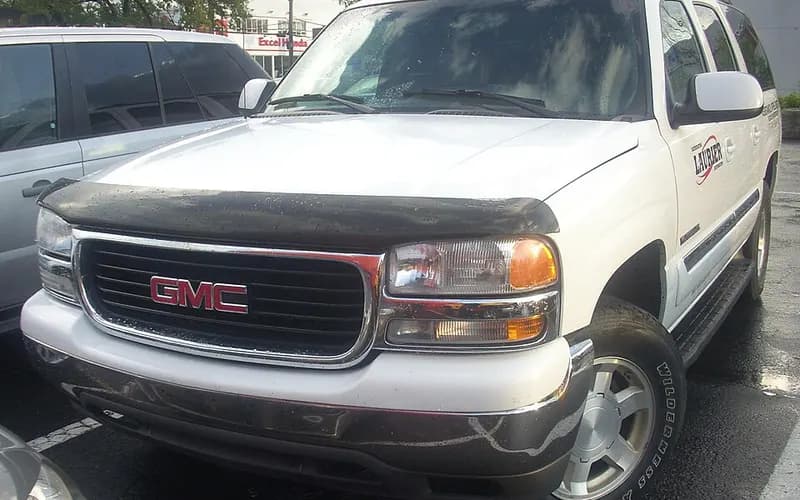
Common on this vehicle:Warning lightLeakNoiseMisfire or rough idleStalls or shuts offSmoke or fireVibration or shudderCorrosion or rust
Record by record
13 records state a cause or a remedy. Each record is shown as short labels in the order fault → finding the cause → correction. Press a label to narrow to the records that state it.
Symptom
Component named as the cause
Work done
How it is said to have ended
- result not stated1
A ribbon is as wide as the records that state both of its ends (only the commonest are drawn). A record that names several symptoms or components runs through each. Orange is records that say the fault came back or was not fixed. Results come from owners’ reports only; one that does not say is “result not stated”. None of this is a likelihood of a cause or a rate at which work succeeds.
Read the records one by one (9)
Known issuesViolent steering wheel shake or vibration at road speed (brake booster)1
Manufacturer communication2000–2001 GMC YUKON XL ・ 2001-01-01
Violent steering wheel shake or vibration at road speed (brake booster)
1Fault
- The condition may get worse the longer the vehicle is driven and may be aggravated by applying the brake.
- The customer may say the shake or vibration started in the steering wheel and then spread throughout the truck as they continued to drive.
2Finding the cause
Steps to confirm (in the document’s order)
- When the concern is duplicated, place your left foot under the brake pedal and lift up on the pedal.
- If the concern remains, continue with vibration diagnosis as noted in the service manual.
3Correction
Repair
- If the shake or vibration goes away, replace the brake booster assembly.
Read the sentences of the record
From the manufacturer’s document
- Applies to:On 1998-2001 Silverado, Sierra, Tahoe, Suburban, Yukon and Yukon XL, the steering wheel may shake violently or vibrate at road speed after driving 10 or more miles.
- Condition:The condition may get worse the longer the vehicle is driven and may be aggravated by applying the brake.
- Condition:The customer may say the shake or vibration started in the steering wheel and then spread throughout the truck as they continued to drive.
- Confirm:When the concern is duplicated, place your left foot under the brake pedal and lift up on the pedal.
- Repair:If the shake or vibration goes away, replace the brake booster assembly.
- Confirm:If the concern remains, continue with vibration diagnosis as noted in the service manual.
Open this issue of GM TechLink ↗ The points above are read from an article of TechLink, GM’s monthly publication for dealership technicians. The article itself is not reproduced here.
- Remedy
- Intermittent Violent Steering Wheel Shake, or Vibration at Road Speed On 1998-2001 Silverado, Sierra, Tahoe, Suburban, Yukon, and Yukon XL, the steering wheel may shake violently or vibrate at road speed after driving 10 or more miles. The condition may get worse the longer the vehicle is driven, and may be aggravated by applying the brake. The customer may advise that the shake or vibration started in the steering wheel and then spread throughout the truck, as they contin- ued to drive the vehicle. When the concern is duplicated, place your left foot under the brake pedal and lift up on the pedal. If the shake or vibration goes away, replace the brake booster assembly. If the concern remains, continue with vibration diagnosis as noted in the service manual.
EQUIPMENT2
Manufacturer communication2000–2006 GMC YUKON XL DENALI ・ 2018-05-21(1 earlier editions of this document folded here)
Wheel Installation and Torque Techniques
1Fault
- Vibration in the steering wheel or seat centered at 10-14 Hz, between 93-115 km/h (58-72 mph).
2Finding the cause
Possible causes
- Wrong wheel torque methods can mount the wheel and tire assembly off center, so its mass "orbits" the hub axis and vibrates like a tire with high RFV or an imbalance.
3Correction
Repair
- Remove the tire and wheel assemblies, index them at least two stud positions from where they were, and reinstall them.
- With the wheel off the ground, install all lug nuts hand tight using only a socket.
- Snug all lug nuts in a star or criss-cross pattern with a hand wrench.
- Lower the vehicle until the tire has just enough contact to resist turning, then torque to specification with a torque wrench.
Caution
- This first order tire/wheel vibration may be misdiagnosed as wheel imbalance or excessive tire radial force variation.
- Improper torque may also distort the brake rotor.
- Do not use torque sticks or an impact driver to tighten wheel lug nuts.
Read the sentences of the record
From the manufacturer’s document
- Applies to:Applies to 2006-2013 GM passenger cars and light duty trucks.
- Condition:Vibration in the steering wheel or seat centered at 10-14 Hz, between 93-115 km/h (58-72 mph).
- Cause:Wrong wheel torque methods can mount the wheel and tire assembly off center, so its mass "orbits" the hub axis and vibrates like a tire with high RFV or an imbalance.
- Caution:This first order tire/wheel vibration may be misdiagnosed as wheel imbalance or excessive tire radial force variation.
- Caution:Improper torque may also distort the brake rotor.
- Repair:Remove the tire and wheel assemblies, index them at least two stud positions from where they were, and reinstall them.
- Caution:Do not use torque sticks or an impact driver to tighten wheel lug nuts.
- Repair:With the wheel off the ground, install all lug nuts hand tight using only a socket.
- Repair:Snug all lug nuts in a star or criss-cross pattern with a hand wrench.
- Repair:Lower the vehicle until the tire has just enough contact to resist turning, then torque to specification with a torque wrench.
Open the manufacturer’s document (PDF) ↗ The points above were read from this document.
- Remedy
- This informational bulletin provides a description of the proper wheel installation and proper wheel torque techniques used to install wheels onto vehicles
Manufacturer communication2000–2006 GMC YUKON XL ・ 2017-08-15(1 earlier editions of this document folded here)
Abnormal Noise or Vibration Investigation Preliminary Information
1Fault
- The customer notices a noise or vibration that seems abnormal and may not have been there when the vehicle was new.
2Finding the cause
Possible causes
- Step bars/nerf bars that touch both the truck frame and the cab without insulation carry the noise of a normally operating drive train into the passenger area.
- Other known contributors are running boards, bug shields, sun visors, vent shades, emergency lights, custom grilles, ski racks and bicycle racks.
Steps to confirm (in the document’s order)
- The first diagnostic step is to evaluate the vehicle for any after-market accessories.
- These items must be removed to evaluate whether they contribute to the concern.
3Correction
Caution
- If the root cause is a non-GM aftermarket accessory, no warranty claim should be filed; it is a customer pay item.
Read the sentences of the record
From the manufacturer’s document
- Applies to:Applies to 2013 and prior passenger cars and light duty trucks, including Saab and Saturn.
- Condition:The customer notices a noise or vibration that seems abnormal and may not have been there when the vehicle was new.
- Confirm:The first diagnostic step is to evaluate the vehicle for any after-market accessories.
- Cause:Step bars/nerf bars that touch both the truck frame and the cab without insulation carry the noise of a normally operating drive train into the passenger area.
- Cause:Other known contributors are running boards, bug shields, sun visors, vent shades, emergency lights, custom grilles, ski racks and bicycle racks.
- Confirm:These items must be removed to evaluate whether they contribute to the concern.
- Caution:If the root cause is a non-GM aftermarket accessory, no warranty claim should be filed; it is a customer pay item.
Open the manufacturer’s document (PDF) ↗ The points above were read from this document.
- Remedy
- This Preliminary Information communication advises the technician that a noise or a vibration in the vehicle that seems to be abnormal may not have been there when the vehicle was purchased. Technician should look for Non - General Motors aftermarket accessories installed on the vehicle that can cause these issues.
POWER TRAIN2
Manufacturer communication2000–2006 GMC YUKON XL ・ 2008-04-07
Eaton Locking Differential Chatter Shudder Noise on Turns (RPO G80)
1Fault
2Finding the cause
3Correction
Read the sentences of the record
- Remedy
- EATON LOCKING DIFFERENTIAL CHATTER SHUDDER NOISE ON TURNS, EQUIPPED WITH A LOCKING REAR DIFFERENTIAL RPO G80. *NJ UPDATED 7/17/2008. *PE
Manufacturer communication2000–2005 GMC YUKON XL DENALI ・ 2004-11-03
NVG149 NP3 Transfer Case Bind or Shudder on Turns
1Fault
2Finding the cause
3Correction
NVG149 NP3 TRANSFER CASE MAY EXHIBIT A BIND OR SHUDDER ON TURNS. *TC
Read the sentences of the record
- Remedy
- NVG149 NP3 TRANSFER CASE MAY EXHIBIT A BIND OR SHUDDER ON TURNS. *TC
ELECTRICAL SYSTEM1
Manufacturer communication2000–2006 GMC YUKON XL ・ 2019-11-12(1 earlier editions of this document folded here)
Preliminary Information: Vibration Diagnosis Using Pico Oscilloscope
1Fault
- Customers complain of vehicle vibration under any of various driving conditions.
2Finding the cause
Steps to confirm (in the document’s order)
- Drive the vehicle to verify the condition and record a Pico data file of the concern.
- Review the Pico file and use it to help determine the root cause or component.
3Correction
Repair
- Repair the vehicle using the Pico information together with any published information relevant to the vibration frequency observed.
Caution
- Attempting a vibration repair without knowing the frequency is compared to repairing a check engine light without knowing the stored DTC.
- 12-03-10-001B is a generic document on the possibility of tire to rim orientation and of the tire slipping on the rim.
- Component level vibrations such as blower motor, brake pulsation or shudder on turns do not require a Pico file.
Read the sentences of the record
From the manufacturer’s document
- Applies to:All models, model years 2000 - 2020.
- Condition:Customers complain of vehicle vibration under any of various driving conditions.
- Caution:Attempting a vibration repair without knowing the frequency is compared to repairing a check engine light without knowing the stored DTC.
- Confirm:Drive the vehicle to verify the condition and record a Pico data file of the concern.
- Confirm:Review the Pico file and use it to help determine the root cause or component.
- Repair:Repair the vehicle using the Pico information together with any published information relevant to the vibration frequency observed.
- Caution:12-03-10-001B is a generic document on the possibility of tire to rim orientation and of the tire slipping on the rim.
- Caution:Component level vibrations such as blower motor, brake pulsation or shudder on turns do not require a Pico file.
Open the manufacturer’s document (PDF) ↗ The points above were read from this document.
- Remedy
- This Preliminary Information communication provides information to the technician about vibration complaints that are one of the most challenging complaints to accurately diagnose and repair. Technician will need to use Pico Oscilloscope Diagnostic Kit to effectively diagnosis vehicles. Technician should drive the vehicle will using the Pico Oscilloscope to record data. After the data is recorded it should be reviewed to determine the root cause of the concern. If a repair attempt made the concern better but not eliminated or had no affect at all, and are requesting assistance from General Motors Technical Assistance Center record another Pico file and save it to the computer. After the new Pico Oscilloscope data has been saved email the data to General Motors Technical Assistance Center in the subject line include ?Vibration? ?Business Associate Code? and the last 8 of the Vehicle Identification Number.
ENGINE AND ENGINE COOLING1
Manufacturer communication2000–2005 GMC YUKON XL ・ 2004-11-08
Exhaust Vibration Resonance or Moan in Gen III V8 Engines
1Fault
2Finding the cause
Not stated
3Correction
EXHAUST VIBRATION RESONANCE OR MOAN IN VEHICLES WITH GEN III V8 ENGINES. *TC
Read the sentences of the record
- Remedy
- EXHAUST VIBRATION RESONANCE OR MOAN IN VEHICLES WITH GEN III V8 ENGINES. *TC
SERVICE BRAKES, HYDRAULIC1
Owner complaint2000 GMC YUKON XL ・ 2005-05-05
Anti-lock brake engagement and increased stopping distance when braking
1Fault
2Finding the cause
Not stated
3Correction
Read the sentences of the record
- Fault
- WHEN APPLYING THE BRAKES ON MY 2000 GMC YUKON XL I HAVE EXPERIENCED ENGAGEMENT OF THE ANTI-LOCK BRAKES AND SUBSEQUENT INCREASED DISTANCE REQUIRED TO STOP THE VEHICLE. (1 more)
- Inspection
- PRIOR TO VISUAL INSPECTION OF THE BRAKE SYSTEM A TEST DRIVE WAS COMPLETED IN AN ATTEMPT TO DUPLICATE THE BRAKING PROBLEM. (2 more)
- Consequence
- I HAVE NOT HAD ANY ACCIDENTS RELATED TO THIS PROBLEM.
STRUCTURE1
Manufacturer communication2000–2006 GMC YUKON XL ・ 2017-08-15(1 earlier editions of this document folded here)
Preliminary Information - Vibration Diagnosis Using Pico Oscilloscope
1Fault
- Customer vibration complaints are among the most challenging to diagnose and repair accurately.
2Finding the cause
Steps to confirm (in the document’s order)
- Drive the vehicle to verify the condition and record a Pico data file of the concern.
- Review the Pico file and use it to help determine the root cause or component.
3Correction
Repair
- Repair the vehicle using the Pico information together with any published information relevant to the vibration frequency observed.
Caution
- Without knowing the vibration frequency, repair attempts are just spinning wheels.
- Component level vibrations such as blower motor, brake pulsation or shudder on turns do not require a Pico file; the requirement is for vehicle level vibration complaints.
Read the sentences of the record
From the manufacturer’s document
- Applies to:Applies to all 2000 and newer GM vehicles.
- Condition:Customer vibration complaints are among the most challenging to diagnose and repair accurately.
- Caution:Without knowing the vibration frequency, repair attempts are just spinning wheels.
- Confirm:Drive the vehicle to verify the condition and record a Pico data file of the concern.
- Confirm:Review the Pico file and use it to help determine the root cause or component.
- Repair:Repair the vehicle using the Pico information together with any published information relevant to the vibration frequency observed.
- Caution:Component level vibrations such as blower motor, brake pulsation or shudder on turns do not require a Pico file; the requirement is for vehicle level vibration complaints.
Open the manufacturer’s document (PDF) ↗ The points above were read from this document.
- Remedy
- This Preliminary Information communication provides information to the technician about vibration complaints that are one of the most challenging complaints to accurately diagnose and repair. Technician will need to use Pico Oscilloscope Diagnostic Kit to effectively diagnosis vehicles. Technician should drive the vehicle will using the Pico Oscilloscope to record data. After the data is recorded it should be reviewed to determine the root cause of the concern. If a repair attempt made the concern better but not eliminated or had no affect at all, and are requesting assistance from General Motors Technical Assistance Center record another Pico file and save it to the computer. After the new Pico Oscilloscope data has been saved email the data to General Motors Technical Assistance Center in the subject line include ?Vibration? ?Business Associate Code? and the last 8 of the Vehicle Identification Number.
Showing 9 of the 13 you can open. Narrow the search to see the rest.