
GMC Yukon XL 2000–2006
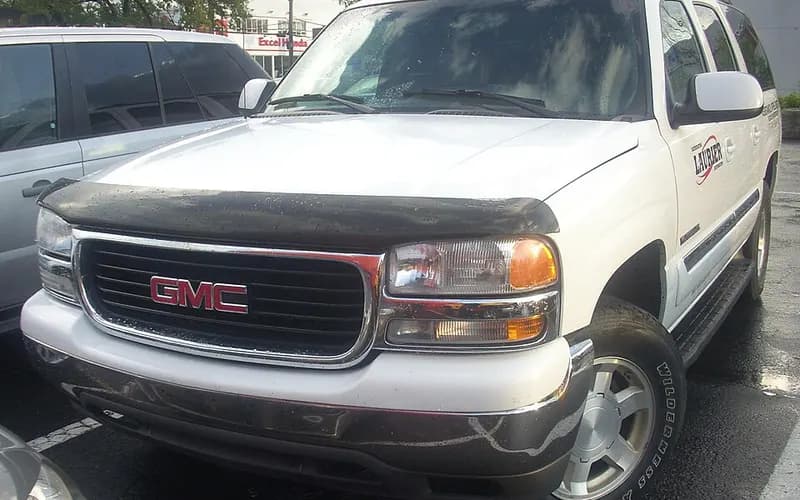
Common on this vehicle:Lights (headlights, turn signals)Gauge or instrument faultLeakAir conditioning or heaterSmoke or fireNoiseOverheatingLoss of engine power, no acceleration
Record by record
3 records state a cause or a remedy. Each record is shown as short labels in the order fault → finding the cause → correction. Press a label to narrow to the records that state it.
Component named as the cause
Work done
How it is said to have ended
- says it did not fix it1
- result not stated3
A ribbon is as wide as the records that state both of its ends (only the commonest are drawn). A record that names several symptoms or components runs through each. Orange is records that say the fault came back or was not fixed. Results come from owners’ reports only; one that does not say is “result not stated”. None of this is a likelihood of a cause or a rate at which work succeeds.
Read the records one by one (2)
Known issuesSteering intermediate shaft clunk1
Owner complaint2002 GMC YUKON XL ・ 2005-03-07
Steering noise and transmission clunking, window regulator failure, transmission fluid leak
1Fault
2Finding the cause
3Correction
Read the sentences of the record
- Remedy
- 06/16/04 36987 LAST WARRANTY WORK...SAME COMPLAINT AS ALWAYS ABOUT STERRING NOISE AND TRANSMISSION,INSPECTED AND REPLACED INTERMEDIATE STEERING SHAFT,DRIVERS WINDOW STOPPED WORKING THEY REPLACED WINDOW REGULATOR,FLUIDS LEAKING THEY REPLACED LEAKING TRANS GASKET.
EXTERIOR LIGHTING1
Manufacturer communication2000–2006 GMC YUKON XL DENALI ・ 2023-02-28(1 earlier editions of this document folded here)
Exterior Lamp Condensation and Water Leaks Service Bulletin
1Fault
- Exterior lamps such as cornering, turn signal, backup, head or tail lamps may show very small water droplets, a fine mist or white fog (condensation) on the inside of the lens.
2Finding the cause
Possible causes
- Condensation occurs when the air inside the lamp assembly reaches the dew point through atmospheric changes.
- Non-OE lamps are most often presented as holding moisture or with inoperative bulbs from corroded electrical connections; they appear to be installed as part of a collision repair.
Steps to confirm (in the document’s order)
- Normal: the mist is located mainly in the lens corners near the vents and does not cover more than half the lens surface.
- Normal: the moisture clears when the vehicle is parked in a dry environment or driven with the lights on.
- Leak: water has accumulated in the bottom of the lamp assembly.
- Leak: the condition will not clear when the vehicle is parked in a dry environment or driven with the lights on.
3Correction
Repair
- A condition covering more than half the surface of the lamp lens indicates the need to service the lens or lamp assembly.
Caution
- Depending on the lamp and the atmospheric conditions, the time needed to clear the lamp may vary from 2 to 6 hours.
- If the normal conditions are noted, advise the customer that replacing the lamp assembly may not correct the condition.
- Moisture that "comes and goes" is considered a normal condition.
Read the sentences of the record
From the manufacturer’s document
- Applies to:Applies to 2023 and prior GM passenger cars and trucks, including medium duty trucks and excluding LCF medium duty trucks.
- Condition:Exterior lamps such as cornering, turn signal, backup, head or tail lamps may show very small water droplets, a fine mist or white fog (condensation) on the inside of the lens.
- Cause:Condensation occurs when the air inside the lamp assembly reaches the dew point through atmospheric changes.
- Caution:Depending on the lamp and the atmospheric conditions, the time needed to clear the lamp may vary from 2 to 6 hours.
- Confirm:Normal: the mist is located mainly in the lens corners near the vents and does not cover more than half the lens surface.
- Confirm:Normal: the moisture clears when the vehicle is parked in a dry environment or driven with the lights on.
- Caution:If the normal conditions are noted, advise the customer that replacing the lamp assembly may not correct the condition.
- Repair:A condition covering more than half the surface of the lamp lens indicates the need to service the lens or lamp assembly.
- Confirm:Leak: water has accumulated in the bottom of the lamp assembly.
- Confirm:Leak: the condition will not clear when the vehicle is parked in a dry environment or driven with the lights on.
- Caution:Moisture that "comes and goes" is considered a normal condition.
- Cause:Non-OE lamps are most often presented as holding moisture or with inoperative bulbs from corroded electrical connections; they appear to be installed as part of a collision repair.
Open the manufacturer’s document (PDF) ↗ The points above were read from this document.
- Remedy
- This service bulletin provides information for dealers/technicians on Exterior Lamp Condensation and Water Leaks and Replacement Guidelines.
Showing 2 of the 3 you can open. Narrow the search to see the rest.