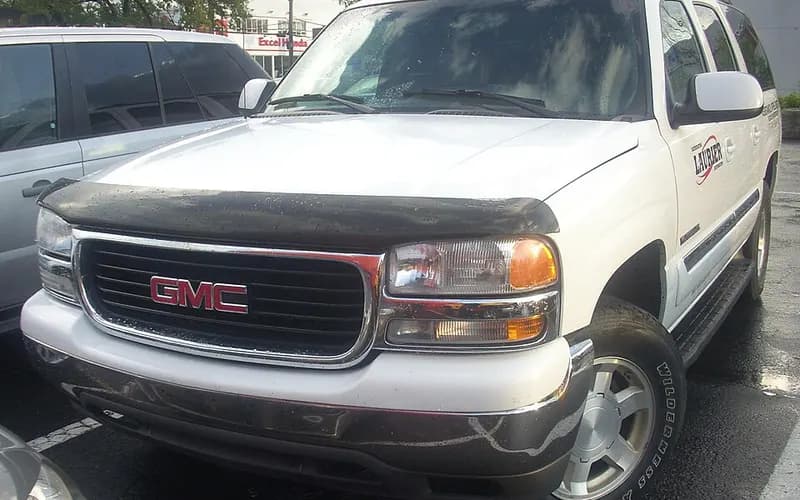
GMC Yukon XL 2000–2006
Common on this vehicle:Warning lightGauge or instrument fault
U0100 is written only in documents for GM vehicles in general. No record or document that names this vehicle states it, and it may not be a code this model year and engine set. The records are shown as their sources write them.
Record by record
2 records state a cause or a remedy. Each record is shown as short labels in the order fault → finding the cause → correction. Press a label to narrow to the records that state it.
Read the records one by one (1)
ELECTRICAL SYSTEM1
Manufacturer communication2006 GMC YUKON XL ・ 2020-12-07(1 earlier editions of this document folded here)
Aftermarket ALDL/DLC Interface Devices - Diagnostic Concerns
1Fault
- Gauge or instrument fault
- Warning light
- C0561 (general documents only)
- U0100 (general documents only)
- U0101 (general documents only)
- U186B (general documents only)
- U1862 (general documents only)
- The radio may not shut off after the vehicle is shut down, and bus or LAN traffic may stay active, leading to a discharged battery.
- C0561 may be stored in the EBCM, leading to a traction control issue, and there may be no high speed LAN communication with various communication U-codes.
- The SES, MIL or CEL light may be set with numerous communication DTCs such as U0100, U0101, U186B and U1862.
- The transmission may not shift for one key cycle (TCM in default mode), and gauge readings may be erratic or displays may flicker.
2Finding the cause
Possible causes
- Monitoring devices and other electronic accessories such as aftermarket cruise control or police speed checking devices (RADAR or LIDAR) may cause one or more of the listed concerns.
- Many of the problems could be caused by an open connection on the HSCAN bus: a device that connects to only one CAN + causes bus errors and erratic ECU behavior.
Steps to confirm (in the document’s order)
- If normal diagnostics find no root cause, check for a device plugged into the ALDL or Data Link Connector (DLC) for tracking and/or maintenance interval scheduling.
3Correction
Repair
- If SI diagnostics do not identify the source and the device is available, try to duplicate the condition, then remove the device to see whether the condition is eliminated.
- If removing the DLC interface device resolves the concern, tell the customer the result and that they should work with the device's supplier for further resolution.
Caution
- The customer may remove the device for use in another vehicle while theirs is in for service.
- Some devices carry a second DLC connector, with the device and the rest of the harness hidden out of sight, so the technician may not notice that the diagnostic connector is not in the factory location.
Read the sentences of the record
From the manufacturer’s document
- Applies to:Applies to 2021 and earlier GM passenger cars and trucks.
- Condition:The radio may not shut off after the vehicle is shut down, and bus or LAN traffic may stay active, leading to a discharged battery.
- Condition:C0561 may be stored in the EBCM, leading to a traction control issue, and there may be no high speed LAN communication with various communication U-codes.
- Condition:The SES, MIL or CEL light may be set with numerous communication DTCs such as U0100, U0101, U186B and U1862.
- Condition:The transmission may not shift for one key cycle (TCM in default mode), and gauge readings may be erratic or displays may flicker.
- Confirm:If normal diagnostics find no root cause, check for a device plugged into the ALDL or Data Link Connector (DLC) for tracking and/or maintenance interval scheduling.
- Cause:Monitoring devices and other electronic accessories such as aftermarket cruise control or police speed checking devices (RADAR or LIDAR) may cause one or more of the listed concerns.
- Cause:Many of the problems could be caused by an open connection on the HSCAN bus: a device that connects to only one CAN + causes bus errors and erratic ECU behavior.
- Caution:The customer may remove the device for use in another vehicle while theirs is in for service.
- Caution:Some devices carry a second DLC connector, with the device and the rest of the harness hidden out of sight, so the technician may not notice that the diagnostic connector is not in the factory location.
- Repair:If SI diagnostics do not identify the source and the device is available, try to duplicate the condition, then remove the device to see whether the condition is eliminated.
- Repair:If removing the DLC interface device resolves the concern, tell the customer the result and that they should work with the device's supplier for further resolution.
Open the manufacturer’s document (PDF) ↗ The points above were read from this document.
- Remedy
- The intent of this technical bulletin is to identify aftermarket ALDL or DLC interface devices as potential sources for causing multiple customer concerns that do not have other diagnostic methods to identify them.
Showing 1 of the 2 you can open. Narrow the search to see the rest.