
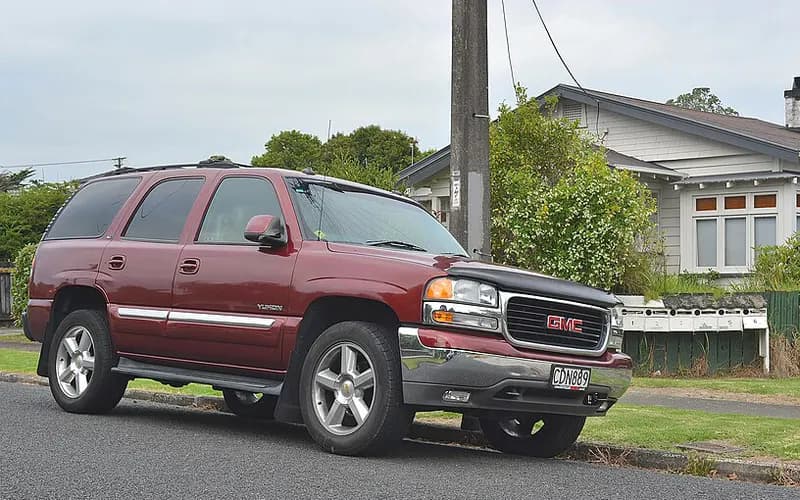
GMC Yukon 2000–2006
Common on this vehicle:Gauge or instrument faultWarning lightNoiseLeakMisfire or rough idleAir conditioning or heaterCorrosion or rustVibration or shudder
Record by record
20 records state a cause or a remedy. Each record is shown as short labels in the order fault → finding the cause → correction. Press a label to narrow to the records that state it.
Symptom
Component named as the cause
How it is said to have ended
- says it came back1
- says it did not fix it1
A ribbon is as wide as the records that state both of its ends (only the commonest are drawn). A record that names several symptoms or components runs through each. Orange is records that say the fault came back or was not fixed. Results come from owners’ reports only; one that does not say is “result not stated”. None of this is a likelihood of a cause or a rate at which work succeeds.
Read the records one by one (10)
Known issuesBrake pipe (brake line) corrosion and rupture1
Owner complaint2004 GMC YUKON ・ 2012-10-03
Brake pedal went to floor during trailer light check
1Fault
2Finding the cause
3Correction
Not stated
What the documents say to do
Brake pipe (brake line) corrosion and ruptureConfirm
- In the joint inspections, scaling or flaking corrosion was taken as indicating the onset of metal loss and given the second lowest ranking (2); a leaking or previously repaired pipe was the lowest (1).
Repair
- GM recommends replacing the entire set of pipes whenever any pipe leaks or is corroded enough to need replacement.
- On June 28, 2013 GM released 66 new part numbers for servicing brake pipes in 1999-2007 GMT800 pickups and utility vehicles.
Caution
- Analysis of repair records indicates that consumers often elect to repair only the failed circuit.
Read the sentences of the record
- Fault
- I WAS HOOKING UP A DUMP TRAILER TO MY 2004 YUKON XL AND WHEN I WENT TO DO A TURN SIGNAL AND BRAKE LIGHT CHECK ON THE TRAILER, MY BRAKE PEDAL WENT TO THE FLOOR. (2 more)
- Inspection
- THE SHOP DIAGNOSED THE BRAKE FAILURE AS CORROSION IN BRAKE LINES AND FITTINGS.
Known issuesDRLs or auto headlamps will not disable with the headlamp switch (Canada, RPO Z49; normal)1
Manufacturer communication2003–2006 GMC YUKON ・ 2019-06-10(1 earlier editions of this document folded here)
Daytime Running Lamps Will Not Shut Off in Canada-Built Vehicles
1Fault
- Some customers may state that the Daytime Running Lamps (DRLs) or the auto headlamps will not shut off when using the daytime running lamp disable switch, which is part of the headlamp switch.
2Finding the cause
Possible causes
- Vehicles built for Canada (RPO Z49) have different software that does not allow the DRLs or auto headlamps to be shut off.
- Canadian law prohibits disabling daytime running lamps (DRLs) or auto headlamps.
3Correction
Caution
- This is a normal operation of the vehicle and no repairs should be attempted.
Read the sentences of the record
From the manufacturer’s document
- Applies to:The model table lists the GMC Yukon, model years 2003 - 2019.
- Condition:Some customers may state that the Daytime Running Lamps (DRLs) or the auto headlamps will not shut off when using the daytime running lamp disable switch, which is part of the headlamp switch.
- Cause:Vehicles built for Canada (RPO Z49) have different software that does not allow the DRLs or auto headlamps to be shut off.
- Cause:Canadian law prohibits disabling daytime running lamps (DRLs) or auto headlamps.
- Caution:This is a normal operation of the vehicle and no repairs should be attempted.
Open the manufacturer’s document (PDF) ↗ The points above were read from this document.
- Remedy
- This Preliminary Information communicates to technicians that the Daytime Running Lamps (DRL's) or the auto headlamps will not shut off when using the daytime running lamp disable switch (Which is part of the headlamp switch), if the vehicles was built for Canada (RPO Z49).  These vehicles were built with different software that doesn't allow the DRL's or Auto headlamp to be shut off. Canada law prohibits disabling daytime running lamps (DRL's) or auto headlamps.
Known issuesRear seat audio and/or rear HVAC controls inoperative (replace the RSA, not the console)1
Owner complaint2004 GMC YUKON ・ 2011-05-10
Rear seat radio inoperative and console overheating, passenger headlight bulb failures
1Fault
2Finding the cause
3Correction
Read the sentences of the record
- Fault
- THE CONTACT STATED THAT THE REAR SEAT RADIO FUNCTION WAS NOT FUNCTIONING. (2 more)
- Remedy
- ALSO, THE CONTACT STATED THAT THE PASSENGER SIDE DAYTIME RUNNING HEADLIGHT BULB WAS REPLACED THREE DIFFERENT TIMES. (1 more)
Known issuesVehicle body tilt or lean left / right (torsion bar front suspension)1
Manufacturer communication2000–2006 GMC YUKON DENALI ・ 2019-04-08(2 earlier editions of this document folded here)
Vehicle Lean Adjustment Preliminary Information
1Fault
- The procedure is for diagnosing and correcting complaints of the vehicle leaning left or right.
2Finding the cause
Steps to confirm (in the document’s order)
- Measure fender wheel-opening heights, front and rear, to quantify vehicle lean.
- The front wheel-opening height is known as P height, and the rear wheel-opening height is known as R height.
- P height and R height are the distance from the ground to the highest point on the wheel-opening, going through the center of the wheel.
- Before measuring, make sure the vehicle is on a level surface, such as an alignment rack.
- Before measuring, check the fuel level and add weight if necessary to simulate a full tank.
3Correction
Repair
- If Z height is out of spec and the D height delta is greater than 1/2 inch (12 mm), adjust Z height until it is within spec and the P and R height deltas are less than 1/2 inch (12 mm).
- If adjustment is not possible, check the front eye of the rear leaf spring for matching color-coded tape or paint; both sides should be the same color. If not, switch springs side to side; if so, replace the leaf spring on the lower side only.
- If this is not possible, shim the body and/or pick-up box until the P and R height deltas are less than 1/2 inch (12 mm).
- After all adjustments are done, perform a front-end alignment and check headlight aim.
Read the sentences of the record
From the manufacturer’s document
- Applies to:Applies to GMC Yukon models, 1999 - 2006.
- Applies to:Applies to vehicles with torsion bar front suspension.
- Condition:The procedure is for diagnosing and correcting complaints of the vehicle leaning left or right.
- Confirm:Measure fender wheel-opening heights, front and rear, to quantify vehicle lean.
- Confirm:The front wheel-opening height is known as P height, and the rear wheel-opening height is known as R height.
- Confirm:P height and R height are the distance from the ground to the highest point on the wheel-opening, going through the center of the wheel.
- Confirm:Before measuring, make sure the vehicle is on a level surface, such as an alignment rack.
- Confirm:Before measuring, check the fuel level and add weight if necessary to simulate a full tank.
- Confirm:Check Z height and D height; see Trim Height Inspection Procedure.
- Repair:If Z height is out of spec and the D height delta is greater than 1/2 inch (12 mm), adjust Z height until it is within spec and the P and R height deltas are less than 1/2 inch (12 mm).
- Repair:If adjustment is not possible, check the front eye of the rear leaf spring for matching color-coded tape or paint; both sides should be the same color. If not, switch springs side to side; if so, replace the leaf spring on the lower side only.
- Repair:If this is not possible, shim the body and/or pick-up box until the P and R height deltas are less than 1/2 inch (12 mm).
- Repair:After all adjustments are done, perform a front-end alignment and check headlight aim.
Open the manufacturer’s document (PDF) ↗ The points above were read from this document.
- Remedy
- This Preliminary Information communication provides information to the technician about vehicles that have a lean to the left or right. Technician will need to measure fender wheel-opening heights, front and rear, to quantify vehicle lean. Fender wheel-opening heights are related to, but distinct from, trim height. The front wheel-opening height is known as P height, and the rear wheel-opening height is known as R height. Adjust and heights that are out of specification. After all adjustments are done, perform a front-end alignment and check headlight aim.
EXTERIOR LIGHTING5
Manufacturer communication2001–2006 GMC YUKON DENALI ・ 2024-01-19(2 earlier editions of this document folded here)
Headlamp, Tail Lamp, License Lamp or Fog/Driving Lamp Damage
1Fault
2Finding the cause
Possible causes
- A variety of chemicals can cause crazing or cracking of the polycarbonate lens.
- Bulbs with a higher output than original equipment run hotter, and the excess heat can melt the socket, housing or lens.
Steps to confirm (in the document’s order)
- Broken mounting tabs, rear housing fractures and loose components inside the lamp assembly are evidence of impact damage.
3Correction
Repair
- When servicing any exterior lighting assembly, transfer any electrical connection seals to the new part.
Caution
- Clean exterior lamps and lenses only with lukewarm or cold water, a soft cloth and a car washing soap.
- Do not let a shop mat or fender cover drape over a headlamp while the DRL or headlamps are on; the lens may craze or deform.
Read the sentences of the record
From the manufacturer’s document
- Applies to:Applies to 2024 and prior GM passenger cars and trucks.
- Cause:A variety of chemicals can cause crazing or cracking of the polycarbonate lens.
- Caution:Clean exterior lamps and lenses only with lukewarm or cold water, a soft cloth and a car washing soap.
- Caution:Do not let a shop mat or fender cover drape over a headlamp while the DRL or headlamps are on; the lens may craze or deform.
- Confirm:Broken mounting tabs, rear housing fractures and loose components inside the lamp assembly are evidence of impact damage.
- Cause:Bulbs with a higher output than original equipment run hotter, and the excess heat can melt the socket, housing or lens.
- Repair:When servicing any exterior lighting assembly, transfer any electrical connection seals to the new part.
Open the manufacturer’s document (PDF) ↗ The points above were read from this document.
- Remedy
- This informational bulletin provides information for dealers/technicians on Headlamp, Tail Lamp, License Lamp or Fog/Driving Lamp Damage.
Manufacturer communication2000–2006 GMC YUKON DENALI ・ 2023-02-28(5 earlier editions of this document folded here)
Exterior Lamp Condensation and Water Leaks Service Bulletin
1Fault
- Exterior lamps such as cornering, turn signal, backup, head or tail lamps may show very small water droplets, a fine mist or white fog (condensation) on the inside of the lens.
2Finding the cause
Possible causes
- Condensation occurs when the air inside the lamp assembly reaches the dew point through atmospheric changes.
- Non-OE lamps are most often presented as holding moisture or with inoperative bulbs from corroded electrical connections; they appear to be installed as part of a collision repair.
Steps to confirm (in the document’s order)
- Normal: the mist is located mainly in the lens corners near the vents and does not cover more than half the lens surface.
- Normal: the moisture clears when the vehicle is parked in a dry environment or driven with the lights on.
- Leak: water has accumulated in the bottom of the lamp assembly.
- Leak: the condition will not clear when the vehicle is parked in a dry environment or driven with the lights on.
3Correction
Repair
- A condition covering more than half the surface of the lamp lens indicates the need to service the lens or lamp assembly.
Caution
- Depending on the lamp and the atmospheric conditions, the time needed to clear the lamp may vary from 2 to 6 hours.
- If the normal conditions are noted, advise the customer that replacing the lamp assembly may not correct the condition.
- Moisture that "comes and goes" is considered a normal condition.
Read the sentences of the record
From the manufacturer’s document
- Applies to:Applies to 2023 and prior GM passenger cars and trucks, including medium duty trucks and excluding LCF medium duty trucks.
- Condition:Exterior lamps such as cornering, turn signal, backup, head or tail lamps may show very small water droplets, a fine mist or white fog (condensation) on the inside of the lens.
- Cause:Condensation occurs when the air inside the lamp assembly reaches the dew point through atmospheric changes.
- Caution:Depending on the lamp and the atmospheric conditions, the time needed to clear the lamp may vary from 2 to 6 hours.
- Confirm:Normal: the mist is located mainly in the lens corners near the vents and does not cover more than half the lens surface.
- Confirm:Normal: the moisture clears when the vehicle is parked in a dry environment or driven with the lights on.
- Caution:If the normal conditions are noted, advise the customer that replacing the lamp assembly may not correct the condition.
- Repair:A condition covering more than half the surface of the lamp lens indicates the need to service the lens or lamp assembly.
- Confirm:Leak: water has accumulated in the bottom of the lamp assembly.
- Confirm:Leak: the condition will not clear when the vehicle is parked in a dry environment or driven with the lights on.
- Caution:Moisture that "comes and goes" is considered a normal condition.
- Cause:Non-OE lamps are most often presented as holding moisture or with inoperative bulbs from corroded electrical connections; they appear to be installed as part of a collision repair.
Open the manufacturer’s document (PDF) ↗ The points above were read from this document.
- Remedy
- This service bulletin provides information for dealers/technicians on Exterior Lamp Condensation and Water Leaks and Replacement Guidelines.
Owner complaint2004 GMC YUKON DENALI ・ 2008-04-17
Turn signals flash both left and right when making right turn
1Fault
2Finding the cause
Not stated
3Correction
Read the sentences of the record
- Fault
- TURN SIGNALS FLASH BOTH LEFT TURN AND RIGHT TURN SIGNAL WHEN MAKING RIGHT TURN.
- Remedy
- ALL EXTERNAL BULBS ASSOCIATED WITH TURN SIGNALS HAVE BEEN REPLACED AND THE PROBLEM STILL EXISTS.
Manufacturer communication2003–2006 GMC YUKON DENALI ・ 2007-11-02
Turn Signal in Outside Rearview Mirror Does Not Illuminate
1Fault
2Finding the cause
Not stated
3Correction
Read the sentences of the record
- Remedy
- TURN SIGNAL IN CAMPER STYLE OUTSIDE REARVIEW MIRROR (RPO DPN) DOES NOT ILLUMINATE TURN SIGNAL FLASH (REPLACE UPPER MIRROR GLASS) *NJ
Manufacturer communication2003–2004 GMC YUKON DENALI ・ 2004-05-04
Hazard Light Flashes When Turn Signal Applied
1Fault
2Finding the cause
Not stated
3Correction
Read the sentences of the record
- Remedy
- HAZARD LIGHT FLASHES WHEN TURN SIGNAL APPLIED. *MR
ELECTRICAL SYSTEM1
Manufacturer communication2003–2004 GMC YUKON DENALI ・ 2004-07-13
Headlamp or Instrument Cluster Light Flickering or Dimming Notice
1Fault
2Finding the cause
Not stated
3Correction
HEADLAMP OR INSTRUMENT CLUSTER LIGHTS FLICKERING OR DIMMING. *TT
Read the sentences of the record
- Remedy
- HEADLAMP OR INSTRUMENT CLUSTER LIGHTS FLICKERING OR DIMMING. *TT
Showing 10 of the 20 you can open. Narrow the search to see the rest.