GMC Yukon 2000–2006
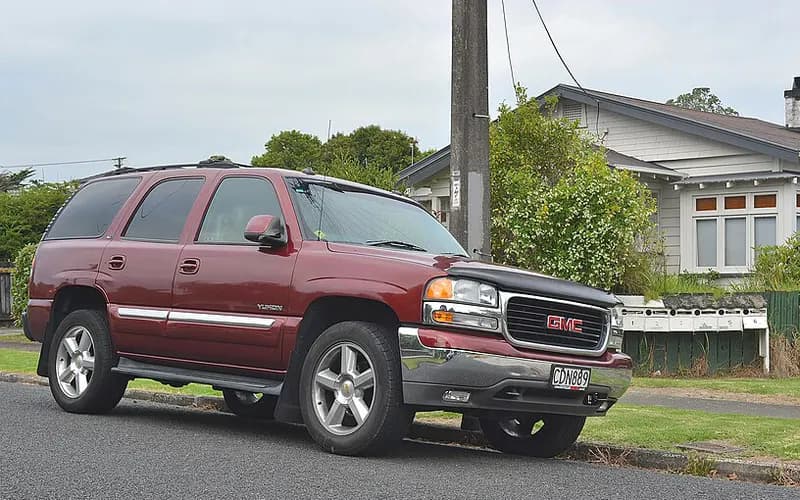
Common on this vehicle:Warning lightMisfire or rough idleLoss of engine power, no accelerationStalls or shuts offCorrosion or rustLeakNoise
Record by record
20 records state a cause or a remedy. Each record is shown as short labels in the order fault → finding the cause → correction. Press a label to narrow to the records that state it.
Component named as the cause
Work done
A ribbon is as wide as the records that state both of its ends (only the commonest are drawn). A record that names several symptoms or components runs through each. Orange is records that say the fault came back or was not fixed. Results come from owners’ reports only; one that does not say is “result not stated”. None of this is a likelihood of a cause or a rate at which work succeeds.
Read the records one by one (17)
Known issuesIncreased accelerator pedal effort / throttle body sticks (clean and adjust, do not replace)1
Manufacturer communication2000–2002 GMC YUKON ・ 2003-04-01
Increased accelerator pedal effort: clean throttle body and adjust blade
1Fault
Not stated
2Finding the cause
Not stated
3Correction
Repair
- The correction named in the subject is to clean the throttle body and adjust the blade.
Read the sentences of the record
From the manufacturer’s document
- Applies to:Bulletin 02-06-04-054A, which replaces 02-06-04-054, covers increased accelerator pedal effort on 1999-2002 Chevrolet Silverado, Suburban, Tahoe, Avalanche and GMC Sierra, Yukon, XL with the 4.8L or 5.3L V8 engine (RPOs LR4, LM7, L59).
- Repair:The correction named in the subject is to clean the throttle body and adjust the blade.
Open this issue of GM TechLink ↗ The points above are read from an article of TechLink, GM’s monthly publication for dealership technicians. The article itself is not reproduced here.
- Remedy
- Bulletins – MARCH, 2003 02-06-04-054A; replaces 02-06-04-054; Increased Accelerator Pedal Effort (Clean Throttle Body and Adjust Blade); 1999-2002 Chevrolet Silverado, Suburban, Tahoe, Avalanche, GMC Sierra, Yukon, XL with 4.8L or 5.3L V8 Engine (NIVs V, T, Z -- RPOs LR4, LM7, L59) Increased Accelerator Pedal Effort (Clean Throttle Body and Adjust Blade)
Known issuesDTCs P2108, P1516 and U0107 (do not replace the TAC module)1
Manufacturer communication2006 GMC YUKON ・ 2007-01-25
1Fault
2Finding the cause
Not stated
3Correction
What the documents say to do
DTCs P2108, P1516 and U0107 (do not replace the TAC module)Confirm
- Perform the diagnostics for the DTCs, but delete the steps that involve replacing the TAC module.
Caution
- Do not replace the TAC module; the reference given is PIP 3812A.
Read the sentences of the record
- Remedy
- LR4, LY2, L33, LH6, LM7, L59, LC9, LMG, LY5, LS2, LQ9, LQ4, L76, LY6 THROTTLE ACTUATOR CONTROL (TAC). MODULE CODES, MIL/SES DTC'S P2108, P1516, U0107, REDUCED ENGINE POWER. *KB
Known issuesFuel pressure regulator buzz / hum after replacement (check fuel pump feed voltage drop and connector crimps)1
Manufacturer communication2001–2002 GMC THE 4.8L RPO LR4 (VIN V), 5.3L RPO LM7 (VIN T), AND 6.0L RPO LQ4 (VIN U) (YUKON) ・ 2002-01-01
1Fault
- The 5.3L L59 has an E85 compatible fuel system, which can handle fuel that is up to 85% ethanol. Its fuel system components are specially designed to survive in this environment. Because of this, fuel rail service is different from the other Gen III engines.
- For 2002, there will be early and late model intake air fuel modules (IAFM), consisting of the throttle body, fuel rail and injectors, and intake manifold. The early IAFMs will be the same as 2001.
- The PCV valve will be changed from a variable valve to a fixed orifice.
2Finding the cause
Steps to confirm (in the document’s order)
- The fuel pressure is different for this application (the E85 fuel rail): 334 to 375 kPa (48 to 54 psi).
3Correction
Repair
- The late production IAFMs on engines that do not require EGR will have a cast-over EGR port. All service replacement manifolds for 2002 will have an open EGR port. If the manifold you are replacing does not have EGR, you must install the supplied plug and screw, following the instructions in the parts package.
Parts
- The L59 uses Denso injectors, which are not interchangeable with the Multec 2 injectors used in the other Gen III applications.
- Because of this, the right fuel rail, left fuel rail and fuel crossover pipe are available only as a complete assembly.
- The fuel pressure regulator is also specific to the E85 fuel rail. It is larger in diameter than those used in the other Gen III engine applications and uses a special diaphragm that is compatible with E85 fuels.
Caution
- If you replace the O-rings, be sure they are specific to this injector. The Denso injector is longer than the Multec 2.
- The L59 fuel rail is made of a special material that is resistant to degradation from E85 fuel. Special thread-cutting screws hold the fuel crossover in place. Do not remove these screws. Re-installing them will cut new threads, destroying the former threads and creating a possibility of failure.
- Three different fuel pressure regulators are used this year. Each one is held in place on the fuel rail by a unique retainer, and the retainer diameter and window dimensions are different for each. Use the correct retainer to ensure adequate retention of the fuel pressure regulator.
Read the sentences of the record
From the manufacturer’s document
- Applies to:In 2001 the Gen III engine family was the 4.8L RPO LR4 (VIN V), the 5.3L RPO LM7 (VIN T) and the 6.0L RPO LQ4 (VIN U); for 2002 the 6.0L RPO LQ9 (VIN N) and the 5.3L L59 (VIN Z) are being added.
- Condition:The 5.3L L59 has an E85 compatible fuel system, which can handle fuel that is up to 85% ethanol. Its fuel system components are specially designed to survive in this environment. Because of this, fuel rail service is different from the other Gen III engines.
- Parts:The L59 uses Denso injectors, which are not interchangeable with the Multec 2 injectors used in the other Gen III applications.
- Caution:If you replace the O-rings, be sure they are specific to this injector. The Denso injector is longer than the Multec 2.
- Caution:The L59 fuel rail is made of a special material that is resistant to degradation from E85 fuel. Special thread-cutting screws hold the fuel crossover in place. Do not remove these screws. Re-installing them will cut new threads, destroying the former threads and creating a possibility of failure.
- Parts:Because of this, the right fuel rail, left fuel rail and fuel crossover pipe are available only as a complete assembly.
- Parts:The fuel pressure regulator is also specific to the E85 fuel rail. It is larger in diameter than those used in the other Gen III engine applications and uses a special diaphragm that is compatible with E85 fuels.
- Confirm:The fuel pressure is different for this application (the E85 fuel rail): 334 to 375 kPa (48 to 54 psi).
- Caution:Three different fuel pressure regulators are used this year. Each one is held in place on the fuel rail by a unique retainer, and the retainer diameter and window dimensions are different for each. Use the correct retainer to ensure adequate retention of the fuel pressure regulator.
- Condition:For 2002, there will be early and late model intake air fuel modules (IAFM), consisting of the throttle body, fuel rail and injectors, and intake manifold. The early IAFMs will be the same as 2001.
- Condition:The PCV valve will be changed from a variable valve to a fixed orifice.
- Repair:The late production IAFMs on engines that do not require EGR will have a cast-over EGR port. All service replacement manifolds for 2002 will have an open EGR port. If the manifold you are replacing does not have EGR, you must install the supplied plug and screw, following the instructions in the parts package.
Open this issue of GM TechLink ↗ The points above are read from an article of TechLink, GM’s monthly publication for dealership technicians. The article itself is not reproduced here.
- Remedy
- Changes to the Gen III Engine Family Fuel Injection System In 2001 the Gen III engine family was comprised of the 4.8L RPO LR4 (VIN V), 5.3L RPO LM7 (VIN T), and 6.0L RPO LQ4 (VIN U). For 2002, the 6.0L RPO LQ9 (VIN N) and the 5.3L L59 (VIN Z) are being added to the list. The 5.3L L59 is equipped with an E85 compatible fuel system, which can handle fuel that is up to 85% ethanol. Fuel system components are specially designed to survive in this environment. Because of this, fuel rail service is different from the other Gen III engines. The L59 uses Denso injectors that are not interchangeable with the Multec 2 injectors used in the other Gen III applications. If you replace the O-rings, be sure they are specific to this injector. Also notice that the Denso injector is longer than the Multec 2. The L59 fuel rail is made of a special material that is resistant to degradation from E85 fuel. Special thread-cutting screws hold the fuel crossover in place. Do not remove these screws. Re-installing them will cut new threads, destroying the former threads and creating a possibility of failure. Because of this, the right fuel rail, left fuel rail and fuel crossover pipe are available only as a complete assembly. The fuel pressure regulator is also specific to the E85 fuel rail. It is larger in diameter than those used in the other Gen III engine applications and uses a special diaphragm that is compatible with E85 fuels. The fuel pressure regulator is also specific to the E85 fuel rail. It is larger in diameter than those used in the other Gen III engine applications and uses a special diaphragm that is compatible with E85 fuels. The fuel pressure is different for this application -- 334 to 375 kPa (48 to 54 psi). Three different fuel pressure regulators are used this year. Each one is held in place on the fuel rail by a unique retainer. The retainer diameter and window dimensions are different for each. Use the correct retainer to ensure adequate retention of the fuel pressure regulator. For 2002, there will be early and late model intake air fuel modules (IAFM), consisting of the throttle body, fuel rail and injectors, and intake manifold. The early IAFMs will be the same as 2001. The PCV valve will be changed from a variable valve to a fixed orifice. Also the late production IAFMs on engines that do not require EGR will have a cast-over EGR port. All service replacement manifolds for 2002 will have an open EGR port. If the manifold you are replacing does not have EGR, you must install the supplied plug and screw, following the instructions in the parts package.
Known issuesIntake manifold gasket leak (cold idle misfire, lean codes)1
Manufacturer communication2000–2006 GMC 5.3L L59 (E85 CAPABLE), AS WELL AS THE OTHER GEN 3 AND GEN 4 ENGINES (YUKON) ・ 2005-05-01
1Fault
- When a leak between the upper manifold and the gasket causes P0300 to set.
2Finding the cause
Not stated
3Correction
Repair
- Use only the 89017589 gasket (teal green) for repairs on the L59 engine, and do not replace the upper manifold unless it measures outside of the service manual specifications or is damaged.
Parts
- A new gasket made of FNK material (GM SPO p/n 89017589) has been released. The new gasket material is teal green; the original gaskets are orange.
- The service kit containing the new gasket was released in October 2004. A small quantity of the old gasket kit, p/n 17113557, which contains two p/n 17122608 (orange) gaskets, remains in the system.
- The 17113557 gasket (orange) can be used on the other engines. Once the 17113557 has been exhausted, only the 89017589 will be available for all engines.
Part numbers printed in the document
89017589Look up at RockAuto (aftermarket candidates) ↗Search the web ↗
17113557Look up at RockAuto (aftermarket candidates) ↗Search the web ↗
17122608Look up at RockAuto (aftermarket candidates) ↗Search the web ↗
The numbers are as the document prints them. The name and the replacing number are what the pages of GMPartsGiant, a reseller of genuine parts and not GM, state. Aftermarket equivalents are not checked here (the links only search by number). Confirm the fit for the vehicle (VIN) before ordering.
Caution
- In that case, do not replace the entire upper manifold assembly, upper plenum and gaskets.
Read the sentences of the record
From the manufacturer’s document
- Applies to:Applies specifically to the 5.3L L59 (E85 capable), as well as the other Gen 3 and Gen 4 engines.
- Condition:When a leak between the upper manifold and the gasket causes P0300 to set.
- Caution:In that case, do not replace the entire upper manifold assembly, upper plenum and gaskets.
- Parts:A new gasket made of FNK material (GM SPO p/n 89017589) has been released. The new gasket material is teal green; the original gaskets are orange.
- Parts:The service kit containing the new gasket was released in October 2004. A small quantity of the old gasket kit, p/n 17113557, which contains two p/n 17122608 (orange) gaskets, remains in the system.
- Repair:Use only the 89017589 gasket (teal green) for repairs on the L59 engine, and do not replace the upper manifold unless it measures outside of the service manual specifications or is damaged.
- Parts:The 17113557 gasket (orange) can be used on the other engines. Once the 17113557 has been exhausted, only the 89017589 will be available for all engines.
Open this issue of GM TechLink ↗ The points above are read from an article of TechLink, GM’s monthly publication for dealership technicians. The article itself is not reproduced here.
- Remedy
- Upper Manifold Gasket Leak This information applies specifically to the 5.3L L59 (E85 capable), as well as the other Gen 3 and Gen 4 engines. If a leak between the upper manifold and gasket causes a DTC P0300 to set, do not replace the entire upper manifold assembly, upper plenum and gaskets. If a leak between the upper manifold and gasket causes a DTC P0300 to set, do not replace the entire upper manifold assembly, upper plenum and gaskets. A new gasket made of FNK material (GM SPO p/n 89017589) has been released. The new gasket material is teal green in color (fig. 7) ; the original gaskets are orange. The service kit containing the new gasket was released in October 2004. A small quantity of the old gasket kit, p/n 17113557, which contains two p/n 17122608 (orange) gaskets, remains in the system. Use only the 89017589 gasket (teal green) for repairs on the L59 engine, and do not replace the upper manifold unless it measures outside of the service manual specifications or is damaged. The 17113557 gasket (orange) can be used on the other engines. Once the 17113557 has been exhausted, only the 89017589 will be available for all engines.
Known issuesRear bank knock sensor corrosion from water intrusion (P0332)1
Manufacturer communication2000–2002 GMC SPECIFIED VEHICLES 1998-2002 WITH 4.8L, 5.3L OR 6.0L ENGINE (YUKON) ・ 2002-09-01(also printed in 1 other issues)
1Fault
- Audible spark knock (detonation), MIL illuminated, DTC P0332 set.
2Finding the cause
Not stated
3Correction
Repair
- Replace the rear bank knock sensor and RTV the area around the sensor.
Read the sentences of the record
From the manufacturer’s document
- Applies to:Bulletin 02-06-04-023A, which replaces 02-06-04-023, lists "specified vehicles 1998-2002 with 4.8L, 5.3L or 6.0L Engine" (VINs V, T, Z, N, U; RPOs LR4, LM7, L59, LQ9, LQ4).
- Condition:Audible spark knock (detonation), MIL illuminated, DTC P0332 set.
- Repair:Replace the rear bank knock sensor and RTV the area around the sensor.
Open this issue of GM TechLink ↗ The points above are read from an article of TechLink, GM’s monthly publication for dealership technicians. The article itself is not reproduced here.
- Remedy
- Bulletins – August 2002 02-06-04-023A; replaces 02-06-04-023; Audible Spark Knock (Detonation), MIL Illuminated, DTC P0332 Set (Replace Rear Bank Knock Sensor and RTV Area Around Sensor); specified vehicles 1998-2002 with 4.8L, 5.3L or 6.0L Engine (VINs V, T, Z, N, U – RPOs LR4, LM7, L59, LQ9, LQ4) Audible Spark Knock (Detonation), MIL Illuminated, DTC P0332 Set Replace Rear Bank Knock Sensor and RTV Area Around Sensor
Known issuesStarter keeps cranking after the key is released (PCM-controlled automatic crank, normal)1
Manufacturer communication2003 GMC YUKON ・ 2003-04-01
Starter cranks after the key is released on a cold start (normal condition)
1Fault
Not stated
2Finding the cause
Not stated
3Correction
Caution
- The subject states that this is a normal condition.
Read the sentences of the record
From the manufacturer’s document
- Applies to:Bulletin 02-06-03-001 covers the starter cranking after the key is released on a cold start, on 2003 Chevrolet Silverado, Suburban, Tahoe and GMC Sierra, Yukon, XL with the 5.3L engine (RPO L59).
- Caution:The subject states that this is a normal condition.
Open this issue of GM TechLink ↗ The points above are read from an article of TechLink, GM’s monthly publication for dealership technicians. The article itself is not reproduced here.
- Remedy
- Bulletins – MARCH, 2003 02-06-03-001; Starter Cranks After Key is Released on Cold Start (Normal Condition); 2003 Chevrolet Silverado, Suburban, Tahoe, GMC Sierra, Yukon, XL with 5.3L Engine (NIV Z -- RPO L59) Starter Cranks After Key is Released on Cold Start (Normal Condition)
No component category6
Manufacturer communication2002–2004 GMC C/K TRUCKS WITH AN L59 ENGINE (E85) (YUKON) ・ 2005-08-01
1Fault
Not stated
2Finding the cause
Not stated
3Correction
Parts
- External fuel filters were used only on C/K trucks with an L59 engine (E85).
Read the sentences of the record
From the manufacturer’s document
- Applies to:External fuel filters were used only on C/K trucks with an L59 engine (E85). These engines were used on utility models only, from 2002 to 2004.
- Parts:External fuel filters were used only on C/K trucks with an L59 engine (E85).
Open this issue of GM TechLink ↗ The points above are read from an article of TechLink, GM’s monthly publication for dealership technicians. The article itself is not reproduced here.
- Remedy
- Fuel Filter Clarification External fuel filters were used only on C/K trucks with an L59 engine (E85). These engines were used on utility models only, from 2002 to 2004. External fuel filters were used only on C/K trucks with an L59 engine (E85).
Manufacturer communication2002–2005 GMC FULL-SIZE PICKUPS AND UTILITIES (YUKON) ・ 2005-06-01
Which vehicles may use E-85 fuel
1Fault
2Finding the cause
Possible causes
- Fuel containing more than 10% ethanol in vehicles not designated for E-85 can cause driveability issues, Service Engine Soon lights and increased fuel system corrosion.
3Correction
Caution
- All other gasoline engines, including all 5.3L V8 with VIN designators other than the letter Z, are not E-85 compatible.
- Only vehicles designated for use with E-85 should use E-85 blended fuel.
Read the sentences of the record
From the manufacturer’s document
- Applies to:The only E-85 compatible vehicles GM produced are 2000 - 02 S series pickups with the 2.2L L43 engine and 2002 - 05 full-size pickups and utilities with the 5.3L L59 VIN code Z V8 engine.
- Caution:All other gasoline engines, including all 5.3L V8 with VIN designators other than the letter Z, are not E-85 compatible.
- Caution:Only vehicles designated for use with E-85 should use E-85 blended fuel.
- Cause:Fuel containing more than 10% ethanol in vehicles not designated for E-85 can cause driveability issues, Service Engine Soon lights and increased fuel system corrosion.
Open this issue of GM TechLink ↗ The points above are read from an article of TechLink, GM’s monthly publication for dealership technicians. The article itself is not reproduced here.
- Remedy
- E-85 Fuel The only E-85 compatible vehicles produced by General Motors are 2000 - 02 S series pickups equipped with the 2.2L L43 4-cylinder engine and 2002 - 05 full-size pickups and utilities equipped with the 5.3L L59 VIN code Z V8 engine. All other gasoline engines including all 5.3L V8 with VIN designators other than the letter Z are not E-85 compatible. Only vehicles designated for use with E-85 should use E-85 blended fuel. Use of fuel containing greater than 10% ethanol in non E-85 designated vehicles can cause driveability issues, Service Engine Soon lights, and increased fuel system corrosion.
Manufacturer communication2004–2005 GMC YUKON ・ 2005-01-01
Non-serviceable fuel filter (part of the fuel pump module): no routine replacement
1Fault
- On many vehicles the fuel filter is non-serviceable: it is an integral part of the fuel pump module and fuel pressure regulator assembly and can be serviced only by replacing the fuel module assembly.
2Finding the cause
Not stated
3Correction
Caution
- The note marked ** says that the 2004 RPO L59 uses a conventional external filter.
- Routine fuel filter replacement does not appear on either maintenance schedule.
Read the sentences of the record
From the manufacturer’s document
- Applies to:The table of vehicles with non-serviceable fuel filters lists, for GMC, the 2004-05 Sierra, Yukon and XL.
- Caution:The note marked ** says that the 2004 RPO L59 uses a conventional external filter.
- Condition:On many vehicles the fuel filter is non-serviceable: it is an integral part of the fuel pump module and fuel pressure regulator assembly and can be serviced only by replacing the fuel module assembly.
- Caution:Routine fuel filter replacement does not appear on either maintenance schedule.
Open this issue of GM TechLink ↗ The points above are read from an article of TechLink, GM’s monthly publication for dealership technicians. The article itself is not reproduced here.
- Remedy
- Fuel Filter Replacement GMC 2004-05 Sierra*, Yukon** and XL ** 2004 RPO L59 uses conventional external filter On many vehicles, the fuel filter is non-serviceable (see table). The filter is an integral part of the fuel pump module and fuel pressure regulator assembly. The filter can be serviced only by replacement of the fuel module assembly. Routine fuel filter replacement does not appear on either of these schedules.
Manufacturer communication2003–2004 GMC 2003 C/K TRUCKS WITH THE 5.3L ENGINE (VIN Z -- RPO L59), AND 2004 C/K TRUCKS WITH ANY ENGINE (YUKON) ・ 2003-10-01(also printed in 1 other issues)
1Fault
- Owners may comment that the engine starter continues to run after the key is released (ghost crank).
2Finding the cause
Possible causes
- On these vehicles, the starter relay is controlled by the PCM, with input from the key switch.
- After 0.4 seconds of cranking, a timer is activated in the PCM. Once this happens, even though the key is released, the PCM will continue to crank the starter until the engine starts or a no-start time limit is reached.
- The fuel pump module may take several seconds to build fuel pressure, particularly after sitting overnight.
- The automatic crank feature ensures sufficient crank time even if the customer releases the ignition switch prematurely.
3Correction
Caution
- This is a normal condition and no repairs should be attempted for this condition.
Read the sentences of the record
From the manufacturer’s document
- Applies to:Applies to 2003 C/K trucks with the 5.3L Engine (VIN Z; RPO L59), and 2004 C/K trucks with any engine (as the article words it).
- Condition:Owners may comment that the engine starter continues to run after the key is released (ghost crank).
- Caution:This is a normal condition and no repairs should be attempted for this condition.
- Cause:On these vehicles, the starter relay is controlled by the PCM, with input from the key switch.
- Cause:After 0.4 seconds of cranking, a timer is activated in the PCM. Once this happens, even though the key is released, the PCM will continue to crank the starter until the engine starts or a no-start time limit is reached.
- Cause:The fuel pump module may take several seconds to build fuel pressure, particularly after sitting overnight.
- Cause:The automatic crank feature ensures sufficient crank time even if the customer releases the ignition switch prematurely.
Open this issue of GM TechLink ↗ The points above are read from an article of TechLink, GM’s monthly publication for dealership technicians. The article itself is not reproduced here.
- Remedy
- Starter Cranks After Key is Released -- Reminder Owners of 2003 C/K trucks with the 5.3L Engine (VIN Z -- RPO L59), and 2004 C/K trucks with any engine, may comment that the engine starter continues to run after the key is released (ghost crank). Owners of 2003 C/K trucks with the 5.3L Engine (VIN Z -- RPO L59), and 2004 C/K trucks with any engine, may comment that the engine starter continues to run after the key is released (ghost crank). This is a normal condition and no repairs should be attempted for this condition. On these vehicles, the starter relay is controlled by the PCM, with input from the key switch. After 0.4 seconds of cranking, a timer is activated in the PCM. Once this happens, even though the key is released, the PCM will continue to crank the starter until the engine starts or a no-start time limit is reached. The fuel pump module may take several seconds to build fuel pressure, particularly after sitting overnight. The automatic crank feature ensures sufficient crank time even if the customer releases the ignition switch prematurely.
Manufacturer communication2001–2003 GMC CARS AND LD TRUCKS WITH 4.8L, 5.3L, 5.7L OR 6.0L V8 ENGINE (YUKON) ・ 2003-02-01
Engine knock or lifter noise: replace the O-ring (bulletin 02-06-01-038)
1Fault
- Engine knock or lifter noise.
2Finding the cause
Not stated
3Correction
Repair
- Replace the O-ring.
Read the sentences of the record
From the manufacturer’s document
- Applies to:Bulletin 02-06-01-038 lists "2001-03 Cars and LD Trucks with 4.8L, 5.3L, 5.7L or 6.0L V8 Engine" (VINs V, T, Z, G, S, N, U; RPOs LR4, LM7, L59, LS1, LS6, LQ9, LQ4).
- Condition:Engine knock or lifter noise.
- Repair:Replace the O-ring.
Open this issue of GM TechLink ↗ The points above are read from an article of TechLink, GM’s monthly publication for dealership technicians. The article itself is not reproduced here.
- Remedy
- Bulletins – January, 2003 02-06-01-038; Engine Knock or Lifter Noise (Replace O-Ring); 2001-03 Cars and LD Trucks with 4.8L, 5.3L, 5.7L or 6.0L V8 Engine (VINs V, T, Z, G, S, N, U -- RPOs LR4, LM7, L59, LS1, LS6, LQ9, LQ4) Engine Knock or Lifter Noise Replace O-Ring
Manufacturer communication2000–2002 GMC CARS AND TRUCKS WITH 4.8L, 5.3L, 5.7L OR 6.0L ENGINE (YUKON) ・ 2002-02-01
Revised cylinder head installation and replacement procedures (bulletin 01-06-01-027)
1Fault
Not stated
2Finding the cause
Not stated
3Correction
Repair
- Revised cylinder head installation and replacement procedures.
Read the sentences of the record
From the manufacturer’s document
- Applies to:Bulletin 01-06-01-027 lists "Specified 1997-2002 Cars and Trucks with 4.8L, 5.3L, 5.7L or 6.0L Engine" (VINs V, T, Z, G, S, U, N; RPOs LR4, LM7, L59, LS1, LS6, LQ4, LQ9).
- Repair:Revised cylinder head installation and replacement procedures.
Open this issue of GM TechLink ↗ The points above are read from an article of TechLink, GM’s monthly publication for dealership technicians. The article itself is not reproduced here.
- Remedy
- Bulletins – January 2002 01-06-01-027; Revised Cylinder Head Installation and Replacement Procedures; Specified 1997-2002 Cars and Trucks with 4.8L, 5.3L, 5.7L or 6.0L Engine (VINs V, T, Z, G, S, U, N – RPOs LR4, LM7, L59, LS1, LS6, LQ4, LQ9) Revised Cylinder Head Installation and Replacement Procedures
ENGINE AND ENGINE COOLING3
Manufacturer communication2004–2005 GMC YUKON ・ 2005-11-30
LM7, L59 or L33 Engine Cold Start Issues and O2 Sensor Service
1Fault
2Finding the cause
3Correction
Read the sentences of the record
- Remedy
- LM7, L59 OR L33 ENGINES WITH COLD START ROUGH OR INCORRECT IDLE, MISFIRE, MALFUNCTION INDICATOR LAMP (MIL) OR FLASHING REQUIRING O2 SENSOR REPLACEMENT. *TT
Manufacturer communication2002–2004 GMC YUKON ・ 2005-11-03
Flexible Fuel (RPO L59) Rough Idle and Misfire Diagnostic
1Fault
2Finding the cause
Not stated
3Correction
Read the sentences of the record
- Remedy
- FLEXIBLE FUEL (RPO L59) ROUGH IDLE, MISFIRE, MALFUNCTION INDICATOR LAMP DIAGNOSTIC TROUBLE CODE P0300. *TT
Manufacturer communication2004 GMC YUKON ・ 2004-05-06
EVAP Code P0442 on Various Engines Notification
1Fault
2Finding the cause
Not stated
3Correction
4.3 4.8 5.3 6.0 LR4 LU3 LM7 L59 LQ4 LQ9 ENGINES- EVAP CODE P0442. *MR
Read the sentences of the record
- Remedy
- 4.3 4.8 5.3 6.0 LR4 LU3 LM7 L59 LQ4 LQ9 ENGINES- EVAP CODE P0442. *MR
FUEL SYSTEM, GASOLINE2
Manufacturer communication2000–2006 GMC YUKON DENALI ・ 2018-05-21(1 earlier editions of this document folded here)
E85 Fuel Effects on Non-E85 Vehicles Information
1Fault
- Misfire or rough idle
- Loss of engine power, no acceleration
- Stalls or shuts off
- Warning light
- ABS light
- P0171
- P0174
- P0300
- Using this fuel in a non-compatible vehicle may cause lean driveability concerns such as hesitation, sag and/or possible stalling.
- Fuel trim DTC P0171 and/or P0174 may set.
- Misfire DTC P0300 may set.
- A Traction Control, Stability System or ABS lamp may illuminate, or a message may display in the DIC (if equipped).
- Harsh and/or firm transmission shifts may occur because the transmission defaults to maximum line pressure.
2Finding the cause
Steps to confirm (in the document’s order)
- Alcohol content is checked using Special Tool J-44175-A Fuel Composition Tester or CH-44175-A Fuel Composition Tester.
- General Motors started putting yellow gas caps on E85 Flex Fuel Vehicles (FFVs) as of Model Year 2006.
3Correction
Repair
- If the ethanol content exceeds the Owner Manual maximum of 10% or 15%, drain the fuel and refill the vehicle with gasoline, preferably a Top Tier brand.
Caution
- All Model Year 2011 and older non-FFV gasoline vehicles are designed to run on fuel containing no more than 10% ethanol.
- Diesel engines are not E85 compatible.
Read the sentences of the record
From the manufacturer’s document
- Applies to:The list of compatible flexible-fuel vehicles includes 2002–2005 fullsize pickups and utilities with 5.3L, RPO L59.
- Applies to:The list of compatible flexible-fuel vehicles includes 2006 Sierra, Yukon and Yukon XL with 5.3L, RPO L59.
- Caution:All Model Year 2011 and older non-FFV gasoline vehicles are designed to run on fuel containing no more than 10% ethanol.
- Caution:Diesel engines are not E85 compatible.
- Condition:Using this fuel in a non-compatible vehicle may cause lean driveability concerns such as hesitation, sag and/or possible stalling.
- Condition:Fuel trim DTC P0171 and/or P0174 may set.
- Condition:Misfire DTC P0300 may set.
- Condition:A Traction Control, Stability System or ABS lamp may illuminate, or a message may display in the DIC (if equipped).
- Condition:Harsh and/or firm transmission shifts may occur because the transmission defaults to maximum line pressure.
- Confirm:Alcohol content is checked using Special Tool J-44175-A Fuel Composition Tester or CH-44175-A Fuel Composition Tester.
- Repair:If the ethanol content exceeds the Owner Manual maximum of 10% or 15%, drain the fuel and refill the vehicle with gasoline, preferably a Top Tier brand.
- Confirm:General Motors started putting yellow gas caps on E85 Flex Fuel Vehicles (FFVs) as of Model Year 2006.
Open the manufacturer’s document (PDF) ↗ The points above were read from this document.
- Remedy
- This informational bulletin provides the technician with information on what E85 fuel may due to a non E85 vehicle.
Manufacturer communication2002–2004 GMC YUKON ・ 2005-01-31
Updated fuel gauge sending units availability
1Fault
Not stated
2Finding the cause
Not stated
3Correction
Read the sentences of the record
- Remedy
- UPDATED FUEL CARD SENDING UNITS AVAILABLE AT WPC. THIS ALSO INCLUDES 2002 2004 L59 K6 C6 C1 C2 K1 K2 MODELS. *EH
Showing 17 of the 20 you can open. Narrow the search to see the rest.