
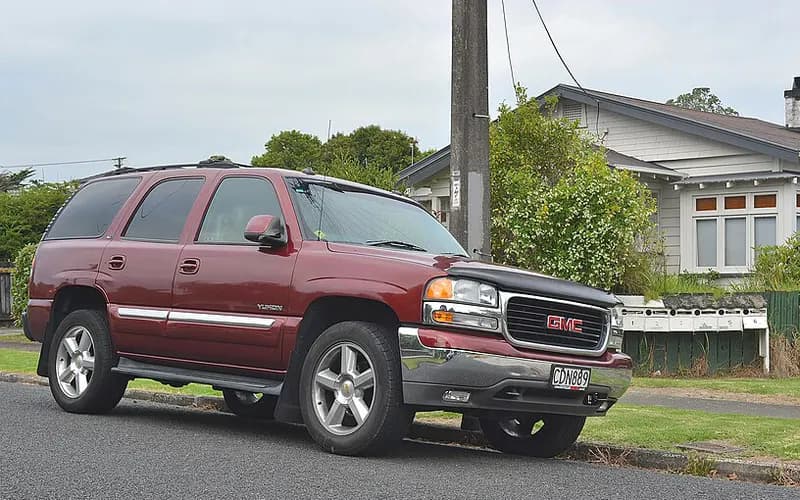
GMC Yukon 2000–2006
Common on this vehicle:Noise
issueTire scrub noise on low speed turns (steering rod / centerlink installed backwards)Remove
Record by record
1 records state a cause or a remedy. Each record is shown as short labels in the order fault → finding the cause → correction. Press a label to narrow to the records that state it.
Read the records one by one (1)
Known issuesTire scrub noise on low speed turns (steering rod / centerlink installed backwards)1
Manufacturer communication2000–2005 GMC FULL SIZE TRUCKS AND UTILITIES (YUKON) ・ 2004-10-01
Tire scrub noise on low speed turns: steering rod (centerlink) installed backwards
1Fault
2Finding the cause
Possible causes
- The steering rod (centerlink) can be installed backwards on all trucks and utilities with recirculating ball type steering that do not use a steering dampener.
- The idler and pitman attaching holes are tapered in only one direction.
Steps to confirm (in the document’s order)
- To determine the correct installation, compare with a like vehicle; correctly installed, the steering rod curves to the rear, outboard of the idler/pitman attachment holes and inboard of the inner tie rods.
- Installed incorrectly, the curved portion of the rod between the idler/pitman holes and the inner tie rods curves toward the front of the vehicle.
3Correction
Repair
- Remove and correctly reinstall the steering rod (centerlink).
Read the sentences of the record
From the manufacturer’s document
- Applies to:Applies to 1999-2005 Full Size Trucks and Utilities: owners may experience tire scrub noise on low speed turns (parking lot maneuvers).
- Cause:The steering rod (centerlink) can be installed backwards on all trucks and utilities with recirculating ball type steering that do not use a steering dampener.
- Cause:The idler and pitman attaching holes are tapered in only one direction.
- Confirm:To determine the correct installation, compare with a like vehicle; correctly installed, the steering rod curves to the rear, outboard of the idler/pitman attachment holes and inboard of the inner tie rods.
- Confirm:Installed incorrectly, the curved portion of the rod between the idler/pitman holes and the inner tie rods curves toward the front of the vehicle.
- Repair:Remove and correctly reinstall the steering rod (centerlink).
Open this issue of GM TechLink ↗ The points above are read from an article of TechLink, GM’s monthly publication for dealership technicians. The article itself is not reproduced here.
- Remedy
- Tire Scrub Noise On Low Speed Turns Owners of some 1999-2005 Full Size Trucks and Utilities may experience tire scrub noise on low speed turns (parking lot maneuvers). The steering rod (centerlink) can be installed backwards on all trucks and utilities with recirculating ball type steering that do not use a steering dampener. The idler and pitman attaching holes are tapered in only one direction. To determine the correct installation of the steering rod, compare to a like vehicle. In a correct installation, the steering rod should curve to the rear, outboard of idler/pitman attachment holes and inboard of the inner tie rods. With the steering rod installed incorrectly, the curved portion of the rod between the idler/pitman holes and inner tie rods curves toward the front of the vehicle. Remove and correctly reinstall the steering rod (centerlink).