
GMC Yukon 2000–2006
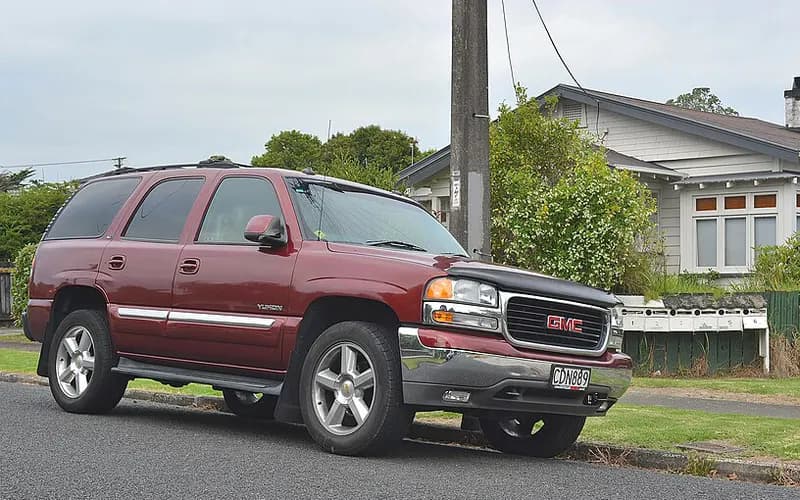
Common on this vehicle:Warning lightMisfire or rough idleNoiseHard start or long crankDoes not startLeakLoss of engine power, no accelerationStalls or shuts off
Record by record
7 records state a cause or a remedy. Each record is shown as short labels in the order fault → finding the cause → correction. Press a label to narrow to the records that state it.
Component named as the cause
A ribbon is as wide as the records that state both of its ends (only the commonest are drawn). A record that names several symptoms or components runs through each. Orange is records that say the fault came back or was not fixed. Results come from owners’ reports only; one that does not say is “result not stated”. None of this is a likelihood of a cause or a rate at which work succeeds.
Read the records one by one (3)
Known issuesSingle-cylinder misfire (P0300-P0308) and/or chirp, squeak or tick at camshaft speed: worn cam lobe / lifter, valve or valve spring2
Manufacturer communication2002–2006 GMC YUKON DENALI ・ 2018-11-13(4 earlier editions of this document folded here)
Service Engine Soon Lamp, Misfire, Engine Noise Diagnostic Information
1Fault
- Customers may complain of an SES light, engine misfire, and/or engine noise.
- If the SES light is on, there will be a P0300-P0308 DTC with misfires counting on a single cylinder, which may or may not be felt.
- A verified noise is not eliminated by canceling fuel injectors and occurs at camshaft speed (half of crankshaft speed).
2Finding the cause
- Valve Spring: broken
- Active Fuel Management Lifter: failed
- Valve: defective
- Camshaft Lobe: worn
- Lifter Roller: worn
Possible causes
- If SI diagnosis does not isolate the cause, it may be a worn camshaft lobe and/or lifter roller, a sticking valve, valve leakage, a broken valve spring, or a collapsed AFM (Active Fuel Management) lifter.
Steps to confirm (in the document’s order)
- During the noise, press with a wooden hammer handle on the rocker arms at the valve side, push rod side, and side of the rocker to find which one is making noise.
- If pressure on the valve side of the rocker changes the noise, it is most likely a lifter and/or cam lobe concern on that cylinder.
- Measure the cam lobe lift at the push rod side of the rocker arm.
- A good indicator of a sticking valve is engine misfires that continue to count on an aggressive deceleration with engine braking.
- Release the air pressure from the cylinder and work the valve up and down in the guide while turning it 360 degrees; if any binding is felt, a stem to guide clearance concern exists.
3Correction
Repair
- If a worn camshaft lobe or lifter roller is found, follow SI procedures to replace the camshaft and all lifters.
- Also replace the plastic lifter guide for the lifter that had the damaged cam lobe and/or lifter roller.
- Refer to the latest version of PIP4753 for decarboning instructions.
- If a broken valve spring is found, replace the broken valve spring as necessary.
Caution
- If an AFM lifter concern is suspected, refer to the latest version of PIP4568 for additional information.
Read the sentences of the record
From the manufacturer’s document
- Applies to:Applies to GMC Yukon models, 2002 - 2018, with a V8 engine.
- Condition:Customers may complain of an SES light, engine misfire, and/or engine noise.
- Condition:If the SES light is on, there will be a P0300-P0308 DTC with misfires counting on a single cylinder, which may or may not be felt.
- Condition:A verified noise is not eliminated by canceling fuel injectors and occurs at camshaft speed (half of crankshaft speed).
- Cause:If SI diagnosis does not isolate the cause, it may be a worn camshaft lobe and/or lifter roller, a sticking valve, valve leakage, a broken valve spring, or a collapsed AFM (Active Fuel Management) lifter.
- Confirm:During the noise, press with a wooden hammer handle on the rocker arms at the valve side, push rod side, and side of the rocker to find which one is making noise.
- Confirm:If pressure on the valve side of the rocker changes the noise, it is most likely a lifter and/or cam lobe concern on that cylinder.
- Confirm:Measure the cam lobe lift at the push rod side of the rocker arm.
- Repair:If a worn camshaft lobe or lifter roller is found, follow SI procedures to replace the camshaft and all lifters.
- Repair:Also replace the plastic lifter guide for the lifter that had the damaged cam lobe and/or lifter roller.
- Confirm:A good indicator of a sticking valve is engine misfires that continue to count on an aggressive deceleration with engine braking.
- Confirm:Release the air pressure from the cylinder and work the valve up and down in the guide while turning it 360 degrees; if any binding is felt, a stem to guide clearance concern exists.
- Repair:Refer to the latest version of PIP4753 for decarboning instructions.
- Confirm:Typically, the Cylinder Leakage Test outlined in SI should isolate valve leakage.
- Repair:If a broken valve spring is found, replace the broken valve spring as necessary.
- Caution:If an AFM lifter concern is suspected, refer to the latest version of PIP4568 for additional information.
Open the manufacturer’s document (PDF) ↗ The points above were read from this document.
- Remedy
- This Preliminary Information communication provides information to the technician about vehicles that have a Service Engine Soon Malfunction Indicator Lamp on, engine misfire, and/or engine noise. Technician may find Diagnostic Trouble Codes P0300-P0308. If published Service Information diagnostics does not isolate the cause of this concern technician should check for a worn camshaft lobe and/or lifter roller, a sticking valve, valve leakage, a broken valve spring, and a collapsed active fuel management lifter.
Manufacturer communication2000–2006 GMC YUKON DENALI ・ 2017-08-15
Service Engine Soon Lamp and Engine Misfire Information
1Fault
2Finding the cause
3Correction
What the documents say to do
Single-cylinder misfire (P0300-P0308) and/or chirp, squeak or tick at camshaft speed: worn cam lobe / lifter, valve or valve springConfirm
- If pressing on the valve side of the rocker changes the noise, a lifter and/or cam lobe concern on that cylinder is most likely.
Repair
- If a worn camshaft lobe or lifter roller is found, follow SI procedures to replace the camshaft and all lifters.
- Also replace the plastic lifter guide for the lifter that had the damaged cam lobe and/or lifter roller.
Caution
- A damaged cam lobe is easy to overlook when inspecting through the lifter bores; unworn lifter rollers do not mean the cam lobes are okay.
Read the sentences of the record
Open the manufacturer’s document (PDF) ↗ What is shown here is NHTSA’s summary; the procedure is in the document itself.
- Remedy
- This Preliminary Information communication provides information to the technician about vehicles that have a Service Engine Soon Malfunction Indicator Lamp on, engine misfire, and/or engine noise. Technician may find Diagnostic Trouble Codes P0300-P0308. If published Service Information diagnostics does not isolate the cause of this concern technician should check for a worn camshaft lobe and/or lifter roller, a sticking valve, valve leakage, a broken valve spring, and a collapsed active fuel management lifter.
Known issuesIntake manifold gasket leak (cold idle misfire, lean codes)1
Manufacturer communication2000–2006 GMC 5.3L L59 (E85 CAPABLE), AS WELL AS THE OTHER GEN 3 AND GEN 4 ENGINES (YUKON) ・ 2005-05-01
1Fault
- When a leak between the upper manifold and the gasket causes P0300 to set.
2Finding the cause
Not stated
3Correction
Repair
- Use only the 89017589 gasket (teal green) for repairs on the L59 engine, and do not replace the upper manifold unless it measures outside of the service manual specifications or is damaged.
Parts
- A new gasket made of FNK material (GM SPO p/n 89017589) has been released. The new gasket material is teal green; the original gaskets are orange.
- The service kit containing the new gasket was released in October 2004. A small quantity of the old gasket kit, p/n 17113557, which contains two p/n 17122608 (orange) gaskets, remains in the system.
- The 17113557 gasket (orange) can be used on the other engines. Once the 17113557 has been exhausted, only the 89017589 will be available for all engines.
Part numbers printed in the document
89017589Look up at RockAuto (aftermarket candidates) ↗Search the web ↗
17113557Look up at RockAuto (aftermarket candidates) ↗Search the web ↗
17122608Look up at RockAuto (aftermarket candidates) ↗Search the web ↗
The numbers are as the document prints them. The name and the replacing number are what the pages of GMPartsGiant, a reseller of genuine parts and not GM, state. Aftermarket equivalents are not checked here (the links only search by number). Confirm the fit for the vehicle (VIN) before ordering.
Caution
- In that case, do not replace the entire upper manifold assembly, upper plenum and gaskets.
Read the sentences of the record
From the manufacturer’s document
- Applies to:Applies specifically to the 5.3L L59 (E85 capable), as well as the other Gen 3 and Gen 4 engines.
- Condition:When a leak between the upper manifold and the gasket causes P0300 to set.
- Caution:In that case, do not replace the entire upper manifold assembly, upper plenum and gaskets.
- Parts:A new gasket made of FNK material (GM SPO p/n 89017589) has been released. The new gasket material is teal green; the original gaskets are orange.
- Parts:The service kit containing the new gasket was released in October 2004. A small quantity of the old gasket kit, p/n 17113557, which contains two p/n 17122608 (orange) gaskets, remains in the system.
- Repair:Use only the 89017589 gasket (teal green) for repairs on the L59 engine, and do not replace the upper manifold unless it measures outside of the service manual specifications or is damaged.
- Parts:The 17113557 gasket (orange) can be used on the other engines. Once the 17113557 has been exhausted, only the 89017589 will be available for all engines.
Open this issue of GM TechLink ↗ The points above are read from an article of TechLink, GM’s monthly publication for dealership technicians. The article itself is not reproduced here.
- Remedy
- Upper Manifold Gasket Leak This information applies specifically to the 5.3L L59 (E85 capable), as well as the other Gen 3 and Gen 4 engines. If a leak between the upper manifold and gasket causes a DTC P0300 to set, do not replace the entire upper manifold assembly, upper plenum and gaskets. If a leak between the upper manifold and gasket causes a DTC P0300 to set, do not replace the entire upper manifold assembly, upper plenum and gaskets. A new gasket made of FNK material (GM SPO p/n 89017589) has been released. The new gasket material is teal green in color (fig. 7) ; the original gaskets are orange. The service kit containing the new gasket was released in October 2004. A small quantity of the old gasket kit, p/n 17113557, which contains two p/n 17122608 (orange) gaskets, remains in the system. Use only the 89017589 gasket (teal green) for repairs on the L59 engine, and do not replace the upper manifold unless it measures outside of the service manual specifications or is damaged. The 17113557 gasket (orange) can be used on the other engines. Once the 17113557 has been exhausted, only the 89017589 will be available for all engines.
Showing 3 of the 7 you can open. Narrow the search to see the rest.