
GMC Yukon 2000–2006
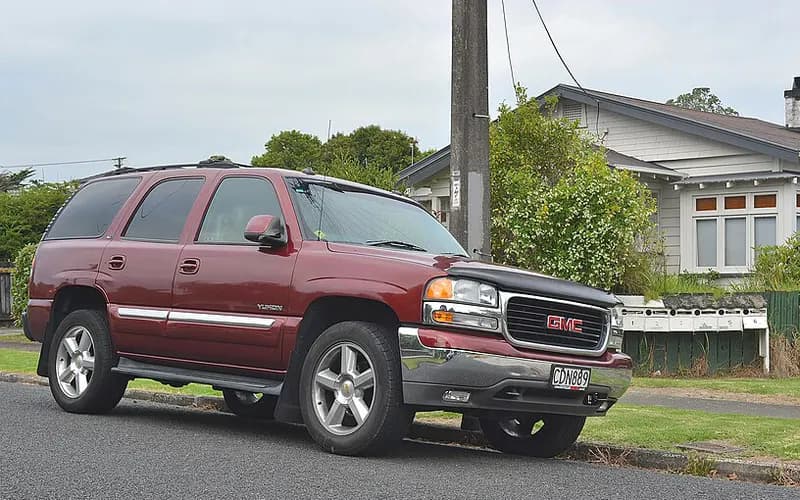
Common on this vehicle:Vibration or shudderTyre failure (blowout, tread separation)NoiseWarning lightCorrosion or rustLeakAir conditioning or heaterABS activates (at low speed and the like)
Record by record
21 records state a cause or a remedy. Each record is shown as short labels in the order fault → finding the cause → correction. Press a label to narrow to the records that state it.
Symptom
Component named as the cause
Work done
How it is said to have ended
- says it held for a while1
- says it did not fix it2
- result not stated15
A ribbon is as wide as the records that state both of its ends (only the commonest are drawn). A record that names several symptoms or components runs through each. Orange is records that say the fault came back or was not fixed. Results come from owners’ reports only; one that does not say is “result not stated”. None of this is a likelihood of a cause or a rate at which work succeeds.
Read the records one by one (21)
Known issuesTire recall (not the vehicle as built): Firestone Wilderness LE tread separation - recall 01T-0012
Recall2000 GMC YUKON ・ 2001-02-01
Tire Tread Separation on Wilderness LE Tires
1Fault
2Finding the cause
3Correction
Read the sentences of the record
- Cause
- TIRE DESCRIPTION: WILDERNESS LE TIRES (BOTH BLACK AND RAISED WHITE LETTER TIRES) PRODUCED DURING THE WEEK OF APRIL 24, 2000 (THE SEVENTEENTH WEEK OF 2000) AT THE CUERNAVACA, MEXICO PLANT WITH TIRE SERIAL NUMBERS V672WL11700 (BLACKWALL) AND V672WL21700 (RAISED WHITE LETTERS). THESE TIRES WERE USED AS ORIGINAL EQUIPMENT ON MODEL YEAR 2000 YUKON XL 1500 SERIES VEHICLES AND WERE ALSO OFFERED AS OPTIONAL EQUIPMENT ON THE 2000 CHEVROLET SUBURBAN 1500 SERIES VEHICLES. TREAD SEPARATION CAN OCCUR DUE TO A LACK OF ADHESION TO THE FIRST STEEL BELT.
- Remedy
- ON JANUARY 2, 2001, FIRESTONE MADE A PUBLIC ANNOUNCEMENT OF THE DEFECT AND THAT REPLACEMENT TIRES ARE IMMEDIATELY AVAILABLE AT NO COST TO THE CUSTOMER. REPLACEMENT TIRES ARE AVAILABLE AT EITHER THEIR LOCAL GM OR CHEVROLET DEALER OR BY THEIR LOCAL AUTHORIZED PARTICIPATING FIRESTONE RETAILER. OWNER NOTIFICATION BEGAN JANUARY 1, 2001. OWNERS SHOULD CONTACT FIRESTONE AT 1-800-465-1904.
- Consequence
- TREAD BELT SEPARATION MAY BE NOTICED BY IRREGULAR WEAR, NOISE, OR VIBRATION. WITH CONTINUED USE, IT MAY LEAD TO COMPLETE SEPARATION OF THE TREAD/BELT PACKAGE FROM THE TIRE CARCASS, POSSIBLY RESULTING IN A VEHICLE CRASH, PERSONAL INJURY, OR DEATH.
Owner complaint2000 GMC YUKON ・ 2000-08-08
Tire blowout with tread separation after 2 weeks of ownership
1Fault
2Finding the cause
3Correction
Not stated
What the documents say to do
Tire recall (not the vehicle as built): Firestone Wilderness LE tread separation - recall 01T-001Repair
- Firestone announced that replacement tires are available at no cost to the customer.
Read the sentences of the record
- Fault
- WE HEARD A CLUNK AND ABOUT 15 MINUTES LATER, THE BLOWOUT OCCURRED. (1 more)
Known issuesAftermarket part (not the vehicle as built): Federal-Mogul National / Carquest replacement wheel hub assembly retention nut - recall 07E-1061
Recall2000–2006 GMC YUKON ・ —
Wheel Hub Assembly Bearing Nut Loosening Recall
1Fault
- The inboard retention nut that maintains the hub bearing assembly can loosen, resulting in an ABS light indication, noise, and/or wheel separation from the vehicle; wheel separation can result in a vehicle crash.
2Finding the cause
Steps to confirm (in the document’s order)
- On 2x4 vehicles, raise the vehicle on an approved hoist first; the hub assembly is good if a yellow, green or blue paint mark is seen on the grease cap on the inboard side of the steering knuckle.
- If the paint mark is not present, remove the wheel and the brake rotor and clean rust from the hub assembly face to check for the date code stamping.
- Defective hub assemblies can be identified by the country of origin on the package together with a recalled date code, by the date code on the package, or by the date code on the hub assembly.
- If a round yellow sticker is present on the box label, the part is good.
3Correction
Repair
- The hub assemblies were manufactured for aftermarket use; owners of these parts should have them removed and replaced as soon as possible.
- Federal-Mogul will replace the recalled hub assemblies free of charge.
Parts
- The recalled part numbers are 515020, 515021, 515025, 515053, 515054, 515059 and 515060.
Read the sentences of the record
From the manufacturer’s document
- Applies to:This is an equipment recall by Federal-Mogul of certain wheel hub assemblies sold as replacement parts only.
- Applies to:The recalled hub assemblies were packaged and sold between January 23, 2006 and December 20, 2007 under the National and CARQUEST Premium (BGS/Blue) brands, in 7 base part numbers.
- Parts:The recalled part numbers are 515020, 515021, 515025, 515053, 515054, 515059 and 515060.
- Applies to:The application lists include GMC 1500 Yukon (2WD) and GMC 1500 Yukon XL (2WD), 2001-2006.
- Applies to:ILJIN manufactured the recalled hub assemblies from December 27, 2005 to November 29, 2007.
- Condition:The inboard retention nut that maintains the hub bearing assembly can loosen, resulting in an ABS light indication, noise, and/or wheel separation from the vehicle; wheel separation can result in a vehicle crash.
- Confirm:On 2x4 vehicles, raise the vehicle on an approved hoist first; the hub assembly is good if a yellow, green or blue paint mark is seen on the grease cap on the inboard side of the steering knuckle.
- Confirm:If the paint mark is not present, remove the wheel and the brake rotor and clean rust from the hub assembly face to check for the date code stamping.
- Confirm:Defective hub assemblies can be identified by the country of origin on the package together with a recalled date code, by the date code on the package, or by the date code on the hub assembly.
- Confirm:If a round yellow sticker is present on the box label, the part is good.
- Repair:The hub assemblies were manufactured for aftermarket use; owners of these parts should have them removed and replaced as soon as possible.
- Repair:Federal-Mogul will replace the recalled hub assemblies free of charge.
- Cause
- CERTAIN FEDERAL-MOGUL REPLACEMENT WHEEL HUB ASSEMBLIES WITH THE BRAND NAMES: NATIONAL, CARQUEST P/NOS. 515020, 515021, 515025, 515053, 515054, 515059, AND 515060, SHIPPED BETWEEN JANUARY 23, 2006, AND DECEMBER 20, 2007, SOLD FOR LIGHT DUTY AND MEDIUM DUTY TRUCKS. THE INBOARD RETENTION NUT USED TO MAINTAIN HUB BEARING ASSEMBLY CAN LOOSEN RESULTING IN AN ABS LIGHT INDICATION, NOISE, AND/OR WHEEL SEPARATION.
- Remedy
- FEDERAL-MOGUL WILL NOTIFY CUSTOMERS AND WILL REPLACE THE HUB ASSEMBLY FREE OF CHARGE. THE RECALL BEGAN ON FEBRUARY 7, 2008. OWNERS CAN CONTACT FEDERAL-MOGUL TOLL-FREE AT 877-489-6659.
- Consequence
- WHEEL SEPARATION CAN RESULT IN A VEHICLE CRASH.
Known issuesGrease seen at front hub bearing seals (normal purge, do not replace)1
Manufacturer communication2004–2006 GMC YUKON DENALI ・ 2017-08-15
Front hub bearing grease leakage preliminary information
1Fault
- Grease may move radially outward from the bearing seal area onto adjoining components.
2Finding the cause
Possible causes
- The factory grease fill of the front bearing/hub assembly is more than the bearing needs for lubrication over the life of the vehicle.
- Part of the grease purges through the self-venting bearing seals during the initial drive period (a few thousand miles/kilometers) and helps form an extra barrier against contamination.
Steps to confirm (in the document’s order)
- Replace the bearing if its endplay is greater than 0.005" or 0.13mm.
- Replace the bearing if the seals show visible damage.
- Replace the bearing if it rotates roughly.
- Replace the bearing if it makes abnormal noise.
3Correction
Repair
- If desired, grease that has migrated away from the immediate seal area can be wiped off.
Caution
- Do not replace the bearing for grease purge, and do not clean the purged grease on or right next to the seals, because it gives additional protection.
Read the sentences of the record
From the manufacturer’s document
- Applies to:Applies to 2004-2013 GMC Sierra, Sierra Classic, Yukon and Yukon Denali models (note: the Yukon years run later than the years this service covers).
- Condition:Grease may move radially outward from the bearing seal area onto adjoining components.
- Cause:The factory grease fill of the front bearing/hub assembly is more than the bearing needs for lubrication over the life of the vehicle.
- Cause:Part of the grease purges through the self-venting bearing seals during the initial drive period (a few thousand miles/kilometers) and helps form an extra barrier against contamination.
- Caution:Do not replace the bearing for grease purge, and do not clean the purged grease on or right next to the seals, because it gives additional protection.
- Repair:If desired, grease that has migrated away from the immediate seal area can be wiped off.
- Confirm:Replace the bearing if its endplay is greater than 0.005" or 0.13mm.
- Confirm:Replace the bearing if the seals show visible damage.
- Confirm:Replace the bearing if it rotates roughly.
- Confirm:Replace the bearing if it makes abnormal noise.
Open the manufacturer’s document (PDF) ↗ The points above were read from this document.
- Remedy
- This Preliminary Information communication provides information to the technician about vehicles that have grease leaking from front hub bearings. Technician should not replace the bearing for grease purge. Technician should be advised to not clean the purged grease from the area immediately on or adjacent to the seals because this grease provides additional protection. Technician should only replace the bearing if the seals show visible damage, bearing endplay is greater than 0.005" or 0.13mm, bearing exhibits rough rotation, or bearing exhibits abnormal noise.
Known issuesParking brake linings worn out prematurely, parking brake does not hold (PBR single-shoe drum-in-hat)1
Owner complaint2000 GMC YUKON ・ 2002-05-02
Parking brake ineffective, engine knock, seat and suspension issues
1Fault
2Finding the cause
Not stated
3Correction
Read the sentences of the record
- Fault
- MY PARKING/EMERGENCY BRAKE GOES ALL THE WAY TO THE FLOOR AND DOES NOT HOLD MY VEHICLE ON EVEN THE SLIGHTEST GRADE. (5 more)
- Remedy
- MY REAR END WHEEL BEARING WERE REPLACED BECAUSE OF A LOUD HUM. (1 more)
SUSPENSION9
Manufacturer communication2004–2006 GMC YUKON ・ 2005-11-02
8.6 Inch Rear Axle Gear Whine Service Communication
1Fault
2Finding the cause
3Correction
Read the sentences of the record
- Remedy
- SERVICE VME - 8.6 INCH (= 218.4 mm) REAR AXLE WHICH EXHIBIT A GEAR WHINE CONDITION (UNTIL DECEMBER 23, 2005). *TT
Manufacturer communication2005 GMC YUKON DENALI ・ 2005-05-12
Axle Phasing, Growl, Cyclic Noise While Driving
1Fault
2Finding the cause
Not stated
3Correction
Read the sentences of the record
- Remedy
- 8.625 AXLE PHASING, GROWL, CYCLIC, NOISE WHILE DRIVING. *TT
Manufacturer communication2000–2005 GMC YUKON DENALI ・ 2004-08-25
Rear Axle Locking Differential Chatter Shudder Noise on Turns
1Fault
2Finding the cause
3Correction
REAR AXLE LOCKING DIFFERENTIAL CHATTER SHUDDER NOISE ON TURNS. *MJ
Read the sentences of the record
- Remedy
- REAR AXLE LOCKING DIFFERENTIAL CHATTER SHUDDER NOISE ON TURNS. *MJ
Manufacturer communication2003–2004 GMC YUKON ・ 2004-02-25
Front Suspension Snap and Popping Noise
1Fault
2Finding the cause
Not stated
3Correction
Read the sentences of the record
- Remedy
- SNAP AND POPPING NOISE IN THE FRONT SUSPENSION AREA. *TT
Manufacturer communication2000–2006 GMC YUKON ・ 2004-02-11
Rear Leaf Spring Slap or Clunk Noise
1Fault
2Finding the cause
3Correction
Read the sentences of the record
- Remedy
- REAR LEAF SPRING SLAP OR CLUNK NOISE (REPLACE SPRING INSERTS) *TT UPDATED 10/18/07. *NJ
Manufacturer communication2003 GMC YUKON ・ 2003-11-24
Front suspension snap and popping noise communication
1Fault
2Finding the cause
Not stated
3Correction
Read the sentences of the record
- Remedy
- SNAP AND POPPING NOISE IN THE FRONT SUSPENSION AREA. *TT
Manufacturer communication2000–2003 GMC YUKON ・ 2003-09-27
Rattle/Squeak From Front of Vehicle Notification
1Fault
2Finding the cause
Not stated
3Correction
Read the sentences of the record
- Remedy
- RATTLE/SQUEAK FROM FRONT OF VEHICLE. *TT *AR
Owner complaint2002 GMC YUKON ・ 2012-07-10
Banging noise from rear while driving
1Fault
2Finding the cause
3Correction
Not stated
Read the sentences of the record
- Fault
- THE CONTACT STATED WHILE DRIVING 25 MPH (= 40.2 km/h) THERE WAS A BANGING NOISE COMING FROM THE REAR OF THE VEHICLE.
Owner complaint2000 GMC YUKON ・ 2001-12-13
Wheel bearing failure at low mileage
1Fault
2Finding the cause
3Correction
Read the sentences of the record
- Inspection
- IT WAS MIS DIAGNOSED BY J.P. THIBODEAUX GMC IN NEW IBERIA, LA. (1 more)
ENGINE AND ENGINE COOLING2
Owner complaint2002 GMC YUKON DENALI ・ 2003-06-11
Intermittent noise from right rear of vehicle; returned after exhaust system change
1Fault
2Finding the cause
Not stated
3Correction
Read the sentences of the record
- Fault
- CONSUMER NOTICED A NOISE COMING FROM RIGHT REAR OF VEHICLE INTERMITTENTLY.
- Remedy
- DEALER WAS CONTACTED, AND CHANGED THE EXHAUST SYSTEM.
- Outcome
- NOISE STOPPED FOR A WHILE, BUT RETURNED. *AK
Owner complaint2006 GMC YUKON ・ 2006-12-05
Clunking noise when turning wheel, vibration at 65 MPH and more
1Fault
2Finding the cause
3Correction
Read the sentences of the record
- Fault
- 2006 YUKON MAKES A CLUNKING NOISE WHEN TURNING THE WHEEL, VIBRATION IS ALSO NOTICED WHEN DRIVING 65 MPH (= 104.6 km/h). (5 more)
- Remedy
- THE VEHICLE WAS RETURNED AND THEY REPLACED THE RIGHT FRONT TIRE WHICH THEY CLAIMED WAS DEFECTIVE FROM THE FACTORY. (5 more)
- Inspection
- THE VEHICLE WAS TAKEN TO SERVICE DEALER WHO DETERMINED THAT THE UPPER AND LOWER CONTROL ARMS NEEDED TO BE REPLACED. (1 more)
TIRES2
Manufacturer communication2003–2006 GMC YUKON DENALI ・ 2022-06-13
Tire Pressure Service Information
1Fault
- Ride, handling and road noise concerns may be caused by improperly adjusted tire pressure.
- During cold weather the Tire Pressure Monitor (TPM) indicator (a yellow horseshoe with an exclamation point) may illuminate.
2Finding the cause
Steps to confirm (in the document’s order)
- The first step in diagnosing these concerns is to verify that the tires are inflated to the correct pressures.
- The tire placard is on the driver's side front or rear door edge, the center pillar, or the rear compartment lid.
- Generally a 5.6°C (10°F) temperature change equals a 6.9 kPa (1 psi) tire pressure change.
- A "cold" tire is one that has sat for at least 3 hours or been driven no more than 1.6 km (1 mi).
3Correction
Repair
- If the indicator goes off after the tires warm up, reset the pressure to placard pressure at the cold temperature.
Caution
- The recommended inflation pressure is not the pressure printed on the tire sidewall.
- Always inspect and adjust the pressure when the tires are cold.
- Vehicles with different front and rear pressures need to be adjusted after tire rotation.
- To prevent electrostatic discharge damage to the Tire Pressure Monitoring Sensor (TPMS), the technician should be statically discharged before checking or filling tires.
Read the sentences of the record
From the manufacturer’s document
- Applies to:Applies to 2022 and prior GM passenger cars and light duty trucks.
- Condition:Ride, handling and road noise concerns may be caused by improperly adjusted tire pressure.
- Confirm:The first step in diagnosing these concerns is to verify that the tires are inflated to the correct pressures.
- Confirm:The tire placard is on the driver's side front or rear door edge, the center pillar, or the rear compartment lid.
- Caution:The recommended inflation pressure is not the pressure printed on the tire sidewall.
- Confirm:Generally a 5.6°C (10°F) temperature change equals a 6.9 kPa (1 psi) tire pressure change.
- Confirm:A "cold" tire is one that has sat for at least 3 hours or been driven no more than 1.6 km (1 mi).
- Caution:Always inspect and adjust the pressure when the tires are cold.
- Condition:During cold weather the Tire Pressure Monitor (TPM) indicator (a yellow horseshoe with an exclamation point) may illuminate.
- Repair:If the indicator goes off after the tires warm up, reset the pressure to placard pressure at the cold temperature.
- Caution:Vehicles with different front and rear pressures need to be adjusted after tire rotation.
- Caution:To prevent electrostatic discharge damage to the Tire Pressure Monitoring Sensor (TPMS), the technician should be statically discharged before checking or filling tires.
Open the manufacturer’s document (PDF) ↗ The points above were read from this document.
- Remedy
- This service bulletin provides information for accurate tire pressures that ensure the safe handling and appropriate ride characteristics of GM cars and trucks.
Owner complaint2004 GMC YUKON ・ 2004-05-27
Loud noise from front end while driving 55 MPH, driver side tire tread blowout
1Fault
2Finding the cause
3Correction
Not stated
Read the sentences of the record
- Fault
- WHILE DRIVING 55 MPH (= 88.5 km/h), CONSUMER NOTICED A LOUD NOISE COMING FROM THE FRONT END OF VEHICLE.
EXTERIOR LIGHTING1
Owner complaint2001 GMC YUKON ・ 2005-12-07
Steering, suspension, and transfer case problems
1Fault
2Finding the cause
3Correction
Read the sentences of the record
- Fault
- THE CONSUMER EXPERIENCED VARIOUS STEERING, SUSPENSION AND TRANSFER CASE PROBLEMS WITH HER 2001 GMC YUKON. (3 more)
- Remedy
- THE DEALER REPLACED THE HOUSING AND ELEMENT. (5 more)
- Inspection
- THE DEALER DETERMINED THAT THE TRANSFER CASE CHAIN HAD STRETCHED.
POWER TRAIN1
Manufacturer communication2000–2006 GMC YUKON DENALI ・ 2008-04-07
Eaton Locking Differential Chatter Shudder Noise on Turns (RPO G80)
1Fault
2Finding the cause
3Correction
Read the sentences of the record
- Remedy
- EATON LOCKING DIFFERENTIAL CHATTER SHUDDER NOISE ON TURNS, EQUIPPED WITH A LOCKING REAR DIFFERENTIAL RPO G80. *NJ UPDATED 7/17/2008. *PE
WHEELS1
Manufacturer communication2000–2006 GMC YUKON DENALI ・ 2021-05-17
Torque Converter Bolt Removal Warning
1Fault
- Customers may comment on noise coming from underneath a vehicle equipped with an automatic transmission.
- Technicians may find that the noise comes from the bell housing area.
2Finding the cause
Possible causes
- Running the engine with those bolts removed may damage the pilot on the front of the torque converter, the pilot hole in the end of the crankshaft, or both.
Steps to confirm (in the document’s order)
- Use chassis ears to isolate the component or assembly that is the loudest source of the noise.
3Correction
Caution
- Do not remove the flex plate to torque converter bolts, push the torque converter back toward the transmission and start the engine to tell whether the noise comes from the engine or the transmission.
Read the sentences of the record
From the manufacturer’s document
- Applies to:Applies to all brands, models, engines and transmissions, 2000 - 2021.
- Condition:Customers may comment on noise coming from underneath a vehicle equipped with an automatic transmission.
- Condition:Technicians may find that the noise comes from the bell housing area.
- Caution:Do not remove the flex plate to torque converter bolts, push the torque converter back toward the transmission and start the engine to tell whether the noise comes from the engine or the transmission.
- Cause:Running the engine with those bolts removed may damage the pilot on the front of the torque converter, the pilot hole in the end of the crankshaft, or both.
- Confirm:Use chassis ears to isolate the component or assembly that is the loudest source of the noise.
Open the manufacturer’s document (PDF) ↗ The points above were read from this document.
- Remedy
- This Preliminary Information communication provides information to the technician to not remove the torque converter bolts and start the engine as this may cause damage to the torque converter of the crankshaft on vehicles equipped with an automatic transmission.