
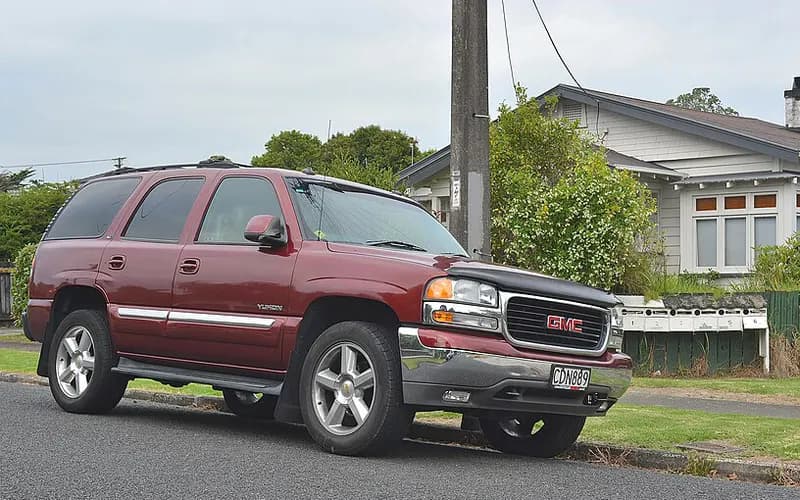
Suspension, wheels and tiresModel years 2005–2006Manufacturer
Creak or squeak noise from the rear lower control arm bushings (do not replace the propshaft)
The article is worded by class: 2005-06 full size utilities, Cadillac Escalade, Chevrolet Avalanche and HUMMER H2 built after May 2005.
FaultCrate・Creak or squeak noise from the rear lower control arm bushings (do not replace the propshaft)
A creak or squeak type noise may come on acceleration, deceleration, over bumps, in turns or on garage shifts. It could be coming from the rear lower control arm bushings, the squeak caused by relative movement of the bushing to the control arm flange (GM TechLink).
How to decide
Spray penetrating oil on the bushing; if the noise is eliminated or reduced, replace the control arm assembly
Watch out
It can sound like the propshaft; do not replace the propshaft
Parts
Rear lower control arm assembly
Check3
- The noise may sound like it is from the front or the rear of the vehicle; felt or heard with Chassis Ears, it may seem to come from along the entire frame side rail or the body mount areas.GM TechLink
- In some cases it may sound like loose lumber when driving straight or turning on a minimally rough road surface.GM TechLink
- The article applies to 2005-06 full size utilities, Cadillac Escalade, Chevrolet Avalanche and HUMMER H2 built after May 2005.GM TechLink
Decide1
Spray penetrating oil (WD-40 or equivalent) on the bushing-to-control-arm area; if the noise is eliminated or reduced, replace the control arm assembly.GM TechLink
Steps2Creak or Squeak Noise
Isolate
- 1Spray penetrating oil (WD-40 or equivalent) on the bushing-to-control-arm area to help isolate the noise to the control arm bushing.
Replace
- 2If the noise is eliminated or reduced, replace the control arm assembly.
The isolation and replacement in GM TechLink's August 2006 article "Creak or Squeak Noise", in the order written (not numbered steps). It applies to 2005-06 vehicles built after May 2005. That this vehicle is among the Creak or Squeak Noise is from GM TechLink / GM TechLink 2000-12.Open GM TechLink 2006-08
Cautions and risks1
- This noise can sound like it is coming from the propshaft; do not replace the propshaft for this condition.GM TechLink
What it needs
- Parts
- The rear lower control arm assembly.GM TechLink
- Materials
- Penetrating oil (WD-40 or equivalent), for isolating the noise.GM TechLink
- Tools
- Chassis Ears, to feel or hear where the noise comes from.GM TechLink
Only what the documents and the pages read state; what is not listed is not thereby not needed.
Applies to
- The information applies to 2005-06 full size utilities, Cadillac Escalade, Chevrolet Avalanche and HUMMER H2 built after May 2005.
See the evidence (1 documents, 8 passages)
| Document | Publisher | Date |
|---|---|---|
| [1]GM TechLink, August 2006 ↗ | ManufacturerGeneral Motors | 2006-08-01 |
Applies toThe information applies to 2005-06 full size utilities, Cadillac Escalade, Chevrolet Avalanche and HUMMER H2 built after May 2005.
This information applies to 2005-06 full size utilities, Cadillac Escalade, Chevrolet Avalanche, and HUMMER H2 built after May, 2005.— [1]
First signsOwners may comment of a creak or squeak type noise on acceleration, deceleration, over bumps, in turns or on garage shifts; it may sound like it comes from the front or the rear of the vehicle.
Owners may comment of a creak or squeak type noise on acceleration, deceleration, over bumps, turns or garage shifts. This noise may sound like it is from the front or the rear of the vehicle.— [1]
First signsThe noise, felt or heard using Chassis Ears, may seem to come from along the entire frame side rail or the body mount areas.
This noise (felt or heard using Chassis Ears) may seem to be coming from along the entire frame side rail or body mount areas.— [1]
First signsIn some cases the noise may sound like loose lumber when driving straight or turning on a minimally rough road surface.
In some cases, the noise may sound like loose lumber while driving on a minimally rough road surface while driving straight or turning.— [1]
Why it happensThe noise could be coming from the rear lower control arm bushings; the squeak is caused by relative movement of the bushing to the control arm flange.
This noise could be coming from the rear lower control arm bushings. The squeak is caused by relative movement of the bushing to the control arm flange.— [1]
How to confirmTo help isolate the noise to the control arm bushing, spray penetrating oil (WD-40 or equivalent) on the bushing-to-control-arm area.
To help isolate the noise to the control arm bushing, spray penetrating oil (WD-40 or equivalent) on the bushing to the control arm area.— [1]
RepairIf the noise is eliminated or reduced, replace the control arm assembly.
If the noise is eliminated or reduced, replace the control arm assembly.— [1]
CautionThe noise can sound like it comes from the propshaft; do not replace the propshaft for this condition.
IMPORTANT: This noise can sound like it is coming from the propshaft. Do not replace the propshaft for this condition.— [1]
Put together by FaultCrate from public records and technical documents. The cause and the repair are for the workshop to decide with the vehicle in front of it. Counts are records, not failure rates.
List the records (1 that can be opened)
Records whose recall number, document number or text matches. Each line says why it matched.
- Creak or squeak noise from the rear lower control arm bushings; do not replace the propshaftManufacturer communication 2006-08-01・document number matches