
EngineModel years 2002–2014Manufacturer
Oil leak after cold start from frozen PCV system (rear main seal)
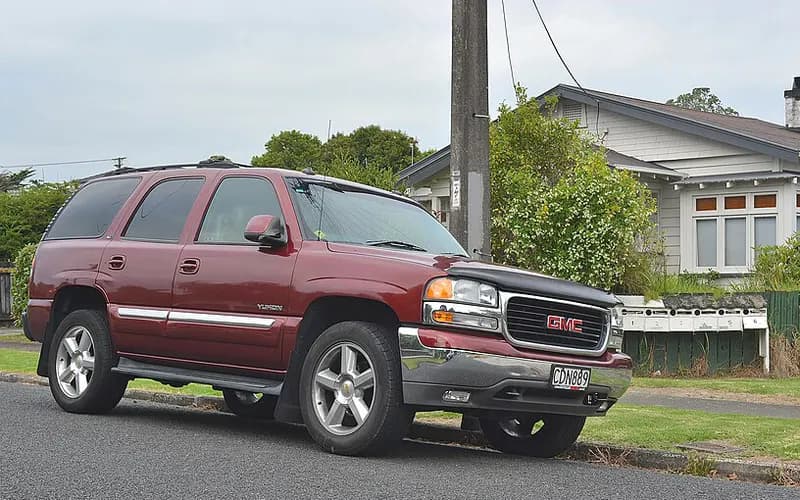
GMC Yukon Models 2002 - 2014, V8 (among many listed V8 models)
FaultCrate・Oil leak after cold start from frozen PCV system (rear main seal)
Some customers may complain of an oil leak shortly after a cold start when ambient temperatures are extremely low (approximately below 10°F (= -12.2 °C)) or with excessive short trip drive cycles. If the leak is from the rear main seal, it is the result of a frozen PCV system and excessive crankcase pressure (GM's PIP3343F).
How to decide
Clean the leak area, clean and dry the PCV hoses, and fit the vented oil fill cap (GM)
Watch out
A rear main seal leak just after a cold start results from a frozen PCV and excessive crankcase pressure (GM)
Parts
Vented oil fill cap 12589430
Check9
- See whether the leak shows shortly after a cold start, whether the vehicle sees extremely low ambient temperatures (approximately below 10°F (= -12.2 °C)) or excessive short trip drive cycles, and whether the leak is from the rear main seal. It is a rear main seal leak that the PI attributes to a frozen PCV system and excessive crankcase pressure.NHTSA
- The PI's versions and coverage: D (March 2014, which made the PI external) and E (April 2014, which added the labor operation) covered vehicles with a V-8 gas engine except L83, L86 and LV3.GM
- The PI's D and E named the Yukon and Yukon XL (Denali included) and the Escalade, Escalade ESV and Escalade EXT.GM
- The PI's latest, F (January 2018, which updated the model years), gives the engine as V8 and names the models as "GMC Yukon Models", "Cadillac Escalade" and so on.GM
- Diagnosing oil leaks can be aided by first measuring crankcase pressure. Excessive crankcase pressure means oil leaks or oil odors (excessive crankcase vacuum means oil consumption through the PCV system or engine performance issues).GM TechLink 2001-03, general guidance (an article that names no model)
- How to measure: remove the dipstick and attach the water manometer's hose at the dipstick tube (an adapter may be necessary, as some tubes are bell shaped).GM TechLink 2001-03, general guidance (an article that names no model)
- Crankcase pressure is usually checked after reaching operating temperature, at idle and various higher RPMs (for example idle, 1500 RPM and 2500 RPM).GM TechLink 2001-03, general guidance (an article that names no model)
- Fluid shifting toward the crankcase indicates vacuum, away from it pressure; the total difference in column heights is the reading.GM TechLink 2001-03, general guidance (an article that names no model)
- Reading the result: typically, readings between zero and 2 inches (= 50.8 mm) of water vacuum are considered acceptable. Any reading over 2 inches (= 50.8 mm) of water vacuum, or positive pressure in the crankcase, should be referenced against a known-good unit. The pressure specifications vary with engine family and are not published in the service manual, so a known-good vehicle is the best reference.GM TechLink 2001-03, general guidance (an article that names no model)
Decide3
If this concern is encountered, clean the area of the oil leak, clean and dry the PCV hoses, and replace the oil fill cap with the vented 12589430 to prevent a reoccurrence (GM's PI).NHTSA
- The PI's remedy does not include replacing the rear main seal; its warranty labor operation is 4065230 (Oil Filler Cap Replacement).NHTSA
- If crankcase pressure is too high, the PCV system may be plugged or restricted, or the wrong PCV valve may be installed: inspect the PCV related components and vacuum supply. The engine may also have excessive blow-by in the cylinders; follow up with a cylinder compression and leak-down test.GM TechLink 2001-03, general guidance (an article that names no model)
Steps2Possible Engine Oil Leak Due To PCV Freeze-Up
Clean
- 1Clean the area of the oil leak, and clean and dry the PCV hoses.
Replace the cap
- 2Replace the oil fill cap with the vented 12589430 to prevent a reoccurrence.
The Recommendations / Instructions of GM's PIP3343F (January 2018), in the document's order. It is one sentence of instructions, not numbered steps; the earlier versions D (March 2014) and E (April 2014) give the same. F's table covers V8 vehicles: the Avalanche, Silverado and Sierra for 2002-2013, the Escalade, Suburban, Tahoe and Yukon ("Yukon Models") for 2002-2014, and the Hummer ("H Models") for 2003-2010; 2000 and 2001 are not included. The Yukon XL is not named in F's table; a GM document that writes only the Yukon is read as covering the Yukon XL too, and the earlier E and D name it (2002-2014). Nor are the Escalade ESV, Escalade EXT and H2 named in F's table; the earlier E and D name them (the Escalade, Escalade ESV and Escalade EXT for 2002-2014, the HUMMER H2 for 2003-2010). F gives updating the model years as its reason for superseding E, and E gives adding the labor operation as its reason for superseding D. E and D excluded the L83, L86 and LV3 among V-8 gas engines. The document covers model years from 2002. That this vehicle is among the Possible Engine Oil Leak Due To PCV Freeze-Up is from GM.Open PIP3343F
Cautions and risks1
- In an engine with high crankcase pressure, replacing a leaking rear main seal may not fix the leak at all.GM TechLink 2001-03, general guidance (an article that names no model)
What it needs
- Parts
- Vented oil fill cap 12589430 (when this concern is encountered, to prevent a reoccurrence).NHTSA
- Tools
- Water manometer (J-23951 or equivalent), a tool to measure small amounts of pressure or vacuum. If you do not have one, it can be made from clear polyvinyl tubing (1/4-inch is a good choice) fixed to a board with inch graduations (water dyed slightly with food coloring for visibility). For bell-shaped dipstick tubes, technicians often use an adapter from a vacuum gage.GM TechLink 2001-03, general guidance (an article that names no model)
- Time
- The warranty labor operation is 4065230 (Oil Filler Cap Replacement); the time is the published labor operation time, with no figure in the PI.NHTSA
Part numbers printed in the document
12589430Oil Filler CapLook up at RockAuto (aftermarket candidates) ↗Search the web ↗
No successor stated(replaces 21007373 / 24100010 / 24100296 / 12573342)as stated by GMPartsGiant (checked 2026-10-06) ↗
The numbers are as the document prints them. The name and the replacing number are what the pages of GMPartsGiant, a reseller of genuine parts and not GM, state. Aftermarket equivalents are not checked here (the links only search by number). Confirm the fit for the vehicle (VIN) before ordering.
Only what the documents and the pages read state; what is not listed is not thereby not needed.
In the records
- Oil Fill Cap: replaced 3
- PCV Hose: cleaned 3
Applies to
- The bulletin lists GMC Yukon Models 2002 - 2014.
See the evidence (1 documents, 5 passages)
| Document | Publisher | Date |
|---|---|---|
| [1]PIP3343F: Possible Engine Oil Leak Due To PCV Freeze-Up ↗ | ManufacturerGeneral Motors | 2018-01-09 |
Applies toThe bulletin lists GMC Yukon Models 2002 - 2014.
Yukon Models 2002 - 2014— [1] Models
First signsOil leak can occur shortly after a cold start in extremely low ambient temperatures (approximately below 10°F (= -12.2 °C)) or with excessive short-trip driving.
oil leak shortly after a cold start when extremely low ambient temperatures are present (approximately below 10*F), or excessive short trip drive cycles.— [1] Condition
Why it happensThis is the result of a frozen PCV system and excessive crankcase pressure.
is noted, this is the result of a frozen PCV system and excessive crankcase pressure.— [1] Condition
RepairClean the area of the leak and clean and dry the PCV hoses.
clean the area of the oil leak, clean and dry the PCV hoses, and replace the oil fill cap with part number— [1] Recommendations
RepairFit oil fill cap 12589430 (vented) to prevent a recurrence.
12589430 (vented oil fill cap) to prevent a reoccurrence.— [1] Recommendations
Put together by FaultCrate from public records and technical documents. The cause and the repair are for the workshop to decide with the vehicle in front of it. Counts are records, not failure rates.
List the records (4 that can be opened)
Records whose recall number, document number or text matches. Each line says why it matched.
- Oil Leak at Cold Start in Extreme Low Ambient TemperaturesManufacturer communication 2018-02-21・document number matches
- Oil Leak at Cold Start in Low Ambient TemperatureManufacturer communication 2017-08-15・text contains "PCV"
- Oil Leak After Cold Start in Extremely Low TemperaturesManufacturer communication 2017-08-15・text contains "PCV"
- Engine Oil Leak Due to PCV Freeze-UpManufacturer communication 2008-04-07・text contains "PCV"