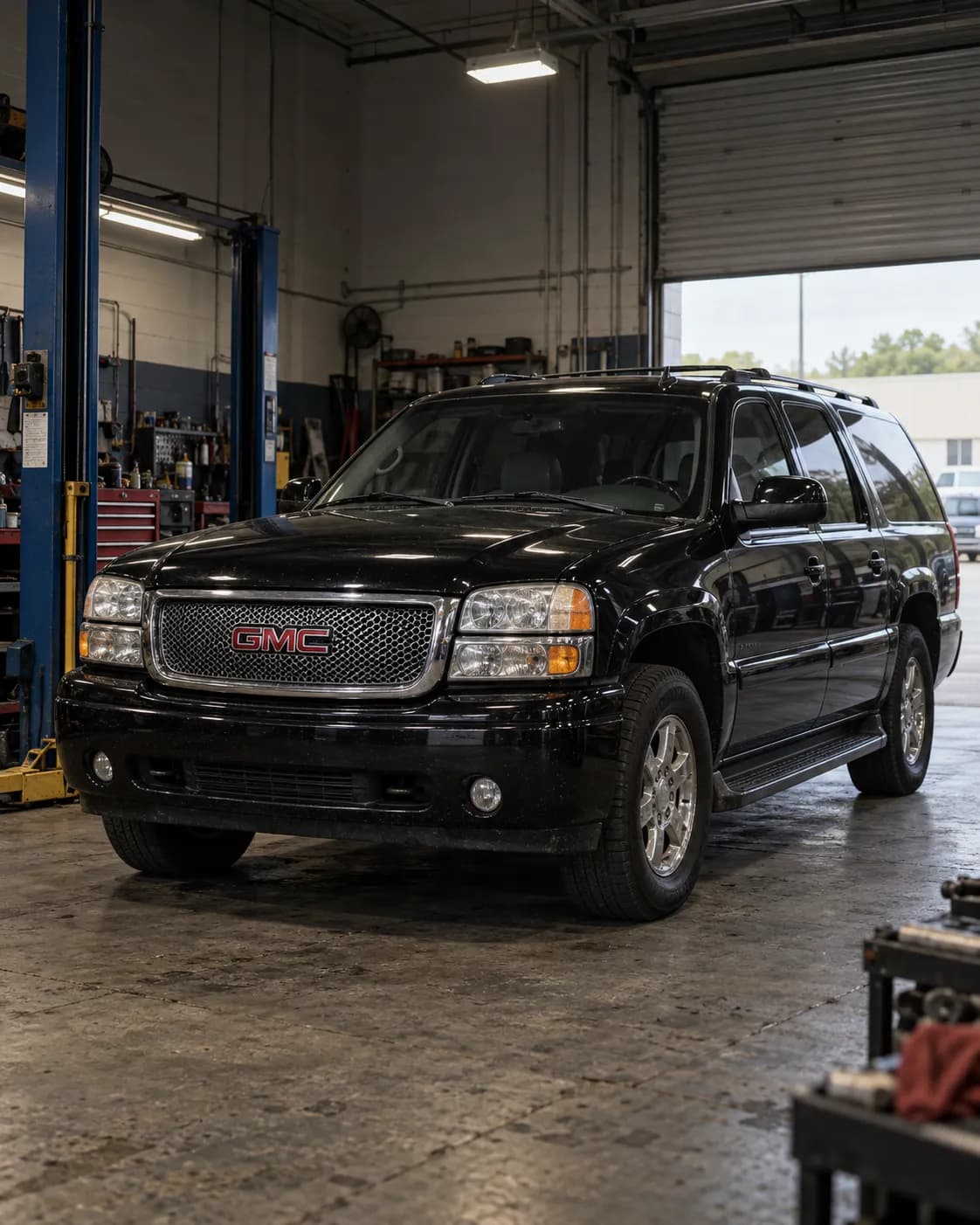
Source reference 10130627
Manufacturer communication — 2006 GMC YUKON DENALI XL
Relation to the target vehicle
- The source's vehicle field includes the trim.
- Model year
- Match 2006 — Source vehicle field
- Model
- Match YUKON DENALI XL — Source vehicle field
- Trim
- Match Denali — Source vehicle field
What the manufacturer’s document says
99-04-20-002H ・ normal characteristic (no repair) ・ for GM vehicles in general
Applies to
2014 and prior GM passenger cars and light duty trucks.
the passage
Models: 2014 and Prior GM Passenger Cars and Light Duty Trucks
Fault
On automatic transmission vehicles, a clunk noise when shifting between Park and Drive, Park and Reverse, or Drive and Reverse.
the passage
Some customers of vehicles equipped with automatic transmissions may comment that the vehicle exhibits a clunk noise when shifting between Park and Drive Park and Reverse, or Drive and Reverse.
A clunk noise while driving when the accelerator is quickly depressed and then released.
the passage
Similarly, customers of vehicles equipped with automatic or manual transmissions may comment that the vehicle exhibits a clunk noise while driving when the accelerator is quickly depressed and then released.
Finding the cause
Possible causes
Gear clearance or freeplay (lash) can produce a clunk whenever a gear is loaded and unloaded quickly or the direction of rotation is reversed.
the passage
This clearance or freeplay (also known as lash) can translate into a clunk noise whenever the gear is loaded and unloaded quickly, or whenever the direction of rotation is reversed.
In a 4-wheel drive vehicle the transfer case gears and their clearances add freeplay on top of that from the rear axle gears, universal joints and transmission.
the passage
This is because in addition to the freeplay from the rear axle gears, the universal joints, and the transmission (common to both vehicles), the 4-wheel drive transfer case gears (and their associated clearances) add additional freeplay to the driveline.
Steps to confirm (in the document’s order)
Compare the complaint vehicle with a like vehicle; if the results are the same, it is a normal condition.
the passage
Note: Compare this complaint vehicle to a like vehicle. If the results are the same, this is a normal condition.
Correction
Caution
Because every driveline component has some lash by design, changing driveline components may not reduce the lash satisfactorily.
the passage
Because all of the components in the driveline have a certain amount of lash by design, changing driveline components may not result in a satisfactory lash reduction.
The clunk noise does not adversely affect durability or performance.
the passage
While some owners may find the clunk noise objectionable, this will not adversely affect durability or performance.
Do not confuse this with the clunk at stop or from launch that is handled by cleaning/lubricating the rear propshaft slip yoke splines (Corporate Bulletin Number 09-04-21-003D or later).
the passage
Clunk Noise at Stop or From Launch (Clean/Lubricate Rear Propshaft Slip Yoke Splines) (Corporate Bulletin Number 09-04-21-003D or later)
Compiled by reading the full text of the document; each point stands on the passage shown. Check the document itself, linked below, before working on a vehicle.
Stated content
Communication summary
本技術情報は99-04-20-002Gの改訂版であり、2013-2014年式を追加するものです。 Machine translation (unreviewed)
This technical bulletin provides a revision of 99-04-20-002G to add 2013-2014 model years.
Go to this passage in the original
Source
- Source
- NHTSA Manufacturer Communications
- Source reference
- 10130627
- Received by source
- 2018-04-02
- Incident date
- Unknown
Open original text and sourceOpen the provider's page (external)