
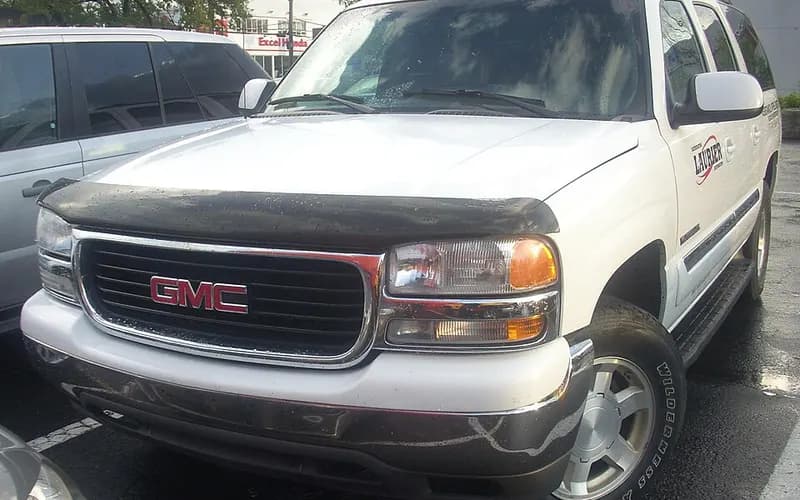
GMC Yukon XL 2000–2006
Common on this vehicle:NoiseWarning lightLoss of engine power, no accelerationLeakMisfire or rough idleVibration or shudderGauge or instrument faultDoes not start
Record by record
31 records state a cause or a remedy. Each record is shown as short labels in the order fault → finding the cause → correction. Press a label to narrow to the records that state it.
Component named as the cause
Work done
How it is said to have ended
- says it did not fix it3
- result not stated6
A ribbon is as wide as the records that state both of its ends (only the commonest are drawn). A record that names several symptoms or components runs through each. Orange is records that say the fault came back or was not fixed. Results come from owners’ reports only; one that does not say is “result not stated”. None of this is a likelihood of a cause or a rate at which work succeeds.
Read the records one by one (29)
Known issues4L60-E slip or no forward engagement right after input housing replacement (service part 17803687)1
Manufacturer communication2000–2006 GMC YUKON XL ・ 2017-08-15
Input Housing Inspection for Forward Range Slip
1Fault
- A few transmissions may slip or have no engagement in any forward gear immediately after the Input Housing (621) is replaced.
2Finding the cause
Possible causes
- The Input Housing (621) from GM Service Parts may have an incorrectly drilled input shaft.
Steps to confirm (in the document’s order)
- With the Input Housing (621) completely assembled, apply regulated compressed air to the 3-4 clutch feed hole and the forward clutch feed hole one at a time.
- Air should not leak out of the 3-4 clutch feed hole when air is applied to the forward clutch feed hole, and not out of the forward clutch feed hole when air is applied to the 3-4 clutch feed hole.
3Correction
Repair
- If air leaks between the two feed holes, replace the Input Housing (621) with one from GM Service Parts, ordering new housing part number 19125752.
Part numbers printed in the document
19125752Housing Assembly,3, 4 Clutch (W/ Input Shaft)Look up at RockAuto (aftermarket candidates) ↗Search the web ↗
Replaced by: 19418733as stated by GMPartsGiant (checked 2026-10-06) ↗Look up at RockAuto (aftermarket candidates) ↗Search the web ↗
The numbers are as the document prints them. The name and the replacing number are what the pages of GMPartsGiant, a reseller of genuine parts and not GM, state. Aftermarket equivalents are not checked here (the links only search by number). Confirm the fit for the vehicle (VIN) before ordering.
Parts
- Part number 19125752, Input Housing And Turbine Shaft Assembly, quantity 1.
Part numbers printed in the document
19125752Housing Assembly,3, 4 Clutch (W/ Input Shaft)Look up at RockAuto (aftermarket candidates) ↗Search the web ↗
Replaced by: 19418733as stated by GMPartsGiant (checked 2026-10-06) ↗Look up at RockAuto (aftermarket candidates) ↗Search the web ↗
The numbers are as the document prints them. The name and the replacing number are what the pages of GMPartsGiant, a reseller of genuine parts and not GM, state. Aftermarket equivalents are not checked here (the links only search by number). Confirm the fit for the vehicle (VIN) before ordering.
Caution
- This information only applies to Input Housing (621) with service part number 17803687; it does not apply to GM service transmission assemblies or original equipment transmission assemblies.
- When testing a fully assembled housing, a small amount of air leaking between the input shaft and the housing does not indicate a defective part.
- Do not replace an Input Housing (621) assembly solely because of a small air leak between the shaft and housing.
Read the sentences of the record
From the manufacturer’s document
- Applies to:The model list includes the 1999-2006 GMC Savana, Sierra, Yukon and Yukon XL.
- Applies to:It applies to vehicles equipped with the 4L60E, 4L65E or 4L70E automatic transmission (RPO M30, M32 or M70) and service input housing part number 17803687.
- Caution:This information only applies to Input Housing (621) with service part number 17803687; it does not apply to GM service transmission assemblies or original equipment transmission assemblies.
- Condition:A few transmissions may slip or have no engagement in any forward gear immediately after the Input Housing (621) is replaced.
- Cause:The Input Housing (621) from GM Service Parts may have an incorrectly drilled input shaft.
- Confirm:With the Input Housing (621) completely assembled, apply regulated compressed air to the 3-4 clutch feed hole and the forward clutch feed hole one at a time.
- Confirm:Air should not leak out of the 3-4 clutch feed hole when air is applied to the forward clutch feed hole, and not out of the forward clutch feed hole when air is applied to the 3-4 clutch feed hole.
- Repair:If air leaks between the two feed holes, replace the Input Housing (621) with one from GM Service Parts, ordering new housing part number 19125752.
- Caution:When testing a fully assembled housing, a small amount of air leaking between the input shaft and the housing does not indicate a defective part.
- Caution:Do not replace an Input Housing (621) assembly solely because of a small air leak between the shaft and housing.
- Parts:Part number 19125752, Input Housing And Turbine Shaft Assembly, quantity 1.
Open the manufacturer’s document (PDF) ↗ The points above were read from this document.
- Remedy
- This Preliminary Information communication provides information to the technician about vehicles that have slip in forward ranges immediately after replacing the input housing. Technician will inspect the 3-4 clutches and the forward clutch oil feed passages for leakage between circuits. Technician should apply regulated compressed air to the 3-4 clutch feed hole and the forward clutch feed hole one at a time with the input housing. Technician will need to replace the input housing if there is an air leak 3-4 clutches.
Known issuesSingle-cylinder misfire (P0300-P0308) and/or chirp, squeak or tick at camshaft speed: worn cam lobe / lifter, valve or valve spring1
Manufacturer communication2000–2006 GMC YUKON XL ・ 2017-08-15
Service Engine Soon Lamp, Misfire, and Engine Noise Information
1Fault
- With the SES light on, a P0300-P0308 DTC is found with misfires counting on a single cylinder that may or may not be felt.
- A verified noise is not eliminated by canceling fuel injectors and occurs at camshaft speed (half of crankshaft speed); it may be a chirp, squeak, squeal or tick and may increase off idle.
2Finding the cause
- Valve Spring: broken
- Active Fuel Management Lifter: failed
- Valve: defective
- Camshaft Lobe: worn
- Lifter Roller: worn
Possible causes
- When SI diagnosis does not isolate the cause, it may be a worn camshaft lobe and/or lifter roller, a sticking valve, valve leakage, a broken valve spring, or a collapsed AFM (Active Fuel Management) lifter.
Steps to confirm (in the document’s order)
- During the noise, press with a wooden hammer handle on the valve side, push rod side and side of each rocker arm; if pressure on the valve side changes the noise, it is most likely a lifter and/or cam lobe concern on that cylinder.
- Measure cam lobe lift at the push rod side of the rocker arm and compare with other rockers on the same bank; the misfiring or ticking cylinder should have clearly less lift if a lifter roller and/or cam lobe is worn.
- A good indicator of a sticking valve is misfires that continue to count on an aggressive deceleration with engine braking.
- For a suspected sticking valve, snap the valve onto its seat and confirm it comes off easily; if force is needed to tap it off the seat, excessive carbon build up exists, which may be repaired by decarboning the engine.
- The Cylinder Leakage Test outlined in SI should isolate valve leakage by finding excessive leakage past an intake or exhaust valve compared with the others.
3Correction
Repair
- If a worn camshaft lobe or lifter roller is found, replace the camshaft and all lifters per SI, and also replace the plastic lifter guide for the lifter that had the damage.
Caution
- A worn cam lobe is easy to overlook through the lifter bores, and unworn lifter rollers do not mean the related cam lobes are okay; both must be carefully inspected.
Read the sentences of the record
From the manufacturer’s document
- Applies to:The model list names 1999-2013 GMC Savana, Sierra and Yukon with a V8 engine.
- Condition:With the SES light on, a P0300-P0308 DTC is found with misfires counting on a single cylinder that may or may not be felt.
- Condition:A verified noise is not eliminated by canceling fuel injectors and occurs at camshaft speed (half of crankshaft speed); it may be a chirp, squeak, squeal or tick and may increase off idle.
- Cause:When SI diagnosis does not isolate the cause, it may be a worn camshaft lobe and/or lifter roller, a sticking valve, valve leakage, a broken valve spring, or a collapsed AFM (Active Fuel Management) lifter.
- Confirm:During the noise, press with a wooden hammer handle on the valve side, push rod side and side of each rocker arm; if pressure on the valve side changes the noise, it is most likely a lifter and/or cam lobe concern on that cylinder.
- Confirm:Measure cam lobe lift at the push rod side of the rocker arm and compare with other rockers on the same bank; the misfiring or ticking cylinder should have clearly less lift if a lifter roller and/or cam lobe is worn.
- Confirm:A good indicator of a sticking valve is misfires that continue to count on an aggressive deceleration with engine braking.
- Confirm:For a suspected sticking valve, snap the valve onto its seat and confirm it comes off easily; if force is needed to tap it off the seat, excessive carbon build up exists, which may be repaired by decarboning the engine.
- Confirm:The Cylinder Leakage Test outlined in SI should isolate valve leakage by finding excessive leakage past an intake or exhaust valve compared with the others.
- Confirm:A broken valve spring may stay stacked together and be hard to see, so lightly push on different places on the springs with a small hammer handle.
- Repair:If a worn camshaft lobe or lifter roller is found, replace the camshaft and all lifters per SI, and also replace the plastic lifter guide for the lifter that had the damage.
- Caution:A worn cam lobe is easy to overlook through the lifter bores, and unworn lifter rollers do not mean the related cam lobes are okay; both must be carefully inspected.
Open the manufacturer’s document (PDF) ↗ The points above were read from this document.
- Remedy
- This Preliminary Information communication provides information to the technician about vehicles that have a Service Engine Soon Malfunction Indicator Lamp on, engine misfire, and/or engine noise. Technician may find Diagnostic Trouble Codes P0300-P0308. If published Service Information diagnostics does not isolate the cause of this concern technician should check for a worn camshaft lobe and/or lifter roller, a sticking valve, valve leakage, a broken valve spring, and a collapsed active fuel management lifter.
Known issuesReduced Engine Power from throttle body connector crimp, broken wire or grounds1
Owner complaint2003 GMC YUKON XL 1500 ・ 2015-02-23
Reduced engine power and service engine soon signals appearing repeatedly since September 2014
1Fault
2Finding the cause
Not stated
3Correction
Read the sentences of the record
- Fault
- "REDUCED ENGINE POWER" AND SERVICE ENGINE SOON SIGNALS APPEAR ON VEHICLE PANEL CAUSING ENGINE POWER TO BE REDUCED IN A MATTER OF SECONDS.
- Remedy
- THROTTLE BODY SENSOR REPLACED TWICE, THROTTLE BODY HARNESS REPLACED, ALL WIRES, AND SENSORS HAVE BEEN CLEANED AND THOROUGHLY INSPECTED.
POWER TRAIN18
Manufacturer communication2000–2006 GMC YUKON XL DENALI ・ 2024-08-15
Transmission Core Damage Prevention Notice
1Fault
- GM is receiving many cracked or broken transmission cores at the remanufacturing facilities, and the damage makes them unusable for remanufacturing.
2Finding the cause
3Correction
Read the sentences of the record
From the manufacturer’s document
- Applies to:Applies to 2000 to 2024 GM passenger cars, SUVs and light/medium duty trucks.
- Condition:GM is receiving many cracked or broken transmission cores at the remanufacturing facilities, and the damage makes them unusable for remanufacturing.
Open the manufacturer’s document (PDF) ↗ The points above were read from this document.
- Remedy
- GM is receiving damaged (cracked or broken) transmission cores returned to the reman facilities. The damage is being caused either in the removal process by the technician, or inadequate packaging or shipping. This bulletin advises the dealers to be more careful not to damage the transmissions during removal and to package the core properly for return.
Manufacturer communication2000–2006 GMC YUKON XL DENALI ・ 2022-09-19
Flexplate and Torque Converter Separation Warning
1Fault
- A noise comes from underneath a vehicle equipped with an automatic transmission.
- The technician may find that the noise comes from the bell housing area.
2Finding the cause
Possible causes
- Running the engine with those bolts removed may damage the pilot on the front of the torque converter, the pilot hole in the end of the crankshaft, or both.
Steps to confirm (in the document’s order)
- Use chassis ears to isolate the component or assembly that is the loudest source of the noise.
3Correction
Caution
- Do not separate the torque converter from the flex plate.
- Do not remove the flex plate to torque converter bolts, push the converter back and start the engine to tell whether the noise is from the engine or the transmission.
Read the sentences of the record
From the manufacturer’s document
- Applies to:Applies to GM passenger cars and trucks, model years 2000 to 2023.
- Condition:A noise comes from underneath a vehicle equipped with an automatic transmission.
- Condition:The technician may find that the noise comes from the bell housing area.
- Caution:Do not separate the torque converter from the flex plate.
- Caution:Do not remove the flex plate to torque converter bolts, push the converter back and start the engine to tell whether the noise is from the engine or the transmission.
- Cause:Running the engine with those bolts removed may damage the pilot on the front of the torque converter, the pilot hole in the end of the crankshaft, or both.
- Confirm:Use chassis ears to isolate the component or assembly that is the loudest source of the noise.
Open the manufacturer’s document (PDF) ↗ The points above were read from this document.
- Remedy
- This diagnostic tip advises the tech not to separate the flexplate from the torque convertor or damage my occur if the engine is started while diagnosing for noise from the engine or transmission.
Manufacturer communication2000–2006 GMC YUKON XL ・ 2017-08-15
American Axle Manufacturing Axle Setup Information
1Fault
Not stated
2Finding the cause
Steps to confirm (in the document’s order)
- If the measured pinion shim comes out near either end of the range, compare it with the shim that was removed or recheck the setup of the measuring tools.
- To verify side bearing preload, the total torque to turn at the pinion should rise 5 - 10 in. lbs (= 0.565–1.13 N·m) after the differential case is installed.
- Axle shaft end play specification is 0.012 inch (= 0.305 mm) per side; radial (up and down) is 0.002 - 0.003 inch (= 0.0508–0.0762 mm).
3Correction
Repair
- On an 8.6 axle the pinion shim used or stacked behind the pinion is 0.050 inch (= 1.27 mm) at most and 0.020 inch (= 0.508 mm) at least.
- Set backlash to 0.003 to 0.005 inch (= 0.0762–0.127 mm) on a new ring and pinion for any AAM application, and check the gear pattern.
- Rule of thumb for an 8.6 inch (= 218.4 mm) axle with a 5 cut gear set: use a 0.035 inch (= 0.889 mm) pinion shim and set backlash to 0.004 inch (= 0.102 mm).
- Use backlash to move the pattern heel to toe, and the pinion shim to move the pattern height (crest to root).
- Drive pinion bearing preload is 15 - 30 in. lbs (= 1.69–3.39 N·m) with new bearings; with old bearings, check the rolling torque before disassembly and reset to only 3 - 5 in. lbs (= 0.339–0.565 N·m) above the original.
Caution
- A ring and pinion can be reused or adjusted only below 500 miles (= 804.7 km) and only if not used for towing; if the vehicle has towed anything, the gear set must be replaced.
- A "roller coaster" or "hourglass" pattern on the bearings may be normal up to 10,000 miles (= 16,093 km) and possibly longer, because the bearings have not fully broken in.
Read the sentences of the record
From the manufacturer’s document
- Applies to:Applies to 1999-2013 GM light duty trucks and utilities.
- Repair:On an 8.6 axle the pinion shim used or stacked behind the pinion is 0.050 inch (= 1.27 mm) at most and 0.020 inch (= 0.508 mm) at least.
- Confirm:If the measured pinion shim comes out near either end of the range, compare it with the shim that was removed or recheck the setup of the measuring tools.
- Repair:Set backlash to 0.003 to 0.005 inch (= 0.0762–0.127 mm) on a new ring and pinion for any AAM application, and check the gear pattern.
- Caution:A ring and pinion can be reused or adjusted only below 500 miles (= 804.7 km) and only if not used for towing; if the vehicle has towed anything, the gear set must be replaced.
- Caution:A "roller coaster" or "hourglass" pattern on the bearings may be normal up to 10,000 miles (= 16,093 km) and possibly longer, because the bearings have not fully broken in.
- Repair:Rule of thumb for an 8.6 inch (= 218.4 mm) axle with a 5 cut gear set: use a 0.035 inch (= 0.889 mm) pinion shim and set backlash to 0.004 inch (= 0.102 mm).
- Repair:Use backlash to move the pattern heel to toe, and the pinion shim to move the pattern height (crest to root).
- Repair:Drive pinion bearing preload is 15 - 30 in. lbs (= 1.69–3.39 N·m) with new bearings; with old bearings, check the rolling torque before disassembly and reset to only 3 - 5 in. lbs (= 0.339–0.565 N·m) above the original.
- Confirm:To verify side bearing preload, the total torque to turn at the pinion should rise 5 - 10 in. lbs (= 0.565–1.13 N·m) after the differential case is installed.
- Repair:Use a new pinion nut whenever the old one is removed; never reuse a used nut.
- Confirm:Axle shaft end play specification is 0.012 inch (= 0.305 mm) per side; radial (up and down) is 0.002 - 0.003 inch (= 0.0508–0.0762 mm).
Open the manufacturer’s document (PDF) ↗ The points above were read from this document.
- Remedy
- This Preliminary Information communication provides information to the technician with the axel setup information from American Axle Manufacturing. Technician should be advised that the maximum pinion shim to be used or stacked behind the pinion is 0.050?, and the minimum pinion shim is 0.020? for an 8.6 axle. The range for available pinion depth shims for the 10.5? axle is 0.006? to 0.024?. When setting the backlash it should be set between 0.003? to 0.005? on a new ring and pinion for any American Axle Manufacturing application. The ring and pinion can be reused or adjusted if the mileage is less than 500 miles (= 804.7 km), if not used for towing. Technician should be advised that a ?roller coaster? or ?hourglass? pattern on the bearings may be normal up to 10,000 miles (= 16,093 km) and possibly longer. With a mis-machined housing you may get a heel pattern on both sides of the gear teeth at build up can generally be corrected with backlash adjustments. When setting up an 8.6? axle with a 5 cut gear set is to use a 0.035? pinion shim and set backlash to 0.004?. When using the newer 2 cut gear set also use a 0.035? pinion shim and still set backlash to 0.004?. To set the gear pattern use backlash to adjust the pattern heel to toe. Use the pinion shim to adjust the height of the pattern. The proper drive pinion bearing pre-load is from 15 - 30 inch pounds (= 1.69–3.39 N·m) with new bearings. The total torque to turn after the differential case is installed should increase 5 - 10 inch pounds (= 0.565–1.13 N·m) at the pinion. A new pinion nut must be used whenever the old one is removed. The axle shaft end play specification is 0.012? per side and the radial specification is 0.002? - 0.003?. Technician should be advised that synthetic lube can be used in all new American Axle Manufacturing axle assemblies. The new pinion seal for the 8.6? axle assembly is a two piece design.
Owner complaint2003 GMC YUKON XL 1500 ・ 2011-12-27
Vehicle automatically switched from 2WD to 4WD Low without driver engagement
1Fault
VEHICLE SUDDENLY AND AUTOMATICALLY SWITCHED FROM 2 WD TO 4 WD LOW.
2Finding the cause
Not stated
3Correction
Not stated
Read the sentences of the record
- Fault
- VEHICLE SUDDENLY AND AUTOMATICALLY SWITCHED FROM 2 WD TO 4 WD LOW.
- Consequence
- DRIVER MOMENTARY LOST CONTROL OF VEHICLE (STEERING) BUT WAS ABLE TO SAFELY MOVE VEHICLE TO SIDE OF ROAD. (1 more)
Manufacturer communication2002–2006 GMC YUKON XL 2500 ・ 2008-08-12
Diagnostic Information: SES/MIL, DTC P0757 Shift Issues
1Fault
2Finding the cause
Not stated
3Correction
Read the sentences of the record
- Remedy
- DIAGNOSTIC INFORMATION ON MN8, MT1 SES/MIL ILLUMINATED, DTC P0757, HARSH SHIFT, DELAYED 2-3 SHIFT, 2-3 SHIFT FLARE, NO THIRD GEAR, SLIPS IN THIRD GEAR OR REVERSE. *PE
Manufacturer communication2000–2006 GMC YUKON XL ・ 2008-04-07
Eaton Locking Differential Chatter Shudder Noise on Turns (RPO G80)
1Fault
2Finding the cause
3Correction
Read the sentences of the record
- Remedy
- EATON LOCKING DIFFERENTIAL CHATTER SHUDDER NOISE ON TURNS, EQUIPPED WITH A LOCKING REAR DIFFERENTIAL RPO G80. *NJ UPDATED 7/17/2008. *PE
Manufacturer communication2003–2006 GMC YUKON XL 2500 ・ 2008-01-31
DTC C0327 Setting on 4WD Models
1Fault
2Finding the cause
Not stated
3Correction
DTC C0327 WITH OR WITHOUT ADDITIONAL DTC'S SETTING. WITH FOUR WHEEL DRIVE (4WD) ONLY. *NJ
Read the sentences of the record
- Remedy
- DTC C0327 WITH OR WITHOUT ADDITIONAL DTC'S SETTING. WITH FOUR WHEEL DRIVE (4WD) ONLY. *NJ
Manufacturer communication2000–2005 GMC YUKON XL DENALI ・ 2004-11-03
NVG149 NP3 Transfer Case Bind or Shudder on Turns
1Fault
2Finding the cause
3Correction
NVG149 NP3 TRANSFER CASE MAY EXHIBIT A BIND OR SHUDDER ON TURNS. *TC
Read the sentences of the record
- Remedy
- NVG149 NP3 TRANSFER CASE MAY EXHIBIT A BIND OR SHUDDER ON TURNS. *TC
Manufacturer communication2003 GMC YUKON XL DENALI ・ 2004-08-10
1Fault
2Finding the cause
Not stated
3Correction
Read the sentences of the record
- Remedy
- CLUNK NOISE ON A 3-2 DOWNSHIFT. *TT
Owner complaint2003 GMC YUKON XL ・ 2004-06-24
Vehicle drifted after shift from park to drive
1Fault
2Finding the cause
Not stated
3Correction
Not stated
Read the sentences of the record
- Fault
- THIS INCIDENT OCCURRED AS THE CONSUMERS CHILD HAD GOTTEN OF HIS CAR SEAT AND CLIMBED TO THE DRIVERS SEAT. *SC
- Consequence
- THIS CAUSED THE VEHICLE TO DRIFT DOWN ON THE ROAD AND HIT A PARKED VEHICLE.
Manufacturer communication2000–2004 GMC YUKON XL ・ 2004-06-04
Forward Low Reverse Waved Steel Clutch Plate Appearance Change
1Fault
Not stated
2Finding the cause
Not stated
3Correction
4L60E, 4L65E FORWARD AND LOW REVERSE WAVED STEEL CLUTCH PLATE APPEARANCE CHANGE. *TT
Read the sentences of the record
- Remedy
- 4L60E, 4L65E FORWARD AND LOW REVERSE WAVED STEEL CLUTCH PLATE APPEARANCE CHANGE. *TT
Manufacturer communication2003 GMC YUKON XL ・ 2003-12-04
Front Axle Growl or Moan Noise
1Fault
2Finding the cause
Not stated
3Correction
Read the sentences of the record
- Remedy
- GROWL OR MOAN NOISE COMING FROM FRONT AXLE. *TT
Manufacturer communication2000–2003 GMC YUKON XL ・ 2003-12-04
Transmission Stuck in Third Gear or Inoperative Instrument Cluster
1Fault
2Finding the cause
Not stated
3Correction
Read the sentences of the record
- Remedy
- MALFUNCTION INDICATOR LAMP (MIL) IS ON; THE TRANSMISSION IS STUCK IN THIRD GEAR; AND / OR THE INSTRUMENT CLUSTER IS INOPERATIVE. *TT
Manufacturer communication2003 GMC YUKON XL ・ 2003-11-25
4L80E/4L85E Transmission Range Switch Performance Communication
1Fault
2Finding the cause
3Correction
Read the sentences of the record
- Remedy
- 4L80E/4L85E MAY SET A DIAGNOSTIC TROUBLE CODE (DTC) P0706 (TRANSMISSION RANGE SWITCH PERFORMANCE) AND EXHIBIT A NO START CONDITION. *TT
Manufacturer communication2003 GMC YUKON XL DENALI ・ 2003-10-28
Driveline clunk when stopping notification
1Fault
2Finding the cause
Not stated
3Correction
Read the sentences of the record
- Remedy
- DRIVELINE CLUNK WHEN STOPPING. THIS NOISE OCCURS ON A 3/2 DOWNSHIFT AT APPROXIMATELY 15 MILES PER HOUR (= 24.1 km/h) AND MAY BE MORE NOTICEABLE ON QUICK STOPS. *TT
Manufacturer communication2000–2004 GMC YUKON XL DENALI ・ 2003-04-17
1Fault
2Finding the cause
Not stated
3Correction
Read the sentences of the record
- Remedy
- WHINE NOISE FROM REAR AXLE. *TT UPDATE. *TT
Owner complaint2003 GMC YUKON XL 1500 ・ 2008-09-08
Front differential failure on AWD Yukon/Denali models with driveline noise
1Fault
2Finding the cause
3Correction
Read the sentences of the record
- Fault
- UNUSUAL FRONT DRIVELINE NOISE IS EXPERIENCED ESPECIALLY DURING LIGHT ACCELERATION OR LOAD. (1 more)
Owner complaint2003 GMC YUKON XL DENALI ・ 2007-09-19
Front transfer case failure on highway with loud noise
1Fault
2Finding the cause
3Correction
Not stated
Read the sentences of the record
- Inspection
- TO HIS FINDINGS IT WAS THE FRONT TRANSFER CASE.
ENGINE AND ENGINE COOLING3
Manufacturer communication2000–2006 GMC YUKON XL DENALI ・ 2024-02-02
1Fault
Not stated
2Finding the cause
Steps to confirm (in the document’s order)
- Refer to the Engine Mechanical Specification in SI for the correct bore and piston specification.
3Correction
Repair
- When installing a piston into a cylinder, use a ring compressor sleeve or equivalent for best results.
- Choose a sleeve with a smooth radius that tapers down to the specific bore size.
- Select a size only slightly bigger than the piston diameter and not larger than the cylinder bore diameter.
Caution
- If a sleeve is unavailable in the needed size, a universal ring compressor will work but is more difficult to use.
Read the sentences of the record
From the manufacturer’s document
- Applies to:Applies to 2024 and earlier GM passenger cars and trucks.
- Repair:When installing a piston into a cylinder, use a ring compressor sleeve or equivalent for best results.
- Repair:Choose a sleeve with a smooth radius that tapers down to the specific bore size.
- Repair:Select a size only slightly bigger than the piston diameter and not larger than the cylinder bore diameter.
- Confirm:Refer to the Engine Mechanical Specification in SI for the correct bore and piston specification.
- Caution:If a sleeve is unavailable in the needed size, a universal ring compressor will work but is more difficult to use.
Open the manufacturer’s document (PDF) ↗ The points above were read from this document.
- Remedy
- This PI bulletin advises the technician on the proper way to install the pistons in an engine.
Manufacturer communication2000–2006 GMC YUKON XL DENALI ・ 2023-09-26
Normal Transmission Shift and Throttle Response Delay
1Fault
- A sag or hesitation may be noticed when coasting at low speeds of less than 24 km/h (15 mph) with a closed throttle and then aggressively applying the throttle.
- With an automatic transmission, after a hard complete stop with a closed throttle immediately followed by an aggressive throttle opening, the downshifts may not be completed by the time the throttle is opened.
- A sag or hesitation may also be noticed while cruising at highway speeds and then aggressively increasing the throttle, forcing a down-shift.
2Finding the cause
Possible causes
- In this maneuver the throttle blade is opened slowly for up to 0.7 seconds, even though the accelerator is applied aggressively, to help minimize driveline lash and clunking.
- As a result, approximately 0.5 seconds of zero torque may be commanded to allow the shift to first gear to occur.
3Correction
Caution
- All of these conditions are a result of Torque Management and should be considered normal; no repairs should be attempted.
Read the sentences of the record
From the manufacturer’s document
- Applies to:GM passenger cars and trucks, model years 2000 to 2024.
- Condition:A sag or hesitation may be noticed when coasting at low speeds of less than 24 km/h (15 mph) with a closed throttle and then aggressively applying the throttle.
- Cause:In this maneuver the throttle blade is opened slowly for up to 0.7 seconds, even though the accelerator is applied aggressively, to help minimize driveline lash and clunking.
- Condition:With an automatic transmission, after a hard complete stop with a closed throttle immediately followed by an aggressive throttle opening, the downshifts may not be completed by the time the throttle is opened.
- Cause:As a result, approximately 0.5 seconds of zero torque may be commanded to allow the shift to first gear to occur.
- Condition:A sag or hesitation may also be noticed while cruising at highway speeds and then aggressively increasing the throttle, forcing a down-shift.
- Caution:All of these conditions are a result of Torque Management and should be considered normal; no repairs should be attempted.
Open the manufacturer’s document (PDF) ↗ The points above were read from this document.
- Remedy
- The service bulletin advises the tech of a normal transmission shift condition and the delay in throttle response when the throttle plate is opened rapidly and advises the customer that it is normal for the delay.
Manufacturer communication2003–2006 GMC YUKON XL DENALI ・ 2022-10-11(1 earlier editions of this document folded here)
OEM and Remanufactured Engine/Transmission ID Notification
1Fault
Not stated
2Finding the cause
Steps to confirm (in the document’s order)
- The engine bar code tag could be on a rocker arm cover, on the ends of a cylinder head, or on the oil pan or oil rail area of the engine.
- All remanufactured engines have a label on the right or left side of the block.
- On the 4.8L/5.3L/6.0L/6.2L (Gen III/Gen IV) engines the remanufactured engine label is on the left side of the block.
3Correction
Caution
- If a piston must be replaced, measure the cylinder before ordering; most of these engines have oversized cylinders, and oversized piston ring packs are not available for service.
- If crankshaft bearings must be replaced, measure the crankshaft before ordering; a crankshaft that has been turned must be replaced, together with all new standard size bearings.
Read the sentences of the record
From the manufacturer’s document
- Applies to:Applies to 2003–2023 GM passenger cars and trucks.
- Confirm:The engine bar code tag could be on a rocker arm cover, on the ends of a cylinder head, or on the oil pan or oil rail area of the engine.
- Confirm:All remanufactured engines have a label on the right or left side of the block.
- Confirm:On the 4.8L/5.3L/6.0L/6.2L (Gen III/Gen IV) engines the remanufactured engine label is on the left side of the block.
- Caution:If a piston must be replaced, measure the cylinder before ordering; most of these engines have oversized cylinders, and oversized piston ring packs are not available for service.
- Caution:If crankshaft bearings must be replaced, measure the crankshaft before ordering; a crankshaft that has been turned must be replaced, together with all new standard size bearings.
Open the manufacturer’s document (PDF) ↗ The points above were read from this document.
- Remedy
- This service bulletin provides information on OEM and Remanufactured Engine and Automatic Transmission/Transaxle Identification.
ENGINE2
Owner complaint2003 GMC YUKON DENALI XL ・ 2014-11-23
Vehicle powers down without pattern, reduced engine power light on, steering and brakes hard
1Fault
2Finding the cause
Not stated
3Correction
Read the sentences of the record
- Fault
- VEHICLE POWERS DOWN WITHOUT ANY PATTERN, RHYME OR REASON. (5 more)
- Remedy
- I HAVE REPLACED THE BATTERY, THROTTLE BODY ASSEMBLY AND WIRING HARNESS TWICE. (2 more)
- Consequence
- IT PUT ME IN THE DITCH. (1 more)
Manufacturer communication2003–2006 GMC YUKON XL DENALI ・ 2021-04-20
Engine and Transmission Identification
1Fault
Not stated
2Finding the cause
Not stated
3Correction
OEM and Remanufactured Engine and Automatic Transmission/Transaxle Identification
Read the sentences of the record
- Remedy
- OEM and Remanufactured Engine and Automatic Transmission/Transaxle Identification
AIR BAGS1
Owner complaint2003 GMC YUKON XL DENALI ・ 2003-12-24
Transmission shift from Park without brake application
1Fault
CONSUMER STATES TRANSMISSION CAN BE SHIFTED FROM PARK WITHOUT FOOT BEING APPLIED TO THE BRAKE. (1 more)
2Finding the cause
Not stated
3Correction
Not stated
Read the sentences of the record
- Fault
- CONSUMER STATES TRANSMISSION CAN BE SHIFTED FROM PARK WITHOUT FOOT BEING APPLIED TO THE BRAKE. (1 more)
- Consequence
- THE VEHICLE STRUCK SEVERAL TREES AND TWO FENCES.
EQUIPMENT1
Manufacturer communication2003–2006 GMC YUKON XL ・ 2018-06-04(1 earlier editions of this document folded here)
Automatic Transmission Oil Cooler Flow Test Essential Tool J-45096
1Fault
- In flow mode, an electronic flow meter measures the flow capability of the ATF oil cooling system.
2Finding the cause
Steps to confirm (in the document’s order)
- On the 4L60-E, the cooler feed (exiting the transmission) is the bottom connector and the return (entering the transmission) is the top connector; J-35944-200 may be required.
- On the 4L80-E, the cooler feed is the front connector and the return is the rear connector; J-35944-200 may be required.
3Correction
Repair
- For the flow test and flush procedure, refer to Automatic Transmission Oil Cooler Flushing and Flow Test J-45096 in SI.
Caution
- Insufficient oil flow through the ATF oil cooling system will cause premature transmission failure; the required minimum flow rate depends directly on the supply oil temperature.
- The oil in the supply vessel must be 18°C (65°F) or warmer for the J-45096 to operate.
- Labor operations that remove the transmission for an internal repair or torque converter replacement include time to flow check and flush the transmission oil cooler system.
- A flow test and flush uses between 4.7-7.5 L (5-8 qts) of DEXRON VI transmission fluid.
Read the sentences of the record
From the manufacturer’s document
- Applies to:Applies to 2011 and prior GM passenger cars and light duty trucks with an automatic transmission/transaxle.
- Condition:In flow mode, an electronic flow meter measures the flow capability of the ATF oil cooling system.
- Caution:Insufficient oil flow through the ATF oil cooling system will cause premature transmission failure; the required minimum flow rate depends directly on the supply oil temperature.
- Caution:The oil in the supply vessel must be 18°C (65°F) or warmer for the J-45096 to operate.
- Confirm:On the 4L60-E, the cooler feed (exiting the transmission) is the bottom connector and the return (entering the transmission) is the top connector; J-35944-200 may be required.
- Confirm:On the 4L80-E, the cooler feed is the front connector and the return is the rear connector; J-35944-200 may be required.
- Repair:For the flow test and flush procedure, refer to Automatic Transmission Oil Cooler Flushing and Flow Test J-45096 in SI.
- Caution:Labor operations that remove the transmission for an internal repair or torque converter replacement include time to flow check and flush the transmission oil cooler system.
- Caution:A flow test and flush uses between 4.7-7.5 L (5-8 qts) of DEXRON VI transmission fluid.
Open the manufacturer’s document (PDF) ↗ The points above were read from this document.
- Remedy
- This informational bulletin provides information for Automatic Transmission Oil Cooler Flow Test Essential Tool J-45096 TransFlow.
FUEL/PROPULSION SYSTEM1
Owner complaint2003 GMC YUKON XL 1500 ・ 2015-09-23
Error message displays on dash
1Fault
2Finding the cause
3Correction
Not stated
Read the sentences of the record
- Fault
- THERE IS AN ERROR MESSAGE THAT DISPLAYS ON THE DASH FOR MYSELF AND THOUSANDS OF OTHERS WHO OWN GMC/CHEVY TRUCKS WITH THESE MOTORS.
Showing 29 of the 31 you can open. Narrow the search to see the rest.