GMC Yukon 2000–2006
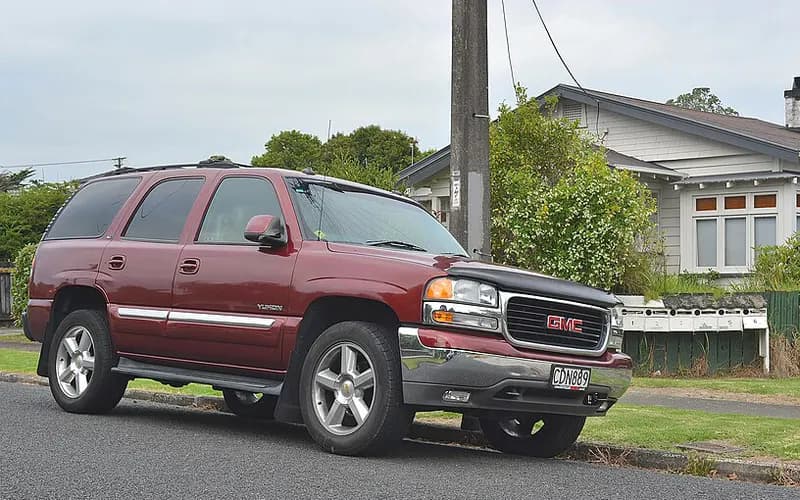
Common on this vehicle:Warning lightNoiseLeakMisfire or rough idleVibration or shudderAir conditioning or heaterReduced brakingCorrosion or rust
Record by record
74 records state a cause or a remedy. Each record is shown as short labels in the order fault → finding the cause → correction. Press a label to narrow to the records that state it.
Component named as the cause
Work done
How it is said to have ended
- says it did not fix it3
- result not stated1
A ribbon is as wide as the records that state both of its ends (only the commonest are drawn). A record that names several symptoms or components runs through each. Orange is records that say the fault came back or was not fixed. Results come from owners’ reports only; one that does not say is “result not stated”. None of this is a likelihood of a cause or a rate at which work succeeds.
Read the records one by one (13)
Known issuesUnwanted ABS activation at low speed (front wheel speed sensor mounting corrosion)1
Owner complaint2000 GMC YUKON ・ 2012-05-21
ABS brakes suddenly activate and pulsate at low speed stops
1Fault
2Finding the cause
Not stated
3Correction
Read the sentences of the record
- Fault
- WHEN SLOWING DOWN AT AN INTERSECTION STOP LIGHT, AT THE SPEED OF UNDER 10 MPH (= 16.1 km/h), THE ABS BRAKES SUDDENLY KICKED IN AND PULSATED, NOT ALLOWING THE TRUCK TO STOP.
- Remedy
- EVEN THOUGH THERE WAS NO ABS WARNING LIGHT OR ERROR CODE, WE ELECTED TO REPLACE BOTH ABS SPEED SENSORS AS A PRECAUTION. (1 more)
- Inspection
- AFTER TAKING THE VEHICLE TO THE MECHANICS THEY COULD NOT DIAGNOSE A PROBLEM.
- Consequence
- THIS ALMOST RESULTED IN A REAR END COLLISION WITH A STOPPED VEHICLE IN FRONT OF ME.
Known issuesAftermarket part (not the vehicle as built): Federal-Mogul National / Carquest replacement wheel hub assembly retention nut - recall 07E-1061
Recall2000 GMC YUKON ・ —
Wheel Hub Assembly Bearing Nut Loosening Recall
1Fault
- The inboard retention nut that maintains the hub bearing assembly can loosen, resulting in an ABS light indication, noise, and/or wheel separation from the vehicle; wheel separation can result in a vehicle crash.
2Finding the cause
Steps to confirm (in the document’s order)
- On 2x4 vehicles, raise the vehicle on an approved hoist first; the hub assembly is good if a yellow, green or blue paint mark is seen on the grease cap on the inboard side of the steering knuckle.
- If the paint mark is not present, remove the wheel and the brake rotor and clean rust from the hub assembly face to check for the date code stamping.
- Defective hub assemblies can be identified by the country of origin on the package together with a recalled date code, by the date code on the package, or by the date code on the hub assembly.
- If a round yellow sticker is present on the box label, the part is good.
3Correction
Repair
- The hub assemblies were manufactured for aftermarket use; owners of these parts should have them removed and replaced as soon as possible.
- Federal-Mogul will replace the recalled hub assemblies free of charge.
Parts
- The recalled part numbers are 515020, 515021, 515025, 515053, 515054, 515059 and 515060.
Read the sentences of the record
From the manufacturer’s document
- Applies to:This is an equipment recall by Federal-Mogul of certain wheel hub assemblies sold as replacement parts only.
- Applies to:The recalled hub assemblies were packaged and sold between January 23, 2006 and December 20, 2007 under the National and CARQUEST Premium (BGS/Blue) brands, in 7 base part numbers.
- Parts:The recalled part numbers are 515020, 515021, 515025, 515053, 515054, 515059 and 515060.
- Applies to:The application lists include GMC 1500 Yukon (2WD) and GMC 1500 Yukon XL (2WD), 2001-2006.
- Applies to:ILJIN manufactured the recalled hub assemblies from December 27, 2005 to November 29, 2007.
- Condition:The inboard retention nut that maintains the hub bearing assembly can loosen, resulting in an ABS light indication, noise, and/or wheel separation from the vehicle; wheel separation can result in a vehicle crash.
- Confirm:On 2x4 vehicles, raise the vehicle on an approved hoist first; the hub assembly is good if a yellow, green or blue paint mark is seen on the grease cap on the inboard side of the steering knuckle.
- Confirm:If the paint mark is not present, remove the wheel and the brake rotor and clean rust from the hub assembly face to check for the date code stamping.
- Confirm:Defective hub assemblies can be identified by the country of origin on the package together with a recalled date code, by the date code on the package, or by the date code on the hub assembly.
- Confirm:If a round yellow sticker is present on the box label, the part is good.
- Repair:The hub assemblies were manufactured for aftermarket use; owners of these parts should have them removed and replaced as soon as possible.
- Repair:Federal-Mogul will replace the recalled hub assemblies free of charge.
- Cause
- CERTAIN FEDERAL-MOGUL REPLACEMENT WHEEL HUB ASSEMBLIES WITH THE BRAND NAMES: NATIONAL, CARQUEST P/NOS. 515020, 515021, 515025, 515053, 515054, 515059, AND 515060, SHIPPED BETWEEN JANUARY 23, 2006, AND DECEMBER 20, 2007, SOLD FOR LIGHT DUTY AND MEDIUM DUTY TRUCKS. THE INBOARD RETENTION NUT USED TO MAINTAIN HUB BEARING ASSEMBLY CAN LOOSEN RESULTING IN AN ABS LIGHT INDICATION, NOISE, AND/OR WHEEL SEPARATION.
- Remedy
- FEDERAL-MOGUL WILL NOTIFY CUSTOMERS AND WILL REPLACE THE HUB ASSEMBLY FREE OF CHARGE. THE RECALL BEGAN ON FEBRUARY 7, 2008. OWNERS CAN CONTACT FEDERAL-MOGUL TOLL-FREE AT 877-489-6659.
- Consequence
- WHEEL SEPARATION CAN RESULT IN A VEHICLE CRASH.
Known issuesSingle-cylinder misfire (P0300-P0308) and/or chirp, squeak or tick at camshaft speed: worn cam lobe / lifter, valve or valve spring1
Manufacturer communication2000–2006 GMC YUKON DENALI ・ 2017-08-15(2 earlier editions of this document folded here)
Engine Misfire and Service Engine Soon Lamp Information
1Fault
- With the SES light on, a P0300-P0308 DTC is found with misfires counting on a single cylinder, which may or may not be felt.
- The noise may be described as a chirp, squeak, squeal or tick and may increase off of idle.
2Finding the cause
- Valve Spring: broken
- Active Fuel Management Lifter: defective
- Valve: defective
- Camshaft Lobe: worn
- Lifter Roller: worn
Possible causes
- A worn cam lobe on this engine family generally makes a consistent chirp, squeak, squeal or tick at camshaft speed and/or a misfire with a P0300-P0308 DTC.
Steps to confirm (in the document’s order)
- Press on the rocker arms with a wooden hammer handle while the noise is present; if pressing the valve side of a rocker changes the noise, a lifter and/or cam lobe concern on that cylinder is most likely.
- Measure cam lobe lift at the push rod side of the rocker arm; it will differ from the SI specification but should be similar to the other rockers on the same bank.
- A bore scope or pen light may help when inspecting the cam lobes through the lifter bores.
- A good sign of a sticking valve is that misfires keep counting during an aggressive deceleration with engine braking.
- The Cylinder Leakage Test in SI should typically isolate valve leakage by showing excessive leakage past an intake or exhaust valve compared with the others.
3Correction
Repair
- If a worn cam lobe or lifter roller is found, replace the camshaft and all lifters per SI, plus the plastic lifter guide for the affected lifter (for the 2010 model year, all the plastic lifter guides).
- If force is needed to tap the valve off its seat, there is excessive carbon build up, which may be repaired by decarboning the engine.
Read the sentences of the record
From the manufacturer’s document
- Applies to:Applies to 1999-2013 GMC Savana, Sierra and Yukon (with a V8 engine per the model list) (note: the Yukon years run later than the years this service covers).
- Condition:With the SES light on, a P0300-P0308 DTC is found with misfires counting on a single cylinder, which may or may not be felt.
- Condition:The noise may be described as a chirp, squeak, squeal or tick and may increase off of idle.
- Cause:A worn cam lobe on this engine family generally makes a consistent chirp, squeak, squeal or tick at camshaft speed and/or a misfire with a P0300-P0308 DTC.
- Confirm:Press on the rocker arms with a wooden hammer handle while the noise is present; if pressing the valve side of a rocker changes the noise, a lifter and/or cam lobe concern on that cylinder is most likely.
- Confirm:Measure cam lobe lift at the push rod side of the rocker arm; it will differ from the SI specification but should be similar to the other rockers on the same bank.
- Confirm:A bore scope or pen light may help when inspecting the cam lobes through the lifter bores.
- Repair:If a worn cam lobe or lifter roller is found, replace the camshaft and all lifters per SI, plus the plastic lifter guide for the affected lifter (for the 2010 model year, all the plastic lifter guides).
- Confirm:A good sign of a sticking valve is that misfires keep counting during an aggressive deceleration with engine braking.
- Repair:If force is needed to tap the valve off its seat, there is excessive carbon build up, which may be repaired by decarboning the engine.
- Confirm:The Cylinder Leakage Test in SI should typically isolate valve leakage by showing excessive leakage past an intake or exhaust valve compared with the others.
- Confirm:The two pieces of a broken valve spring can stay stacked together and be hard to see, so lightly push on different places on the springs with a small hammer handle.
Open the manufacturer’s document (PDF) ↗ The points above were read from this document.
- Remedy
- This Preliminary Information communication provides information to the technician about vehicles that have a Service Engine Soon Malfunction Indicator Lamp on, engine misfire, and/or engine noise. Technician may find Diagnostic Trouble Codes P0300-P0308. If published Service Information diagnostics does not isolate the cause of this concern technician should check for a worn camshaft lobe and/or lifter roller, a sticking valve, valve leakage, a broken valve spring, and a collapsed active fuel management lifter.
Known issuesAir bag (SIR) lamp on with DTC B1001 after BCM or SDM replacement1
Manufacturer communication2000–2006 GMC YUKON DENALI ・ 2020-04-13
BCM or SDM Replacement: B1001 DTC Clearing Procedure
1Fault
- The SIR lamp stays on steady after an SDM or BCM has been replaced, with DTC B1001 current in the SDM.
2Finding the cause
Possible causes
- When the ignition is first turned to RUN, the SDM compares the restraints ID stored in the SDM to the restraints ID stored in the body control module (BCM).
- B1001 sets if the restraints ID in the SDM does not match the one in the BCM, or the VIN information in the SDM does not match the VIN information stored in the PCM/VCM.
3Correction
Repair
- A replaced SDM or BCM must learn the restraints ID, which requires performing a 10 minute V.T.D. "Vehicle Theft Deterrent - Learn" with the Tech 2.
- On some vehicles a calibration may need to be selected after choosing "Vehicle Theft Deterrent - Learn"; select the one labeled "Vehicle Theft Deterrent for Passlock sensor".
Caution
- A 30 minute Theft relearn will not allow the SDM or BCM to learn the restraints ID.
Read the sentences of the record
From the manufacturer’s document
- Applies to:The model table lists GMC Yukon models for model years 2000 - 2006, among other GM trucks, except export vehicles (RPO EXP).
- Condition:The SIR lamp stays on steady after an SDM or BCM has been replaced, with DTC B1001 current in the SDM.
- Cause:When the ignition is first turned to RUN, the SDM compares the restraints ID stored in the SDM to the restraints ID stored in the body control module (BCM).
- Cause:B1001 sets if the restraints ID in the SDM does not match the one in the BCM, or the VIN information in the SDM does not match the VIN information stored in the PCM/VCM.
- Repair:A replaced SDM or BCM must learn the restraints ID, which requires performing a 10 minute V.T.D. "Vehicle Theft Deterrent - Learn" with the Tech 2.
- Repair:On some vehicles a calibration may need to be selected after choosing "Vehicle Theft Deterrent - Learn"; select the one labeled "Vehicle Theft Deterrent for Passlock sensor".
- Caution:A 30 minute Theft relearn will not allow the SDM or BCM to learn the restraints ID.
Open the manufacturer’s document (PDF) ↗ The points above were read from this document.
- Remedy
- This Preliminary information communicates information to dealership on how to clear a B1001 DTC after replacing the BCM or SDM.
ENGINE3
Manufacturer communication2000–2006 GMC YUKON DENALI ・ 2024-07-16(4 earlier editions of this document folded here)
Fuel Injection Cleaner Kit Service Bulletin
1Fault
- Hard start or long crank
- Misfire or rough idle
- Does not start
- Warning light
- Check engine / Service Engine Soon
- P0300
- P0301
- P0302
- P0303
- P0304
- P0305
- Rough idle, crank no start, extended crank or misfire, with the engine warning lamp on and DTC P0300, P0301, P0302, P0303, P0304, P0305, P0306, P0307 or P0308 set.
- When the engine is cold, compression on multiple cylinders may be zero.
- The engine may pop through the intake or exhaust while cranking, and the spark plugs may be fuel fouled.
2Finding the cause
Possible causes
- Major carbon build-up on the intake and/or exhaust valves from fuel contamination or incomplete burning of the fuel; misfires should not appear before at least 8,000 km (5,000 mi).
3Correction
Repair
- If there is no valve damage and no cam follower out of place, perform the cleaning procedure to free sticking valves and remove carbon from the valves and pistons.
- If valves are damaged or cam followers are out of place, make the engine mechanical repairs first and then perform the cleaning procedure to prevent a return.
- Fill Cleaner Kit J-35800-A with about 650 ml (22 oz, 2 cans) of Air Intake, Combustion Chamber Cleaner and set the air pressure at the tool to 260 kPa (40 psi).
- With GDS 2 or a scan tool, command engine idle to 2000 rpm so the engine does not stall.
- With the engine at operating temperature in a well-ventilated area, slowly and carefully induce the cleaner into the engine, taking about 3 minutes.
Parts
- The Top Engine Cleaning Kit (ACDelco Air Intake, Valve and Combustion Chamber Cleaner and ACDelco Fuel System Cleaner 44K) is 19435372 for the U.S. and Canada.
Part numbers printed in the document
19435372MAINTENANCE KIT,FUEL SYSTEM ACDELCO 3-11OZLook up at RockAuto (aftermarket candidates) ↗Search the web ↗
No successor statedas stated by GMPartsGiant (checked 2026-10-06) ↗
The numbers are as the document prints them. The name and the replacing number are what the pages of GMPartsGiant, a reseller of genuine parts and not GM, state. Aftermarket equivalents are not checked here (the links only search by number). Confirm the fit for the vehicle (VIN) before ordering.
Caution
- Inducing too much cleaner at too low an RPM, or stalling the engine with too much cleaner at once, may hydro-lock the engine and bend a connecting rod.
Read the sentences of the record
From the manufacturer’s document
- Applies to:Applies to GM passenger cars and trucks with gasoline engines only, model years 2000 to 2025.
- Condition:Rough idle, crank no start, extended crank or misfire, with the engine warning lamp on and DTC P0300, P0301, P0302, P0303, P0304, P0305, P0306, P0307 or P0308 set.
- Condition:When the engine is cold, compression on multiple cylinders may be zero.
- Condition:The engine may pop through the intake or exhaust while cranking, and the spark plugs may be fuel fouled.
- Cause:Major carbon build-up on the intake and/or exhaust valves from fuel contamination or incomplete burning of the fuel; misfires should not appear before at least 8,000 km (5,000 mi).
- Repair:If there is no valve damage and no cam follower out of place, perform the cleaning procedure to free sticking valves and remove carbon from the valves and pistons.
- Repair:If valves are damaged or cam followers are out of place, make the engine mechanical repairs first and then perform the cleaning procedure to prevent a return.
- Caution:Inducing too much cleaner at too low an RPM, or stalling the engine with too much cleaner at once, may hydro-lock the engine and bend a connecting rod.
- Repair:Fill Cleaner Kit J-35800-A with about 650 ml (22 oz, 2 cans) of Air Intake, Combustion Chamber Cleaner and set the air pressure at the tool to 260 kPa (40 psi).
- Repair:With GDS 2 or a scan tool, command engine idle to 2000 rpm so the engine does not stall.
- Repair:With the engine at operating temperature in a well-ventilated area, slowly and carefully induce the cleaner into the engine, taking about 3 minutes.
- Parts:The Top Engine Cleaning Kit (ACDelco Air Intake, Valve and Combustion Chamber Cleaner and ACDelco Fuel System Cleaner 44K) is 19435372 for the U.S. and Canada.
Open the manufacturer’s document (PDF) ↗ The points above were read from this document.
- Remedy
- This service bulletin advises of a new fuel injection cleaner kit used for decarbonizing the intake valves to correct conditions of rough idle, Crank no start, extended crank or misfire, MIL with DTCs, and explains how Top Tier fuels should be used to reduce carbon build-up.
Manufacturer communication2000–2006 GMC YUKON ・ 2023-09-18(6 earlier editions of this document folded here)
Misfire and DTC Codes Diagnostic Information
1Fault
- With DTC P0300 - P0308 and/or P050D, use GDS and save the freeze frame records.
2Finding the cause
Steps to confirm (in the document’s order)
- Perform the relative compression test in the PICO NVH or Oscilloscope software; SI Document number 5518386 covers the procedure.
- If it passes the relative compression test, the concern is an ignition or fuel delivery issue.
- Check the ignition supply voltage to the ignition module/coil assemblies and also to the fuel injectors.
- Inspect the spark plugs for anything abnormal.
- Note the fuel trim values and on which bank, and compare actual MAF with calculated air flow.
3Correction
Caution
- The injector balance procedure in GDS is only a preliminary test and its results should not decide injector replacement, especially with a low or no flow injector.
Read the sentences of the record
From the manufacturer’s document
- Applies to:All brands and models with gas engines, model years 2000 - 2024.
- Condition:With DTC P0300 - P0308 and/or P050D, use GDS and save the freeze frame records.
- Confirm:Perform the relative compression test in the PICO NVH or Oscilloscope software; SI Document number 5518386 covers the procedure.
- Confirm:If it passes the relative compression test, the concern is an ignition or fuel delivery issue.
- Confirm:Check the ignition supply voltage to the ignition module/coil assemblies and also to the fuel injectors.
- Confirm:Inspect the spark plugs for anything abnormal.
- Caution:The injector balance procedure in GDS is only a preliminary test and its results should not decide injector replacement, especially with a low or no flow injector.
- Confirm:Note the fuel trim values and on which bank, and compare actual MAF with calculated air flow.
- Confirm:Check for a possible fuel quality issue, especially with a cold engine hard start and/or a misfire on all cylinders.
- Confirm:Confirm whether a crankshaft variation learn has been completed and whether there is any abnormal engine noise possibly related to the misfire.
Open the manufacturer’s document (PDF) ↗ The points above were read from this document.
- Remedy
- This Preliminary information communicates information that will need to be provided to TAC to aid in diagnosing if a vehicle comes in with misfire and DTC Codes P0300 - P0308 and/or P050D
Manufacturer communication2000–2006 GMC YUKON DENALI ・ 2017-08-15(1 earlier editions of this document folded here)
Engine Misfire and Rough Idle Malfunction Indicator Lamp
1Fault
- Hard start or long crank
- Misfire or rough idle
- Does not start
- Warning light
- Check engine / Service Engine Soon
- P0300
- P0308
- Customers may complain of a MIL and/or engine misfire, rough idle, extended crank, or crank no start.
- One or more misfire codes (DTC P0300-P0308) are found stored in the ECM.
2Finding the cause
Possible causes
- The condition may result from major carbon build up on the intake and/or exhaust valves due to fuel contamination or incomplete burning of the fuel.
Steps to confirm (in the document’s order)
- With the engine cold, compression on multiple cylinders may read 0 PSI (= 0 kPa).
- The engine may pop through the intake or exhaust while cranking, and the spark plugs may be fuel fouled.
3Correction
Repair
- If there is valve damage or cam followers are out of place, make the mechanical repairs first, then perform the cleaning procedure to keep the concern from returning.
- With the engine at operating temperature, slowly induce a bottle of GM Upper Engine and Fuel Injection Cleaner with RPM held above idle so the engine does not stall (typically around 2,000 RPM).
- Turn the engine off and let the cleaner soak for 2.5 to 3 hours.
- To complete the repair, change the engine oil and filter.
Parts
- Upper Engine and Fuel Injector Cleaner is P/N 88861803 (in Canada, P/N 88861804).
Part numbers printed in the document
88861803Cleaner,Fuel Injector & Upper Engine Acdelco 16OzLook up at RockAuto (aftermarket candidates) ↗Search the web ↗
Replaced by: 19355198as stated by GMPartsGiant (checked 2026-10-06) ↗Look up at RockAuto (aftermarket candidates) ↗Search the web ↗
88861804Cleaner,Fuel Injector & Upper Engine Acdelco .473LLook up at RockAuto (aftermarket candidates) ↗Search the web ↗
Discontinued (no successor stated)(replaces 21992873)as stated by GMPartsGiant (checked 2026-10-06) ↗
The numbers are as the document prints them. The name and the replacing number are what the pages of GMPartsGiant, a reseller of genuine parts and not GM, state. Aftermarket equivalents are not checked here (the links only search by number). Confirm the fit for the vehicle (VIN) before ordering.
Caution
- Inducing too much cleaner at too low an RPM, or stalling the engine with cleaner, may hydro-lock the engine and bend a connecting rod.
Read the sentences of the record
From the manufacturer’s document
- Applies to:Applies to all 2000-2015 light duty trucks with gasoline engines.
- Condition:Customers may complain of a MIL and/or engine misfire, rough idle, extended crank, or crank no start.
- Condition:One or more misfire codes (DTC P0300-P0308) are found stored in the ECM.
- Cause:The condition may result from major carbon build up on the intake and/or exhaust valves due to fuel contamination or incomplete burning of the fuel.
- Confirm:With the engine cold, compression on multiple cylinders may read 0 PSI (= 0 kPa).
- Confirm:The engine may pop through the intake or exhaust while cranking, and the spark plugs may be fuel fouled.
- Repair:If there is valve damage or cam followers are out of place, make the mechanical repairs first, then perform the cleaning procedure to keep the concern from returning.
- Repair:With the engine at operating temperature, slowly induce a bottle of GM Upper Engine and Fuel Injection Cleaner with RPM held above idle so the engine does not stall (typically around 2,000 RPM).
- Repair:Turn the engine off and let the cleaner soak for 2.5 to 3 hours.
- Repair:To complete the repair, change the engine oil and filter.
- Caution:Inducing too much cleaner at too low an RPM, or stalling the engine with cleaner, may hydro-lock the engine and bend a connecting rod.
- Parts:Upper Engine and Fuel Injector Cleaner is P/N 88861803 (in Canada, P/N 88861804).
Open the manufacturer’s document (PDF) ↗ The points above were read from this document.
- Remedy
- This Preliminary Information communication provides information to the technician about vehicles that have a Malfunction Indicator Lamp on or engine misfire, rough idle, extended crank, or crank no start in some cases. Technician will need to perform published Service Information diagnostics. If technician finds carbon an upper engine and valve cleaning should be performed.
ENGINE AND ENGINE COOLING3
Manufacturer communication2000–2006 GMC YUKON DENALI ・ 2023-01-06(2 earlier editions of this document folded here)
EVAP Leak Diagnostic Service Bulletin (DTCs P0442/P0455)
1Fault
- The MIL is illuminated, and DTC P0442 (EVAP small leak detected) and/or P0455 (EVAP large leak detected) may be set in the ECM.
2Finding the cause
Possible causes
- P0455 sets because of a large leak or a purge blockage: an unseated tube connection, a damaged tube, a canister vent valve stuck open, or a purge valve stuck closed.
- P0442 sets because of a small leak, which can come from a purge valve stuck open or a canister vent valve stuck open.
Steps to confirm (in the document’s order)
- Inspect every purge connection for proper installation, and look along the lines for damage or wear; if damage is seen, confirm it with the smoke test.
- Some leaks show only under pressure and some only under vacuum, so check both ways; cycling the purge and vent solenoids with GDS2 while inspecting may show a sticking valve.
- Critical connections to check include: purge tube to purge valve (at the intake manifold), purge tube to chassis EVAP line (rear of the engine, near the transmission), chassis EVAP line to canister, and fuel tank load line to canister.
- Also check the vent valve line at the vent valve, the fuel tank load line jumper connection near the fuel tank, and that the fuel tank cap is closed properly.
- If all connections are good, check the vent valve for a stuck-open position; if the vent valve works correctly, go on to the purge valve.
3Correction
Parts
- No parts are required for this repair.
Caution
- For diagnostic instructions, DTC information and required tools, always follow the service information document for the vehicle and DTC being worked on.
Read the sentences of the record
From the manufacturer’s document
- Applies to:This bulletin only applies to vehicles with gasoline engines.
- Condition:The MIL is illuminated, and DTC P0442 (EVAP small leak detected) and/or P0455 (EVAP large leak detected) may be set in the ECM.
- Cause:P0455 sets because of a large leak or a purge blockage: an unseated tube connection, a damaged tube, a canister vent valve stuck open, or a purge valve stuck closed.
- Cause:P0442 sets because of a small leak, which can come from a purge valve stuck open or a canister vent valve stuck open.
- Confirm:Inspect every purge connection for proper installation, and look along the lines for damage or wear; if damage is seen, confirm it with the smoke test.
- Confirm:Some leaks show only under pressure and some only under vacuum, so check both ways; cycling the purge and vent solenoids with GDS2 while inspecting may show a sticking valve.
- Confirm:Critical connections to check include: purge tube to purge valve (at the intake manifold), purge tube to chassis EVAP line (rear of the engine, near the transmission), chassis EVAP line to canister, and fuel tank load line to canister.
- Confirm:Also check the vent valve line at the vent valve, the fuel tank load line jumper connection near the fuel tank, and that the fuel tank cap is closed properly.
- Confirm:If all connections are good, check the vent valve for a stuck-open position; if the vent valve works correctly, go on to the purge valve.
- Confirm:Work in this order: EVAP lines properly installed and fully seated; damage on the EVAP lines; vent valve malfunction; purge valve malfunction.
- Parts:No parts are required for this repair.
- Caution:For diagnostic instructions, DTC information and required tools, always follow the service information document for the vehicle and DTC being worked on.
Open the manufacturer’s document (PDF) ↗ The points above were read from this document.
- Remedy
- This service bulletin provides diagnostic tips/steps on testing for possible EVAP leaks in the system to correct a customer concern of an MIL Illuminated with DTCs P0442 and/or P0455 Set.
Manufacturer communication2000–2006 GMC YUKON DENALI ・ 2022-09-07
MIL Illuminated with Fuel Trim and Oxygen Sensor Codes
1Fault
- Leak
- Warning light
- P0101
- P0137 (general documents only)
- P0138 (general documents only)
- P0140 (general documents only)
- P0141
- P0157 (general documents only)
- Customers may comment that the MIL is illuminated.
- Initial diagnosis may show fuel trim and O2 sensor related codes including P0101, P0137, P0138, P0140, P0141, P0157, P0158, P0160 and P0161.
- The listed codes also include P0171, P0174, P0420, P0430, P1174 and P1175.
2Finding the cause
Possible causes
- These methods find small leaks around the O2 sensor embossments and slight cracks in an intake plenum or gasket.
Steps to confirm (in the document’s order)
- If normal SI diagnostics do not lead to a resolution and an intake vacuum leak or exhaust leak is suspected, use the GE-52250 Variable Pressure Leak Detector (preferred), the J-41416 ultrasonic leak tester, or possibly soapy water with low pressure air into the tailpipe to find the leak.
- For an intake leak, introduce the smoke into the brake booster hose or the oil dipstick tube; soapy water can be sprayed near the gasket, seams and all vacuum nipples.
- For an exhaust leak, put the hose with smoke or air into the tailpipe sealed with shop towels, then spray soapy water around seals, seams and bosses.
3Correction
Parts
- No parts are required for this repair.
Caution
- All of these tests are much more effective if the throttle body is covered or sealed.
Read the sentences of the record
From the manufacturer’s document
- Applies to:Applies to Buick, Cadillac, Chevrolet and GMC passenger cars and trucks, model years 2000 to 2022, gasoline engines only.
- Condition:Customers may comment that the MIL is illuminated.
- Condition:Initial diagnosis may show fuel trim and O2 sensor related codes including P0101, P0137, P0138, P0140, P0141, P0157, P0158, P0160 and P0161.
- Condition:The listed codes also include P0171, P0174, P0420, P0430, P1174 and P1175.
- Confirm:If normal SI diagnostics do not lead to a resolution and an intake vacuum leak or exhaust leak is suspected, use the GE-52250 Variable Pressure Leak Detector (preferred), the J-41416 ultrasonic leak tester, or possibly soapy water with low pressure air into the tailpipe to find the leak.
- Caution:All of these tests are much more effective if the throttle body is covered or sealed.
- Confirm:For an intake leak, introduce the smoke into the brake booster hose or the oil dipstick tube; soapy water can be sprayed near the gasket, seams and all vacuum nipples.
- Confirm:For an exhaust leak, put the hose with smoke or air into the tailpipe sealed with shop towels, then spray soapy water around seals, seams and bosses.
- Cause:These methods find small leaks around the O2 sensor embossments and slight cracks in an intake plenum or gasket.
- Parts:No parts are required for this repair.
Open the manufacturer’s document (PDF) ↗ The points above were read from this document.
- Remedy
- This bulletin provides information on tools available to find an intake vacuum leak or exhaust leak to correct a condition of MIL Illuminated with Multiple Fuel Trim and/or Oxygen Sensor Codes Set.
Manufacturer communication2000–2006 GMC YUKON DENALI ・ 2017-08-15
Engine Check Lamp P0442 Evaporative Emissions System Notification
1Fault
- The service engine soon lamp (MIL) is on for DTC P0442, but a leak cannot be verified with the system test in the service information.
2Finding the cause
Steps to confirm (in the document’s order)
- With the scan tool, command the EVAP system CLOSED, start the engine and watch the tank pressure sensor value for about two minutes.
- If the tank pressure value changes (shows vacuum), remove the purge solenoid and pressurize its fuel tank side with the GE 41413-A / J 41413-A tester.
- If the tank pressure value does not change, install the CH-48096 adaptor between the purge line from the canister and the purge solenoid; use no other adaptor or pressurization method.
- With the EVAP system CLOSED, pressurize through the adaptor and let the system stabilize, watching the gauge for at least 5 minutes, then add smoke.
- Look for smoke or UV trace fluid at the purge solenoid, the engine side, the fuel cap or capless fill door, and the canister vent solenoid filter or fresh-air line.
3Correction
Repair
- If smoke passes through the purge solenoid, replace the purge solenoid.
Caution
- After verifying P0442, do not disturb any fuel system component before testing.
- Test pressure must not exceed 13 in H2O (0.5 PSI (= 3.45 kPa)); more can make components perform inaccurately and lead to misdiagnosis.
- A large temperature difference between vehicle, shop and tester seriously affects accuracy; let the vehicle adjust to shop temperature first.
Read the sentences of the record
From the manufacturer’s document
- Applies to:Applies to 2016 and prior passenger cars and trucks.
- Condition:The service engine soon lamp (MIL) is on for DTC P0442, but a leak cannot be verified with the system test in the service information.
- Caution:After verifying P0442, do not disturb any fuel system component before testing.
- Confirm:With the scan tool, command the EVAP system CLOSED, start the engine and watch the tank pressure sensor value for about two minutes.
- Confirm:If the tank pressure value changes (shows vacuum), remove the purge solenoid and pressurize its fuel tank side with the GE 41413-A / J 41413-A tester.
- Repair:If smoke passes through the purge solenoid, replace the purge solenoid.
- Confirm:If the tank pressure value does not change, install the CH-48096 adaptor between the purge line from the canister and the purge solenoid; use no other adaptor or pressurization method.
- Confirm:With the EVAP system CLOSED, pressurize through the adaptor and let the system stabilize, watching the gauge for at least 5 minutes, then add smoke.
- Confirm:Look for smoke or UV trace fluid at the purge solenoid, the engine side, the fuel cap or capless fill door, and the canister vent solenoid filter or fresh-air line.
- Confirm:If smoke testing finds nothing, the leak may exist only under vacuum: use the scan tool Purge/Seal function to pull a vacuum and watch the FTP sensor parameter for vacuum decay.
- Caution:Test pressure must not exceed 13 in H2O (0.5 PSI (= 3.45 kPa)); more can make components perform inaccurately and lead to misdiagnosis.
- Caution:A large temperature difference between vehicle, shop and tester seriously affects accuracy; let the vehicle adjust to shop temperature first.
Open the manufacturer’s document (PDF) ↗ The points above were read from this document.
- Remedy
- This Preliminary Information communication provides information to the technician about vehicles that have a Service Engine Soon Malfunction Indicator Lamp. Technician may find Diagnostic Trouble Code P0442. Technician will need to review Techlink article from May 2013 titled "Using the Evaporative Emissions System Tester" Technician will need to follow these steps to help diagnose the issue. First after the P0442 has been verified do not disturb any of the fuel system components. The technician now can use the scan tool to close the Evaporative Emissions System. If possible change the tank pressure sensor units from inch_H2O to milimeter_Hg for better resolution. Now the vehicle can be stared to monitor the tank pressure sensor output value for approximately two minutes. If the tank pressure sensor value does change, pressurize the fuel tank side of the purge solenoid with the GE 41413-A / J 41413-A and the necessary adaptors. Now add smoke and allow pressure to stabilize for 2 minutes. If smoke is allowed to pass through the purge solenoid, replace the purge solenoid. If the tank pressure sensor value does not change, then install CH-48096 adaptor between the purge line from the canister and the purge solenoid. With the Evaporative Emissions System closed, pressurize the system through the CH-48096 adaptor and allow the system to completely stabilize, by observing the Press / Vac Gauge for a minimum of 5 minutes. Now add smoke to the system with GE 41413-A / J 41413-A after system stabilization. Now inspect the purge solenoid, engine side, fuel cap, canister vent solenoid filter and any line quick connects. When the leak is unable to be located, test under a vacuum condition. his type of leak may be detected by using the scan tool Purge/Seal function to create a vacuum in the Evaporative Emissions System and then observe the FTP sensor parameter for vacuum decay.
EQUIPMENT1
Manufacturer communication2000–2006 GMC YUKON DENALI ・ 2021-04-19(1 earlier editions of this document folded here)
Winter Fuel Grade Use in Warm Months 2020 – Drivability Issues
1Fault
- Fuel smell
- Loss of engine power, no acceleration
- Stalls or shuts off
- Warning light
- P0300
- P0171
- P0174
- P228C (general documents only)
- In rare instances customers may complain of a fuel smell, longer starts, hesitation and, in extreme cases, engine stalls.
- Any combination of DTCs P0300, P0171, P0174 and P228C may be set.
2Finding the cause
Possible causes
- Using winter fuel in summer weather may cause drivability concerns.
Steps to confirm (in the document’s order)
- The concern should not be a single event but multiple occurrences associated with hot days.
3Correction
Caution
- No repair is required; the vehicles are not damaged and will recover.
- There is no other remedy until summer fuel and/or cooler weather is available.
Read the sentences of the record
From the manufacturer’s document
- Applies to:Applies to all brands and models with gasoline engines, model years 2000 - 2022.
- Applies to:The involved region is North America.
- Condition:In rare instances customers may complain of a fuel smell, longer starts, hesitation and, in extreme cases, engine stalls.
- Condition:Any combination of DTCs P0300, P0171, P0174 and P228C may be set.
- Cause:Using winter fuel in summer weather may cause drivability concerns.
- Confirm:The concern should not be a single event but multiple occurrences associated with hot days.
- Caution:No repair is required; the vehicles are not damaged and will recover.
- Caution:There is no other remedy until summer fuel and/or cooler weather is available.
Open the manufacturer’s document (PDF) ↗ The points above were read from this document.
- Remedy
- This Preliminary information communicates the use of Winter grade fuel during the warm months of 2020 and the potential rivability issues that it can cause. The ongoing Coronavirus (COVID-19) pandemic has caused significant reductions in driving and fuel use. Due to the surplus of winter grade fuel sitting in storage (pipelines/stations) the EPA is waiving the fuel vapor requirement. This will extend the use of winter fuel into the summer months. The drivability concerns should not be single events but should be multiple occurrences associated with hot days.
FUEL SYSTEM, GASOLINE1
Manufacturer communication2000–2006 GMC YUKON DENALI ・ 2018-05-21(1 earlier editions of this document folded here)
E85 Fuel Effects on Non-E85 Vehicles Information
1Fault
- Misfire or rough idle
- Loss of engine power, no acceleration
- Stalls or shuts off
- Warning light
- ABS light
- P0171
- P0174
- P0300
- Using this fuel in a non-compatible vehicle may cause lean driveability concerns such as hesitation, sag and/or possible stalling.
- Fuel trim DTC P0171 and/or P0174 may set.
- Misfire DTC P0300 may set.
- A Traction Control, Stability System or ABS lamp may illuminate, or a message may display in the DIC (if equipped).
- Harsh and/or firm transmission shifts may occur because the transmission defaults to maximum line pressure.
2Finding the cause
Steps to confirm (in the document’s order)
- Alcohol content is checked using Special Tool J-44175-A Fuel Composition Tester or CH-44175-A Fuel Composition Tester.
- General Motors started putting yellow gas caps on E85 Flex Fuel Vehicles (FFVs) as of Model Year 2006.
3Correction
Repair
- If the ethanol content exceeds the Owner Manual maximum of 10% or 15%, drain the fuel and refill the vehicle with gasoline, preferably a Top Tier brand.
Caution
- All Model Year 2011 and older non-FFV gasoline vehicles are designed to run on fuel containing no more than 10% ethanol.
- Diesel engines are not E85 compatible.
Read the sentences of the record
From the manufacturer’s document
- Applies to:The list of compatible flexible-fuel vehicles includes 2002–2005 fullsize pickups and utilities with 5.3L, RPO L59.
- Applies to:The list of compatible flexible-fuel vehicles includes 2006 Sierra, Yukon and Yukon XL with 5.3L, RPO L59.
- Caution:All Model Year 2011 and older non-FFV gasoline vehicles are designed to run on fuel containing no more than 10% ethanol.
- Caution:Diesel engines are not E85 compatible.
- Condition:Using this fuel in a non-compatible vehicle may cause lean driveability concerns such as hesitation, sag and/or possible stalling.
- Condition:Fuel trim DTC P0171 and/or P0174 may set.
- Condition:Misfire DTC P0300 may set.
- Condition:A Traction Control, Stability System or ABS lamp may illuminate, or a message may display in the DIC (if equipped).
- Condition:Harsh and/or firm transmission shifts may occur because the transmission defaults to maximum line pressure.
- Confirm:Alcohol content is checked using Special Tool J-44175-A Fuel Composition Tester or CH-44175-A Fuel Composition Tester.
- Repair:If the ethanol content exceeds the Owner Manual maximum of 10% or 15%, drain the fuel and refill the vehicle with gasoline, preferably a Top Tier brand.
- Confirm:General Motors started putting yellow gas caps on E85 Flex Fuel Vehicles (FFVs) as of Model Year 2006.
Open the manufacturer’s document (PDF) ↗ The points above were read from this document.
- Remedy
- This informational bulletin provides the technician with information on what E85 fuel may due to a non E85 vehicle.
VISIBILITY1
Manufacturer communication2000–2006 GMC YUKON ・ 2023-01-30(6 earlier editions of this document folded here)
Induction System Icing Inspection in Cold Ambient Temperatures
1Fault
- The tip concerns vehicles with turbocharged gasoline engines that show poor engine performance or CEL on in cold ambient temperatures and may set DTC P0299 or P2227.
2Finding the cause
Not stated
3Correction
Read the sentences of the record
From the manufacturer’s document
- Applies to:The model table lists all brands and models for model years 2000 - 2022.
- Condition:The tip concerns vehicles with turbocharged gasoline engines that show poor engine performance or CEL on in cold ambient temperatures and may set DTC P0299 or P2227.
Open the manufacturer’s document (PDF) ↗ The points above were read from this document.
- Remedy
- This Preliminary information communicates to the technician the need to inspect the induction system for potential icing issues in very cold ambient temperatures. To allow the ice to melt so that it can be drained from the related components. That any of the listed DTC's may set with or without poor engine performance. Â
Showing 13 of the 74 you can open. Narrow the search to see the rest.