
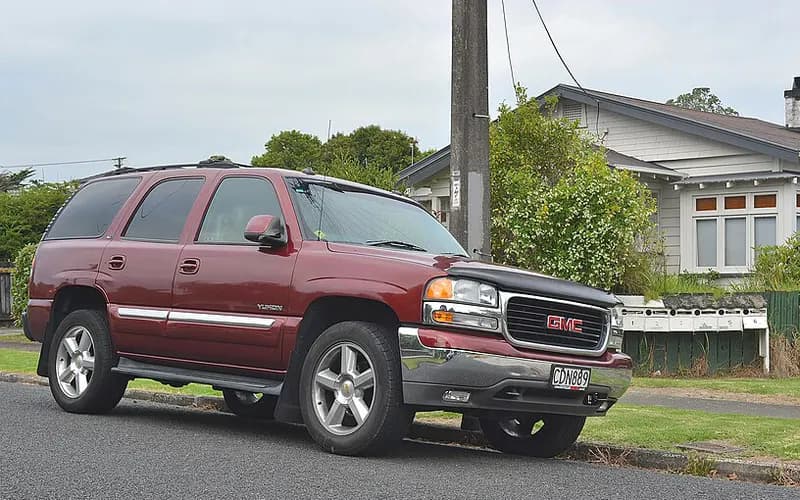
GMC Yukon 2000–2006
Common on this vehicle:Gauge or instrument faultVibration or shudderWarning lightAir conditioning or heaterHard start or long crankMisfire or rough idleDoes not startSeat belt
Record by record
8 records state a cause or a remedy. Each record is shown as short labels in the order fault → finding the cause → correction. Press a label to narrow to the records that state it.
Component named as the cause
A ribbon is as wide as the records that state both of its ends (only the commonest are drawn). A record that names several symptoms or components runs through each. Orange is records that say the fault came back or was not fixed. Results come from owners’ reports only; one that does not say is “result not stated”. None of this is a likelihood of a cause or a rate at which work succeeds.
Read the records one by one (6)
ELECTRICAL SYSTEM1
Owner complaint2004 GMC YUKON ・ 2025-03-05
Power loss and shaking while driving at 45 MPH; multiple repairs unsuccessful
1Fault
2Finding the cause
3CorrectionNot repaired
Read the sentences of the record
- Fault
- The contact stated while driving 45 MPH (= 72.4 km/h), the vehicle started losing motive power. (3 more)
- Remedy
- The vehicle was not repaired for the most recent failure.
- Inspection
- The vehicle was taken to an independent mechanic where it was diagnosed with throttle body failure; however, the failure persisted.
- Outcome
- The vehicle was repaired but the failure persisted three more times with different diagnoses.
ENGINE AND ENGINE COOLING1
Manufacturer communication2004–2006 GMC YUKON DENALI ・ 2023-11-22
Vibration Analysis Worksheet Service Bulletin
1Fault
2Finding the cause
Steps to confirm (in the document’s order)
- When diagnosing vibration, use the worksheet together with the Vibration Analysis - Road Testing procedure in the service information.
- Place the sensor where the vibration is felt: on the seat track for a seat complaint, on the steering column for a steering wheel complaint.
- Moving the sensor to other areas, look for the same Hz reading with the greatest amplitude.
- If a system balance was attempted and the vibration remains, check ring gear backlash at each tooth; readings should not vary more than 0.050 mm (0.002 in).
- Aluminum wheel/tire runout measured on the vehicle: maximum 0.030 in (.762 mm).
3Correction
Read the sentences of the record
From the manufacturer’s document
- Applies to:Applies to 2024 and prior GM passenger cars and trucks.
- Confirm:When diagnosing vibration, use the worksheet together with the Vibration Analysis - Road Testing procedure in the service information.
- Confirm:Place the sensor where the vibration is felt: on the seat track for a seat complaint, on the steering column for a steering wheel complaint.
- Confirm:Moving the sensor to other areas, look for the same Hz reading with the greatest amplitude.
- Confirm:If a system balance was attempted and the vibration remains, check ring gear backlash at each tooth; readings should not vary more than 0.050 mm (0.002 in).
- Confirm:Aluminum wheel/tire runout measured on the vehicle: maximum 0.030 in (.762 mm).
- Confirm:Hub mounting surface runout: maximum 0.005 in (0.132 mm).
- Confirm:Wheel stud runout: maximum 0.010 in (0.254 mm).
Open the manufacturer’s document (PDF) ↗ The points above were read from this document.
- Remedy
- This service bulletin provides a vibration analysis worksheet the technician can use in conjunction with the appropriate Vibration Analysis-Road testing procedure when diagnosing vibration concerns.
POWER TRAIN1
Manufacturer communication2005–2006 GMC YUKON DENALI ・ 2024-06-07
Water or Ethylene Glycol in Transmission Fluid
1Fault
- Water or ethylene glycol in ATF changes the friction of the clutches, frequently causing shudder during engagement or gear changes, especially during torque converter clutch engagement.
2Finding the cause
Steps to confirm (in the document’s order)
- An indication of water in the ATF: ATF blowing out of the transmission vent tube.
- The ATF may appear cloudy or, with extreme contamination, look like a strawberry milkshake.
- There may be visible water in the oil pan or a milky white substance inside the pan area.
- Spacer plate gaskets appear swollen or wrinkled in areas where they are not compressed.
- If water is found in the ATF and its source is not identified, or a leaking in-radiator transmission oil cooler is suspected, a simple and quick test kit that detects ethylene glycol in ATF is available.
3Correction
Repair
- If water or coolant is found in the transmission, all rubber-type seals, all composition-faced clutch plates and/or bands, all nylon parts and the torque converter must be replaced.
- Thoroughly clean and rebuild the transmission, using new gaskets and oil filter.
- Flush and flow check the transmission oil cooler using J-45096.
- Thoroughly inspect the engine cooling system and hoses and clean/repair as necessary.
Read the sentences of the record
From the manufacturer’s document
- Applies to:Applies to 2025 and prior GM passenger cars and trucks equipped with an automatic transmission.
- Condition:Water or ethylene glycol in ATF changes the friction of the clutches, frequently causing shudder during engagement or gear changes, especially during torque converter clutch engagement.
- Confirm:An indication of water in the ATF: ATF blowing out of the transmission vent tube.
- Confirm:The ATF may appear cloudy or, with extreme contamination, look like a strawberry milkshake.
- Confirm:There may be visible water in the oil pan or a milky white substance inside the pan area.
- Confirm:Spacer plate gaskets appear swollen or wrinkled in areas where they are not compressed.
- Confirm:If water is found in the ATF and its source is not identified, or a leaking in-radiator transmission oil cooler is suspected, a simple and quick test kit that detects ethylene glycol in ATF is available.
- Confirm:Obtain the Gly-Tek test kit from the Nelco Company and test the ATF to decide accurately whether the radiator needs to be replaced.
- Repair:If water or coolant is found in the transmission, all rubber-type seals, all composition-faced clutch plates and/or bands, all nylon parts and the torque converter must be replaced.
- Repair:Thoroughly clean and rebuild the transmission, using new gaskets and oil filter.
- Repair:Flush and flow check the transmission oil cooler using J-45096.
- Repair:Thoroughly inspect the engine cooling system and hoses and clean/repair as necessary.
Open the manufacturer’s document (PDF) ↗ The points above were read from this document.
- Remedy
- This bulletin provides information on the harmful effects of water or ethylene glycol in transmission fluid.
TIRES1
Manufacturer communication2006 GMC YUKON DENALI ・ 2023-12-04(1 earlier editions of this document folded here)
Proper Wheel Installation and Wheel Torque Techniques
1Fault
- Vibration is felt in the steering wheel or the seat, centered at a frequency of 10-14 Hz, between 93-115 km/h (58-72 mph).
2Finding the cause
Possible causes
- Inappropriate wheel torque methods may leave the wheel and tire assembly offset when mounted, so that its mass orbits the axis of the hub and vibrates like a tire with high RFV or an imbalance.
- Improper torque may distort the brake rotor and cause variance in wheel mounting that can produce smooth road shake.
3Correction
Repair
- Remove the tire and wheel assemblies, index them at least two stud positions from the previous position, and re-install them.
- With the wheel off the ground, install all lug nuts hand tight using only a socket.
- Snug all lug nuts in a star or criss-cross pattern with a hand wrench.
- Lower the vehicle until there is just enough contact to provide resistance, then complete torquing to specification with a torque wrench.
Caution
- First order tire/wheel vibration may be misdiagnosed as tire/wheel assembly imbalance or excessive tire radial force variation.
- Do not use torque sticks or an impact driver to tighten wheel lug nuts.
Read the sentences of the record
From the manufacturer’s document
- Applies to:Applies to 2006-2015 GM passenger cars and light duty trucks.
- Condition:Vibration is felt in the steering wheel or the seat, centered at a frequency of 10-14 Hz, between 93-115 km/h (58-72 mph).
- Caution:First order tire/wheel vibration may be misdiagnosed as tire/wheel assembly imbalance or excessive tire radial force variation.
- Cause:Inappropriate wheel torque methods may leave the wheel and tire assembly offset when mounted, so that its mass orbits the axis of the hub and vibrates like a tire with high RFV or an imbalance.
- Cause:Improper torque may distort the brake rotor and cause variance in wheel mounting that can produce smooth road shake.
- Repair:Remove the tire and wheel assemblies, index them at least two stud positions from the previous position, and re-install them.
- Caution:Do not use torque sticks or an impact driver to tighten wheel lug nuts.
- Repair:With the wheel off the ground, install all lug nuts hand tight using only a socket.
- Repair:Snug all lug nuts in a star or criss-cross pattern with a hand wrench.
- Repair:Lower the vehicle until there is just enough contact to provide resistance, then complete torquing to specification with a torque wrench.
Open the manufacturer’s document (PDF) ↗ The points above were read from this document.
- Remedy
- Proper Wheel Installation and Wheel Torque Techniques
UNKNOWN OR OTHER1
Manufacturer communication2001–2006 GMC YUKON DENALI ・ 2025-07-23(1 earlier editions of this document folded here)
TAC diagnostic assistance pico file requirement
1Fault
- Vehicle vibration under any of various driving conditions.
2Finding the cause
Possible causes
- Vibration could be caused by many various components and conditions.
Steps to confirm (in the document’s order)
- Drive the vehicle to verify the condition and record a Pico data file of the concern.
3Correction
Repair
- Repair the vehicle using the Pico information along with any published information relevant to the vibration frequency observed.
Caution
- Just as a check engine light is not repaired without knowing the stored DTC, a vibration should not be repaired without knowing its frequency.
- Bulletin 12-03-10-001B is a generic document about tire to rim orientation and the tire slipping on the rim.
- Component level vibrations such as a blower motor, brake pulsation or shudder on turns do not require a Pico file.
Read the sentences of the record
From the manufacturer’s document
- Applies to:Applies to all 2000 to 2026 models.
- Condition:Vehicle vibration under any of various driving conditions.
- Cause:Vibration could be caused by many various components and conditions.
- Caution:Just as a check engine light is not repaired without knowing the stored DTC, a vibration should not be repaired without knowing its frequency.
- Confirm:Drive the vehicle to verify the condition and record a Pico data file of the concern.
- Repair:Repair the vehicle using the Pico information along with any published information relevant to the vibration frequency observed.
- Caution:Bulletin 12-03-10-001B is a generic document about tire to rim orientation and the tire slipping on the rim.
- Caution:Component level vibrations such as a blower motor, brake pulsation or shudder on turns do not require a Pico file.
Open the manufacturer’s document (PDF) ↗ The points above were read from this document.
- Remedy
- This PI communicates the requirement to provide a pico file to receive diagnostic assistance from TAC.
WHEELS1
Manufacturer communication2006 GMC YUKON DENALI ・ 2024-05-01
Tire Radial Force Variation (RFV) Service Bulletin
1Fault
- The most common ride concern involving tire radial force variation is shake on smooth roads at highway speed, 105-115 km/h (65-70 mph).
2Finding the cause
Possible causes
- Tire related smooth road highway speed shake can be caused by three conditions: imbalance, out of round and tire force variation.
Steps to confirm (in the document’s order)
- With the vehicle raised, center the wheels on the hub by loosening all wheel nuts and hand-tightening them while shaking the wheel, then torque to specification with a torque wrench, not a torque stick.
- If light brake application increases the pulsation felt in the steering wheel, go to the brake-induced pulsation diagnosis in the Brakes section of the service manual.
- A reading of 35 to 50 Hz typically indicates a first order propshaft vibration.
- Generally a reading between 10 and 20 Hz indicates a tire/wheel vibration.
- If vibration continues after 10 minutes of driving above 72 km/h (45 mph), temporary tire flat-spotting can be ruled out.
3Correction
Repair
- If the radial runout of a tire/wheel assembly is more than 0.040 in (1.02 mm), match mount the tire to the wheel to get below 0.040 in (1.02 mm).
Caution
- On the balancer always center the wheel by the pilot bore; never use the hub-cap bore, since it is not a precision machined surface.
Read the sentences of the record
From the manufacturer’s document
- Applies to:Applies to 2024 and prior GM passenger cars and light duty trucks.
- Condition:The most common ride concern involving tire radial force variation is shake on smooth roads at highway speed, 105-115 km/h (65-70 mph).
- Cause:Tire related smooth road highway speed shake can be caused by three conditions: imbalance, out of round and tire force variation.
- Confirm:With the vehicle raised, center the wheels on the hub by loosening all wheel nuts and hand-tightening them while shaking the wheel, then torque to specification with a torque wrench, not a torque stick.
- Confirm:If light brake application increases the pulsation felt in the steering wheel, go to the brake-induced pulsation diagnosis in the Brakes section of the service manual.
- Confirm:A reading of 35 to 50 Hz typically indicates a first order propshaft vibration.
- Confirm:Generally a reading between 10 and 20 Hz indicates a tire/wheel vibration.
- Confirm:If vibration continues after 10 minutes of driving above 72 km/h (45 mph), temporary tire flat-spotting can be ruled out.
- Caution:On the balancer always center the wheel by the pilot bore; never use the hub-cap bore, since it is not a precision machined surface.
- Confirm:Assembly radial force variation guide: P-Metric tires on light trucks, 24 lbs (11 kg) or less.
- Confirm:Assembly radial force variation guide: LT-tires on light trucks, 35 lbs (16 kg) or less.
- Repair:If the radial runout of a tire/wheel assembly is more than 0.040 in (1.02 mm), match mount the tire to the wheel to get below 0.040 in (1.02 mm).
Open the manufacturer’s document (PDF) ↗ The points above were read from this document.
- Remedy
- This service bulletin provides information for dealers/technicians on Tire Radial Force Variation (RFV).
Showing 6 of the 8 you can open. Narrow the search to see the rest.