
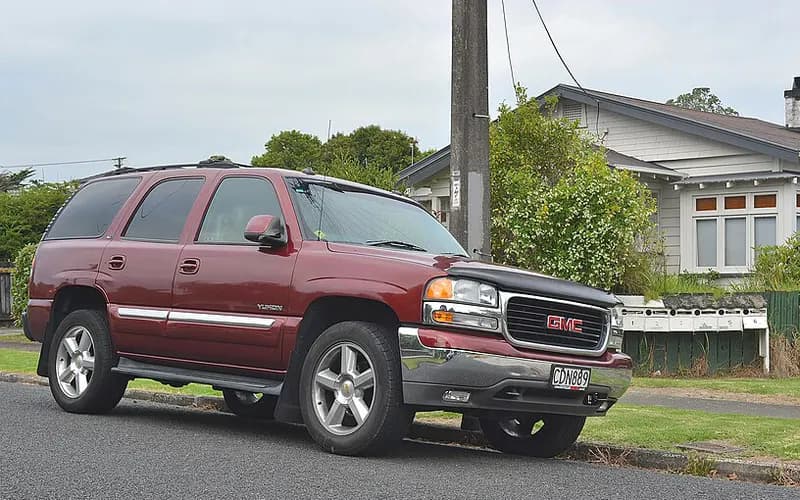
GMC Yukon 2000–2006
Common on this vehicle:Noise
Record by record
6 records state a cause or a remedy. Each record is shown as short labels in the order fault → finding the cause → correction. Press a label to narrow to the records that state it.
Read the records one by one (2)
ELECTRICAL SYSTEM1
Manufacturer communication2000–2006 GMC YUKON ・ 2024-10-25(4 earlier editions of this document folded here)
Tire Pressure Monitor and Diagnostic Tools Software Update
1Fault
- The process for reaching the GM Tools site has changed.
2Finding the cause
Not stated
3Correction
Read the sentences of the record
From the manufacturer’s document
- Applies to:All brands and models, model years 1995 - 2025.
- Condition:The process for reaching the GM Tools site has changed.
Open the manufacturer’s document (PDF) ↗ The points above were read from this document.
- Remedy
- This Preliminary Information communicates to the dealer the process for downloading or updating operating software for the Tire Pressure Monitor, Active Fuel Injector tester, multi media tester, PICO Scope, GR8 starting/charging tester  and Vehicle Data Recorder tools, giving website address and step by step instructions to complete the update.
TIRES1
Manufacturer communication2003–2006 GMC YUKON DENALI ・ 2022-06-13
Tire Pressure Service Information
1Fault
- Ride, handling and road noise concerns may be caused by improperly adjusted tire pressure.
- During cold weather the Tire Pressure Monitor (TPM) indicator (a yellow horseshoe with an exclamation point) may illuminate.
2Finding the cause
Steps to confirm (in the document’s order)
- The first step in diagnosing these concerns is to verify that the tires are inflated to the correct pressures.
- The tire placard is on the driver's side front or rear door edge, the center pillar, or the rear compartment lid.
- Generally a 5.6°C (10°F) temperature change equals a 6.9 kPa (1 psi) tire pressure change.
- A "cold" tire is one that has sat for at least 3 hours or been driven no more than 1.6 km (1 mi).
3Correction
Repair
- If the indicator goes off after the tires warm up, reset the pressure to placard pressure at the cold temperature.
Caution
- The recommended inflation pressure is not the pressure printed on the tire sidewall.
- Always inspect and adjust the pressure when the tires are cold.
- Vehicles with different front and rear pressures need to be adjusted after tire rotation.
- To prevent electrostatic discharge damage to the Tire Pressure Monitoring Sensor (TPMS), the technician should be statically discharged before checking or filling tires.
Read the sentences of the record
From the manufacturer’s document
- Applies to:Applies to 2022 and prior GM passenger cars and light duty trucks.
- Condition:Ride, handling and road noise concerns may be caused by improperly adjusted tire pressure.
- Confirm:The first step in diagnosing these concerns is to verify that the tires are inflated to the correct pressures.
- Confirm:The tire placard is on the driver's side front or rear door edge, the center pillar, or the rear compartment lid.
- Caution:The recommended inflation pressure is not the pressure printed on the tire sidewall.
- Confirm:Generally a 5.6°C (10°F) temperature change equals a 6.9 kPa (1 psi) tire pressure change.
- Confirm:A "cold" tire is one that has sat for at least 3 hours or been driven no more than 1.6 km (1 mi).
- Caution:Always inspect and adjust the pressure when the tires are cold.
- Condition:During cold weather the Tire Pressure Monitor (TPM) indicator (a yellow horseshoe with an exclamation point) may illuminate.
- Repair:If the indicator goes off after the tires warm up, reset the pressure to placard pressure at the cold temperature.
- Caution:Vehicles with different front and rear pressures need to be adjusted after tire rotation.
- Caution:To prevent electrostatic discharge damage to the Tire Pressure Monitoring Sensor (TPMS), the technician should be statically discharged before checking or filling tires.
Open the manufacturer’s document (PDF) ↗ The points above were read from this document.
- Remedy
- This service bulletin provides information for accurate tire pressures that ensure the safe handling and appropriate ride characteristics of GM cars and trucks.
Showing 2 of the 6 you can open. Narrow the search to see the rest.