
GMC Yukon 2000–2006
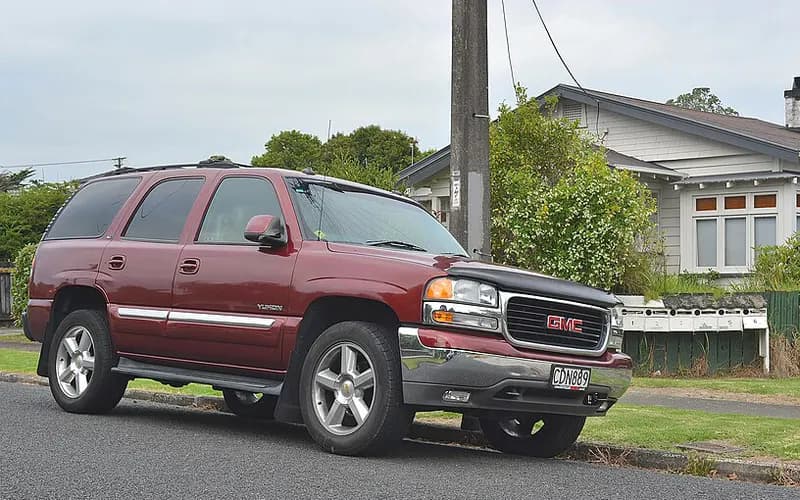
Common on this vehicle:Vibration or shudderTyre failure (blowout, tread separation)NoiseWarning lightCorrosion or rustLeakAir conditioning or heaterABS activates (at low speed and the like)
Record by record
8 records state a cause or a remedy. Each record is shown as short labels in the order fault → finding the cause → correction. Press a label to narrow to the records that state it.
Component named as the cause
Work done
A ribbon is as wide as the records that state both of its ends (only the commonest are drawn). A record that names several symptoms or components runs through each. Orange is records that say the fault came back or was not fixed. Results come from owners’ reports only; one that does not say is “result not stated”. None of this is a likelihood of a cause or a rate at which work succeeds.
Read the records one by one (8)
Known issuesGrease seen at front hub bearing seals (normal purge, do not replace)1
Manufacturer communication2004–2006 GMC YUKON DENALI ・ 2017-08-15
Front hub bearing grease leakage preliminary information
1Fault
- Grease may move radially outward from the bearing seal area onto adjoining components.
2Finding the cause
Possible causes
- The factory grease fill of the front bearing/hub assembly is more than the bearing needs for lubrication over the life of the vehicle.
- Part of the grease purges through the self-venting bearing seals during the initial drive period (a few thousand miles/kilometers) and helps form an extra barrier against contamination.
Steps to confirm (in the document’s order)
- Replace the bearing if its endplay is greater than 0.005" or 0.13mm.
- Replace the bearing if the seals show visible damage.
- Replace the bearing if it rotates roughly.
- Replace the bearing if it makes abnormal noise.
3Correction
Repair
- If desired, grease that has migrated away from the immediate seal area can be wiped off.
Caution
- Do not replace the bearing for grease purge, and do not clean the purged grease on or right next to the seals, because it gives additional protection.
Read the sentences of the record
From the manufacturer’s document
- Applies to:Applies to 2004-2013 GMC Sierra, Sierra Classic, Yukon and Yukon Denali models (note: the Yukon years run later than the years this service covers).
- Condition:Grease may move radially outward from the bearing seal area onto adjoining components.
- Cause:The factory grease fill of the front bearing/hub assembly is more than the bearing needs for lubrication over the life of the vehicle.
- Cause:Part of the grease purges through the self-venting bearing seals during the initial drive period (a few thousand miles/kilometers) and helps form an extra barrier against contamination.
- Caution:Do not replace the bearing for grease purge, and do not clean the purged grease on or right next to the seals, because it gives additional protection.
- Repair:If desired, grease that has migrated away from the immediate seal area can be wiped off.
- Confirm:Replace the bearing if its endplay is greater than 0.005" or 0.13mm.
- Confirm:Replace the bearing if the seals show visible damage.
- Confirm:Replace the bearing if it rotates roughly.
- Confirm:Replace the bearing if it makes abnormal noise.
Open the manufacturer’s document (PDF) ↗ The points above were read from this document.
- Remedy
- This Preliminary Information communication provides information to the technician about vehicles that have grease leaking from front hub bearings. Technician should not replace the bearing for grease purge. Technician should be advised to not clean the purged grease from the area immediately on or adjacent to the seals because this grease provides additional protection. Technician should only replace the bearing if the seals show visible damage, bearing endplay is greater than 0.005" or 0.13mm, bearing exhibits rough rotation, or bearing exhibits abnormal noise.
TIRES3
Manufacturer communication2005–2006 GMC YUKON DENALI ・ 2018-05-29
Slow Tire Leak and Low Tire PSI Message Correction
1Fault
- A tire slowly loses air pressure over a period of days or weeks.
2Finding the cause
Possible causes
- Abrasive elements from the environment get between the tire and the wheel at the bead seat, and the relative motion between tire and wheel lets them wear both materials.
Steps to confirm (in the document’s order)
- The corrosion may be on the inboard or outboard bead seat and is not visible until the tire is dismounted from the wheel.
- After a water dunk tank leak test, if the leak is around the bead seat of the wheel, dismount the tire and examine the bead seat.
- Bead seat corrosion looks like blistering of the wheel finish, leaving a rough or uneven surface on which the tire cannot keep a proper seal.
- At 32,186 km (20,000 mi) or less, the total combined linear length of repairable corrosion is 100 mm (4 in) or less; beyond that, replace the wheel.
- Above 32,186 km (20,000 mi), the total combined linear length of repairable corrosion is 200 mm (8 in) or less; beyond that, replace the wheel.
3Correction
Repair
- Remove the corrosion and any flaking paint with a clean-up (fine cut) sanding disc or biscuit, back to material that is stable and firmly bonded to the wheel.
- Coat the repaired area with a commercially available tire sealant such as Patch Brand Bead Sealant or equivalent.
Caution
- Remove only the material needed to eliminate the corrosion from the bead seat; keep the sealing surface as smooth and level as possible.
- If loose coatings or corrosion extend to the visible surfaces on the face of the wheel, the wheel must be replaced.
Read the sentences of the record
From the manufacturer’s document
- Applies to:2005-2015 GM passenger cars and light duty trucks.
- Condition:A tire slowly loses air pressure over a period of days or weeks.
- Cause:Abrasive elements from the environment get between the tire and the wheel at the bead seat, and the relative motion between tire and wheel lets them wear both materials.
- Confirm:The corrosion may be on the inboard or outboard bead seat and is not visible until the tire is dismounted from the wheel.
- Confirm:After a water dunk tank leak test, if the leak is around the bead seat of the wheel, dismount the tire and examine the bead seat.
- Confirm:Bead seat corrosion looks like blistering of the wheel finish, leaving a rough or uneven surface on which the tire cannot keep a proper seal.
- Confirm:At 32,186 km (20,000 mi) or less, the total combined linear length of repairable corrosion is 100 mm (4 in) or less; beyond that, replace the wheel.
- Confirm:Above 32,186 km (20,000 mi), the total combined linear length of repairable corrosion is 200 mm (8 in) or less; beyond that, replace the wheel.
- Repair:Remove the corrosion and any flaking paint with a clean-up (fine cut) sanding disc or biscuit, back to material that is stable and firmly bonded to the wheel.
- Caution:Remove only the material needed to eliminate the corrosion from the bead seat; keep the sealing surface as smooth and level as possible.
- Repair:Coat the repaired area with a commercially available tire sealant such as Patch Brand Bead Sealant or equivalent.
- Caution:If loose coatings or corrosion extend to the visible surfaces on the face of the wheel, the wheel must be replaced.
Open the manufacturer’s document (PDF) ↗ The points above were read from this document.
- Remedy
- This technical bulletin provides a procedure on cleaning a leaking rim, to correct a customers concern of having a slow tire leak and low tire psi message on.
Manufacturer communication2004–2005 GMC YUKON ・ 2004-12-04
Slow Tire Leak or Low Tire Pressure Warning Message
1Fault
2Finding the cause
Not stated
3Correction
Read the sentences of the record
- Remedy
- SLOW TIRE LEAK OR LOW TIRE PRESSURE WARNING MESSAGE. *EH
Owner complaint2001 GMC YUKON ・ 2002-06-18
Front right tire blowout at 30 MPH with sidewall separation
1Fault
2Finding the cause
3Correction
Not stated
SUSPENSION2
Manufacturer communication2003–2006 GMC YUKON DENALI ・ 2021-04-16
Fluid Leakage vs. Seepage Identification Guide
1Fault
2Finding the cause
Not stated
3Correction
Read the sentences of the record
- Remedy
- Information Regarding the Differences Between Fluid Leakage and Seepage This bulletin is intended to help identify the differences between what is considered a fluid leak and what is considered seepage. Improper diagnosis may lead to unnecessary component replacement. Use the following information to determine if the condition is normal acceptable seepage or a defective component
Manufacturer communication2005–2006 GMC YUKON DENALI ・ 2017-12-22
Shock/Strut Fluid Residue Diagnosis
1Fault
2Finding the cause
Steps to confirm (in the document’s order)
- The shock absorber or strut does not have to be removed from the vehicle for the inspection.
- Do not replace (level 1): oil or fluid residue only on the bottom or top of the shock absorber, not originating from the shaft seal at the upper part of the lower shock tube.
- Do not replace (level 2): a light film or residue from the shaft seal on approximately 1/3 or less of the lower shock tube.
3Correction
Repair
- Replace (level 3): an oil drip or trail down the lower shock tube originating from the shaft seal.
- Replace (level 4): an extreme wet film of oil from the shaft seal covering more than 1/3 of the lower shock tube.
Caution
- Shock absorbers and struts are fluid-filled and normally show some seepage, defined as an oil film or dust accumulation on the outside of the shock housing.
- Shock absorbers and struts are not to be replaced under warranty for seepage.
Read the sentences of the record
From the manufacturer’s document
- Applies to:Applies to 2015 and prior GM passenger cars and trucks.
- Caution:Shock absorbers and struts are fluid-filled and normally show some seepage, defined as an oil film or dust accumulation on the outside of the shock housing.
- Caution:Shock absorbers and struts are not to be replaced under warranty for seepage.
- Confirm:The shock absorber or strut does not have to be removed from the vehicle for the inspection.
- Confirm:Do not replace (level 1): oil or fluid residue only on the bottom or top of the shock absorber, not originating from the shaft seal at the upper part of the lower shock tube.
- Confirm:Do not replace (level 2): a light film or residue from the shaft seal on approximately 1/3 or less of the lower shock tube.
- Repair:Replace (level 3): an oil drip or trail down the lower shock tube originating from the shaft seal.
- Repair:Replace (level 4): an extreme wet film of oil from the shaft seal covering more than 1/3 of the lower shock tube.
Open the manufacturer’s document (PDF) ↗ The points above were read from this document.
- Remedy
- This informational bulletin was created to aid the technician in diagnosing the difference between a shock or strut that has a fluid residule from a possible external source from a leaking shaft seal.
LEAF SPRING TO AXLE1
Manufacturer communication2000–2006 GMC YUKON ・ 2007-01-25
Left Front Axle Shaft Removal Difficulty and Differential Leak
1Fault
2Finding the cause
3Correction
LEFT FRONT AXLE SHAFT DIFFICULT TO REMOVE. AXLE DIFFERENTIAL LEAK SEAL SHAFT. *KB
Read the sentences of the record
- Remedy
- LEFT FRONT AXLE SHAFT DIFFICULT TO REMOVE. AXLE DIFFERENTIAL LEAK SEAL SHAFT. *KB
STEERING1
Owner complaint2001 GMC YUKON ・ 2001-04-18
Tilt steering wheel locks in up position
1Fault
2Finding the cause
3Correction
Not stated
Read the sentences of the record
- Fault
- TILT STEERING WHEEL LOCKS IN UP POSITION.
1 owner complaints have no classified sentences yet, so their causes and repairs are not picked out. Their text is in the list of records.