
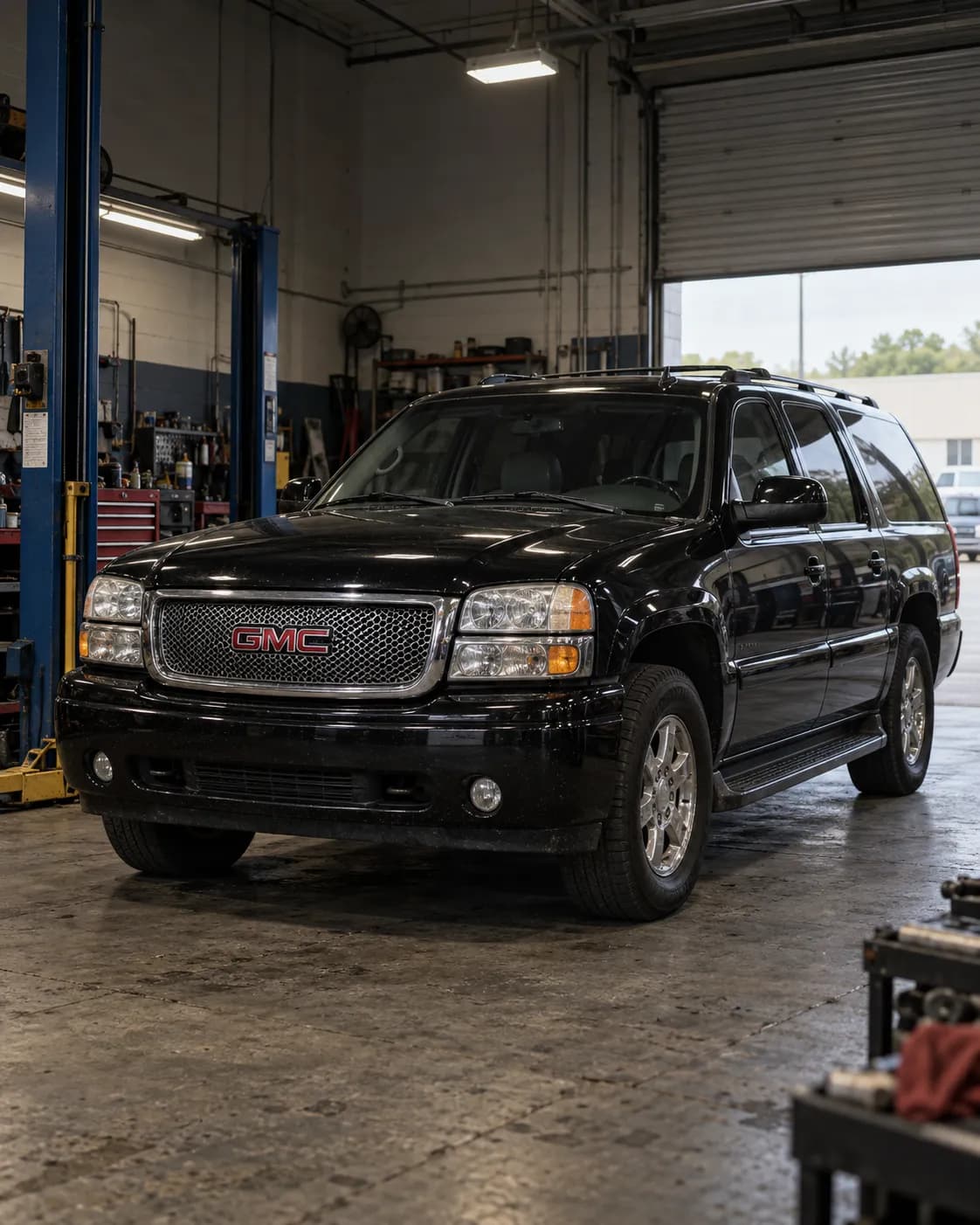
Manufacturer communication 08-07-30-035G — 2006 GMC YUKON DENALI XL ・ Source reference 10234619
Information on Water or Ethylene Glycol in Transmission Fluid
Relation to the target vehicle
- The source's vehicle field includes the trim.
- Model year
- Match 2006 — Source vehicle field
- Model
- Match YUKON DENALI XL — Source vehicle field
- Trim
- Match Denali — Source vehicle field
What the manufacturer’s document says
08-07-30-035G ・ fault and correction ・ for GM vehicles in general
Applies to
Applies to 2024 and prior GM passenger cars and trucks.
the passage
2024 and Prior GM Passenger Cars and Trucks
Fault
Water or ethylene glycol in ATF changes the friction of the clutches, frequently causing shudder during engagement or gear changes, especially during torque converter clutch engagement.
the passage
Water or ethylene glycol in ATF will also change the friction of the clutches, frequently resulting in shudder during engagement or gear changes, especially during torque converter clutch engagement.
Finding the cause
Steps to confirm (in the document’s order)
ATF blowing out of the transmission vent tube is an indication of water in the ATF.
the passage
Indications of water in the ATF may include: • ATF blowing out of the transmission vent tube.
The ATF may appear cloudy or, with extreme contamination, look like a strawberry milkshake.
the passage
ATF may appear cloudy or, in cases of extreme contamination, have the appearance of a strawberry milkshake.
Spacer plate gaskets may appear swollen or wrinkled in areas where they are not compressed.
the passage
Spacer plate gaskets that appear to be swollen or wrinkled in areas where they are not compressed.
If water is found and its entry point is not identified, or a leaking in-radiator transmission oil cooler is suspected, a quick test kit that detects ethylene glycol in ATF is available.
the passage
If water in the ATF has been found and the source of the water entry has not been identified, or if a leaking in-radiator transmission oil cooler is suspected (with no evidence of cross-contamination in the coolant recovery reservoir), a simple and quick test kit is available that detects the presence of ethylene glycol in ATF.
Correction
Repair
If water or coolant is found in the transmission, replace all of the rubber-type seals.
the passage
Important: If water or coolant is found in the transmission, the following components MUST be replaced. • Replace all of the rubber-type seals.
Replace all of the composition-faced clutch plates and/or bands.
the passage
Replace all of the composition-faced clutch plates and/or bands.
Replace all of the nylon parts.
the passage
Replace all of the nylon parts.
Replace the torque converter.
the passage
Replace the torque converter.
Thoroughly clean and rebuild the transmission, using new gaskets and oil filter.
the passage
Thoroughly clean and rebuild the transmission, using new gaskets and oil filter.
Thoroughly inspect the engine cooling system and hoses and clean or repair as necessary.
the passage
Thoroughly inspect the engine cooling system and hoses and clean/repair as necessary.
What is needed
- Parts and materials
- "Gly-Tek" test kit (Nelco Company; to test the ATF for ethylene glycol when water was found in the ATF and its source has not been identified, or a leaking in-radiator transmission oil cooler is suspected)
- All rubber-type seals, all composition-faced clutch plates and/or bands, all nylon parts, the torque converter, new gaskets and oil filter (if water or coolant is found in the transmission)
- Labor time
- Not stated
- Special tools
- J-45096 (to flush and flow check the transmission oil cooler)
- Scan tool
- Not stated
Only what the technical documents state. "Not stated" does not mean not needed.
Compiled by reading the full text of the document; each point stands on the passage shown. Check the document itself, linked below, before working on a vehicle.
Stated content
Communication summary
本通知はトランスミッションフルード内の水またはエチレングリコールの有害な影響に関する情報を提供するものです。 Machine translation (unreviewed)
This bulletin provides information on the harmful effects of water or ethylene glycol in transmission fluid.
Go to this passage in the original
Source
- Source
- NHTSA Manufacturer Communications
- Source reference
- 10234619
- Received by source
- 2023-04-22
- Incident date
- Unknown
Open original text and sourceOpen the provider's page (external)