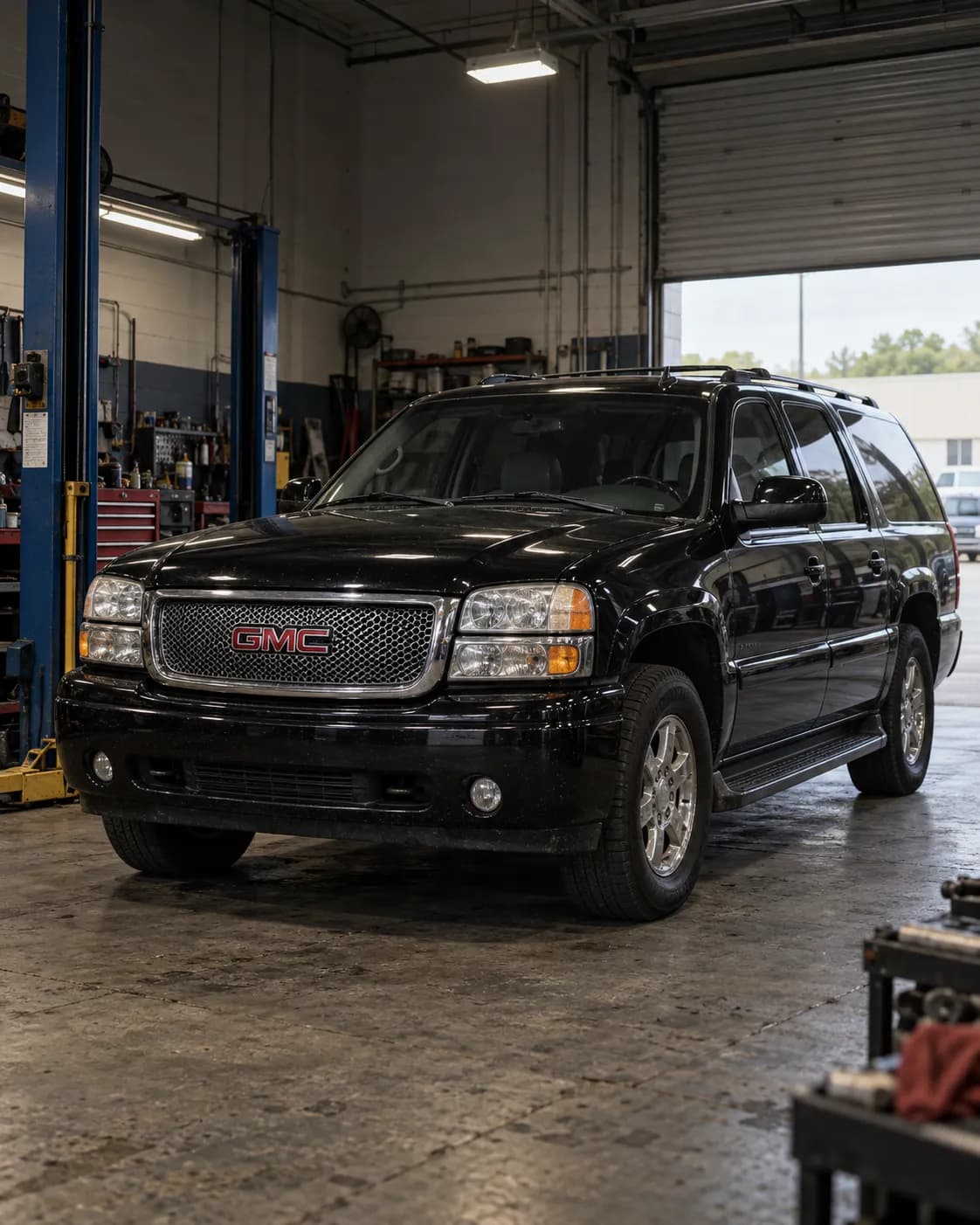
Source reference 10172293
Manufacturer communication — 2006 GMC YUKON DENALI XL
Relation to the target vehicle
- The source's vehicle field includes the trim.
- Model year
- Match 2006 — Source vehicle field
- Model
- Match YUKON DENALI XL — Source vehicle field
- Trim
- Match Denali — Source vehicle field
What the manufacturer’s document says
05-03-07-009I ・ normal characteristic (no repair) ・ for GM vehicles in general
Applies to
Applies to 2020 and prior GM passenger cars and light duty trucks.
the passage
Models: 2020 and Prior GM Passenger Cars and Light Duty Trucks
Finding the cause
Steps to confirm (in the document’s order)
Verify that no aftermarket suspension "lift" or "lowering" kit or other suspension alteration has been done to the vehicle.
the passage
Verify that aftermarket suspension “Lift” or “Lowering” Kits or other suspension alterations have NOT been done to the vehicle.
Before aligning, inspect tire inflation and irregular wear, wheel bearings for excessive play, and all suspension and steering parts for looseness, wear or damage.
the passage
3. Inspect the tires for the proper inflation and irregular tire wear. 4. Inspect the wheel bearings for excessive play. 5. Inspect all suspension and steering parts for looseness, wear, or damage.
For a verified steering wheel angle complaint, front and rear toe are the only alignment values that affect the angle of the steering wheel.
the passage
If a steering wheel angle complaint has been verified, it should be noted that front and rear toes are the only alignment values that affect the angle of the steering wheel.
If a pull is verified but all alignment settings are within specification, the tires may be the cause; swap the front tires left to right and re-evaluate.
the passage
Tires: If a pull complaint has been verified but all the alignment settings all are within specifications, the issue may be in the tires. Certain tire differences left to right may cause a vehicle pull. Swapping the front tires left to right and re-evaluating is a simple way to verify a tire issue.
Correction
Repair
On vehicles requiring a 4-wheel alignment, set the rear wheel alignment angles first to obtain proper front angles.
the passage
Important: When performing adjustments to vehicles requiring a 4-wheel alignment, set the rear wheel alignment angles first in order to obtain proper front wheel alignment angles.
Jounce the front and rear bumpers 3 times before checking the wheel alignment.
the passage
2. Jounce the front and the rear bumpers 3 times prior to checking the wheel alignment.
Caution
Vehicles follow road crown or slope as part of normal operation, and a wheel alignment will generally not correct this.
the passage
Important: A wheel alignment will generally NOT correct vehicles that follow the road crown since this is within “Normal Operation.”
Slight or mild feathering, cupping, edge or heel/toe wear of the tread shoulders is normal and can appear very early; it does not affect tire performance or tread life.
the passage
Important: Slight or mild feathering, cupping, edge or heel/toe wear of tire tread shoulders is “normal” and can show up very early in a tire/vehicle service mileage; in fact, some new tires can show evidence of feathering from the factory. These issues do NOT affect the overall performance and tread life of the tire.
Vibration concerns are generally not due to wheel alignment; alignments are not to be performed to investigate or correct vibration.
the passage
Important: Vibration type customer concerns are generally NOT due to wheel alignment except in the rare cases; e.g., extreme diagonal wear across the tread. In general, wheel alignments are NOT to be performed as an investigation/correction for vibration concerns.
Tramlining (following ruts and grooves in the road) occurs to some degree on all vehicles, more with low aspect ratio, wide tires.
the passage
All vehicles tramline to some degree, however vehicles equipped with low aspect ratio, wide tires tend to be more sensitive to this condition (e.g. Corvette, Camaro, CTS-V, Chevrolet SS).
Front or rear toe out of specification does not cause a true vehicle pull; if only toe is out on a confirmed pull, something else is causing it.
the passage
Important: Front or rear toe values being out of specifications do not cause a true vehicle pull. If only front or rear toe values are out of specification on a confirmed vehicle pull issue, something else is causing the pull.
Compiled by reading the full text of the document; each point stands on the passage shown. Check the document itself, linked below, before working on a vehicle.
Stated content
Communication summary
本技術情報は、ホイールアラインメントに関連するユーザーからの問い合わせについて、ゼネラルモーターズの推奨事項を小売、卸売およびフリート関連業者に提供するものである。 Machine translation (unreviewed)
This informational bulletin provides retail, wholesale and fleet personnel with General Motors recommendations for customer concerns related to wheel alignment.
Go to this passage in the original
Source
- Source
- NHTSA Manufacturer Communications
- Source reference
- 10172293
- Received by source
- 2020-03-09
- Incident date
- Unknown
Open original text and sourceOpen the provider's page (external)