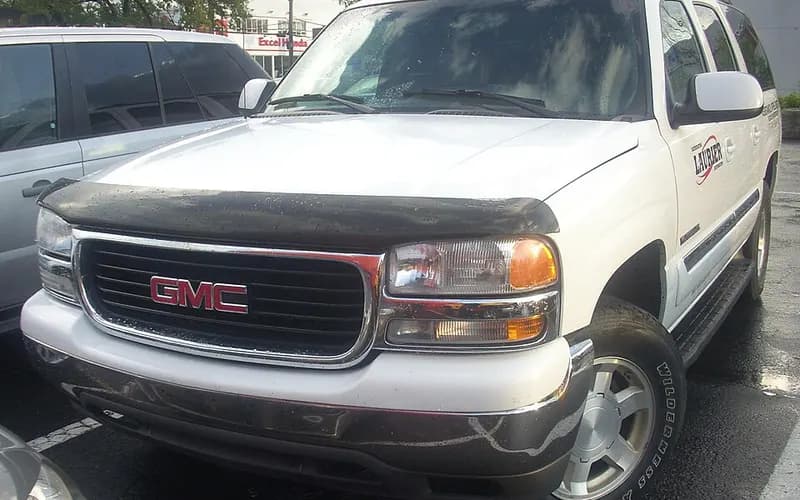
GMC Yukon XL 2000–2006
Common on this vehicle:Smoke or fireStalls or shuts offWarning lightGauge or instrument faultLeakOverheating
issueFuel module reservoir assembly: fuel pump wire connectors may overheat - recall 05V-155Remove
Record by record
1 records state a cause or a remedy. Each record is shown as short labels in the order fault → finding the cause → correction. Press a label to narrow to the records that state it.
Component named as the cause
A ribbon is as wide as the records that state both of its ends (only the commonest are drawn). A record that names several symptoms or components runs through each. Orange is records that say the fault came back or was not fixed. Results come from owners’ reports only; one that does not say is “result not stated”. None of this is a likelihood of a cause or a rate at which work succeeds.
Read the records one by one (1)
Known issuesFuel module reservoir assembly: fuel pump wire connectors may overheat - recall 05V-1551
Recall2000–2001 GMC YUKON XL ・ —
Fuel Module Reservoir Assembly Overheating Recall
1Fault
- Some vehicles were built with fuel module reservoir assemblies whose fuel pump wires and/or connectors may overheat under certain operating conditions.
- If the exposed ignition circuit wire shorts to ground, the fuel pump fuse blows, disabling the fuel pump and causing an engine stall or no-start; if the ignition circuit or ground wire shorts to the fuel level sender card wires, fuel level readings may be inaccurate.
- If enough heat reaches the pass-through connector, a hole may form in it, which may turn on the Service Engine Soon light during the emission system diagnostics routine; fuel vapor, and in some cases liquid fuel, may leak from the tank through the hole.
- If enough fuel leaked out and an ignition source were present, a vehicle fire could occur.
2Finding the cause
Possible causes
- Fretting corrosion caused by vibration inside the tank was identified as the cause of high resistance within the fuel pump connector.
3Correction
Repair
- Dealers remove the fuel tank, remove the fuel module reservoir assembly and install a new service kit, which includes a new pass-through connector and a wiring harness for the fuel pump and fuel sender card.
- Start by disconnecting the negative battery cable, then remove and discard the "ECM B" fuse.
- In the revised bulletin, the fuel and EVAP pipes are capped with J 41413-300, EVAP Cap/Plug Kit, to prevent fuel system contamination.
- Remove the 4 pin Metri Pack 150 electrical connector from the vehicle's body harness.
- Connect the new GT280 connector to the vehicle's body harness with the 4 butt splice connectors contained in the kit.
Parts
- Part number 15824379, Harness Kit, F/Tnk F/Pmp Mdl Wrg, quantity 1 per vehicle.
Part numbers printed in the document
15824379Harness Kit, Fuel Tank Fuel Pump Module WiringLook up at RockAuto (aftermarket candidates) ↗Search the web ↗
No successor statedas stated by GMPartsGiant (checked 2026-10-06) ↗
The numbers are as the document prints them. The name and the replacing number are what the pages of GMPartsGiant, a reseller of genuine parts and not GM, state. Aftermarket equivalents are not checked here (the links only search by number). Confirm the fit for the vehicle (VIN) before ordering.
Caution
- Do not handle the fuel sender assembly by the fuel pipes; the leverage could damage the joints.
- Always replace the fuel sender gasket when reinstalling the fuel sender assembly, to reduce the risk of fire and injury from a fuel leak.
Read the sentences of the record
From the manufacturer’s document
- Applies to:The recall covers certain 2000-2001 Chevrolet 1500 Series Suburban and GMC 1500 Series Yukon XL vehicles built within the listed VIN breakpoints.
- Condition:Some vehicles were built with fuel module reservoir assemblies whose fuel pump wires and/or connectors may overheat under certain operating conditions.
- Condition:If the exposed ignition circuit wire shorts to ground, the fuel pump fuse blows, disabling the fuel pump and causing an engine stall or no-start; if the ignition circuit or ground wire shorts to the fuel level sender card wires, fuel level readings may be inaccurate.
- Condition:If enough heat reaches the pass-through connector, a hole may form in it, which may turn on the Service Engine Soon light during the emission system diagnostics routine; fuel vapor, and in some cases liquid fuel, may leak from the tank through the hole.
- Condition:If enough fuel leaked out and an ignition source were present, a vehicle fire could occur.
- Cause:Fretting corrosion caused by vibration inside the tank was identified as the cause of high resistance within the fuel pump connector.
- Repair:Dealers remove the fuel tank, remove the fuel module reservoir assembly and install a new service kit, which includes a new pass-through connector and a wiring harness for the fuel pump and fuel sender card.
- Parts:Part number 15824379, Harness Kit, F/Tnk F/Pmp Mdl Wrg, quantity 1 per vehicle.
- Repair:Start by disconnecting the negative battery cable, then remove and discard the "ECM B" fuse.
- Repair:In the revised bulletin, the fuel and EVAP pipes are capped with J 41413-300, EVAP Cap/Plug Kit, to prevent fuel system contamination.
- Caution:Do not handle the fuel sender assembly by the fuel pipes; the leverage could damage the joints.
- Caution:Always replace the fuel sender gasket when reinstalling the fuel sender assembly, to reduce the risk of fire and injury from a fuel leak.
- Repair:Remove the 4 pin Metri Pack 150 electrical connector from the vehicle's body harness.
- Repair:Connect the new GT280 connector to the vehicle's body harness with the 4 butt splice connectors contained in the kit.
- Repair:Install the fuel tank strap attaching bolts and tighten them to 40 N·m (30 lb ft).
- Repair:Install the new fuel pump fuse contained in the kit into the vehicle's electrical center (ECM B).
- Cause
- CERTAIN TRUCKS AND SPORT UTILITY VEHICLES WERE BUILT WITH FUEL MODULE RESERVOIR ASSEMBLIES THAT CONTAIN FUEL PUMP WIRES CONNECTORS MAY OVERHEAT UNDER CERTAIN OPERATING CONDITIONS.
- Remedy
- DEALERS WILL REMOVE THE FUEL TANK, AND REMOVE THE MODULE RESERVOIR ASSEMBLIES FROM THE TANK, AND INSTALL A NEW SERVICE KIT FREE OF CHARGE. AN INTERIM LETTER TO OWNERS WAS MAILED ON MAY 25, 2005. THE OWNERS WERE RE-NOTIFIED ON OCTOBER 19, 2005, SINCE PARTS ARE NOW AVAILABE. OWNERS MAY CONTACT CHEVROLET AT 1-800-630-2438 AND GMC AT 1-866-996-9463.
- Consequence
- IF THE IGNITION CIRCUIT WIRE IS EXPOSED, THE FUEL PUMP FUSE WILL BLOW, DISABLING THE FUEL PUMP AND CAUSING AN ENGINE STALL OR NO-START CONDITION. IF SUFFICIENT HEAT IS CONDUCTED TO THE PASS-THROUGH CONNECTOR, A HOLE IN THE CONNECTOR MAY RESULT, WHICH MAY CAUSE A 'SERVICE ENGINE SOON' LIGHT TO BE ILLUMINATED DURING THE EMISSION SYSTEM DIAGNOSTIC ROUTINE. FUEL VAPOR AND IN SOME CASES LIQUID FUEL MAY LEAK OUT OF THE FUEL TANK THROUGH THE HOLE IN THE CONNECTOR BODY. FUEL LEAKAGE, IN THE PRESENCE OF AN IGNITION SOURCE, COULD RESULT IN A FIRE. ALSO IF THE IGNITION CIRCUIT OR GROUND WIRE IS EXPOSED AND SHORTS TO THE FUEL LEVEL SENDER CARD WIRES, INACCURATE FUEL LEVEL READINGS MAY RESULT.