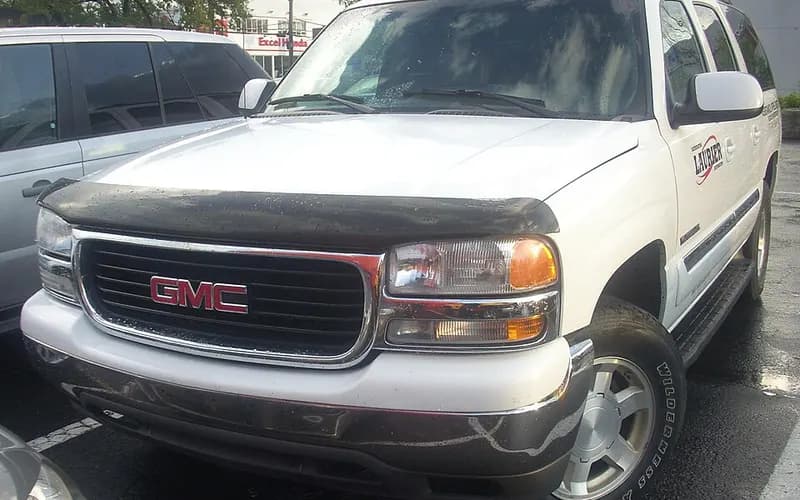
GMC Yukon XL 2000–2006
Common on this vehicle:LeakSmoke or fireWarning light
Record by record
2 records state a cause or a remedy. Each record is shown as short labels in the order fault → finding the cause → correction. Press a label to narrow to the records that state it.
Read the records one by one (2)
ENGINE AND ENGINE COOLING2
Manufacturer communication2000–2006 GMC YUKON XL DENALI ・ 2022-09-07
MIL Illuminated with Fuel Trim and Oxygen Sensor Codes
1Fault
- Customers may comment that the MIL is illuminated.
- Initial diagnosis may show fuel trim and O2 sensor related codes including P0101, P0137, P0138, P0140, P0141, P0157, P0158, P0160 and P0161.
- The listed codes also include P0171, P0174, P0420, P0430, P1174 and P1175.
2Finding the cause
Possible causes
- These methods find small leaks around the O2 sensor embossments and slight cracks in an intake plenum or gasket.
Steps to confirm (in the document’s order)
- If normal SI diagnostics do not lead to a resolution and an intake vacuum leak or exhaust leak is suspected, use the GE-52250 Variable Pressure Leak Detector (preferred), the J-41416 ultrasonic leak tester, or possibly soapy water with low pressure air into the tailpipe to find the leak.
- For an intake leak, introduce the smoke into the brake booster hose or the oil dipstick tube; soapy water can be sprayed near the gasket, seams and all vacuum nipples.
- For an exhaust leak, put the hose with smoke or air into the tailpipe sealed with shop towels, then spray soapy water around seals, seams and bosses.
3Correction
Parts
- No parts are required for this repair.
Caution
- All of these tests are much more effective if the throttle body is covered or sealed.
Read the sentences of the record
From the manufacturer’s document
- Applies to:Applies to Buick, Cadillac, Chevrolet and GMC passenger cars and trucks, model years 2000 to 2022, gasoline engines only.
- Condition:Customers may comment that the MIL is illuminated.
- Condition:Initial diagnosis may show fuel trim and O2 sensor related codes including P0101, P0137, P0138, P0140, P0141, P0157, P0158, P0160 and P0161.
- Condition:The listed codes also include P0171, P0174, P0420, P0430, P1174 and P1175.
- Confirm:If normal SI diagnostics do not lead to a resolution and an intake vacuum leak or exhaust leak is suspected, use the GE-52250 Variable Pressure Leak Detector (preferred), the J-41416 ultrasonic leak tester, or possibly soapy water with low pressure air into the tailpipe to find the leak.
- Caution:All of these tests are much more effective if the throttle body is covered or sealed.
- Confirm:For an intake leak, introduce the smoke into the brake booster hose or the oil dipstick tube; soapy water can be sprayed near the gasket, seams and all vacuum nipples.
- Confirm:For an exhaust leak, put the hose with smoke or air into the tailpipe sealed with shop towels, then spray soapy water around seals, seams and bosses.
- Cause:These methods find small leaks around the O2 sensor embossments and slight cracks in an intake plenum or gasket.
- Parts:No parts are required for this repair.
Open the manufacturer’s document (PDF) ↗ The points above were read from this document.
- Remedy
- This bulletin provides information on tools available to find an intake vacuum leak or exhaust leak to correct a condition of MIL Illuminated with Multiple Fuel Trim and/or Oxygen Sensor Codes Set.
Manufacturer communication2000–2006 GMC YUKON XL ・ 2019-03-18
Diagnostic Tip: Using Smoke Machine and Ultrasonic Detector for Air Leaks
1Fault
- The SES light is on, and initial diagnosis may show fuel trim and/or O2 sensor related codes such as P0171, P0174, P0420 and P0430.
2Finding the cause
Steps to confirm (in the document’s order)
- If normal SI diagnostics do not resolve it and an intake vacuum leak or exhaust leak is suspected, the J41413-200 Evaporative System Tester smoke machine, the J-41416 ultrasonic leak tester, or soapy water with low pressure air into the tailpipe may help find the leak.
- For an intake leak, the smoke can be introduced into the brake booster hose or the oil dipstick tube.
- Soapy water can be sprayed near the gasket and seams and on all vacuum nipples.
- For an exhaust leak, a hose into the tailpipe carrying smoke or air, sealed with shop towels, is effective.
- Then spray soapy water around the seals, seams and bosses.
3Correction
Caution
- All of these tests are much more effective if the throttle body is covered/sealed.
Read the sentences of the record
From the manufacturer’s document
- Applies to:Applies to all 2000 - 2019 models with gasoline engines.
- Condition:The SES light is on, and initial diagnosis may show fuel trim and/or O2 sensor related codes such as P0171, P0174, P0420 and P0430.
- Confirm:If normal SI diagnostics do not resolve it and an intake vacuum leak or exhaust leak is suspected, the J41413-200 Evaporative System Tester smoke machine, the J-41416 ultrasonic leak tester, or soapy water with low pressure air into the tailpipe may help find the leak.
- Caution:All of these tests are much more effective if the throttle body is covered/sealed.
- Confirm:For an intake leak, the smoke can be introduced into the brake booster hose or the oil dipstick tube.
- Confirm:Soapy water can be sprayed near the gasket and seams and on all vacuum nipples.
- Confirm:For an exhaust leak, a hose into the tailpipe carrying smoke or air, sealed with shop towels, is effective.
- Confirm:Then spray soapy water around the seals, seams and bosses.
- Confirm:These methods are very good for finding small leaks around the O2 sensor bosses and slight cracks in an intake plenum or gasket.
Open the manufacturer’s document (PDF) ↗ The points above were read from this document.
- Remedy
- This preliminary information document communicates a tip on the way to diagnose possible induction or exhaust air leaks using the evaporative emission cart smoke machine and ultrasonic leak detector tools.