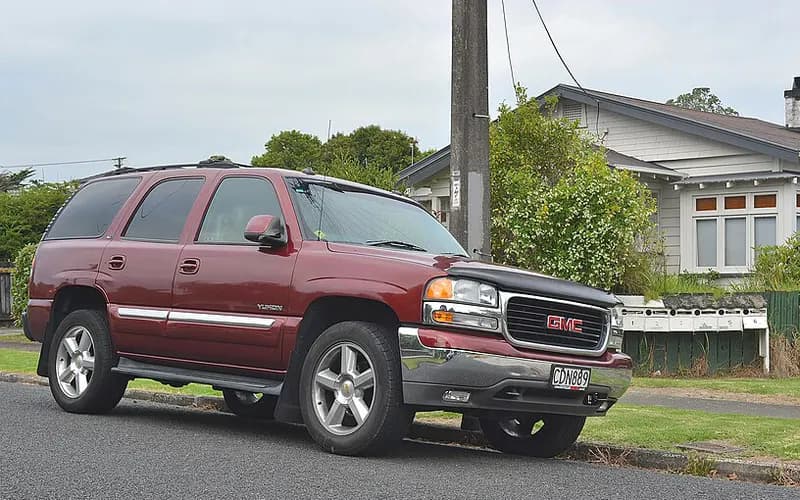
GMC Yukon 2000–2006
Common on this vehicle:
Possible causes
The documents say what to doOnly records name itThe size of a node, the width of a link and the numbers are records matching this search, not likelihoods.
FaultCrate・GMC Yukon 2000–2006・P0506
Candidate cause (the documents say what to do)
Throttle body carbon build-up: idle surge, reduced engine power, throttle DTCs (high mileage)
As carbon builds up in the throttle body of a high-mileage vehicle, the ECM/PCM learns to compensate by increasing the throttle plate angle.
With enough carbon, idle surge, deceleration surge, tip-in hesitation, reduced engine power mode and/or DTCs may occur.
How to tell
P0068P0121P0506P0507P1516Check engine / Service Engine SoonReduced Engine Power
What to do
- If SI diagnosis does not isolate the cause, inspect the throttle body bore and plate for obvious carbon build-up.
- If carbon is present, follow the Throttle Body Cleaning Procedure in SI.
- Depending on the vehicle, the idle learn reset/reset idle learn is normally found on the Tech 2 ECM menu for Module Set Up or Special Functions/TAC System.
- After ensuring that the throttle body bore and plate are clean, perform an idle learn reset/reset idle learn with the Tech 2/GDS and re-evaluate the concern.
Caution: If the throttle body is cleaned without performing an idle learn reset/reset idle learn with the Tech 2, the ECM/PCM may continue to compensate for the previous carbon build up, and the concern may return along with DTCs P0121, P0506 and/or P0507.
In the records
No record states work done for this cause.
See the evidence (1 technical documents, 0 records)
Passages of the technical documents
Yukon 2006 - 2018
General Motors (published by NHTSA) 2017-12-18
As carbon builds up in the throttle body of a high mileage vehicle, the ECM/PCM learns to compensate by increasing the throttle plate angle.
General Motors (published by NHTSA) 2017-12-18
If enough carbon builds up, an idle surge, deceleration surge, tip-in hesitation, reduced engine power mode, and/or DTCs
General Motors (published by NHTSA) 2017-12-18
If SI diagnosis does not isolate the cause of this concern, inspect the throttle body bore and plate for obvious carbon build up.
General Motors (published by NHTSA) 2017-12-18
A cause or a result a complaint states is the owner’s view or what a dealer told them, not an established fact.
Put together by FaultCrate from public records and technical documents. The cause and the repair are for the workshop to decide with the vehicle in front of it. Counts are records, not failure rates.