
GMC Yukon 2000–2006
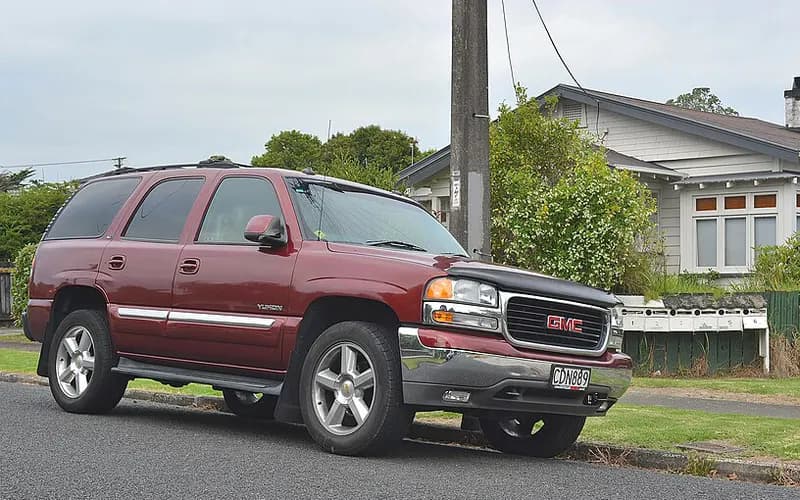
Common on this vehicle:Lights (headlights, turn signals)Gauge or instrument faultLeakSmoke or fireWarning lightAir conditioning or heaterMisfire or rough idleNoise
Possible causes
6 causes not drawn
- Fuel pressure regulator buzz / hum after replacement (check fuel pump feed voltage drop and connector crimps)4.8L, 5.3L, 6.0L only0
- Rear HVAC ticking noise, no rear temperature or mode control, DTC B0434 / B3764 (revised auxiliary HVAC control module)0
- Power steering pump whine between idle and 2000 rpm0
- Steering intermediate shaft clunk0
- Tire scrub noise on low speed turns (steering rod / centerlink installed backwards)0
- Aftermarket part (not the vehicle as built): Federal-Mogul National / Carquest replacement wheel hub assembly retention nut - recall 07E-1062WD only0
The documents say what to doOnly records name itThe size of a node, the width of a link and the numbers are records matching this search, not likelihoods.
FaultCrate・GMC Yukon 2000–2006・Noise, Instruments and lighting, 2003
Candidate cause (the documents say what to do)
Single-cylinder misfire (P0300-P0308) and/or chirp, squeak or tick at camshaft speed: worn cam lobe / lifter, valve or valve spring
Customers may complain of an SES light, engine misfire and/or engine noise.
A verified noise is not eliminated by canceling fuel injectors and occurs at camshaft speed (half of crankshaft speed).
How to tell
P0300P0301P0302P0303P0304Check engine / Service Engine Soon
What to do
- If pressing on the valve side of the rocker changes the noise, a lifter and/or cam lobe concern on that cylinder is most likely.
- The misfiring/ticking cylinder should have less cam lobe lift than comparison cylinders if a worn lifter roller and/or cam lobe is the cause.
- During the noise, press with a wooden hammer handle on the rocker arms at the valve side, push rod side, and side of the rocker to find which one is making noise.
- Measure the cam lobe lift at the push rod side of the rocker arm.
- A good indicator of a sticking valve is engine misfires that continue to count on an aggressive deceleration with engine braking.
- Release the air pressure from the cylinder and work the valve up and down in the guide while turning it 360 degrees; if any binding is felt, a stem to guide clearance concern exists.
Caution: A damaged cam lobe is easy to overlook when inspecting through the lifter bores; unworn lifter rollers do not mean the cam lobes are okay.
What is needed
- Parts and materials
- Camshaft and all lifters (if a worn camshaft lobe or lifter roller is found)
- Plastic lifter guide (for the lifter that had the damaged cam lobe or lifter roller)
- Valve spring (if found broken)
- Labor time
- Not stated
- Special tools
- Not stated
- Scan tool
- Not stated
Only what the technical documents state. "Not stated" does not mean not needed.
In the records
No record states work done for this cause.
See the evidence (2 technical documents, 1 records)
Passages of the technical documents
The model list includes GMC Yukon Models 2002 - 2018 with V8 engines.
GMC Yukon Models 2002 - 2018 All All V8 ALL
General Motors (published by NHTSA) 2018-10-16
Customers may complain of an SES light, engine misfire and/or engine noise.
Some customers may complain of a SES light, engine misfire, and/or engine noise.
General Motors (published by NHTSA) 2018-10-16
A verified noise is not eliminated by canceling fuel injectors and occurs at camshaft speed (half of crankshaft speed).
If a noise is verified, it will not be eliminated by canceling fuel injectors and the noise will occur at camshaft speed (half of crankshaft speed).
General Motors (published by NHTSA) 2023-04-24
The noise may be described as a chirp, squeak, squeal or tick and may increase off idle.
The noise may be described as a chirp, squeak, squeal or tick noise and may increase off of idle.
General Motors (published by NHTSA) 2023-04-24
Manufacturer’s documents
- Engine Misfire and Related Issues Notice PIP4138Q 2018-02-21
A cause or a result a complaint states is the owner’s view or what a dealer told them, not an established fact.
Put together by FaultCrate from public records and technical documents. The cause and the repair are for the workshop to decide with the vehicle in front of it. Counts are records, not failure rates.