
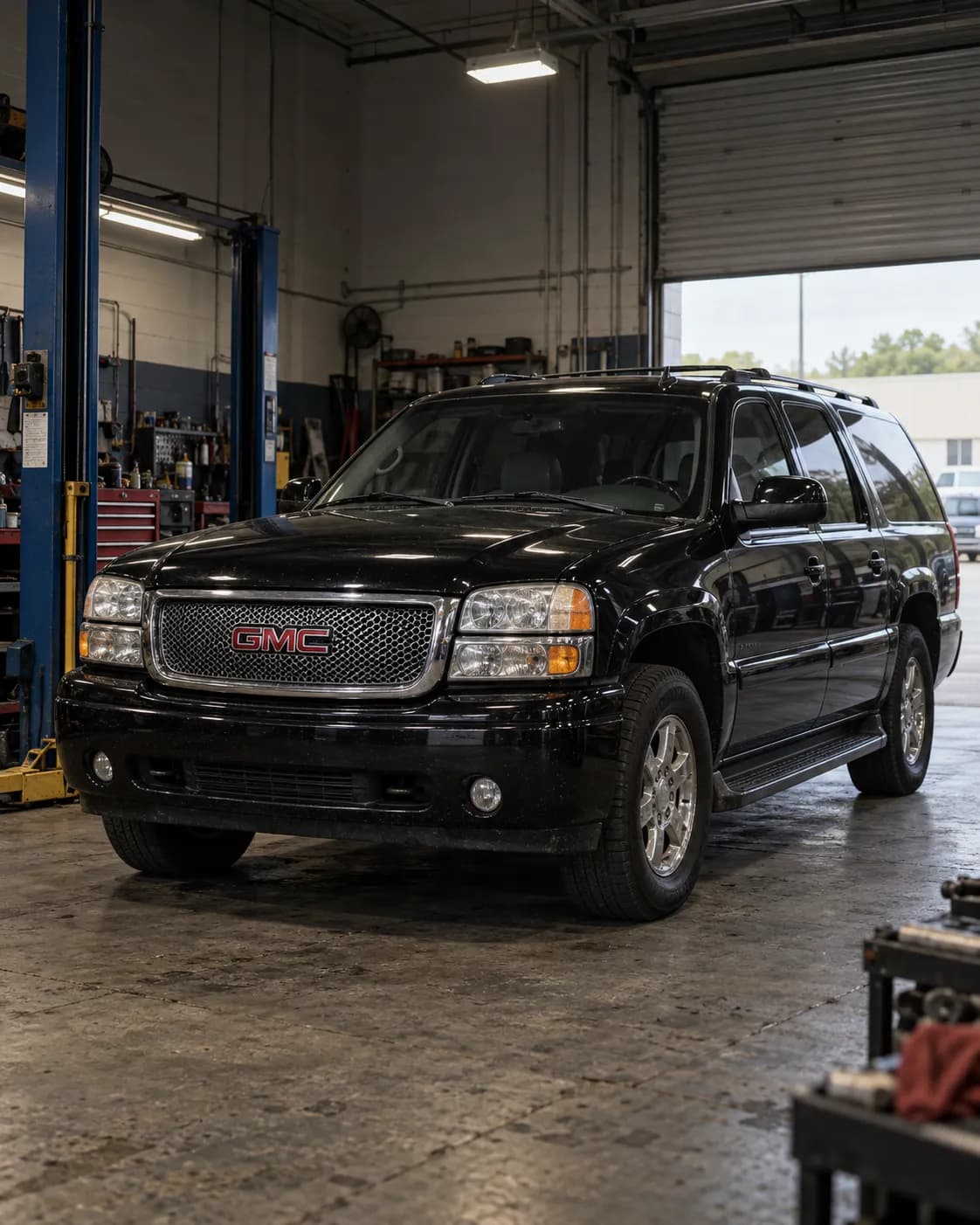
Source reference 10198890
Manufacturer communication — 2006 GMC YUKON DENALI XL
Relation to the target vehicle
- The source's vehicle field includes the trim.
- Model year
- Match 2006 — Source vehicle field
- Model
- Match YUKON DENALI XL — Source vehicle field
- Trim
- Match Denali — Source vehicle field
What the manufacturer’s document says
21-NA-124 ・ fault and correction ・ for GM vehicles in general
Applies to
Applies to GM passenger cars and trucks, including medium duty, model years 2000 to 2021.
the passage
GM Passenger Cars and Trucks (including Medium Duty) 2000 2021
The bulletin applies only to vehicles with gasoline engines.
the passage
This bulletin only applies to vehicles with gasoline engines.
Fault
The MIL is illuminated and DTC P0442 (EVAP small leak detected) and/or P0455 (EVAP large leak detected) is set in the Engine Control Module (ECM).
the passage
Some technicians may find one or more of the DTCs set in the Engine Control Module (ECM): • P0442: Evaporative Emission System Small Leak Detected • P0455: Evaporative Emission System Large Leak Detected
Finding the cause
Possible causes
DTC P0455 sets for a large leak or a purge blockage; a large leak can come from an unseated tube connection, a damaged tube, a stuck open canister vent valve or a stuck closed purge valve.
the passage
For DTC P0455 (large leak detected), the vehicle will set the code due to large leak or purge blockage. A large leak can occur from an unseated tube connection, a damaged tube, a stuck opened canister vent valve or a stuck closed purge valve.
DTC P0442 sets for a small leak, which can come from a stuck open purge valve or a stuck open canister vent valve.
the passage
For DTC P0442 (small leak detected), the vehicle will set this code due to small leak. The leak can occur from a stuck open purge valve or stuck open canister vent valve.
Steps to confirm (in the document’s order)
Inspect all purge connections for proper installation and look for damage or wear along the lines; if damage is seen, confirm with the smoke test.
the passage
All purge connections must be inspected for proper installation. While inspecting the line connections, look for any signs of damage or wear along the lines. If any damage is observed, proceed to confirm via the smoke test.
Some leaks show only under pressure and some only under vacuum, so check both ways.
the passage
Note: Some leaks will only be noticeable under pressure and some only noticeable under vacuum. We recommend checking both ways.
Cycling the purge and vent solenoids with GDS2 while inspecting may indicate a sticking valve.
the passage
Also cycling the purge and vent solenoids with GDS2 while inspecting may indicate a sticking valve.
Critical connections on the engine side: purge tube to purge valve at the intake manifold, purge tube to chassis EVAP line at the rear of the engine near the transmission, and chassis EVAP line to canister.
the passage
1. Purge tube to purge valve (at intake manifold) 2. Purge tube to chassis EVAP line (at rear of engine, near transmission) 3. Chassis EVAP line to canister (at canister)
Critical connections on the tank side: fuel tank load line to canister, vent valve line to vent valve, fuel tank load line jumper connection near the fuel tank, and the fuel tank cap being closed properly.
the passage
4. Fuel tank load line to canister (at canister) 5. Vent valve line to vent valve (at vent valve) 6. Fuel tank load line jumper connection (near fuel tank) 7. Fuel tank cap is closed properly (at refuel compartment)
If all connections are good, check the vent valve for a stuck open position.
the passage
If all connections are good, the vent valve should be checked for a stuck open position.
If the vent valve is verified to be functioning correctly, go on to investigate the purge valve.
the passage
If the vent valve is verified to be functioning correctly, proceed to investigate the purge valve.
What is needed
- Parts and materials
- Not stated
- Labor time
- Not stated
- Special tools
- Not stated
- Scan tool
- Not stated
Only what the technical documents state. "Not stated" does not mean not needed.
Compiled by reading the full text of the document; each point stands on the passage shown. Check the document itself, linked below, before working on a vehicle.
Stated content
Communication summary
本技術情報は、エンジン警告灯点灯およびDTC P0442および/またはP0455が入った場合のEVAPシステム漏れの可能性をテストするための診断ヒント/手順を提供しています。 Machine translation (unreviewed)
This service bulletin provides diagnostic tips/steps on testing for possible EVAP leaks in the system to correct a customer concern of an MIL Illuminated with DTCs P0442 and/or P0455 Set.
Go to this passage in the original
Source
- Source
- NHTSA Manufacturer Communications
- Source reference
- 10198890
- Received by source
- 2021-07-06
- Incident date
- Unknown
Open original text and sourceOpen the provider's page (external)