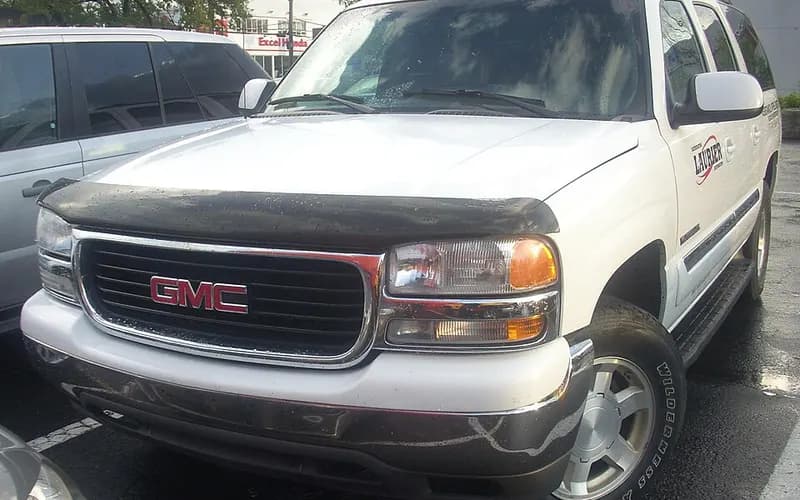
GMC Yukon XL 2000–2006
Common on this vehicle:Vibration or shudderCorrosion or rustNoiseWarning lightLeakTyre failure (blowout, tread separation)Reduced brakingLights (headlights, turn signals)
Possible causes
The documents say what to doOnly records name itThe size of a node, the width of a link and the numbers are records matching this search, not likelihoods.
FaultCrate・GMC Yukon XL 2000–2006・Suspension, wheels and tires, 2004
Candidate cause (the documents say what to do)
Grease seen at front hub bearing seals (normal purge, do not replace)
The factory grease fill of the front bearing/hub assembly exceeds what is required for bearing lubrication over the life of the vehicle.
Some grease purges through the self-venting seals in the initial drive period and helps form a barrier against contamination.
What to do
- Replace the bearing only for visible seal damage, endplay over 0.005 in (0.13 mm), rough rotation or abnormal noise.
- If desired, grease that has migrated away from the immediate seal area can be wiped off.
Caution: Do not replace the bearing for grease purge.
In the records
- Bearing: replaced 1
See the evidence (2 technical documents, 1 records)
Passages of the technical documents
2004-2013 GMC Sierra, Sierra Classic, Yukon and Yukon Denali Models
General Motors (published by NHTSA) 2012-10-29
The factory grease fill of the front bearing/hub assembly exceeds the amount of grease that is required for adequate bearing lubrication throughout the life of the vehicle.
General Motors (published by NHTSA) 2012-10-29
A portion of the grease will purge through the self-venting bearing seals for the initial drive period (a few thousand miles/kilometers) and helps to form an additional barrier to block contamination of the bearing.
General Motors (published by NHTSA) 2012-10-29
Do not replace the bearing for grease purge.
General Motors (published by NHTSA) 2012-10-29
Manufacturer’s documents
- Front hub bearing grease leakage preliminary information PIT3078F 2017-08-15
A cause or a result a complaint states is the owner’s view or what a dealer told them, not an established fact.
Put together by FaultCrate from public records and technical documents. The cause and the repair are for the workshop to decide with the vehicle in front of it. Counts are records, not failure rates.