GMC Yukon 2000–2006
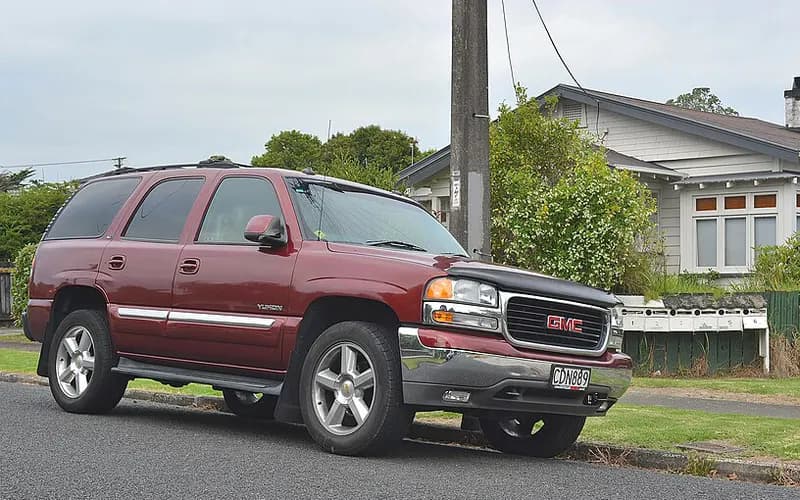
Common on this vehicle:Gauge or instrument faultNoiseWarning lightCorrosion or rustLeakReduced brakingAir conditioning or heaterVibration or shudder
Record by record
164 records state a cause or a remedy. Each record is shown as short labels in the order fault → finding the cause → correction. Press a label to narrow to the records that state it.
Symptom
Component named as the cause
Work done
How it is said to have ended
- says it was fixed2
- says it held for a while1
- says it came back5
- says it did not fix it4
- result not stated10
A ribbon is as wide as the records that state both of its ends (only the commonest are drawn). A record that names several symptoms or components runs through each. Orange is records that say the fault came back or was not fixed. Results come from owners’ reports only; one that does not say is “result not stated”. None of this is a likelihood of a cause or a rate at which work succeeds.
Read the records one by one (15)
Known issuesInstrument panel cluster gauges stick, flutter or stop working3
Owner complaint2004 GMC YUKON DENALI ・ 2015-02-27
Multiple electrical and mechanical failures including gauge failure, brake issues, and more
1Fault
2Finding the cause
3Correction
WHICH I HAD TO REPLACE. (1 more)
What the documents say to do
Instrument panel cluster gauges stick, flutter or stop workingRepair
- Dealers replace the instrument panel cluster after verifying the condition.
Read the sentences of the record
- Fault
- IT'S LIKE IT STARTS SLOW YOUR GAUGES GO OUT. (2 more)
- Remedy
- WHICH I HAD TO REPLACE. (1 more)
Owner complaint2003 GMC YUKON DENALI ・ 2010-07-28
Speedometer freezes while driving and other gauge lights burnt out
1Fault
2Finding the cause
3Correction
I EVENTUALLY DISCONNECTED THE VEHICLES BATTERY FOR APPROX. 30 MINUTES.
What the documents say to do
Instrument panel cluster gauges stick, flutter or stop workingRepair
- Dealers replace the instrument panel cluster after verifying the condition.
Read the sentences of the record
- Fault
- WHILE DRIVING ON A TRIP THE SPEEDOMETER IN MY 2003 GMC YUKON DENALI FROZE ON 72 MPH (= 115.9 km/h). (1 more)
- Remedy
- I EVENTUALLY DISCONNECTED THE VEHICLES BATTERY FOR APPROX. 30 MINUTES.
- Outcome
- AFTER RECONNECTING BATTERY SPEEDOMETER APPEARED TO CORRECT ITSELF.
Owner complaint2003 GMC YUKON DENALI ・ 2007-01-09
Speedometer stopped working while driving on highway
1Fault
2Finding the cause
3CorrectionNot repaired
What the documents say to do
Instrument panel cluster gauges stick, flutter or stop workingRepair
- Dealers replace the instrument panel cluster after verifying the condition.
Read the sentences of the record
- Fault
- THE SPEEDOMETER IN MY VEHICLE HAS STOPPED WORKING WHILE DRIVING DOWN THEN HIGH WAY.
- Remedy
- AT THIS POINT NOTHING HAS BEEN REPAIRED AS I REFUSE TO PAY GM TO REPAIR A DEFECTIVE PART, WHICH THEY ARE AWARE OF.
- Consequence
- THIS FAILURE CAN LEAD TO ACCIDENTS AS WELL AS FINANCIAL BURDENS WHEN HAVING TO PAY FOR SPEEDING TICKETS DUE TO THE FAILURE TO MAINTAIN A SAFE SPEED.
Known issuesFuel gauge reads low or drops to empty in Park / Neutral (normal characteristic)1
Manufacturer communication2000–2006 GMC YUKON DENALI ・ 2017-08-15
Fuel Gauge Accuracy—Preliminary Information
1Fault
- The fuel gauge may be inaccurate or drop to empty (E) with the low fuel light coming on.
- The condition is most apparent when the gauge is at or below the quarter (1/4) tank mark.
2Finding the cause
Possible causes
- On an automatic transmission no buffering of the fuel gauge takes place when the transmission is in park or neutral.
Steps to confirm (in the document’s order)
- Try to duplicate it by driving a short distance in reverse and stopping (to make fuel slosh), shifting to park or neutral and then to drive.
- Note how the vehicle is being parked (on an incline, front of the vehicle up hill or down hill).
3Correction
Caution
- This is a normal characteristic and no repairs are necessary.
Read the sentences of the record
From the manufacturer’s document
- Applies to:The model list names 2000-2015 GMC Yukon models.
- Condition:The fuel gauge may be inaccurate or drop to empty (E) with the low fuel light coming on.
- Condition:The condition is most apparent when the gauge is at or below the quarter (1/4) tank mark.
- Confirm:Try to duplicate it by driving a short distance in reverse and stopping (to make fuel slosh), shifting to park or neutral and then to drive.
- Confirm:Note how the vehicle is being parked (on an incline, front of the vehicle up hill or down hill).
- Cause:On an automatic transmission no buffering of the fuel gauge takes place when the transmission is in park or neutral.
- Caution:This is a normal characteristic and no repairs are necessary.
Open the manufacturer’s document (PDF) ↗ The points above were read from this document.
- Remedy
- This Preliminary Information communication provides information to the technician about vehicles that have an inaccurate fuel gauge. Technician should drive the vehicle to duplicate the concern. The fuel gauge will have a tendency to falsely indicate a lower fuel level than what is actually present. The fuel gauge will take a few minutes to show the correct fuel level. On vehicles equipped with an automatic transmission no buffering takes place when the transmission is in park or neutral. This is a normal characteristic and no repairs are necessary. On vehicles equipped with a manual transmission the fuel gauge is buffered in all gears and neutral. There is a timer which starts to count up when the clutch is depressed. When this timer reaches its calibrated value the buffering stops. This is a normal characteristic and no repairs are necessary.
Known issuesSpeedometer needle appears inaccurate (specification +/- 2 MPH)1
Manufacturer communication2003–2006 GMC YUKON ・ 2024-08-13(9 earlier editions of this document folded here)
Speedometer Needle Accuracy Preliminary Information
1Fault
- A customer may say the speedometer needle appears inaccurate.
2Finding the cause
Possible causes
- An instrument panel cluster with a physical speedometer needle drives the needle electrically with a stepper motor, and some variation in accuracy is possible.
Steps to confirm (in the document’s order)
- Digital readouts such as the "Digital Speedometer" on the DIC read the Vehicle Speed Sensor (VSS) directly and are much more accurate.
- The specification for needle accuracy is +/- 2 MPH (= 3.22 km/h) at any given speed when looking straight at the needle.
3Correction
What the documents say to do
Speedometer needle appears inaccurate (specification +/- 2 MPH)Confirm
- The needle accuracy specification is +/- 2 MPH (= 3.22 km/h) at any given speed when looking straight at the needle.
Caution
- Tire size, tread life and inflation may cause some variation in the readings.
Read the sentences of the record
From the manufacturer’s document
- Applies to:Applies to 2003 - 2024 GMC Yukon models (note: the years run later than the years this service covers).
- Condition:A customer may say the speedometer needle appears inaccurate.
- Cause:An instrument panel cluster with a physical speedometer needle drives the needle electrically with a stepper motor, and some variation in accuracy is possible.
- Confirm:Digital readouts such as the "Digital Speedometer" on the DIC read the Vehicle Speed Sensor (VSS) directly and are much more accurate.
- Confirm:The specification for needle accuracy is +/- 2 MPH (= 3.22 km/h) at any given speed when looking straight at the needle.
Open the manufacturer’s document (PDF) ↗ The points above were read from this document.
- Remedy
- This Preliminary Information communication provides information to the technician about vehicles that the speedometer needle appears to be inaccurate. Dealer should advise the customer the specification for speedometer needle accuracy is +/- 2 MPH (= 3.22 km/h) at any given speed when looking straight at the needle. Â
Known issuesVoltmeter fluctuates between 12 and 14 volts (Regulated Voltage Control, normal)1
Manufacturer communication2005–2006 GMC YUKON DENALI ・ 2018-06-04(1 earlier editions of this document folded here)
Voltmeter Gauge Fluctuation and Battery Charging Information
1Fault
- Customers may comment that the voltmeter is fluctuating between 12 and 14 volts.
- When towing or hauling a camper/trailer, customers may comment that the auxiliary battery for the camper/trailer will not stay charged.
2Finding the cause
Possible causes
- Starting with the 2005 model year, light duty full size pickups and utilities have a Regulated Voltage Control (RVC) system.
- The RVC system reduces the targeted generator output to 12.6–13.1 volts in "Fuel Economy Mode" to improve fuel economy.
3Correction
Repair
- With the tow/haul feature enabled, the RVC system stays in "Charge Mode" and the targeted generator output voltage is 13.9–15.5 volts, depending on battery state of charge and estimated battery temperature.
- The second method is to turn on the headlights, which increases the generator's targeted output voltage to 13.9–14.5 volts.
Caution
- This fluctuation with the RVC system is normal system operation and no repairs should be attempted.
Read the sentences of the record
From the manufacturer’s document
- Applies to:The model list names 2005-2014 GMC Yukon models.
- Condition:Customers may comment that the voltmeter is fluctuating between 12 and 14 volts.
- Cause:Starting with the 2005 model year, light duty full size pickups and utilities have a Regulated Voltage Control (RVC) system.
- Cause:The RVC system reduces the targeted generator output to 12.6–13.1 volts in "Fuel Economy Mode" to improve fuel economy.
- Caution:This fluctuation with the RVC system is normal system operation and no repairs should be attempted.
- Condition:When towing or hauling a camper/trailer, customers may comment that the auxiliary battery for the camper/trailer will not stay charged.
- Repair:With the tow/haul feature enabled, the RVC system stays in "Charge Mode" and the targeted generator output voltage is 13.9–15.5 volts, depending on battery state of charge and estimated battery temperature.
- Repair:The second method is to turn on the headlights, which increases the generator's targeted output voltage to 13.9–14.5 volts.
Open the manufacturer’s document (PDF) ↗ The points above were read from this document.
- Remedy
- This informational bulletin adds models to information on voltmeter gauge fluctuation due to regulated voltage control system and concerns about camper/trailer battery charging.
ELECTRICAL SYSTEM5
Owner complaint2003 GMC YUKON ・ 2022-04-18
Multiple electrical and suspension failures, air bag warning on 2003 GMC Yukon
1Fault
2Finding the cause
Not stated
3Correction
Read the sentences of the record
- Fault
- The contact stated that upon purchasing the vehicle from a towing company, the vehicle would not start. (2 more)
- Remedy
- The battery was instantly replaced. (2 more)
- Inspection
- The independent mechanic then took the vehicle to an electrical failure specialist where it was diagnosed that the front end of the vehicle was experiencing electrical failures.
Manufacturer communication2003–2006 GMC YUKON DENALI ・ 2023-10-18(5 earlier editions of this document folded here)
IPC odometer programming method notification
1Fault
- It is a reference guide for identifying which odometer programming method to use after replacing the instrument panel cluster (IPC).
2Finding the cause
Not stated
3Correction
Repair
- The table lists the 2003-2006 Yukon with the odometer value stored in the IPC and SPS as the programming method.
- The SPS method is IPC reprogramming and setup using the service programming system (SPS).
Caution
- Vehicles not listed in the document need to follow the SPS Programming for Odometer.
- Stable battery voltage is critical during programming; any fluctuation, spiking, over voltage or loss of voltage will interrupt it.
- Install the EL-49642 SPS Programming Support Tool (GM Dealer Equipment Item #PSC-550) to maintain system voltage; if not available, connect a fully charged 12V jumper or booster pack disconnected from the AC supply, and do not connect a battery charger.
Read the sentences of the record
From the manufacturer’s document
- Applies to:The bulletin is addressed to 2020 and prior GM passenger cars and trucks sold in the U.S. and Canada only.
- Condition:It is a reference guide for identifying which odometer programming method to use after replacing the instrument panel cluster (IPC).
- Repair:The table lists the 2003-2006 Yukon with the odometer value stored in the IPC and SPS as the programming method.
- Repair:The SPS method is IPC reprogramming and setup using the service programming system (SPS).
- Caution:Vehicles not listed in the document need to follow the SPS Programming for Odometer.
- Caution:Stable battery voltage is critical during programming; any fluctuation, spiking, over voltage or loss of voltage will interrupt it.
- Caution:Install the EL-49642 SPS Programming Support Tool (GM Dealer Equipment Item #PSC-550) to maintain system voltage; if not available, connect a fully charged 12V jumper or booster pack disconnected from the AC supply, and do not connect a battery charger.
Open the manufacturer’s document (PDF) ↗ The points above were read from this document.
- Remedy
- This informational bulletin provides information for the IPC odometer programming method quick reference guide.
Manufacturer communication2003–2006 GMC YUKON ・ 2021-04-20
IPC Odometer Programming Method Quick Reference Guide
1Fault
2Finding the cause
Not stated
3Correction
Read the sentences of the record
- Remedy
- IPC Odometer Programming Method Quick Reference Guide Season Odometer Programming Methods in Use Today 1. IPC reprogramming and setup using the service programming system (SPS). 2. Odometer setup at the electronic service center (ESC) when using an exchange IPC/DIC. 3. Tech 2®  The Tech 2 is used to set up a replacement BCM, which includes loading the odometer value that is displayed and stored in the IPC. A replacement IPC will display the previously stored vehicle odometer value, communicated from the BCM, after cycling the ignition or driving the vehicle. *The odometer programming is integrated as part of the BCM programming procedure. It is not a stand-alone event.
Manufacturer communication2003–2006 GMC YUKON DENALI ・ 2021-04-16
IPC Odometer Programming Method Quick Reference
1Fault
2Finding the cause
Not stated
3Correction
Read the sentences of the record
- Remedy
- IPC Odometer Programming Method Quick Reference Guide
Manufacturer communication2000–2006 GMC YUKON DENALI ・ 2017-12-14(1 earlier editions of this document folded here)
Inaccurate Odometer Reading – Preliminary Information
1Fault
- A customer may say the odometer appears inaccurate compared with a known distance traveled.
2Finding the cause
Steps to confirm (in the document’s order)
- Use a hand-held GPS unit to test the odometer.
- On a straight road over a mile long, mark the GPS waypoint when the odometer (not the trip odometer) rolls over a digit.
- Confirm that the original size tires and wheels are mounted and that the axle ratio is as specified on the SPID label and unmodified.
- If those are correct and the odometer is beyond the limit, consider the relationship between the VSS and the reluctor on the transmission output shaft.
- Closely inspect the associated wiring and any connectors in the circuits.
3Correction
Repair
- Finally, it may be necessary to exchange the IPC with a replacement unit.
Caution
- Generally a tolerance of plus or minus 4% is allowed.
- Do not compare with another vehicle or with the trip odometer.
Read the sentences of the record
From the manufacturer’s document
- Applies to:Applies to all brands and models, model years 2000 - 2018.
- Condition:A customer may say the odometer appears inaccurate compared with a known distance traveled.
- Caution:Generally a tolerance of plus or minus 4% is allowed.
- Confirm:Use a hand-held GPS unit to test the odometer.
- Confirm:On a straight road over a mile long, mark the GPS waypoint when the odometer (not the trip odometer) rolls over a digit.
- Caution:Do not compare with another vehicle or with the trip odometer.
- Confirm:Confirm that the original size tires and wheels are mounted and that the axle ratio is as specified on the SPID label and unmodified.
- Confirm:If those are correct and the odometer is beyond the limit, consider the relationship between the VSS and the reluctor on the transmission output shaft.
- Confirm:Closely inspect the associated wiring and any connectors in the circuits.
- Repair:Finally, it may be necessary to exchange the IPC with a replacement unit.
Open the manufacturer’s document (PDF) ↗ The points above were read from this document.
- Remedy
- This Preliminary Information communication provides information to the technician about vehicle's odometer appears to be inaccurate relative to a known distance traveled. Technician should obtain a hand-held GPS unit to test the odometer. If a hand held GPS unit is not available, the only other option is to verify the miles traveled using a surveyor's wheel or a dynamometer.
STEERING2
Owner complaint2003 GMC YUKON ・ 2005-08-01
Multiple chassis problems: front end vibration and others
1Fault
2Finding the cause
Not stated
3Correction
Read the sentences of the record
- Fault
- AFTER THE NEAR MISS, I REALIZED THAT THE VEHICLE HAD LOST POWER STEERING, ONLY TO THE RIGHT.
- Remedy
- IN THE PAST, GM SERVICE HAS ALIGNED THE FRONT END, BALANCED WHEELS, REPLACED TIRES, REPLACED THE POWER STEERING PUMP, AND REPLACED THE STEERING GEAR.
- Consequence
- I HAD A NEAR MISS AS THERE WAS TRAFFIC COMING FROM BOTH DIRECTIONS ON A ROAD WITH A POSTED SPEED LIMIT OF 45 MPH (= 72.4 km/h).
Owner complaint2003 GMC YUKON ・ 2005-08-01
Intermittent loss of power steering and front-end vibration at highway speeds
1Fault
2Finding the cause
Not stated
3Correction
Read the sentences of the record
- Fault
- AFTER THE NEAR MISS, I REALIZED THAT THE VEHICLE HAD LOST POWER STEERING, ONLY TO THE RIGHT.
- Remedy
- IN THE PAST, GM SERVICE HAS ALIGNED THE FRONT END, BALANCED WHEELS, REPLACED TIRES, REPLACED THE POWER STEERING PUMP, AND REPLACED THE STEERING GEAR.
- Consequence
- I HAD A NEAR MISS AS THERE WAS TRAFFIC COMING FROM BOTH DIRECTIONS ON A ROAD WITH A POSTED SPEED LIMIT OF 45 MPH (= 72.4 km/h).
ENGINE AND ENGINE COOLING1
Manufacturer communication2000–2006 GMC YUKON DENALI ・ 2017-08-15
Engine Check Lamp P0442 Evaporative Emissions System Notification
1Fault
- The service engine soon lamp (MIL) is on for DTC P0442, but a leak cannot be verified with the system test in the service information.
2Finding the cause
Steps to confirm (in the document’s order)
- With the scan tool, command the EVAP system CLOSED, start the engine and watch the tank pressure sensor value for about two minutes.
- If the tank pressure value changes (shows vacuum), remove the purge solenoid and pressurize its fuel tank side with the GE 41413-A / J 41413-A tester.
- If the tank pressure value does not change, install the CH-48096 adaptor between the purge line from the canister and the purge solenoid; use no other adaptor or pressurization method.
- With the EVAP system CLOSED, pressurize through the adaptor and let the system stabilize, watching the gauge for at least 5 minutes, then add smoke.
- Look for smoke or UV trace fluid at the purge solenoid, the engine side, the fuel cap or capless fill door, and the canister vent solenoid filter or fresh-air line.
3Correction
Repair
- If smoke passes through the purge solenoid, replace the purge solenoid.
Caution
- After verifying P0442, do not disturb any fuel system component before testing.
- Test pressure must not exceed 13 in H2O (0.5 PSI (= 3.45 kPa)); more can make components perform inaccurately and lead to misdiagnosis.
- A large temperature difference between vehicle, shop and tester seriously affects accuracy; let the vehicle adjust to shop temperature first.
Read the sentences of the record
From the manufacturer’s document
- Applies to:Applies to 2016 and prior passenger cars and trucks.
- Condition:The service engine soon lamp (MIL) is on for DTC P0442, but a leak cannot be verified with the system test in the service information.
- Caution:After verifying P0442, do not disturb any fuel system component before testing.
- Confirm:With the scan tool, command the EVAP system CLOSED, start the engine and watch the tank pressure sensor value for about two minutes.
- Confirm:If the tank pressure value changes (shows vacuum), remove the purge solenoid and pressurize its fuel tank side with the GE 41413-A / J 41413-A tester.
- Repair:If smoke passes through the purge solenoid, replace the purge solenoid.
- Confirm:If the tank pressure value does not change, install the CH-48096 adaptor between the purge line from the canister and the purge solenoid; use no other adaptor or pressurization method.
- Confirm:With the EVAP system CLOSED, pressurize through the adaptor and let the system stabilize, watching the gauge for at least 5 minutes, then add smoke.
- Confirm:Look for smoke or UV trace fluid at the purge solenoid, the engine side, the fuel cap or capless fill door, and the canister vent solenoid filter or fresh-air line.
- Confirm:If smoke testing finds nothing, the leak may exist only under vacuum: use the scan tool Purge/Seal function to pull a vacuum and watch the FTP sensor parameter for vacuum decay.
- Caution:Test pressure must not exceed 13 in H2O (0.5 PSI (= 3.45 kPa)); more can make components perform inaccurately and lead to misdiagnosis.
- Caution:A large temperature difference between vehicle, shop and tester seriously affects accuracy; let the vehicle adjust to shop temperature first.
Open the manufacturer’s document (PDF) ↗ The points above were read from this document.
- Remedy
- This Preliminary Information communication provides information to the technician about vehicles that have a Service Engine Soon Malfunction Indicator Lamp. Technician may find Diagnostic Trouble Code P0442. Technician will need to review Techlink article from May 2013 titled "Using the Evaporative Emissions System Tester" Technician will need to follow these steps to help diagnose the issue. First after the P0442 has been verified do not disturb any of the fuel system components. The technician now can use the scan tool to close the Evaporative Emissions System. If possible change the tank pressure sensor units from inch_H2O to milimeter_Hg for better resolution. Now the vehicle can be stared to monitor the tank pressure sensor output value for approximately two minutes. If the tank pressure sensor value does change, pressurize the fuel tank side of the purge solenoid with the GE 41413-A / J 41413-A and the necessary adaptors. Now add smoke and allow pressure to stabilize for 2 minutes. If smoke is allowed to pass through the purge solenoid, replace the purge solenoid. If the tank pressure sensor value does not change, then install CH-48096 adaptor between the purge line from the canister and the purge solenoid. With the Evaporative Emissions System closed, pressurize the system through the CH-48096 adaptor and allow the system to completely stabilize, by observing the Press / Vac Gauge for a minimum of 5 minutes. Now add smoke to the system with GE 41413-A / J 41413-A after system stabilization. Now inspect the purge solenoid, engine side, fuel cap, canister vent solenoid filter and any line quick connects. When the leak is unable to be located, test under a vacuum condition. his type of leak may be detected by using the scan tool Purge/Seal function to create a vacuum in the Evaporative Emissions System and then observe the FTP sensor parameter for vacuum decay.
EQUIPMENT1
Manufacturer communication2006 GMC YUKON DENALI ・ 2023-12-04(5 earlier editions of this document folded here)
Aftermarket ALDL/DLC Interface Devices Causing Multiple Issues
1Fault
- Gauge or instrument fault
- Warning light
- C0561 (general documents only)
- U0100 (general documents only)
- U0101 (general documents only)
- U186B (general documents only)
- U1862 (general documents only)
- U2109 (general documents only)
- Bus or LAN traffic may stay active, leading to a discharged vehicle battery.
- C0561 may be stored in the EBCM, leading to a traction control issue.
- The SES, MIL or CEL light may be set with numerous communication DTCs such as U0100, U0101, U186B and U1862.
- The transmission may not shift for one key cycle (TCM in default mode).
- Gauge readings may be erratic or displays may flicker.
2Finding the cause
Possible causes
- Monitoring devices and other electronic accessories such as aftermarket cruise control or police speed checking devices (RADAR or LIDAR) may cause one or more of the listed concerns.
- Many of the problems could be caused by an open connection on the HSCAN bus: a device that connects to only one CAN + causes bus errors and erratic ECU behavior.
Steps to confirm (in the document’s order)
- If nothing else can be identified as the root cause, check for a device plugged into the Assembly Line Diagnostic Link (ALDL) or Data Link Connector (DLC) for tracking or maintenance interval scheduling.
3Correction
Repair
- If the device is available, try to duplicate the condition, then remove the device to see whether the condition is eliminated.
Caution
- The customer may have removed the device for use in another vehicle while the vehicle is in for service.
Read the sentences of the record
From the manufacturer’s document
- Applies to:Applies to 2006-2014 GM passenger cars and trucks.
- Condition:Bus or LAN traffic may stay active, leading to a discharged vehicle battery.
- Condition:C0561 may be stored in the EBCM, leading to a traction control issue.
- Condition:The SES, MIL or CEL light may be set with numerous communication DTCs such as U0100, U0101, U186B and U1862.
- Condition:The transmission may not shift for one key cycle (TCM in default mode).
- Condition:Gauge readings may be erratic or displays may flicker.
- Condition:Electric power steering boost may be erratic, potentially with codes U2109, U2107, U2100, B1325 and C0000.
- Confirm:If nothing else can be identified as the root cause, check for a device plugged into the Assembly Line Diagnostic Link (ALDL) or Data Link Connector (DLC) for tracking or maintenance interval scheduling.
- Cause:Monitoring devices and other electronic accessories such as aftermarket cruise control or police speed checking devices (RADAR or LIDAR) may cause one or more of the listed concerns.
- Cause:Many of the problems could be caused by an open connection on the HSCAN bus: a device that connects to only one CAN + causes bus errors and erratic ECU behavior.
- Caution:The customer may have removed the device for use in another vehicle while the vehicle is in for service.
- Repair:If the device is available, try to duplicate the condition, then remove the device to see whether the condition is eliminated.
Open the manufacturer’s document (PDF) ↗ The points above were read from this document.
- Remedy
- Aftermarket ALDL or DLC Interface Devices Causing Multiple Issues
Showing 15 of the 164 you can open. Narrow the search to see the rest.
7 owner complaints have no classified sentences yet, so their causes and repairs are not picked out. Their text is in the list of records.