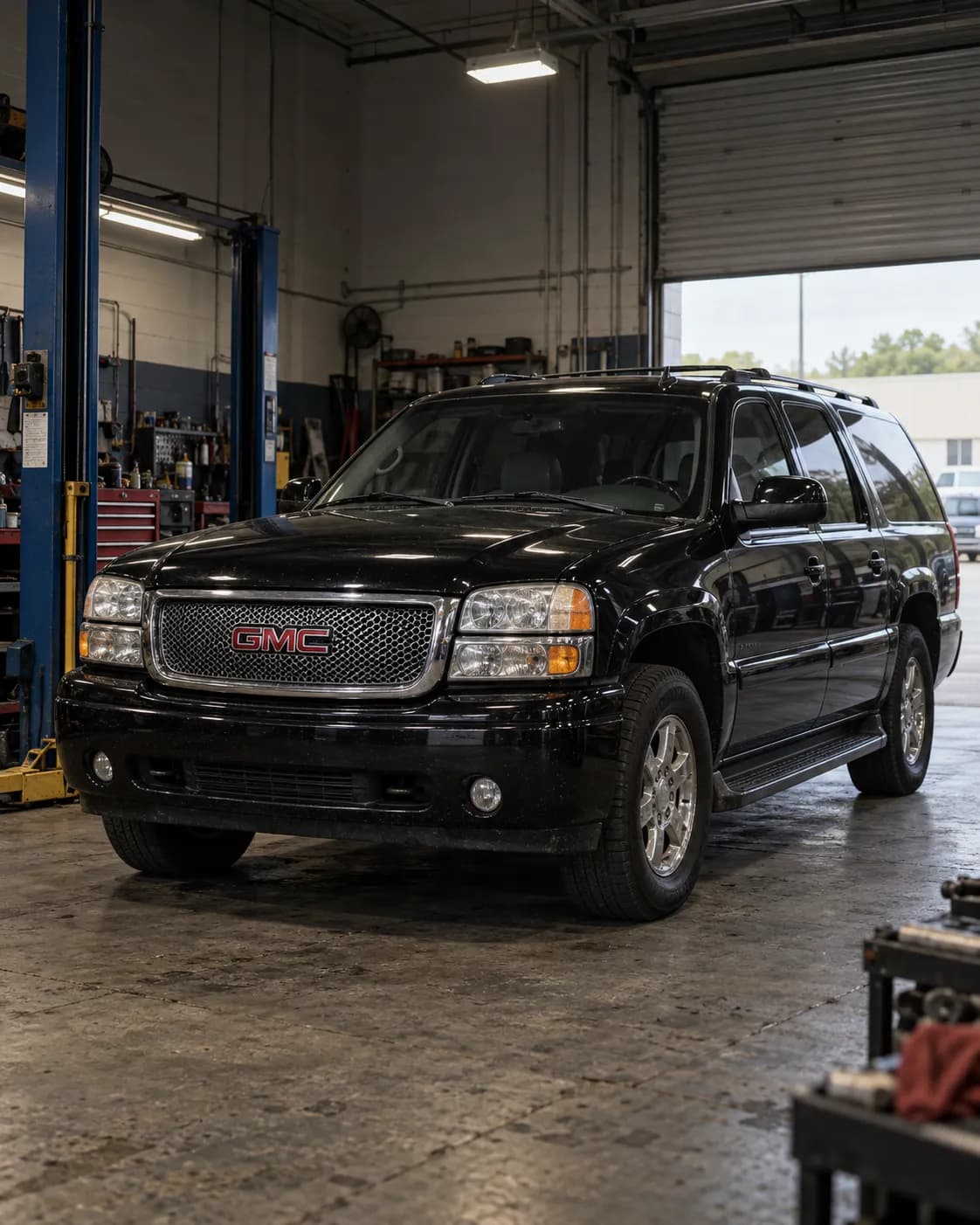
Source reference 10213760
Manufacturer communication — 2006 GMC YUKON DENALI XL
Relation to the target vehicle
- The source's vehicle field includes the trim.
- Model year
- Match 2006 — Source vehicle field
- Model
- Match YUKON DENALI XL — Source vehicle field
- Trim
- Match Denali — Source vehicle field
What the manufacturer’s document says
07-03-16-004D ・ information ・ for GM vehicles in general
Applies to
Applies to 2022 and earlier GM passenger cars and light duty trucks.
the passage
GM Passenger Cars and Light Duty Trucks 2022 and Prior
Only some vehicles built prior to the 2008 model year have tire pressure monitoring; check vehicle build and RPO information to be sure.
the passage
Some vehicles built prior to the 2008 model year or sold in Canada have tire pressure monitoring; check vehicle build and RPO information to be sure.
Fault
A Check Tire Pressure / Low Tire Pressure message or light stays on solid with no system codes set; the system is operating as designed and correcting the tire pressure resolves it.
the passage
A Check Tire Pressure / Low Tire Pressure message/light will stay on solid and no system codes are set. The TPM system is operating as designed. Correcting the tire pressure will resolve the issue.
A Service Tire Monitor message or light blinks and system codes set; this is a condition to be diagnosed and corrected.
the passage
A Service Tire Monitor message/light will blink and system codes WILL set. There is a condition that should be diagnosed and corrected.
The Low Tire telltale must come on when a tire's pressure drops to 75% of the Recommended Cold Inflation pressure.
the passage
The Low Tire telltale MUST come on when a tire's pressure drops to 75% of the Recommended Cold Inflation pressure
Finding the cause
Possible causes
If one or more tire pressure sensors do not transmit for 18 minutes of driving, the system sets a code, displays a message and blinks the light for about a minute, after which it stays on solid for the rest of the ignition cycle.
the passage
If one or more tire pressure sensors does not transmit information for 18 minutes of driving, the TPM system WILL set a code, display a message, and BLINK the light for about a minute, after which the light will stay on solid for the remainder of the ignition cycle.
A low pressure warning can appear when tires were rotated and pressures adjusted but the new positions were not re-learned, on vehicles with different placard pressures front and rear.
the passage
The tires may have been rotated, pressures adjusted, and the new tire positions were NOT re-learned into the vehicle. This can occur on vehicles that have two different placard pressures for front and rear tires.
Steps to confirm (in the document’s order)
When activating a sensor, place the antenna tip of the EL 52545 tool on the sidewall, perpendicular to the tire and close to the valve stem.
the passage
When activating a sensor, the antenna tip of the TPM Test EL 52545 must be placed on the sidewall, perpendicular to the tire, and close to the valve stem (see photo above).
Correction
Repair
Re-learn the TPM sensors and adjust the tire pressure to the placard values after every tire rotation.
the passage
Re-learn the TPM sensors and adjust the tire pressure to the placard values after every tire rotation.
Caution
Never set the tire pressure below the placard value regardless of tire or ambient temperature.
the passage
Never set the tire pressure below the placard value regardless of tire temperature or ambient temperature.
To prevent electrostatic discharge damage to the tire pressure sensor, the technician should be statically discharged before checking or filling tires.
the passage
Note: In order to prevent possible electrostatic discharge damage to the Tire Pressure Monitoring Sensor (TPMS), the technician should be statically discharged before checking or filling tires.
Compiled by reading the full text of the document; each point stands on the passage shown. Check the document itself, linked below, before working on a vehicle.
Stated content
Communication summary
本技術情報はタイヤ空気圧監視(TPM)システムに関する懸念について情報を提供します。 Machine translation (unreviewed)
This service bulletin provides information for tire pressure monitoring (TPM) system concerns.
Go to this passage in the original
Source
- Source
- NHTSA Manufacturer Communications
- Source reference
- 10213760
- Received by source
- 2022-06-13
- Incident date
- Unknown
Open original text and sourceOpen the provider's page (external)