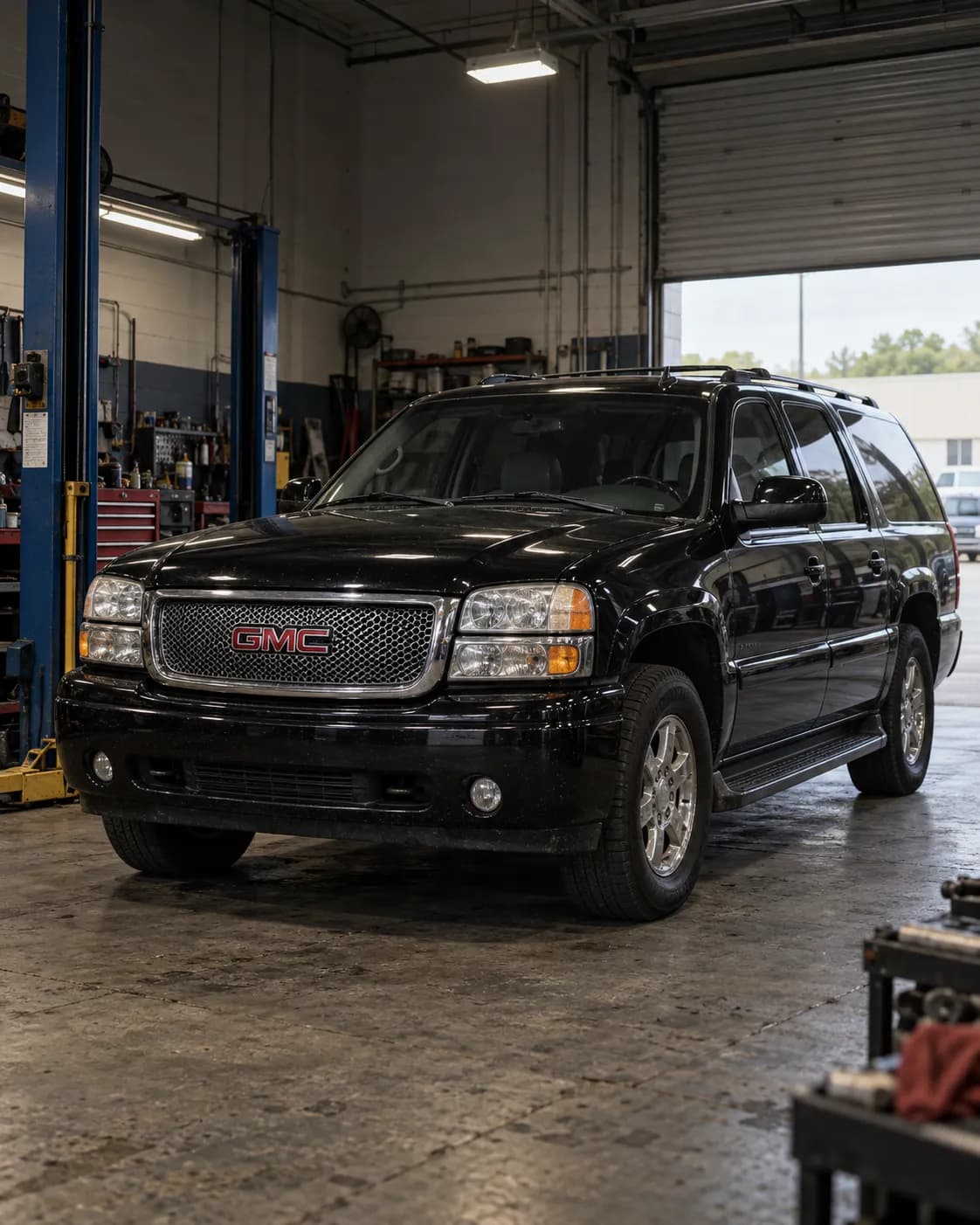
Source reference 10211061
Manufacturer communication — 2006 GMC YUKON XL
Relation to the target vehicle
- The trim (Denali) is not stated.
- Model year
- Match 2006 — Source vehicle field
- Model
- Match YUKON XL — Source vehicle field
- Trim
- Unknown
What the manufacturer’s document says
03-06-01-023E ・ information ・ names this vehicle
Applies to
Applies to 2000-2019 GMC Savana, Sierra 2500/3500 and Yukon XL.
the passage
2000-2019 GMC Savana, Sierra, 2500/3500, Yukon XL
Applies to vehicles with a gasoline engine rated at 8600 GVW and above.
the passage
with Gasoline Engine and Rated at 8600 GVW and above
Finding the cause
Possible causes
Towing a trailer or hauling additional weight will increase oil consumption.
the passage
Towing a trailer or hauling additional weight will increase oil consumption.
Steps to confirm (in the document’s order)
The accepted rate of oil consumption for gasoline engines in vehicles at or above 8600 GVW is 0.946 liter (1 qt) within 379 liters (100 gallons) of fuel used.
the passage
The accepted rate of oil consumption for gasoline engines in vehicles at or above 8600 GVW is 0.946 liter (1 qt) within 379 liters (100 gallons) of fuel used.
Inspect the oil pans, engine covers, and the engine oil cooler for leakage, and inspect for oil leakage into the engine coolant.
the passage
Inspect the oil pans, engine covers, and the engine oil cooler for leakage. Inspect for oil leakage into the engine coolant.
Let the vehicle sit for at least 15 minutes after the engine has been shut off before taking an oil level reading.
the passage
The vehicle should be allowed to sit for at least 15 minutes, after the engine has been shut off, before taking an oil level reading
Verify that the positive crankcase ventilation (PCV) system is operating properly; blockages, restrictions or damage to the PCV system can result in increased oil use.
the passage
Verify that the positive crankcase ventilation (PCV) system is operating properly. Blockages, restrictions or damage to the PCV system can result in increased oil use.
Begin the oil consumption test after the next regularly scheduled oil and filter change; oil changes should not be performed during the test.
the passage
Begin oil consumption test after next regularly scheduled oil and filter change. Oil changes should not be performed during the test.
The customer keeps driving and checking the oil level until it drops to or below the add mark or at least 4800 km (3000 mi) has accumulated since the test began.
the passage
the customer should continue to operate the vehicle and verify the engine oil level until either the oil level drops to or below the add mark or at least 4800 km (3000 mi) has accumulated since the test began
Correction
Repair
If the final evaluation shows the engine uses more than 0.946 liter (1 qt) in 379 liters (100 gallons) of fuel used, follow the published symptom diagnostics in the appropriate Service Manual.
the passage
If the final evaluation shows that the engine uses more than 0.946 liter (1 qt) in 379 liters (100 gallons) of fuel used, follow the published symptom diagnostics as described in the appropriate Service Manual.
Caution
Oil economy should not be tested until the vehicle has accumulated at least 8000 km (5000 mi) and the oil has been changed for the first time.
the passage
oil economy should not be tested until the vehicle has accumulated at least 8000 km (5000 mi) and the oil has been changed for the first time.
Compiled by reading the full text of the document; each point stands on the passage shown. Check the document itself, linked below, before working on a vehicle.
Stated content
Communication summary
本情報文書は、オイル消費量の計測方法と、オイル消費の可能性のある原因について説明するものです。 Machine translation (unreviewed)
This information bulletin explains how to measure for oil consumption and possible reasons for loss of oil.
Go to this passage in the original
Source
- Source
- NHTSA Manufacturer Communications
- Source reference
- 10211061
- Received by source
- 2022-05-06
- Incident date
- Unknown
Open original text and sourceOpen the provider's page (external)