
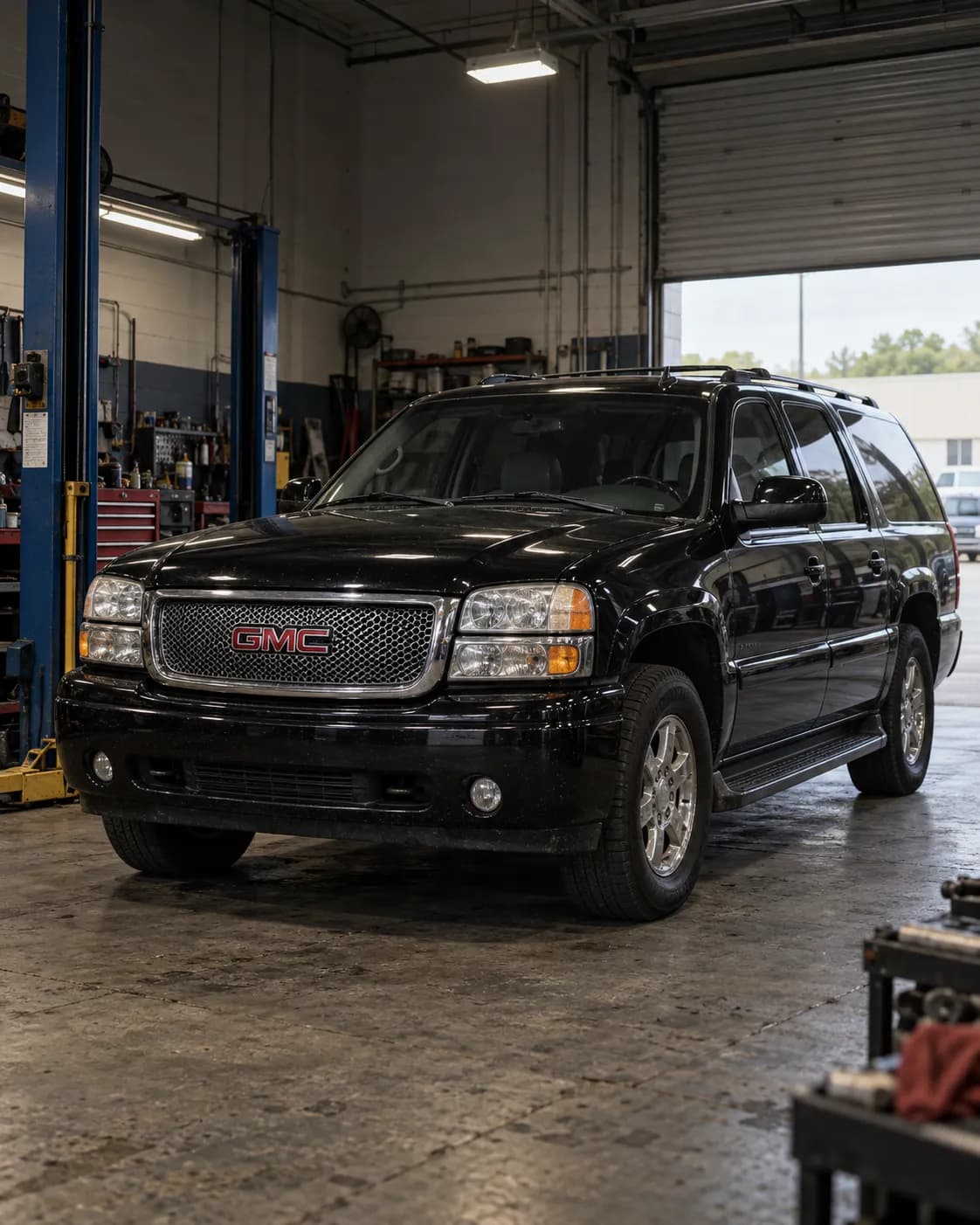
Source reference 10187625
Manufacturer communication — 2006 GMC YUKON DENALI XL
Relation to the target vehicle
- The source's vehicle field includes the trim.
- Model year
- Match 2006 — Source vehicle field
- Model
- Match YUKON DENALI XL — Source vehicle field
- Trim
- Match Denali — Source vehicle field
What the manufacturer’s document says
01-06-01-011L ・ normal characteristic (no repair) ・ for GM vehicles in general
Applies to
Applies to 2021 and prior GM passenger cars and gasoline-powered light duty trucks under 8500 LB GVW.
the passage
2021 and Prior GM Passenger Cars and Gasoline-Powered Light Duty Trucks Under 8500 LB GVW
Finding the cause
Possible causes
Towing a trailer increases oil consumption and may put it outside the normal accepted rate given for an unloaded vehicle in personal use.
the passage
Towing a trailer will increase oil consumption and may cause oil consumption to fall below the normal accepted rate referenced in this bulletin for an unloaded vehicle in a personal use application.
On vehicles usually driven short distances, less than 8 km (5 mi), especially in colder weather, unburned fuel and condensation may not evaporate out of the oil, and the dipstick may read over-full.
the passage
On vehicles that are usually driven short distances, less than 8 km (5 mi), especially in colder weather, unburned fuel and condensation generated from cold engine operation may not get hot enough to evaporate out of the oil. When this occurs, the dipstick may indicate that the oil level is over-full.
Piston scuffing, excessive piston-to-wall clearance, tapered or out of round cylinders, and worn, damaged or improperly installed valve guides, seals and piston rings all increase oil consumption.
the passage
Piston scuffing, excessive piston-to-wall clearance, tapered or out of round cylinders, worn, damaged or improperly installed valve guides, seals and piston rings will all cause an increase in oil consumption.
Steps to confirm (in the document’s order)
Inspect the oil pan and engine covers for leakage from over-tightened, damaged or out of place gaskets, and inspect oil lines and fittings for signs of leakage.
the passage
Inspect the oil pan and engine covers for leakage due to over-tightened, damaged, or out of place gaskets. Inspect oil lines and fittings for signs of leakage.
Let the vehicle sit for at least 15 minutes after the engine has been shut off before taking an oil level reading, so that the oil drains back to the crankcase.
the passage
To assure a sufficient amount of oil has drained back to the crankcase, and an accurate reading can be obtained, the vehicle should be allowed to sit for at least 15 minutes, after the engine has been shut off, before taking an oil level reading.
Verify that the positive crankcase ventilation (PCV) system is operating properly; blockages, restrictions or damage to it can increase oil use.
the passage
Verify that the positive crankcase ventilation (PCV) system is operating properly. Blockages, restrictions, or damage to the PCV system can result in increased oil use.
For the test, verify that the oil level is at, but not above, the full mark on the dipstick and that oil of the proper viscosity and quality is used.
the passage
5. Verify that the oil level is at, but not above, the full mark on the dipstick, and that the proper viscosity and quality oil are being used as recommended in the Owner Manual.
Correction
Repair
If the final evaluation shows the engine uses more than 0.946 liter (1 qt) in 3200 km (2000 mi), follow the published symptom diagnostics in the appropriate Service Manual.
the passage
8. If the final evaluation shows that the engine uses more than 0.946 liter (1 qt) in 3200 km (2000 mi), follow the published symptom diagnostics as described in the appropriate Service Manual.
Caution
The accepted rate of oil consumption for these engines is 0.946 liter (1 qt) in 3200 km (2000 mi).
the passage
The accepted rate of oil consumption for engines used in the vehicles referenced is 0.946 liter (1 qt) in 3200 km (2000 mi).
This rate does not apply to vehicles driven aggressively, at high RPM, at high speeds or, for trucks, loaded; oil consumption under these conditions will be more.
the passage
Important: This rate does not apply to vehicles that are driven in an aggressive manner, at high RPM, high speeds, or in a loaded condition (for trucks). Oil consumption for vehicles driven under these conditions will be more.
Oil economy should not be tested until the vehicle has accumulated at least 6400 km (4000 mi).
the passage
Therefore, oil economy should not be tested until the vehicle has accumulated at least 6400 km (4000 mi).
What is needed
- Parts and materials
- Not stated
- Labor time
- Not stated
- Special tools
- Not stated
- Scan tool
- Not stated
Only what the technical documents state. "Not stated" does not mean not needed.
Compiled by reading the full text of the document; each point stands on the passage shown. Check the document itself, linked below, before working on a vehicle.
Stated content
Communication summary
本情報技術通知は、車両エンジンオイル消費に関する整備士向けガイドラインおよび診断/修理情報を提供するものです。 Machine translation (unreviewed)
This informational bulletin provides guidelines and diagnostic/repair information to technicians regarding vehicle engine oil consumption.
Go to this passage in the original
Source
- Source
- NHTSA Manufacturer Communications
- Source reference
- 10187625
- Received by source
- 2021-03-01
- Incident date
- Unknown
Open original text and sourceOpen the provider's page (external)