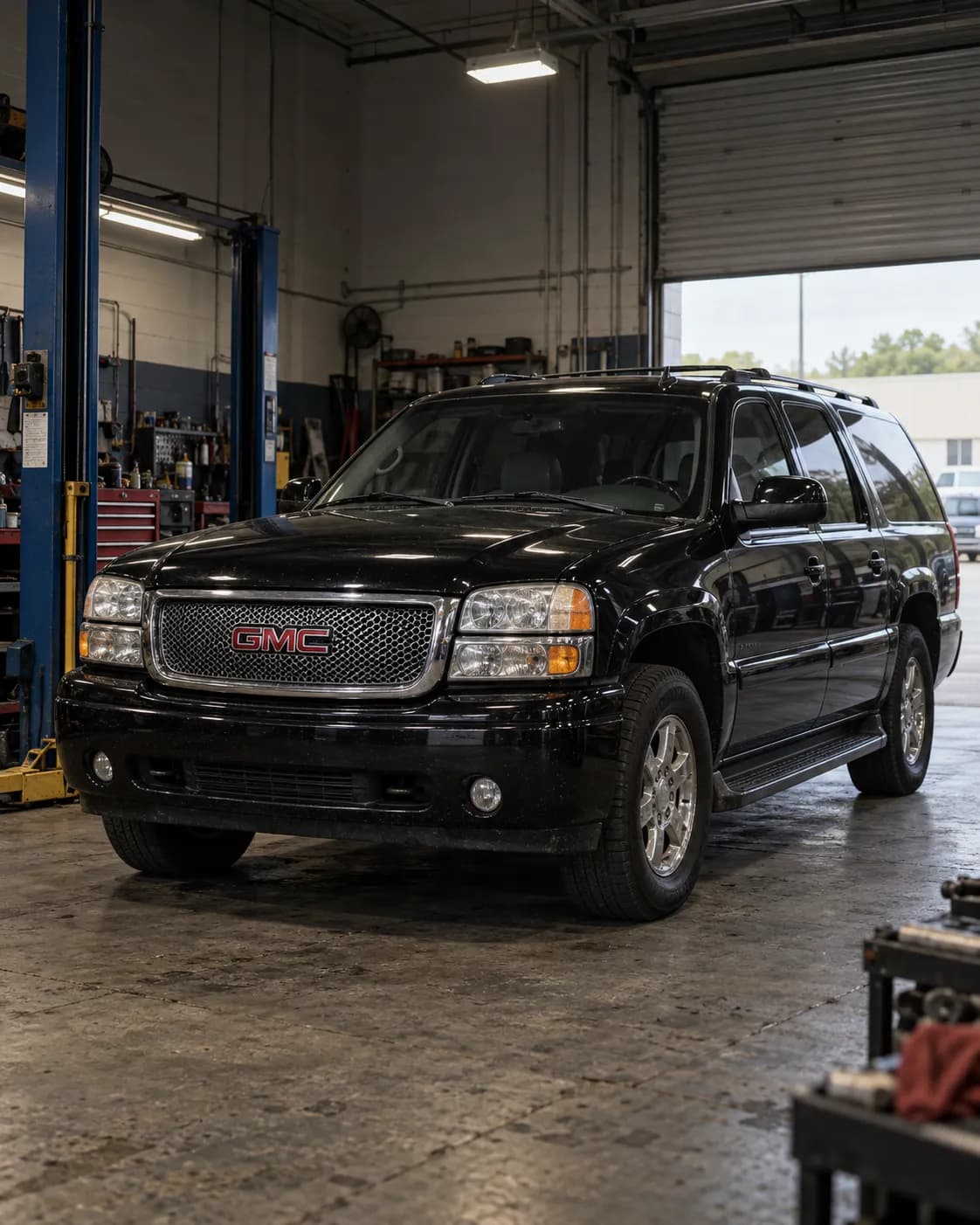
Source reference 10156947
Manufacturer communication — 2006 GMC YUKON DENALI
Relation to the target vehicle
- The source's vehicle field says Yukon; whether it is an XL is not stated.
- Model year
- Match 2006 — Source vehicle field
- Model
- Unknown YUKON DENALI — Source vehicle field
- Trim
- Match Denali — Source vehicle field
What the manufacturer’s document says
PIT3098G ・ fault and correction ・ names this vehicle
Applies to
Applies to GMC Yukon models, 1999 - 2006.
the passage
Yukon Models 1999 - 2006 All All All All
Applies to vehicles with torsion bar front suspension.
the passage
With Torsion Bar Front Suspension
Fault
The procedure is for diagnosing and correcting complaints of the vehicle leaning left or right.
the passage
This procedure should be followed to diagnose and correct customer complaints of vehicle leaning left or right.
Finding the cause
Steps to confirm (in the document’s order)
Measure fender wheel-opening heights, front and rear, to quantify vehicle lean.
the passage
Measure fender wheel-opening heights, front and rear, to quantify vehicle lean.
The front wheel-opening height is known as P height, and the rear wheel-opening height is known as R height.
the passage
The front wheel-opening height is known as P height, and the rear wheel-opening height is known as R height.
P height and R height are the distance from the ground to the highest point on the wheel-opening, going through the center of the wheel.
the passage
They are the distance from the ground to the highest point on their respective wheel-opening, going through the center of their respective wheel.
Before measuring, make sure the vehicle is on a level surface, such as an alignment rack.
the passage
Make sure the vehicle is on a level surface, such as an alignment rack.
Before measuring, check the fuel level and add weight if necessary to simulate a full tank.
the passage
Check the fuel level. Add additional weight if necessary to simulate a full tank.
Check Z height and D height; see Trim Height Inspection Procedure.
the passage
Check Z height and D height. See Trim Height Inspection Procedure.
Correction
Repair
If Z height is out of spec and the D height delta is greater than 1/2 inch (12 mm), adjust Z height until it is within spec and the P and R height deltas are less than 1/2 inch (12 mm).
the passage
If Z height is out of spec and D height delta is greater than 1/2 inch (12 mm), adjust Z height until it is within spec and P and R height deltas are less than 1/2 inch (12 mm).
If adjustment is not possible, check the front eye of the rear leaf spring for matching color-coded tape or paint; both sides should be the same color. If not, switch springs side to side; if so, replace the leaf spring on the lower side only.
the passage
check front eye of rear leaf spring for matching color-coded tape or paint. Both sides should be the same color. If not, switch springs side to side. If so, replace leaf spring on lower side only.
If this is not possible, shim the body and/or pick-up box until the P and R height deltas are less than 1/2 inch (12 mm).
the passage
If this is not possible, shim body and/or pick-up box until P and R height deltas less than 1/2 inch (12 mm).
After all adjustments are done, perform a front-end alignment and check headlight aim.
the passage
After all adjustments are done, perform a front-end alignment and check headlight aim.
Compiled by reading the full text of the document; each point stands on the passage shown. Check the document itself, linked below, before working on a vehicle.
Stated content
Communication summary
本予備情報通知は、左右に傾斜している車両についての情報を技術者に提供するものです。技術者は、車両傾斜を定量化するために、前後のフェンダーホイールオープニングハイトを測定する必要があります。フェンダーホイールオープニングハイトはトリムハイトと関連していますが、これとは異なります。前輪のホイールオープニングハイトはPハイトとして知られており、後輪のホイールオープニングハイトはRハイトとして知られています。仕様外のハイトを調整してください。すべての調整が完了した後、フロントエンドアライメントを実施し、ヘッドライト照射方向を確認してください。 Machine translation (unreviewed)
This Preliminary Information communication provides information to the technician about vehicles that have a lean to the left or right. Technician will need to measure fender wheel-opening heights, front and rear, to quantify vehicle lean. Fender wheel-opening heights are related to, but distinct from, trim height. The front wheel-opening height is known as P height, and the rear wheel-opening height is known as R height. Adjust and heights that are out of specification. After all adjustments are done, perform a front-end alignment and check headlight aim.
Go to this passage in the original
Source
- Source
- NHTSA Manufacturer Communications
- Source reference
- 10156947
- Received by source
- 2019-04-08
- Incident date
- Unknown
Open original text and sourceOpen the provider's page (external)