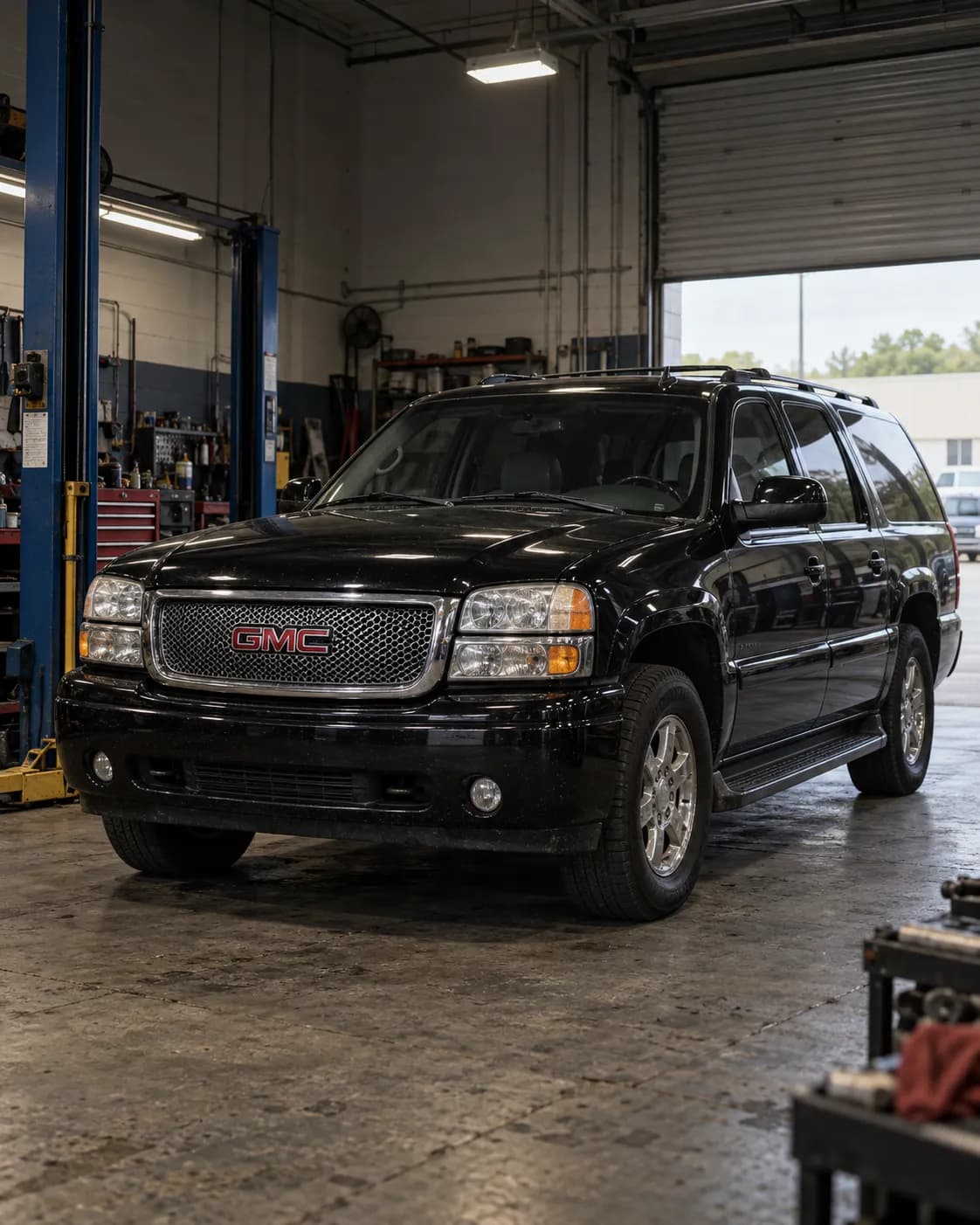
Source reference 10155051
Manufacturer communication — 2006 GMC YUKON DENALI XL
Relation to the target vehicle
- The source's vehicle field includes the trim.
- Model year
- Match 2006 — Source vehicle field
- Model
- Match YUKON DENALI XL — Source vehicle field
- Trim
- Match Denali — Source vehicle field
What the manufacturer’s document says
17-NA-170 ・ information ・ for GM vehicles in general
Applies to
Applies to all GM passenger cars and trucks (including medium duty), model years 2000 to 2019.
the passage
All GM Passenger Cars and Trucks (includes Medium Duty) 2000 2019
Fault
Effective February 2017 (May 2017 for Canada), a Generation 3, 4 or 5 Hunter Road Force Balancer is designated as essential dealer equipment.
the passage
Effective February 2017 (May 2017 for Canada), a Generation 3, 4 or 5 Hunter Road Force Balancer is designated as Essential Dealer Equipment.
Finding the cause
Possible causes
Road Force is a measurement of both sidewall stiffness and how much the assembly is egg shaped.
the passage
Road Force is a measurement of both sidewall stiffness and how much the assembly is “Egg Shaped.”
Excessive Road Force can also be produced by incorrect tire mounting or improper bead seating to the rim.
the passage
Excessive Road Force can also be produced by incorrect tire mounting or improper bead seating to the rim.
Steps to confirm (in the document’s order)
Because tires can become temporarily flat-spotted, drive the vehicle at least 24 km (15 mi) at 89 km (55 mph (= 88.5 km/h)) or more before measuring.
the passage
Because tires can sometimes become temporarily flat-spotted, which will affect force variation, it is important that the vehicle be driven at least 24 km (15 mi) at 89 km (55 mph) or more prior to measuring.
Before measuring, adjust tire pressure to the usage pressure on the vehicle's tire placard.
the passage
Tire pressure must also be adjusted to the usage pressure on the vehicle's tire placard prior to measuring.
Correction
Repair
180 Matching: use a tire changer to rotate the rim 180 degrees relative to the tire, aligning the V mark with the valve stem, then mount the assembly on the balancer again.
the passage
Use a tire changer and rotate the rim 180 degrees relative to the tire, aligning the “V” mark with the valve stem. Mount the assembly on the balancer.
Caution
When mounting a GM wheel on a balancer/force variation machine, always use the wheel's center pilot hole; it is the primary centering mechanism on all GM wheels and the bolt holes are secondary.
the passage
When mounting a GM wheel to a wheel balancer/ force variation machine, always use the wheel's center pilot hole. This is the primary centering mechanism on all GM wheels; the bolt holes are secondary.
Service equipment that removes tread rubber by grinding, buffing or trueing is not recommended and may void the tire warranty.
the passage
Any type of service equipment that removes tread rubber by grinding, buffing or trueing is NOT recommended, and may void the tire warranty.
Compiled by reading the full text of the document; each point stands on the passage shown. Check the document itself, linked below, before working on a vehicle.
Stated content
Communication summary
本情報通知では、ホイールロードフォースバランサーおよびユーザー対応に対して実施できる内容について説明しています。 Machine translation (unreviewed)
This informational bulletin explains the wheel Road Force balancers and what they can do for customer concerns.
Go to this passage in the original
Source
- Source
- NHTSA Manufacturer Communications
- Source reference
- 10155051
- Received by source
- 2019-03-25
- Incident date
- Unknown
Open original text and sourceOpen the provider's page (external)